Category: Science & Tech

  • Samsung P9 Portable SSD Review: Speed that actually lasts

    Samsung P9 Portable SSD Review: Speed that actually lasts

    Samsung’s fastest portable SSD is expensive, but for creators moving enormous files, waiting around costs money too.


    Portable SSDs have reached the point where their specifications are beginning to sound faintly ridiculous. The Samsung P9 promises read speeds of up to 4,000MB/s and writes of up to 3,800MB/s. That is fast enough to move a 100GB folder in less time than some computers take to decide whether they would like to install an update.

    The more important number, however, is not 4,000, but rather 2,000. More on that shortly.

    Small drive, enormous appetite
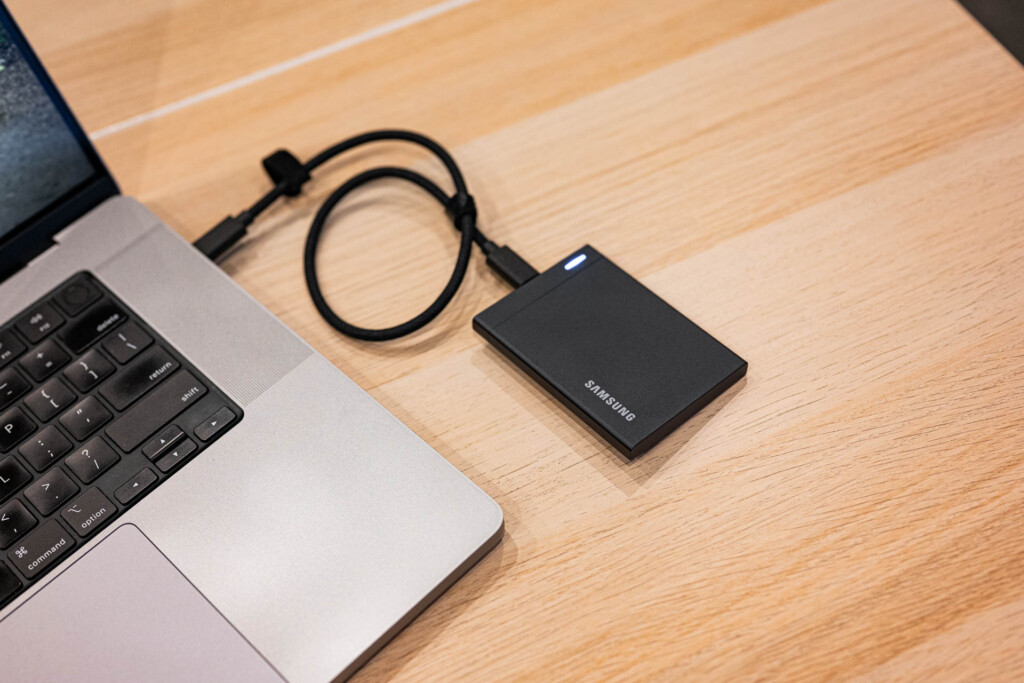
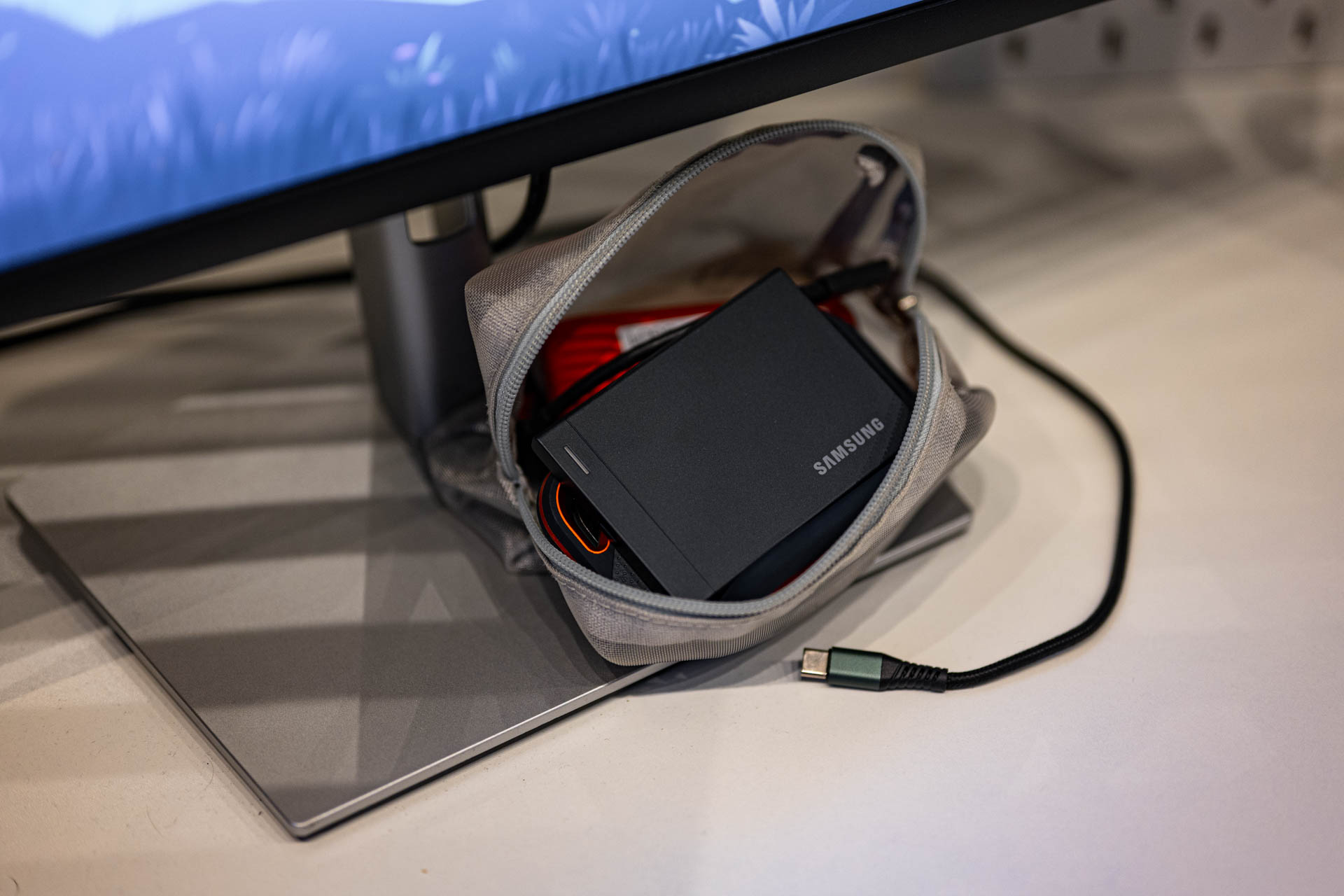
    The P9 is Samsung’s flagship portable SSD and uses a 40Gbps USB4 connection, with capacities ranging from 1TB to 8TB. Samsung is positioning it primarily at photographers, videographers and other creative professionals rather than someone looking for somewhere to dump old holiday photographs.

    In Singapore, it costs S$459 for 1TB, S$929 for 2TB, S$1,858 for 4TB and a fairly breathtaking S$3,739 for 8TB. That 8TB drive costs more than many perfectly decent laptops.

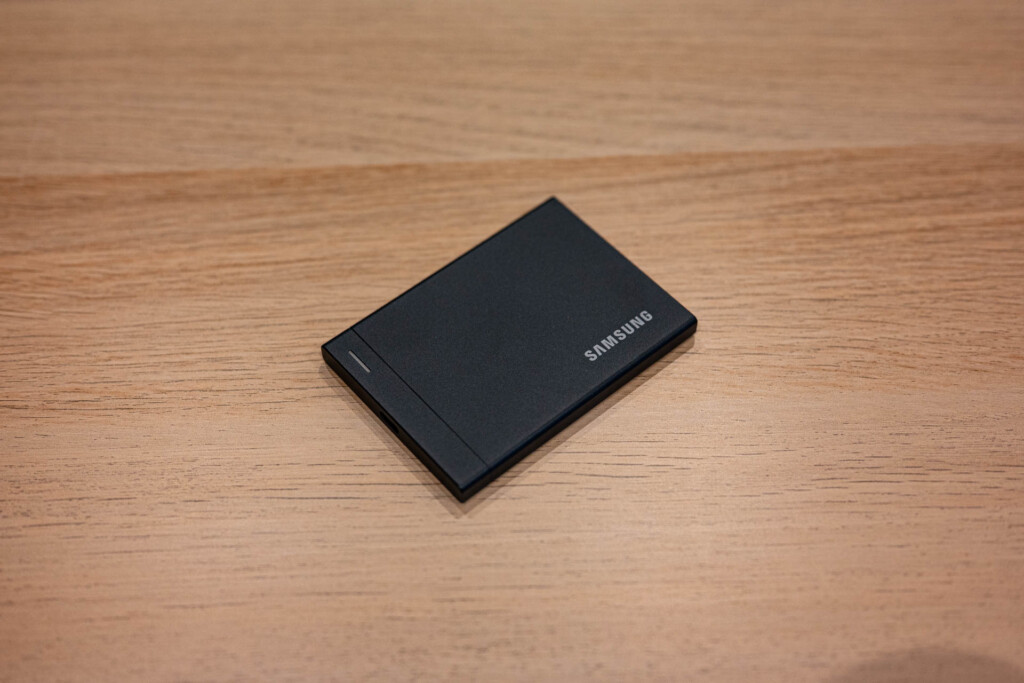
    Still, you are getting a lot of storage in something measuring roughly 90mm by 65mm, only 8.3mm thick and weighing 96g. Its metal body is pleasantly understated, with a rubberised base that stops it skating across a desk whenever you touch the cable.

    Fast is easy. Staying fast is harder
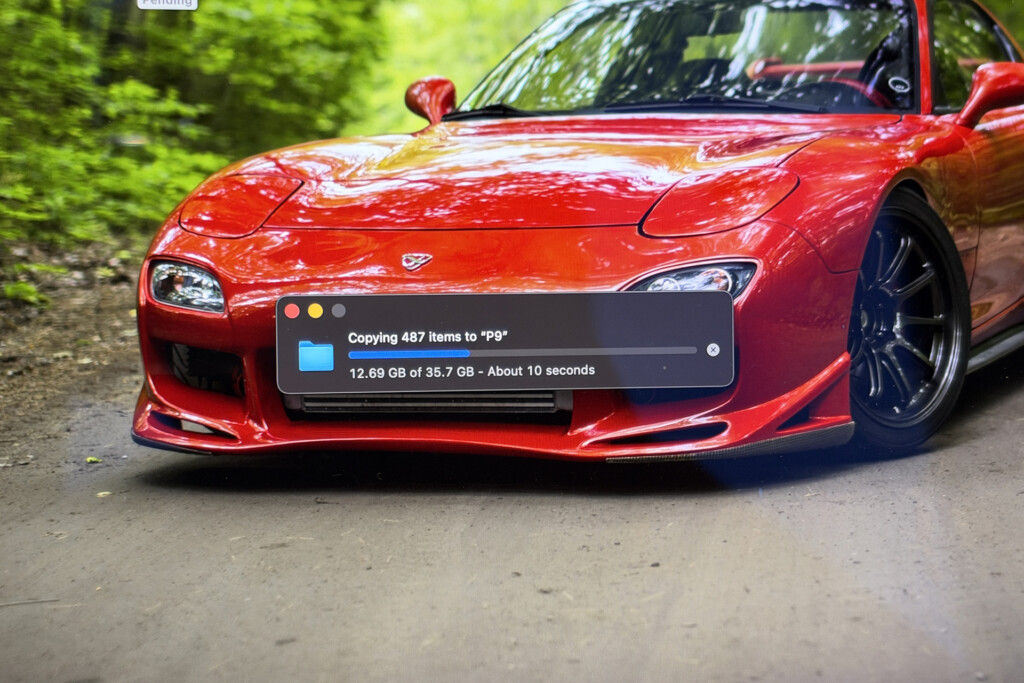
    These are killer speeds

    Headline SSD speeds are a little like claimed fuel economy figures. They are impressive, but they do not always tell you what happens in the real world.

    Many portable SSDs can achieve spectacular speeds for short bursts before slowing dramatically once their cache fills up. That matters little if you are moving a few documents. When we were testing it out, the P9 could sustain a rate of about 2GB/s for big files, and that is the P9’s killer feature.

    If your day involves offloading camera cards, moving RAW photographs or shifting large video projects between machines, this consistency saves actual time.

    You will need the right computer
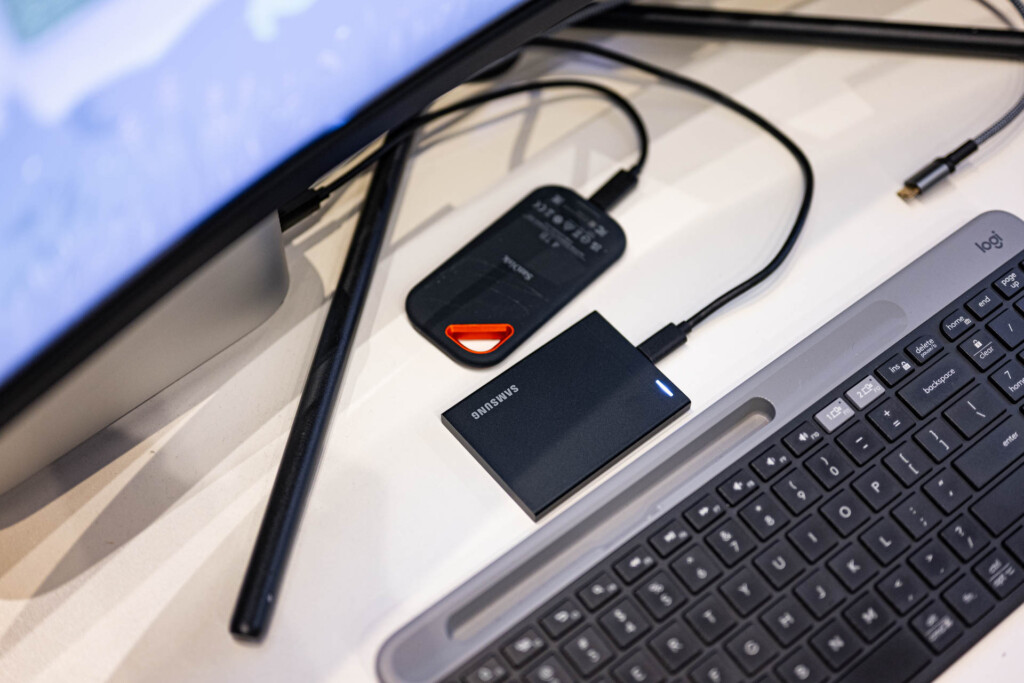
    Leaving the competition in the dust…

    To see anything approaching the P9’s maximum performance, your computer needs a 40Gbps USB4-compatible USB-C port, and you need to use an appropriate cable. Samsung supplies one in the box.

    Plug it into a slower USB port and the P9 will still work, but you will have paid a considerable amount of money for performance your computer cannot access.

    The P9 also supports direct recording of high-resolution footage, including 12K direct recording on compatible devices, which makes its appeal to professional video users fairly obvious.

    Samsung has also paid attention to thermals, which becomes increasingly important when a tiny drive is being asked to shift data at several gigabytes per second for extended periods.

    Useful things beyond speed
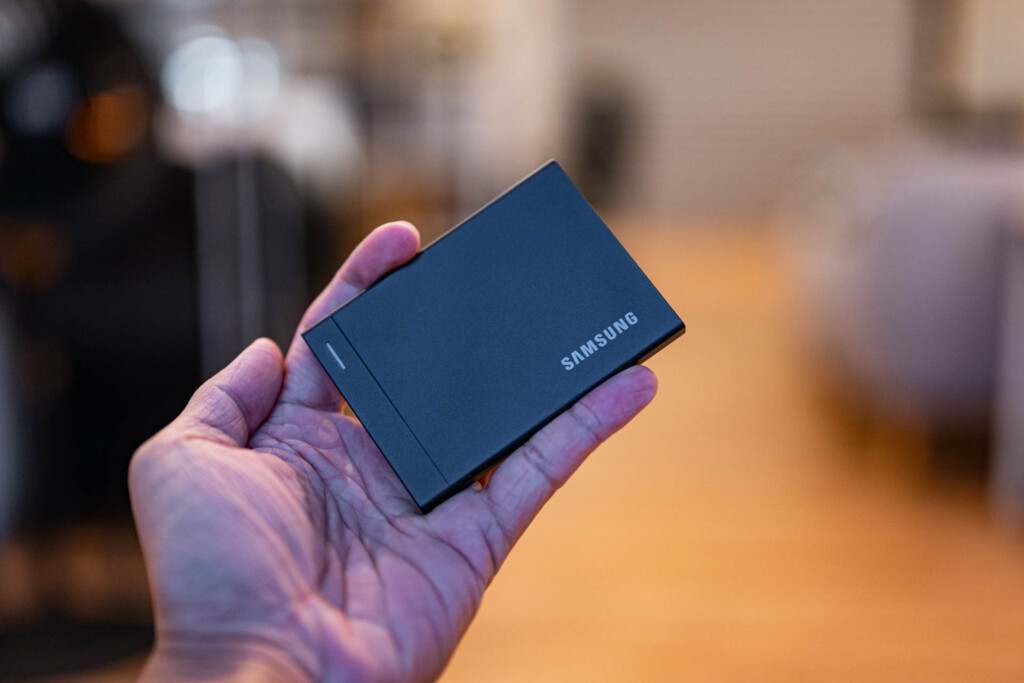
    There is AES 256-bit hardware encryption, while Samsung Magician allows you to password-protect the drive, monitor performance, authenticate the SSD and securely erase it. The P9 also comes with a five-year limited warranty.

    One notable omission is an IP rating, although Samsung says the drive has been tested against shock, vibration and drops of up to two metres. So fingers crossed, it should survive normal life in a camera bag.

    I would perhaps avoid testing that theory from a hotel balcony.

    Should you buy one?
    For most people, probably not.

    If you are backing up spreadsheets, storing family photographs or transferring the occasional 4K video, there are plenty of cheaper SSDs that will accomplish exactly the same thing.

    The P9 makes sense when storage speed becomes part of your workflow.

    If you regularly transfer hundreds of gigabytes, edit directly from external storage or need to dump footage quickly between shoots, its sustained performance begins to justify the price.

    For professional users, time is money after all.

    Samsung P9 Portable SSD

    Price: S$459 (1TB) / S$929 (2TB) / S$1,858 (4TB) / S$3,739 (8TB)
    Interface: USB4, up to 40Gbps
    Sequential read: Up to 4,000MB/s
    Sequential write: Up to 3,800MB/s
    Sustained write: Around 2,000MB/s in testing
    Capacities: 1TB / 2TB / 4TB / 8TB
    Security: AES 256-bit hardware encryption
    Dimensions: 90 x 65 x 8.3mm
    Weight: 96g


    Liked this? Check out more articles on Futr tech here.

    Source link

  • Google Fi’s ‘Super Network’ Hops Networks to Keep Your Pixel Phone Connected

    Google Fi’s ‘Super Network’ Hops Networks to Keep Your Pixel Phone Connected

    Even in areas that seem abundant with overlapping cellular coverage, phones sometimes sputter when you’re looking up information or trying to get directions when your carrier’s signal gets weak. To avoid those annoying interruptions, Google Fi Wireless is rolling out what it’s calling a “super network” feature. It automatically switches your phone between two 5G networks to maintain the best connection.

    The new capability works only on Google’s phones, starting with the Pixel 9 and newer Pixel models.

    The super network is included free for existing Google Fi customers on all of its plans: Flexible, Unlimited Essentials, Unlimited Standard and Unlimited Premium.

    Google says that it’s using “two top 5G networks,” but the company is refusing to reveal which networks those are in the US. Traditionally Google Fi runs on T-Mobile’s network.

    The network switching also applies when you’re traveling internationally, and is included in the Unlimited Premium and Flexible plans.

    According to a source at Google, the phone will use two eSIM slots to switch between networks, but it will appear to only use a single eSIM on the customer’s phone. A fine-print disclaimer notes that any other eSIMs on your device must be disabled, which is worth knowing for anyone that already uses multiple carriers on a single device.

    In addition to the super network news, Google said its Wi-Fi Auto Connect Plus feature is available in millions of more locations across the US. If the phone is in an area where cellular is spotty and a compatible Wi-Fi network is nearby, it automatically makes an encrypted connection if the Wi-Fi network is stronger.

    Wi-Fi Auto Connect Plus is available on Pixel phones, but is also becoming available on Samsung phones running One UI 9 or later and “select modern Motorola phones.”

    Source link

  • Energy Drinks Loaded With Bizarre Chemicals Are Causing Heart Attacks in Healthy Young People

    Energy Drinks Loaded With Bizarre Chemicals Are Causing Heart Attacks in Healthy Young People

    Who’d have thought that pumping cans of cheap and colorful caffeine bombs into every gas station in the country could be bad for public health?

    Most people probably at least suspect that energy drinks aren’t the best thing to put in our bodies. Still, a recent preliminary study by the American Heart Association found that the energy drinks’ impact on the human heart over time is worse than you might imagine.

    The new research took a look at over 28,300 health events reported to the US Food and Drug Administration between 2017 and 2025. Broadly, researchers found that energy drinks and heavily caffeinated beverages carry a link to serious heart conditions which is far, far stronger than that of non-ultra-caffeinated beverages.

    More granularly, the study found that energy drinks were cited some 11 times more often in cardiac arrest reports compared to products without caffeine. And while caffeine was a key ingredient found to contribute to adverse health events like heart attacks and ventricular arrhythmia, energy drinks are often slurries of methylxanthines, sympathomimetics, yohimbine, and other poorly-understood ingredients.

    As the researchers found, documentation of serious medical episodes involving mention of energy drinks and other stimulating beverages are about four times more likely to include cases of arrhythmia compared to medical reports that don’t. The study’s abstract also points to a rising number of cases reported by healthcare professionals involving irregular heart rhythm or sudden cardiac death in otherwise healthy young adults who regularly slurp down energy drinks.

    Crucially, the findings point to a high number of adverse heart impacts in young adults in the 18-to-34 age range, for whom heart conditions are generally rare. US adults in this age group tend to be the predominant consumers of energy drinks, which could reflect the fact that consuming high amounts of energy drinks is, in fact, rough on your ticker.

    Still, the study’s authors point out that any causal link between high energy drink consumption and poor heart health has yet to be proven, as the body of research on the topic is relatively young.

    While the research has yet to be peer-reviewed, it may nonetheless point to a growing public health crisis — not one stemming from a lack of resources, as is very often the case, but from too much of a very bad thing.

    More on food and beverages: Climate Change Has Become So Bad That Rice Krispies Don’t Have Actual Rice in Them Anymore

    Source link

  • AMD looks to tighten grip on CPU crown with Venice customer-centric core power

    AMD looks to tighten grip on CPU crown with Venice customer-centric core power

    Leadership leans in on customer outcomes over benchmarks while still flexing big performance numbers