Category: Science & Tech

  • I got hands on with the new ZWO Seestar S30 Plus

    I got hands on with the new ZWO Seestar S30 Plus


    Follow us

    Add us as a preferred source on Google


    Subscribe to our newsletter


    As rival makers announce increasingly ambitious smart telescopes, ZWO has taken a different approach. Its new Seestar S30 Plus launches today and will be available online from Seestar’s website and Amazon, just in time for Christmas. Better still, we’ve been using it for a month and can bring you a first look.

    Announced a few months after the flagship Seestar S50 Pro and replacing the now-discontinued Seestar S30, the new Seestar S30 Plus retains its 30mm aperture and compact chassis, but upgrades to four-element apochromatic optics with extra-low dispersion (ED) glass and two 3.7-megapixel cameras.

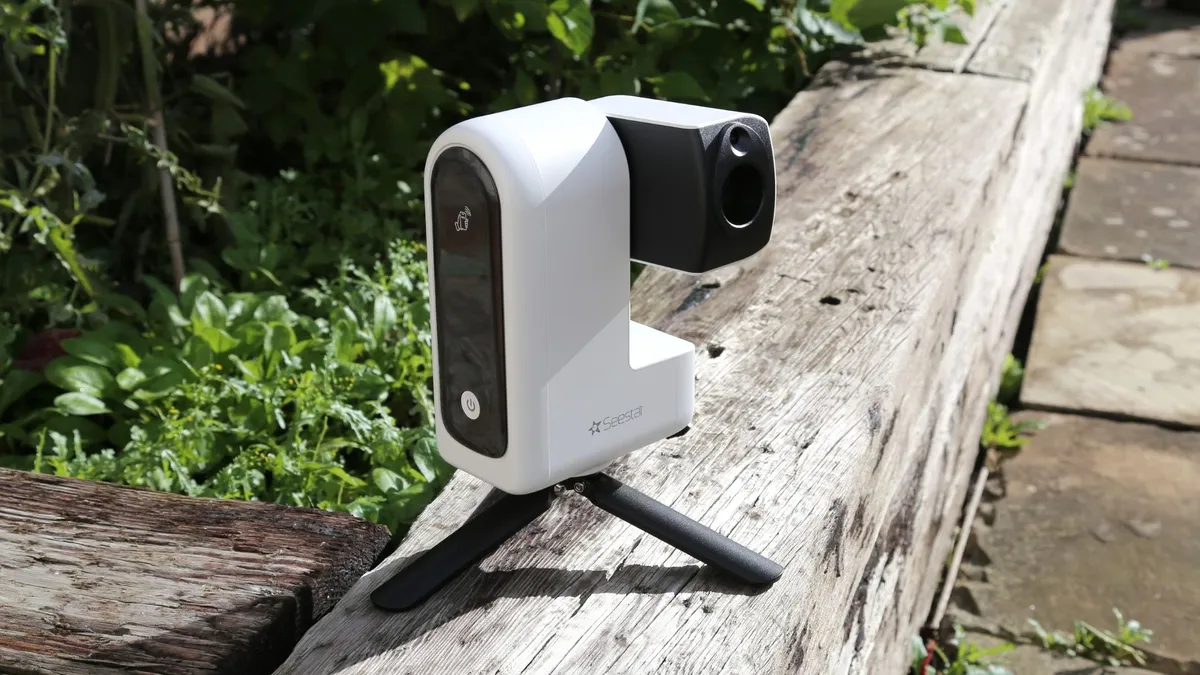
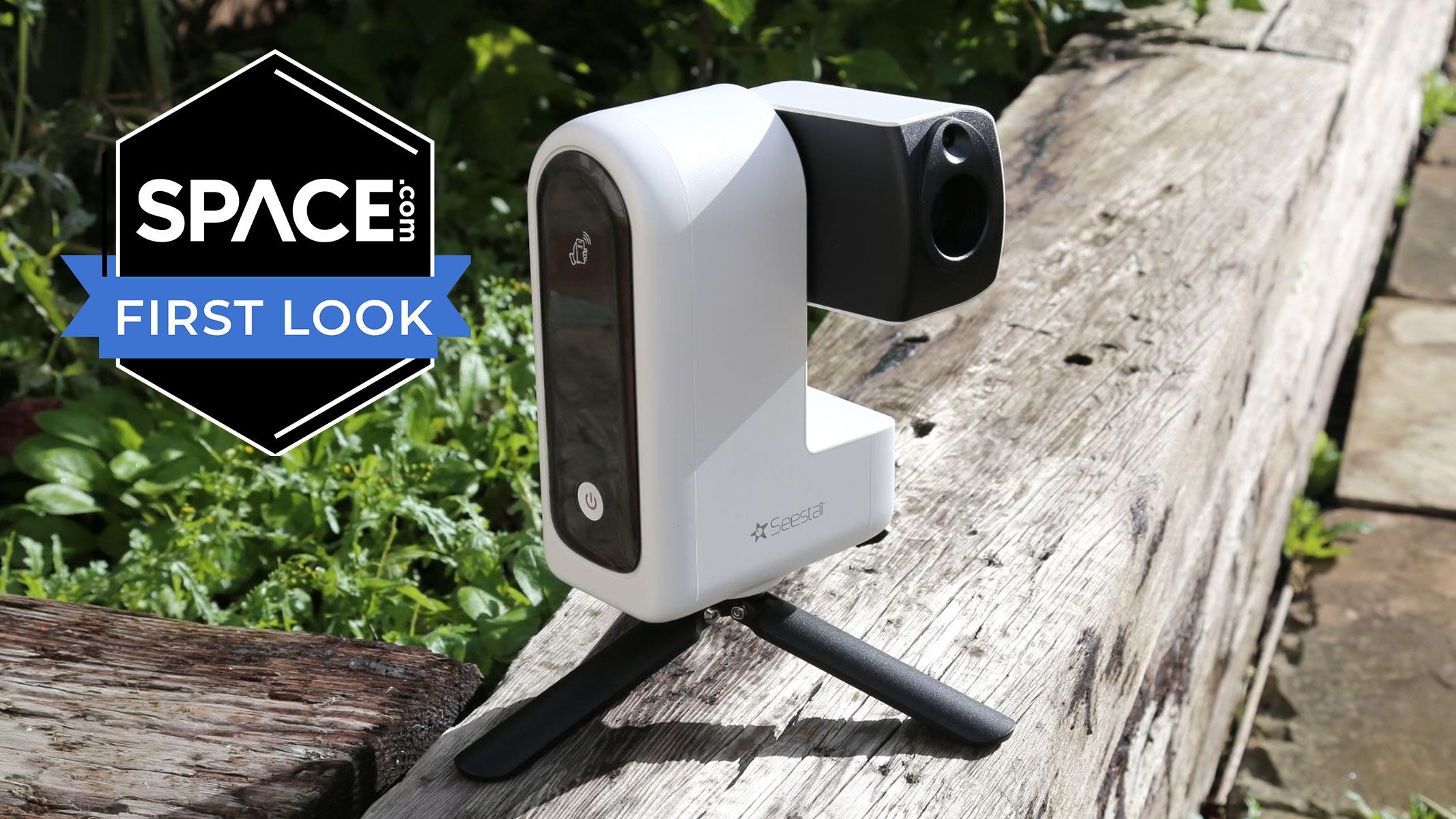
    The Seestar S30 Plus smart telescope sitting on a wooden beam in garden, with foliage in the background.

    The ZWO Seestar S30 Plus is a new sub-$500 smart telescope with upgraded optics and dual 3.7MP cameras. (Image credit: Jamie Carter)

    Both produce 1,440 x 2,560-pixel images, while a much-improved 43.5-degree wide-angle camera can capture the Milky Way, constellations, star trails and nightscapes. Built-in filters, a mosaic mode and equatorial (EQ) tracking add considerable deep-sky astrophotography potential.

    For a telescope weighing just 3.64 lbs (1.65 kg), it’s impressive. It easily fits into a camera bag and could happily live on a bookshelf.

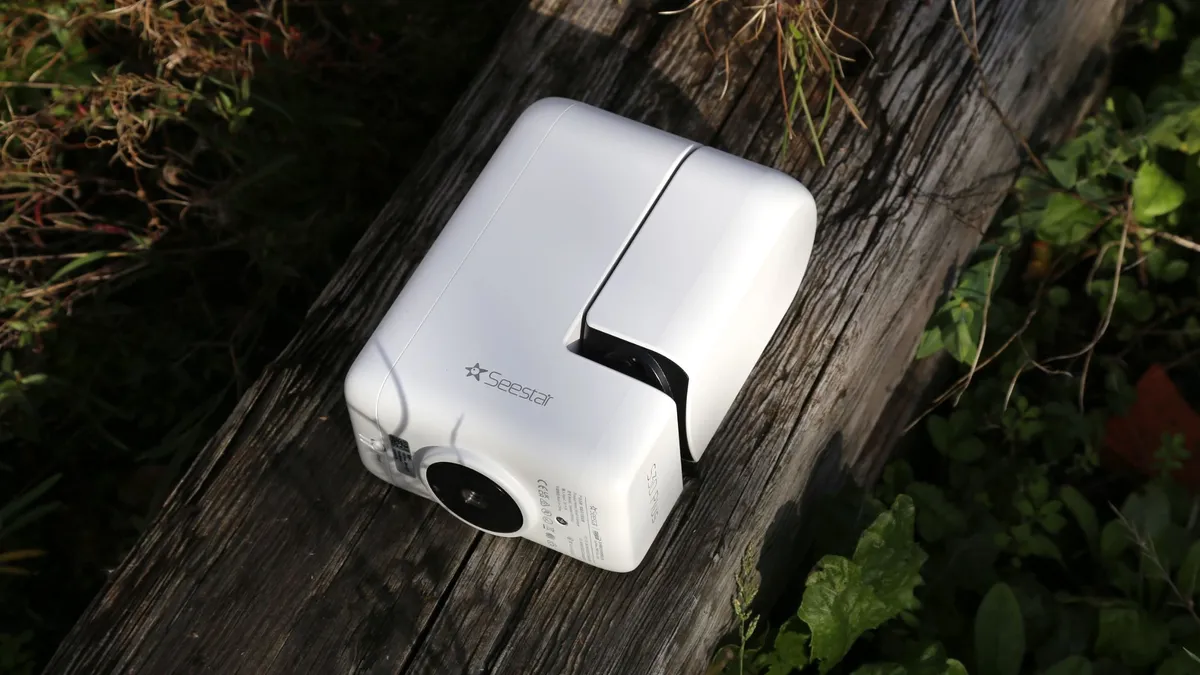
    The Seestar S30 Plus lying on a wooden beam in the closed position.

    The Seestar S30 Plus weighs just 3.64 lbs (1.65 kg) and fits in a camera bag easily. (Image credit: Jamie Carter)

    I’ve already photographed the Andromeda Galaxy (M31), the Pleiades (M45), the Dumbbell Nebula (M27) and the North America Nebula (NGC 7000). The results are excellent for such a small instrument, especially when imaging nebulas with its built-in dual-band filter, which helps reduce light pollution.

    The Seestar app adds new in-app post-processing options, so you don’t have to mess around with any of that — though you can also export everything as lossless FITS files. The S30 Plus also includes a magnetic solar filter, enabling you to indulge in solar photography safely.

    Three space images captured using the Seestar S30 Plus: the North American Nebula, the Pleiades and star trails.

    The North America Nebula (NGC 7000), the Pleiades (M45) and a star trail imaged using the Seestar S30 Plus. (Image credit: Jamie Carter)

    With Dwarflab’s $1,299 Draco (3.5-inch/90mm aperture) recently landed in stores and Vaonis’ own $4,990 Atlas (3.1-inch/80mm aperture) not available until 2027, ZWO’s decision to offer an upgraded entry-level smart telescope that buyers can get their hands on right now looks particularly smart.

    The Andromeda Galaxy (M31) photographed using the Seestar S30 Plus.

    The Andromeda Galaxy (M31) photographed using the Seestar S30 Plus. (Image credit: Jamie Carter)

    With ZWO’s pattern of delivering cheaper smart telescopes without sacrificing on quality, the Seestar S30 Plus could be one of Christmas 2026’s best gifts for anyone interested in astronomy — and maybe that’s the point of it. Either way, first impressions are good. A full review is coming tomorrow, so check back at Space.com to find out our full thoughts and testing.

    Source link

  • Albishorn’s Voisin Aérosport is a Time-Only Time Machine

    Albishorn’s Voisin Aérosport is a Time-Only Time Machine

    The Albishorn Voisin Aérosport brings the brand’s imagined histories into a simpler format, pairing a layered sector dial with a slim case and hand-wound movement in a design inspired by the era of French automotive designer Gabriel Voisin.

    The brand’s first time-only watch retains the unusual crown position and asymmetric display of its chronographs, establishing a recognisable identity beyond the complications that defined its launch.

    Initial thoughts

    There are number of good reasons why so many watchmakers return to the Art Deco era, and specifically the sector dial format, for inspiration. For one thing, the inherent purposefulness in the instrument-like design has allowed it to transcend trends and fads.

    For another, it was also one of the styles en vogue during the early wristwatch era, so the design has become embedded in the cultural heritage of watchmaking. These attributes make it attractive subject matter for a brand like Albishorn that interprets historical motifs through a contemporary lens.

    The Voisin Aérosport is Albishorn’s first time-only model after a string of vintage-inspired monopusher chronographs, each taking after a specific historical inspiration, from the Swiss expeditions to Everest in 1952 to the regattas of Lac Léman.

    The watch derives much of its personality from its bi-level seconds scale, legible thanks to the two ends of the asymmetrical seconds hand that count off the first and second halves of each minute in sequence. The format is familiar from watches like the Daniel Roth Tourbillon, but it remains an uncommon detail in the broader landscape.

    Like its stablemates, the Voisin Aérosport imagines an alternative history, and is founder Sébastien Chaulmontet’s vision of a wristwatch as it might have been conceived by the pioneering French aviator-turned-automotive designer Gabriel Voisin.

    One of Voisin’s most celebrated designs was the C28 Aérosport of 1935. Albishorn’s homage stops short of replicating the Streamline Moderne look of the automobile itself, choosing instead to channel the visual codes of the era’s wristwatches.

    Historical inspiration aside, the Voisin Aérosport has been sized to contemporary expectations with a 38 mm case and features the intentional asymmetry that has become a recurring Albishorn motif.

    The Voisin Aérosport is priced under CHF4,000, even with the optional stainless steel bracelet the brand launched this past spring. That’s nearly the same price as the brand’s chronographs, but what it lacks in complication it makes up in considered details — the case is sumptuously sculpted — making it a compelling value all the same.

    Long live the sector dial

    Albishorn’s interpretation of the sector dial comprises three distinct levels, mirroring the layered look of the stepped bezel and lugs. The upper and lower layers of the dial are similar between the Classic and Ice Blue colourways, while the latter features an embossed mid-layer with raised markings.

    In either case, the “Chronometer” text that runs between six and seven o’clock is a visual counterbalance to the recessed gauge for the running seconds.

    The elaborate dial construction offers pleasing depth for a watch less than 10 mm thick, and the polished edge of the applied satin-finished chapter ring results in a premium look. Of the two variants, I prefer the simpler Classic configuration with its pad-printed mid-layer, which makes it feel more like an artefact of the early 20th century.

    A first for Albishorn

    The ALB04 M movement inside is derived from an ébauche supplied by Manufacture AMT, a division of Sellita that produces bespoke calibres for small independent brands. The positioning of the major elements — the fourth wheel would be at nine o’clock with a traditional crown location — hints at the architecture’s chronograph roots.

    The movement layout is similar to that of the AMT6600 seen in the Havid Nagan Classic One, though the movement has been rotated relative to the case to achieve the 10 o’clock crown position.

    Conveniently, this change appears to have naturally relocated the fourth wheel underneath the running seconds gauge, possibly eliminating the need for an auxiliary gear train underneath the dial.

    Not only is the Voisin Aérosport Albishorn’s first time-only watch, it’s also the first time that the brand has chosen to reveal the movement — the brand’s chronographs all feature solid case backs, and no movement images were shared publicly until the launch of the X-Graph earlier this year.

    The decoration is industrial but appealing enough to warrant display, notably in its treatment of the recessed planes and the dial side of the main plate, which are decorated with perlage.

    As a final note, the movement is also a COSC-certified chronometer, which feels appropriate given the scientific optimism that prevailed in the interwar period.


    Key facts and price

    Albishorn Voisin Aérosport

    Diameter: 38 mm
    Height: 9.6 mm
    Material: Steel
    Crystal: Sapphire
    Water resistance: 50 m

    Movement: ALB04 M
    Features: Hours, minutes, and seconds
    Frequency: 28,800 beats per hour (4 Hz)
    Winding: Manual
    Power reserve: 60 hours

    Strap: Pair of leather straps included, optional stainless steel bracelet

    Limited edition: 99 pieces in each colour
    Availability:
    Direct from Albishorn
    Price: CHF3,450 on strap, and CHF3,900 on bracelet; before taxes

    For more, visit Albishorn-watches.ch.


    Back to top.
    Source link

  • Only One Town in America Voted in Favor to Building a New Data Center, and the Reason Why Is Bleak

    Only One Town in America Voted in Favor to Building a New Data Center, and the Reason Why Is Bleak

    The midterms were in no small part a searing repudiation of the AI industry, and in particular data centers. In fact, of 41 ballot proposed measures that would crack down on data center development, Americans voted for all but one.

    The lone exception: the town of Harwood, North Dakota, population 845.

    According to reporting by The Washington Post, a lot of residents were hesitant to approve the $3 billion, 1.8 million square foot facility for the same reasons as their peers across the country: noise, environmental impact, and the shady backroom dealmaking that facilitated it.

    But all the same, they still voted against a measure demanding additional reviews and public hearings for big new industrial projects like this one, by a 3-to-1 majority — albeit, it sounds like, reluctantly.

    The reasons why are both charmingly parochial and unremittingly bleak. One 40-year resident, Mark Kerkvliet, was on board once he was assured that the data center wouldn’t drive up power costs. But he stopped short of endorsing the technology.

    “As soon as I was comfortable with the power use, I was on board,” he told WaPo. “Not because I like data centers or I like artificial intelligence or anything like that, but because this was very good for the city of Harwood.”

    The other glaring reason: if they voted against the project, led by the Texas-based firm Applied Digital, their next-door neighbor of Fargo, the state’s most populous city, would almost certainly get the contract instead. And you can’t let that happen.

    Blake Hankey, the mayor of Harwood, put it in frank terms.

    “It was always going to get built right around the same area that it was now,” he told WaPo. “If the data center is going to get put in this similar location, we might as well get the tax benefits and the tax revenue from it.”

    If AI data center construction is inevitable, in other words, then you might as well reap the benefits. Hankey estimated that having the project in the town would earn it $1.65 million in property taxes once it’s fully constructed, which is six times the entire tax revenue Harwood collected in 2024. Applied Digital claims that it will create 200 jobs. (That’s no joke in such a small town, but these data center job projections often turn out to be a mirage, especially after construction is finished.)

    But if AI data center is as inevitable as the townspeople believe, then the future is looking rather grim. Your town can protest an AI data center and maybe even shoot it down, but there’s no guarantee that the town next door won’t.

    If your primary objection to data centers is them being in your back yard, then perhaps you’re content to have them be built out of sight and out of mind. But many also oppose data centers for environmental reasons which become all the more exigent amid an accelerating climate crisis. In that case, forcing a data center to be built in a less ideal location for a multimillion or billion dollar company isn’t much of a victory.

    But who’s to say their — or the mayor’s — fatalism is correct? Exit polls showed that 76 percent of voters said they’re against new data centers in their community, and 56 percent considered AI and data centers a crucial or major factor in how they vote. A full 57 percent of Americans now believe AI is outright bad for society. Texas’s governor-elect Gina Hinojosa even campaigned on a data center moratorium. It just may be that opposition to the facilities has reached critical mass.

    More on AI: New AI Data Center Is So Huge That It’ll Generate the Heat of 23 Atomic Bombs Every Single Day

    Source link

  • Best Pokémon TCG deal: Delta Reign Elite Trainer Box now under 0 on Amazon

    Best Pokémon TCG deal: Delta Reign Elite Trainer Box now under $100 on Amazon

    TL;DR: The Pokémon TCG Mega Evolution Delta Reign Elite Trainer Box is on sale for $99.64 at Amazon, down from its list price of $134.45.


    Credit: The Pokémon Company

    $99.64
    at Amazon

    $134.45
    Save $34.81


    Black Friday hasn’t really started yet, but the Pokémon TCG’s recently released Delta Reign expansion is already seeing huge discounts on Amazon. This time, the Rayquaza-themed Elite Trainer Box has finally slipped below $100, setting a new record-low price with the retailer.

    As of Nov. 10, the Pokémon TCG’s Delta Reign Elite Trainer Box is available for just $99.64 at Amazon, saving you $34.81 against its usual $134.45 price. That’s an impressive 26% off, bringing the cost of its nine booster packs down to $11.07 apiece, before factoring in the extras.

    That’s $3.59 cheaper than the previous $103.23 Amazon low we covered on the Nov. 6 launch day.

    SEE ALSO:

    Pokémon card drops and restocks: Best deals from Amazon, Walmart, TCGplayer

    What’s more, this bargain has brought the ETB much closer to market price, now only $10.10 above its estimated value determined by dedicated trading card marketplace TCGplayer — currently $89.54.  

    Note that this $99.64 listing comes from third-party seller Thumbs Up Distribution, rather than Amazon directly. 

    Buyers are getting nine Delta Reign packs, an exclusive full-art foil Kyogre promo card, 65 card sleeves, 40 Energy cards, seven dice, a plastic coin, six dividers, a collector’s box, a player’s guide, and a Pokémon TCG Live code card.

    Source link

  • UAE’s etisalat starts selling Meta smart glasses to boost wearables base

    UAE’s etisalat starts selling Meta smart glasses to boost wearables base

    UAE telecoms group etisalat has started offering artificial intelligence-powered smart glasses from Meta Platforms, as it aims to broaden its wearable technology base.

    The smart glasses from the Facebook parent and Ray-Ban maker EssilorLuxottica start at Dh1,160 ($316), Abu Dhabi-based etisalat said in a statement on Tuesday.

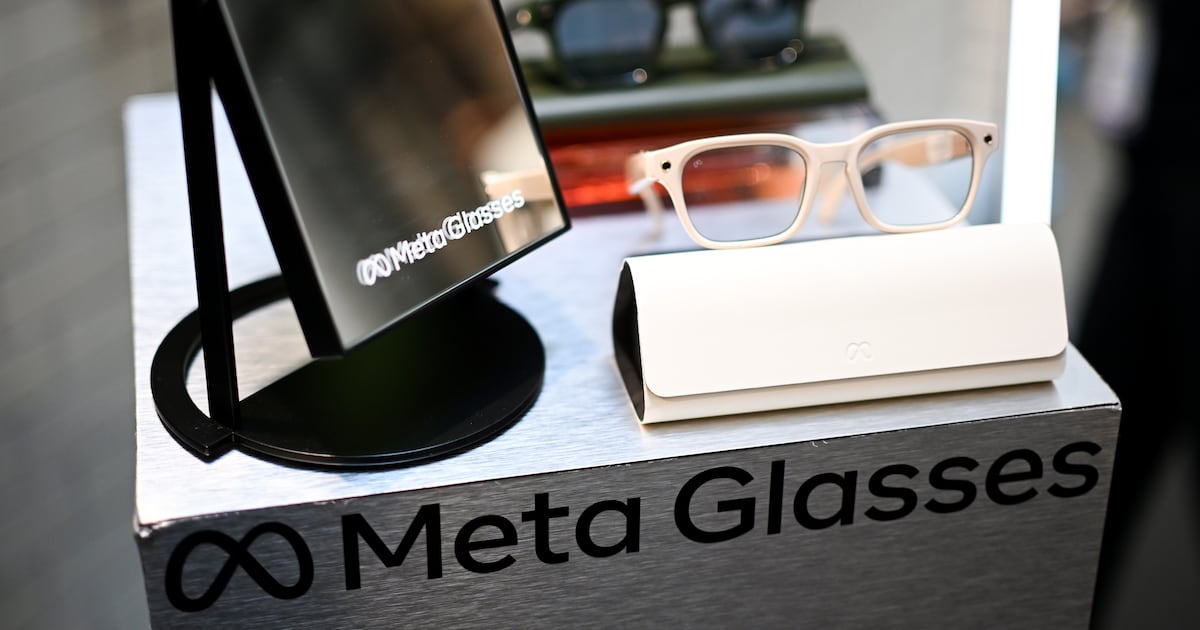
    Options include the standard Meta Glasses, the second and third generation Ray-Ban Meta Glasses and Oakley Meta HSTN performance glasses.

    They are able to perform smart functions, from real-time translation in a number of languages and recommendations to search queries to hands-free calls, photo capturing and video recording, and audio.

    Etisalat says it is the first telecom company in the Middle East and North Africa to offer the Meta smart glasses, serving as “another step in expanding Etisalat UAE’s device portfolio around how people progressively want to live, work, create and stay connected”, said Tamer Eltoni, senior vice president at etisalat UAE.

    “AI wearables are opening up a new way for people to interact with technology, making access more immediate, intuitive and hands-free,” he said.

    California-based Meta has said privacy is built into its glasses and that it will continue strengthening its protections. In the UAE, owning smart glasses is permitted but using their recording features without consent can result in penalties.

    Aside from the Meta smart glasses, etisalat also offers smartwatches and smart rings.

    The telecoms company is pushing for AI-led growth, with the launch of a strategic project to develop and expand digital infrastructure capacity within the UAE and abroad.

    Etisalat has also announced a commercial service that increases upload speeds to smartphones threefold, boosting the UAE’s push towards the next-generation 6G standard for mobile communications.

    Source link

  • Tesla Starts Humiliating Prospect of Returning Cybertruck Deposits It Couldn’t Deliver On

    Tesla Starts Humiliating Prospect of Returning Cybertruck Deposits It Couldn’t Deliver On

    Hot off the heels of a devastating defeat in his attempts to influence the midterm elections, Tesla CEO Elon Musk announced that his EV maker would begin winding down production of its widely-reviled Cybertruck.

    In a tweet last week, Musk said that the company was looking to “make room for increased Cybercab production” at its massive Gigafactory in Texas in the “middle of next year.”

    Despite sales circling the drain for years now, Musk said that the number of orders for the pickup “far exceeds” the company’s capacity to build them — meaning, he claims, that Tesla has must “return deposits for a lot of people.”

    The basic laws of economics dictate that Musk is fudging the details. If demand for the brutalist pickup was really that high, and the company was really able to produce enough for all of them, it would obviously be doing so instead of nixing the entire line. Put simply, the billionaire is almost certainly engaging in some tricky rhetoric to make it sound like buyers are lining up around the corner for one — which couldn’t be further from the truth.

    Musk appears to be equating deposits with orders, which seems disingenuous at best, considering capacity to build them didn’t appear to be a problem when he sold $131 million worth of Cybertrucks to himself earlier this year. Countless deposits likely never converted into actual sales as potential buyers realized the sheer amount of problems the truck had.

    In 2019, when the vehicle was first announced, Tesla claimed it had received 250,000 preorders. Considering the EV maker only ever delivered just over 70,000 of them — a far cry from the quarter million trucks a year Musk once promised — the number of people getting cold feet likely grew quickly in the four years it took for the company to get production going.

    As of right now, we don’t know how many orders — if any — are outstanding and how many $100 deposits Tesla will have to issue refunds for. But it’s certainly a humiliating end to one of the biggest flops in automotive history.

    Musk also refuted that the Cybertruck was “unprofitable,” but suggested that the “opportunity cost of the complexity of Cybertruck is vastly outweighed by the value of incremental Cybercab production.”

    People on his social media platform didn’t buy the claim.

    “LOL — no company shuts down a profitable product,” one user replied. “Just admit the Cybertruck has been one of the all time stinkers and move on. People might start to respect you a bit more.”

    In reality, barely anybody actually wants to buy one of the trucks. The Cybertruck has quickly become a physical manifestation for all of the pent-up hatred directed at the almost-trillionaire. Beyond the truck becoming a major target for vandalism and open mockery, the vehicle has also been haunted by near-constant technical issues and has been recalled in the US a whopping eleven times over its short production run.

    More on the Cybertruck: The Death of the Cybertruck Proves That Elon Musk Can’t Actually Predict the Future

    Source link

  • New M grant allows the University of Oxford and Boston Children’s Hospital to lead Genetic Medicines Hub within ARIA ecosystem

    New $46M grant allows the University of Oxford and Boston Children’s Hospital to lead Genetic Medicines Hub within ARIA ecosystem

    The University of Oxford and Boston Children’s Hospital, with collaboration from The Jackson Laboratory and N=1 Collaborative, have been selected to establish a new Genetic Medicines Hub, one of six research hubs within the Aligning Research to Impact Autism (ARIA) ecosystem. The Genetic Medicines Hub is a collaborative research effort led by the University of Oxford and Boston Children’s Hospital, that is developing a scalable platform to design, test, and accelerate genetic medicines, including antisense oligonucleotide (ASO) therapies, for children with specific genetic disorders causing neurodevelopmental disorders (NDDs), including profound autism. The $46M multi-year commitment brings together leading expertise in genomics, neuroscience, and translational medicine.

    New $46M grant allows the University of Oxford and Boston Children’s Hospital to lead Genetic Medicines Hub within ARIA ecosystem
    Stephen Sanders. Image Credit: University of Oxford

    While advances in genetic sequencing have rapidly increased understanding of the biological basis of many neurodevelopmental conditions, translating these discoveries into scalable therapeutic strategies remains a significant challenge. ARIA is leading the way in an effort to address this critical bottleneck in the field.

    At the core of the program is the development of a platform-based approach to genetic medicines, focused initially on antisense oligonucleotides (ASOs), which are short, synthetic molecules that can be designed to interact with RNA and modify gene expression. ASOs have been used to successfully treat disorders of the central nervous system, offering an opportunity for rapid translation.

    Rather than pursuing one condition at a time, the Genetic Medicines Hub will establish systematic methods to design, test, and optimize these molecules across multiple genetic targets. This approach is intended to improve efficiency, reduce duplication, and enable progress across a wider range of rare conditions.

    The program will initially focus on a set of genes associated with NDDs, including ARID1B, CHD2, GRIN2B, RNU4-2, SCN2A, and SLC6A1, working hand-in-hand with another research hub, the ARIA IMPACT Network and gene-specific Patient Advocacy Groups.

    The Genetic Medicines Hub will combine cutting-edge experimental and computational capabilities, including:

    • High-throughput laboratory systems to scale molecular testing
    • Novel screening approaches to assess biological impact at the protein level
    • AI-informed design tools to optimize candidate molecules
    • Integrated data platforms to enable sharing of results, protocols, and insights

    Together, these elements are designed to create a reproducible, scalable pipeline for genetic medicine development and to generate a shared resource for the wider research community.

    The Hub brings together complementary strengths across Boston Children’s Hospital, the University of Oxford, The Jackson Laboratory and N=1 Collaborative, combining expertise in human genetics, functional genomics, clinical research, and therapeutic development.

    Stephan Sanders, Professor of Paediatric Neurogenetics at the Department of Paediatrics in the University of Oxford, said: “This program represents a step change in how we approach developing genetic medicines. By building a platform that can be applied across multiple genes, we can move beyond fragmented efforts and begin to scale our impact. Importantly, this work is grounded in collaboration and open science, ensuring that the knowledge generated benefits the broader community.”

    Tim Yu, Associate Professor of Paediatrics at the Boston Children’s Hospital, added: “Genetic neurodevelopmental disorders have long faced a bottleneck between gene discovery and therapeutic development. By uniting world-class teams and building a shared, transparent blueprint for ASO innovation, we aim to make that bottleneck disappear. This Genetic Medicines Hub will allow us to move from scientific insight to actionable therapies with unprecedented speed – and to do so in a way that benefits the entire field.”

    For rare disease patients, the biggest barrier has never been scientific ambition, it’s been data. JAX has built its rare disease mission around open, deeply annotated genomic resources, and this collaboration is a direct extension of that commitment, ensuring rare conditions have the depth of evidence needed to drive genetic medicine development forward.”

    Cat Lutz, Vice President of the Rare Disease Translational Center at The Jackson Laboratory 

    Nicole Nolen, Executive Director of N=1 Collaborative, said: “Reaching more patients requires more than advancing individual programs – it requires a field that learns together. This collaboration creates an opportunity to turn what is learned into shared approaches that can be adopted and built upon across the community.”

    Together, the teams aim to develop safe and effective ASO therapies for several NDDs while establishing a sustainable framework for advancing genetic medicines across a much wider range of conditions.

    Source link

  • Best early Black Friday T-Mobile deals 2026: Shop free phones from Apple, Samsung, Google

    Best early Black Friday T-Mobile deals 2026: Shop free phones from Apple, Samsung, Google

    The best early Black Friday T-Mobile deals:


    iPhone 18 Pro


    Samsung Galaxy S26+


    Google Pixel 11 Pro


    Motorola razr+

    It may be a couple of weeks until the big day, but this year Black Friday seems to be kicking off earlier than ever. Deals are already starting to appear on everything from household essentials to tech and gaming. These early offers are particularly useful if you’re looking to finally upgrade your phone.

    T-Mobile is one retailer that has dropped discounts early, with a range of Black Friday deals already live.

    It’s worth checking the terms and conditions before jumping on a deal, as many of these offers require a new line, a qualifying plan, or a trade-in to unlock the full discount. Some savings are also delivered through monthly bill credits rather than an upfront price reduction.

    The best tech deal this week

    The Apple iPhone 18 Pro is free right now with T-Mobile

    Best Apple deal at T-Mobile

    $0
    at T-Mobile

    $1,199.99
    Save $1,199.99


    Why we like it

    You can get the iPhone 18 Pro 256GB for free with T-Mobile, thanks to $1,200 in bill credits spread across your monthly payments. To qualify, you’ll need to open a new line, transfer your number from an eligible carrier (such as AT&T or Verizon), and sign up for a qualifying plan costing at least $95 per month with AutoPay. You’ll also need to keep your line active and continue with the financing agreement to receive all the credits. If you cancel early or pay off the phone ahead of schedule, you could lose the remaining credits.

    More Apple deals at T-Mobile

    Best Samsung deal at T-Mobile

    $0
    at T-Mobile

    $1,199.99
    Save $1,199.99


    Why we like it

    This deal gets you the Samsung Galaxy S26+ 256GB completely free, with T-Mobile offering up to $1,200 in monthly bill credits to cover its $1,199.99 retail price. To qualify, you’ll need to open a new voice line and sign up for a qualifying plan costing at least $95 per month with AutoPay. You’ll need to keep the line active and stay on the financing agreement to receive the full discount. Unlike some of T-Mobile’s other phone offers, this one doesn’t require you to transfer a number from another carrier.

    More Samsung deals at T-Mobile

    Best Google deal at T-Mobile

    $0
    at T-Mobile

    $1,099.99
    Save $1,099.99


    Why we like it

    Another “for free” deal: you can wave goodbye to the $1,099.99 retail cost and get the Google Pixel 11 Pro (256GB) for nothing thanks to $1,100 in monthly bill credits. To qualify, you’ll need to open a new voice line and sign up for a plan costing at least $75 per month with AutoPay. You’ll also need to have two Picks for the duration of the financing agreement and keep your new line active and in good standing to receive all the credits. Just bear in mind that there’s a $35 device connection charge, and you’ll pay tax on the phone’s full price upfront.

    More Google deals at T-Mobile

    Best Motorola deal at T-Mobile

    $0
    at T-Mobile

    $999.99
    Save $999.99


    Why we like it

    The Motorola razr+ is one of the many phones you can pick up for nothing in T-Mobile’s Black Friday sale. Its $999.99 retail price is covered by up to $1,000 in monthly bill credits, although getting the deal means opening a new voice line and signing up for a plan costing at least $75 per month with AutoPay. You’ll also need to put two of your plan’s Picks towards the promotion for the length of the financing agreement. A $35 device connection charge applies, and tax is due upfront on the full price. Remember, the line needs to stay active and in good standing for you to receive all the credits.

    More Motorola deals at T-Mobile

    Source link

  • Fox News Takes Massive Ratings Hit As It Triples Down on Pro-Data Center Coverage

    Fox News Takes Massive Ratings Hit As It Triples Down on Pro-Data Center Coverage

    It’s obvious by now that data centers are political kryptonite. Across the US, bipartisan backlash to data center projects has upended city councils, while billionaire developers and industry-aligned political candidates are being routed by grassroots opposition.

    But beyond those running for or occupying political office, the backlash is also taking a toll on news networks viewed as pushing pro-data center propaganda. Case-in-point is Fox News, which has tailed president Donald Trump in embracing the AI industry’s narrative on data centers — an editorial decision which happens to coincides with viewers fleeing the network in droves.

    According to a new analysis by Media Matters for America, coverage spinning data centers in a positive light shot up by a staggering 420 percent across Fox News over the past two months. On August 18, a memo issued by the National Republican Senatorial Committee went out to party insiders and top corporate executives, warning that opposition to data centers presented a major challenge to the party’s victory in the upcoming US midterm elections.

    As Media Matters notes, Fox News quickly fell in line, increasing the total number of pro-data center claims to 203 between August 19 and September 2, compared to just 39 from August 5 through August 18.

    Bizarre claims of “far-left activists” and Chinese government propaganda likewise proliferated, teeing up Republican faithfuls to blame a boogeyman for the rise in anti-data center rhetoric. Surprisingly, the tactic appears to have backfired, as even the network’s most devoted acolytes reacted with disgust.

    “Just in case there were any dummies who thought Fox News cares what voters want,” one disaffected viewer wrote in the YouTube comments under an extremely sunny Fox and Friends segment on data centers. “They’ll always protect corporate interests over conservative interests and (perhaps) even over protecting Trump in certain cases.”

    “For the first time I’m going to say, FOX is GREEDY,” another angry viewer commented. “For people who like to say they believe in God, [they] sure are failing on following his word.”

    Recent reporting by Status found that viewership of Fox News is in freefall following the shift — plummeting down 27 percent across the month of October to an average of 1.1 million total viewers. That data comes from media tracking company Nielsen, which also noted that viewership across the months of July, August, and September shriveled by 16 percent compared to the previous three months. Viewers in the 24 to 54 age range — a crucial demographic — tumbled 24 percent over the period.

    While there are likely a litany of other reasons for the shift, it’s nonetheless a striking correlation that coincides with a broader falling out with Trump as president. American voters overwhelmingly disprove of his handling of the economy, not to mention the extremely costly war on Iran.

    With a crucial midterm election coming up, it remains to be seen how the backlash against the right’s embrace of third rail issues like data centers will cost Republicans at the polls.

    More on media: You Know Those Three Brothers Who Buy Struggling News Sites and Turn Them Into AI-Powered Content Farms? It Turns Out One of Them Has Extensive Connections to Ghislaine Maxwell

    Source link

  • How To Crack Resale’s AI Algorithms

    How To Crack Resale’s AI Algorithms

    The next time someone asks ChatGPT to find them a designer handbag, the answer could be a previously owned version, even if they weren’t originally looking to shop secondhand.

    Rémi Bouchez, who was appointed as Vestiaire Collective’s new CTO in March, says the resale platform is working to make its product listing available to OpenAI’s broader agentic shopping systems, which would allow secondhand pieces to appear alongside new products in AI-generated recommendations. The proposed plan follows Vestiaire Collective quietly launching a dedicated app plugin within ChatGPT last month, allowing shoppers to search its pre-owned luxury inventory and compare products using conversational prompts within the chatbot. A shopper searching for a new Prada bag could now conceivably be shown a pre-owned version at a fraction of the price, or an archival design that is no longer available firsthand.

    At a time when luxury consumers are questioning rising prices, this could significantly impact the shopping journey. And this is just one part of a wider transformation in how secondhand fashion is discovered. Resale platforms are simultaneously rebuilding their own search and recommendation algorithms, using AI to understand product images, interpret shoppers’ tastes and determine which listings get seen. As a result, the rules of discovery are changing on two fronts: within resale marketplaces themselves, and through the AI assistants that could increasingly direct shoppers towards them.

    Bouchez believes that if AI agents like Muse, Instinct and Duet reach mainstream adoption, it could fundamentally change how luxury shoppers weigh up their options.

    “These agents are capable of ingesting a ton of information — way more than human shoppers can. They remember user preferences over time, and they can catch things like discreet terms and conditions or shady seller behaviors and put them in front of a user who would have otherwise missed them,” says Bouchez. He explains how an AI agent could compare a Prada bag across several platforms, assessing its condition, authentication details and seller reliability before recommending the best value option, raising the stakes for resellers.

    It’s an opportunity resale platforms have long been waiting for. Finding a particular product secondhand has traditionally meant scrolling through multiple marketplace apps, deciphering inconsistent descriptions and comparing endless individual listings. AI now promises to take much of the legwork out of that hunt.

    Across the resale industry, rival platforms are investing in both forms of discovery. Depop has enabled shoppers to search its marketplace through Apple’s Visual Intelligence on supported iPhones. Last month, The RealReal introduced its own AI shopping assistant, Ask TRR, built on Google Gemini AI that enables shoppers to search in natural language — or by uploading images of products they’ve seen for visual search — while learning shoppers’ preferences. Speaking on the company’s third-quarter earnings call last week, CEO Rati Levesque said Ask TRR’s early adopters spend 20% more per transaction than non-users. The RealReal is also preparing for shopping journeys that begin outside its own platform. A spokesperson tells Vogue Business the company is restructuring data on its 1.5 million listed items to make them easier for external AI agents to find and recommend.

    Source link