Category: Science & Tech

  • “Everybody has access today. I think that’s beta”: PE investors say AI’s edge is in d

    “Everybody has access today. I think that’s beta”: PE investors say AI’s edge is in d

    Every private equity firm now has access to the same AI models. What still sets a firm apart, according to investors from Vista Equity Partners, Veritas Capital and Tikehau Capital, is not the models but the data, the context and the people using them.

    That was the consensus of a panel on AI in private equity at the Israel Private Markets Summit (IPM), the main annual conference of the institutional capital market for alternative investments, which was held on Tuesday at the Peres Center for Peace and Innovation in Tel Aviv. Moderator Ofir Reiner Sigler, Head of Direct and PE Investments at Menora Mivtachim Group, framed the discussion as a split between “AI alpha” and “AI beta.”

    1 View gallery

    כנס לידר שוקי הון - פאנל משתתפים מימין: ניקולא שאופלה , ססיל מאייר לוי , האנה דולגין ו אופיר ריינר סיגלרכנס לידר שוקי הון - פאנל משתתפים מימין: ניקולא שאופלה , ססיל מאייר לוי , האנה דולגין ו אופיר ריינר סיגלר

    Panel participants, from right: Nicolas Schaufele, Cécile Mayer-Lévi, Hannah Dolgin, and Ofir Reiner Sigler.

    (Photo: Orel Cohen)

    Nicolas Schaufele, Managing Director at Veritas Capital, drew the line plainly. “Everybody has access today. I think that’s beta,” he said. Integration “will commoditize over time,” he added, while the alpha comes from the proprietary data inside a firm’s portfolio companies and knowing how to harvest it.

    Hannah Dolgin, Senior Vice President at Vista Equity Partners, made a similar case. “AI models give businesses access to general intelligence,” she said. “I think what really sets us apart is the access to context, trust, and scale.” She pointed to Duck Creek, a Vista portfolio company that supports underwriting for property and casualty insurers. “They’re not giving that information away to general purpose models,” she said.

    Asked what had surprised them most about AI, the panelists pointed in the same direction. Schaufele said that a year ago he would have named hallucinations, but “today that’s mostly solved.” The gap now is the firms themselves. “What’s lacking is really us right now,” he said, pointing to workflows, willingness to adopt AI and the way data is structured.

    For Dolgin, the surprise was speed. Over Vista’s 25 years, she said, technological change took longer to reach the business model. Today, “the speed of adoption has been much faster than we’ve historically seen.”

    Cécile Mayer-Lévi, Head of Private Debt at Tikehau Capital, said AI now shapes how her team evaluates credit. “It’s part of the underwriting,” she said. Every deal is assessed for whether AI is a risk or an opportunity.

    On cost cutting, Mayer-Lévi cautioned that savings are not automatic, citing a large insurer that rolled out a copilot tool, saw no efficiency gains and switched it off. The real gains, she argued, come from freeing people from repetitive work, and from recognizing the difference between automating a task and replacing a job.

    Schaufele said the effect reaches beyond tech. At one Veritas manufacturing portfolio company, AI was used to retool the entire production process, cutting the time to launch new products “from two years to six months” and increasing yields “by up to 30%.”

    Revenue is the less proven side. “The cost side is a given,” Dolgin said, noting that all of Vista’s portfolio companies run AI cost-saving initiatives. The growth play, she said, is tapping labor spend as a new addressable market and turning existing software into agentic products, using what Vista calls its “agentic factory” to place engineers inside portfolio companies. Schaufele was more measured: revenue is accelerating where companies hold data assets, but it is not yet clear “how much of it is AI driven versus just other innovations.”

    Reiner Sigler raised the question of junior professionals, whose groundwork is increasingly handled by AI. Mayer-Lévi said the era of long, painful hours on presentations that hardly anyone read is ending. Schaufele saw an upside: with less number-crunching, juniors may join management meetings sooner and “get exposed earlier to judgment.”

    By the end, Reiner Sigler noted, the discussion had come full circle, back to trusting the judgment of people as the real source of alpha. Dolgin pointed out that models produce probabilistic rather than deterministic outcomes, which makes a human in the loop even more essential. As firms come to rely on the same tools, the question becomes how to avoid drawing the same conclusions. Schaufele’s answer was to treat the model like a red team, forcing it to challenge the firm’s underlying assumptions, then reviewing past mistakes together. “You need to be careful and not just rely on the models blindly,” he said.


    Source link

  • Innocent People Are Being Accused of Shoplifting by Faulty AI-Facial Recognition Systems at an Alarming Rate

    Innocent People Are Being Accused of Shoplifting by Faulty AI-Facial Recognition Systems at an Alarming Rate

    From New York City to the streets of Tokyo, creepy AI-facial recognition security systems are quickly becoming a common sight across the world. Unfortunately for many, the tech is nowhere near ready for the responsibility of live use as the troubling rise of false-positive matches makes clear.

    In the United Kingdom, AI surveillance systems in retail stores have led to a surge in customers being wrongly accused of shoplifting. TechRadar highlighted a number of recent cases throughout the country, where shoppers say false accusations have left them shaken, with a feeling that their privacy had been horribly violated.

    As one woman identified as Mary told the publication, her husband has been socially “isolated” after a quick jaunt into a Home Bargains store for vitamins went awry. When the stores’ system flagged the anonymous man as a shoplifter, the couple was forced to leave by management, seemingly without any chance to refute the accusation.

    “I was scared to go into a shop,” the man told TechRadar.

    Another man was said to be “shaking from head to toe” following his wife’s removal from a Budgens chain store for the crime of stealing “loads of meat” days before — an accusation complicated by the fact that they hadn’t set foot in the store for months.

    In these and other cases, the publication reports a dizzying labyrinth of corporate bureaucracy and vague insinuations that leave innocent people unable to access their local businesses, and with little recourse to clear their name.

    In the UK, individuals can file Subject Access Requests, or SARs, which are like US-Freedom of Information Act requests but for private companies. Though the avenue technically exists for those wrongly accused of shoplifting, it’s a massive undertaking just for the hope of clearing your name — and requires handing over even more private information to private companies.

    As head of advocacy at civil liberty group Big Brother Watch Jack Coulson told TechRadar, it’s “the stuff of Kafkaesque nightmares to be trapped in a maze of bureaucracy and forced to hand over even more personal data just to be told the accusation.”

    More on facial recognition: Innocent Man Freed After Spending Over 50 Days in Jail Due to Horribly Inaccurate AI Facial Recognition Tech

    Source link

  • G2 Digital launches quad-GPU 2U server

    G2 Digital launches quad-GPU 2U server

    UK-manufactured 2U Q-Power offers firms an on-premise alternative to premium cloud AI services


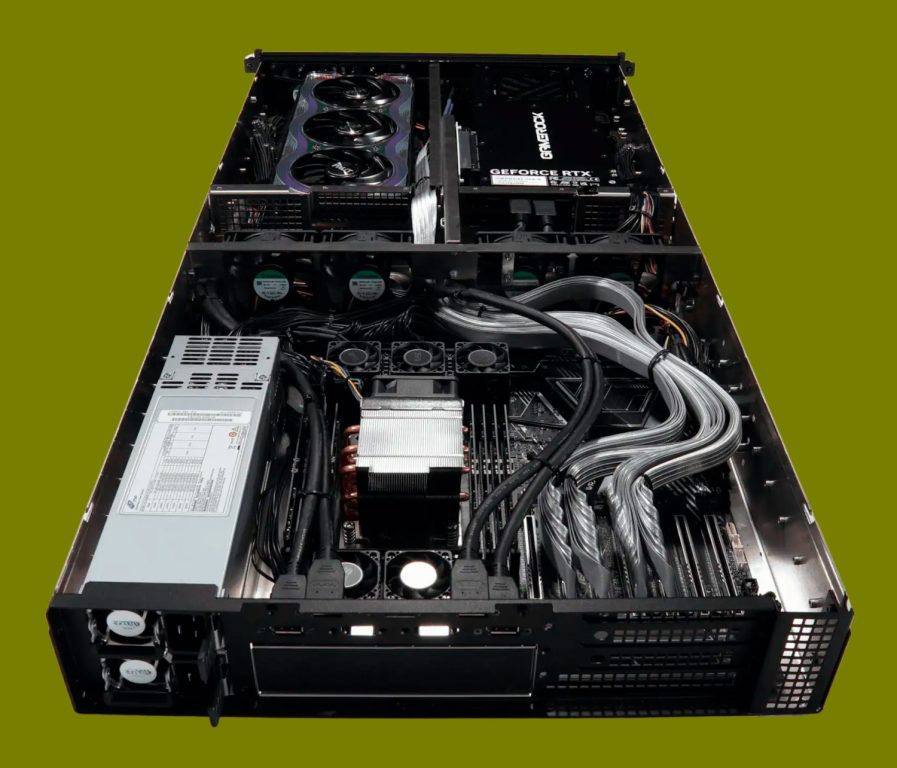
    G2 Digital, a UK specialist in custom-built rack-mount computers, has launched the 2U Q-Power, a high-performance GPU server designed for complex AI workloads and rendering.

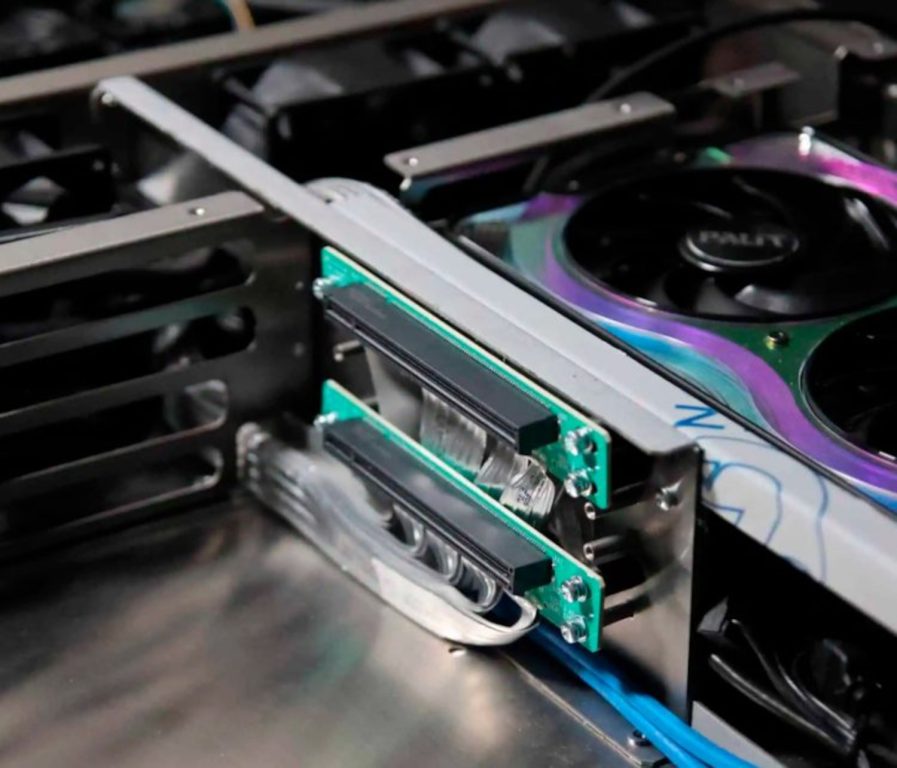
    The system can accommodate up to four dual slot Nvidia RTX GPUs, offering twice the capacity of most conventional 2U servers and greater computing density within a rack. This is made possible by a custom chassis design that mounts the GPUs horizontally, parallel to the motherboard.

    When configured with four Nvidia RTX Pro 6000 Blackwell Max-Q GPUs, the Q-Power delivers 384 GB of combined GPU memory, enabling organisations to run demanding AI workloads entirely on-site. This includes large language models (LLMs) with 70 billion parameters at full precision, as well as significantly larger models using lower-precision formats and quantisation.

    According to G2 Digital, the system can deliver up to 18 times lower costs per million tokens than premium cloud AI APIs when operating under sustained workloads. The company also claims response latency can fall from around 1.5 seconds with cloud APIs to less than 40 milliseconds when running AI locally.

    Keeping AI workloads on-premise, says G2 Digital, gives organisations greater control over their data, allowing them to train or fine-tune models using proprietary information without having to send that data to external cloud providers. This can help businesses address data sovereignty and security requirements and support compliance efforts under frameworks such as GDPR, HIPAA and SOC 2.

    The 2U Q-Power can be configured with AMD Epyc or AMD Ryzen Threadripper processors, and up to two Nvidia GeForce RTX 5090 GPUs. The system is designed and manufactured in the UK.


    Related articles:

    Source link

  • House House clarifies use of AI tools in Big Walk’s “final stage of development”

    House House clarifies use of AI tools in Big Walk’s “final stage of development”

    House House has clarified it used AI tools “sparingly” during the “final stretch of development” on Big Walk to address “difficult technical challenges and bugs.”

    The Australian indie studio released a statement to Aftermath after a group of jurors for the 2027 Independent Games Festival (IGF) said they would not vote for any game developed with generative AI.

    Big Walk was one of the games submitted for the IGF. Submissions closed on September 13, with finalists to be announced in January 2027.

    In a social media post, the IGF jurors said they had seen a “significant increase in the number of submitted games developed with generative AI tools.”

    “This year we are declining to vote for any game that uses generative AI in any capacity. We urge the IGF to adopt a strong anti-AI policy for future years that disallows games containing any AI-generated work.”

    House House explained its use of AI tools, including the implementation of LLMs “to research, via chatbots, issues encountered with third-party code.”

    “In some cases, snippets from LLM responses were copied as a starting point to be modified into game code – we’d estimate that well under 0.1% of Big Walk’s code had anything to do with this usage, and generative AI was not used in any other context when making the game.”

    House House provided the following explanation, noting it wrote “a version of” this disclosure for the IGF, as it was a suggested part of Big Walk’s submission:

    “We needed to cull shadow casters by distance from the camera, but Unity URP only allows culling shadow casters by distance in camera forwards, so shadow casters behind the player were being rendered at an infinite distance.

    This made our game run 50% slower for around 20 seconds at sunrise and sunset. We researched the problem extensively, and we looked at the URP code ourselves, but we couldn’t find a way. Then, we were able to speak directly to an engineer at Unity, who asked around and ultimately concluded that what we wanted wasn’t possible.

    Finally, we posed the question to an LLM chatbot. After a few dead ends, it suggested a possible fix, and while we had to modify the suggestion extensively, it worked. This fix represented about 10 lines of code inside URP.”

    House House stated it has not disclosed this information on Steam because “the platform does not request disclosure of code or chatbot usage. We are posting this disclosure as it has become a matter of public interest.”

    “This is not an endorsement of, or argument for, the use of AI tools, however minimal,” the developer said.

    “We have some concern that voluntary disclosures like this might contribute to the normalisation of this technology, or its treatment as ‘inevitable’. We support the work of those who are trying to limit the harm generative AI is doing to video games and our world, and apologise that Big Walk’s LLM usage may not meet their standards.”

    “Big Walk was developed without an internal AI usage policy in place, and we consider that lack of policy a failure. We will work to have a more comprehensive policy going forward.”

    Source link

  • Trump Living in Alternate World of AI Slop, Insiders Say

    Trump Living in Alternate World of AI Slop, Insiders Say

    President Donald Trump’s obsession with AI is even grimmer than we believed.

    The commander-in-chief has hardly hidden his enchantment with AI slop, regularly posting bizarre AI videos glorifying himself, denigrating his foes, and at times, attempting to rewrite reality. 

    But a behind-the-scenes look suggests that Trump is now completely lost in an AI alternate reality of his own making.

    While Republicans scramble and prepare for what could be a disastrous midterm election season for their party, sources told the New York Times that Trump is cloistering himself in a world made of sycophantic press coverage, disparaging clips about his foes, and, not least of all, “AI slop,” in the words of one White House official.

    One person keeping him hooked on the stuff is Bill Pulte, a top federal housing official. According to the reporting, Pulte regularly joins Trump in his cabin on Air Force One and shows him memes — some of which are almost certainly AI-generated — posters, and documents related to the mortgage industry. One administration official even described Pulte as a “court jester.”

    Trump is now so isolated from critical coverage that his indignation and incredulity when encountering it can be petulant and extreme. When comedian Bill Maher — who you wouldn’t describe as particularly left wing — joked about Trump’s ties to Jeffrey Epstein and his affinity for Russia, Trump’s response was absurdly disproportionate: a maniacal 1,300 word rant raging against Maher that he posted on his website Truth Social, which breaking news accounts on social media struggled to capture in one screenshot.

    The signs of his AI infirmity have long been apparent. But some worry that AI is playing a direct role in the president’s decision-making, too. A recent scoop from TIME magazine reported that Trump is so enthralled by Elon Musk’s chatbot Grok that his conversations with it encouraged him to invade Venezuela and capture its president Nicolas Maduro.

    Top Democrats are now demanding to see those Grok conversations and others.

    More on AI: Trump Addresses United Nations to Declare That the United States Is Now Calling Artificial Intelligence “Super Intelligence” in “All Official Documents”

    Source link

  • Quantum Brilliance Foundry Develops Diamond Quantum Tech

    Quantum Brilliance Foundry Develops Diamond Quantum Tech

    Quantum Brilliance is redefining the path to scalable quantum computing by focusing on the connection between device performance and material specification within its Quantum Diamond Foundry. Dr. Marcus Doherty, Chief Technology Officer, received the 2013 Chancellor’s Prize for Excellence for his PhD thesis on the nitrogen-vacancy colour centre in diamond.

    Doherty concurrently leads technology development at Quantum Brilliance while serving within the Future Land Warfare Branch of Army Headquarters, overseeing the implementation of Army’s Quantum Technology Roadmap. “In many ways, that is increasingly how I think about what QDF was always meant to be: the point where the science of quantum materials meets the discipline required to turn them into technologies that can be built, repeated, and scaled.”

    Dr. Marcus Doherty Pioneers Diamond Quantum Technology

    Quantum Brilliance established its Quantum Diamond Foundry (QDF) a year ago with the goal of creating a dedicated materials and manufacturing infrastructure for diamond quantum technology, moving beyond laboratory demonstrations. Doherty views QDF as a system where device physics dictates material requirements, those requirements guide suppliers, and the resulting knowledge feeds back into the development of future devices. This approach allows the company to begin with desired device performance parameters, sensitivity, contrast, or linewidth, and then use modeling to determine the necessary material properties and tolerances, Quantum Brilliance says.

    Metrology enables Quantum Brilliance to test whether a diamond possesses the required properties and pinpoint areas for improvement. The company is focused on translating metrology and modeling into repeatable tools, assisting suppliers in refining their processes and ensuring consistent reproduction as production scales.

    Doherty believes this infrastructure, encompassing scientific knowledge, measurement, modeling, fabrication, suppliers and personnel, will support the growth of a diamond quantum industry with increasing capability and global reach. The establishment of QDF signifies a shift from purely academic research to industrial production, capturing scientific understanding in a scalable and reproducible form.

    Doherty emphasizes the importance of connecting materials capabilities to the evolving generations of chips being developed at Quantum Brilliance, ensuring a continuous cycle of innovation and improvement, according to the company. He expressed confidence that the foundations laid in Melbourne will support a growing diamond quantum industry, stating, “I am more convinced than ever that the foundations taking shape in Melbourne will support a diamond quantum industry that grows in capability and global reach over time.” The company’s long-term vision extends to enabling quantum computing “anywhere,” a goal supported by its integrated approach to materials science, manufacturing and device development.

    Quantum Diamond Foundry Focuses on Device-Informed Materials

    Quantum Brilliance has shifted its focus within the Quantum Diamond Foundry (QDF) toward a device-centric approach to materials science, prioritizing the characteristics needed for functional quantum devices over simply improving diamond growth techniques. Initial plans for QDF, established a year ago with investment from the National Reconstruction Fund and Breakthrough Victoria, emphasized building internal diamond growth capabilities, but the company now prioritizes a system integrating measurement, modeling, processing and growth, the company says.

    This evolution reflects a growing understanding of how to best translate research into scalable quantum technologies. The foundry now operates as a system where desired device performance, such as sensitivity, contrast, or linewidth, drives material specifications, rather than the other way around. This process isn’t simply about creating better diamonds. It’s about creating diamonds tailored to specific applications and consistently reproducing those materials as production scales.

    QDF Integrates Measurement & Modeling for Material Validation

    This shift signifies a deliberate focus on translating scientific understanding into repeatable industrial processes, moving beyond initial facility setup to practical application. Quantum Brilliance now applies an approach, connecting device performance directly to material specifications through integrated measurement and modeling, the company states. Metrology then verifies whether a diamond possesses these properties, identifying discrepancies that highlight areas for improvement. Two diamonds appearing similar based on supplier specifications can exhibit markedly different behavior within a quantum device, and physical models help Quantum Brilliance interpret these differences, linking material measurements to device performance.

    Quantum Brilliance can now determine which material characteristics require modification, the extent of those changes and how to confirm successful improvement. When modeling and measurement data diverge, this discrepancy itself provides valuable insight, revealing gaps in current understanding and guiding future research.

    Extended Supply Chain Builds Sovereign Quantum Capability

    Quantum Brilliance is now applying established measurement and characterization routines to address real-world material challenges, moving beyond initial facility setup after twelve months of operation at its Quantum Diamond Foundry (QDF). The facility’s initial emphasis on internal diamond growth capabilities has evolved, with the company now prioritizing a view of the manufacturing ecosystem. This shift reflects a broader strategy to connect scientific discovery with scalable production techniques, essential for translating quantum materials into functional technologies.

    The company’s approach to supply has undergone a significant transformation during the first year, expanding beyond internal development to include collaboration with existing manufacturers and processing partners. Quantum Brilliance is actively working with these entities to develop, test, and qualify the specific materials required for its devices, encouraging a more robust and reliable supply chain.

    This collaborative model extends to partnerships with organizations including L3Harris, Monash University, RMIT, La Trobe University, Chromos Labs, Tessara Therapeutics and the University of Melbourne, spanning diverse applications while using common foundations in quantum materials and device development, by the company’s account. Australia’s decades-long investment in quantum research is now being used through QDF, which acts as a bridge between fundamental research and the supply chain needed to support a growing industry, both domestically and internationally.

    This connection is not limited to research institutions. It’s designed to attract further investment and technical expertise, anchoring manufacturing knowledge and companies within the region while serving global markets. The focus is currently on increasing the availability of material for quantum magnetometry, a key application driving near-term commercialization. Simultaneously, Quantum Brilliance is developing the tools and manufacturing pathways necessary to extend these advancements into future sensing technologies and, ultimately, quantum computing.

    This progression requires a transition from simply understanding material requirements to actively verifying and qualifying diamond against those specifications, ensuring consistent performance and reliability. Doherty describes the developing infrastructure as “a network of scientific knowledge, measurement, modeling, fabrication capability, suppliers, and people, all working together to help take quantum anywhere.” This interconnected network is designed to embed scientific understanding into design tools, measurement methods, and manufacturing processes, allowing others to build upon existing knowledge and accelerate innovation.

    Stay current

    See today’s quantum computing news on Quantum Zeitgeist for the latest breakthroughs in qubits, hardware, algorithms, and industry deals.

    Source link

  • Access4 adds Microsoft Teams calling to SASBOSS platform…

    Access4 adds Microsoft Teams calling to SASBOSS platform…

    Alex Smith

    By Alex Smith |

    Access4 has integrated Microsoft Teams calling into its SASBOSS platform, enabling channel partners to sell three voice platforms through a single wholesale service.


    The UK-based cloud communications provider has added Teams calling through UCTeams, its Microsoft-certified operator connect service. The integration allows partners to offer customers a choice of Microsoft Teams calling, hosted voice or a combination of both, while managing quotations, provisioning and billing through SASBOSS.


    The platform is designed to simplify the management of multiple voice services, which have traditionally required separate suppliers, portals, contracts and invoices. Access4 says the integration will allow partners to serve businesses with different communications requirements without managing multiple wholesale relationships.


    “Teams calling on its own is a price comparison, and nobody needs another one of those,” said Jonathan Walker, CEO UK and Ireland at Access4. “The margin sits in what goes alongside it. Bringing Teams into SASBOSS means partners can sell it next to the voice services they already offer, then build each account out with contact centre, recording and integrations from the same platform. That is how a voice line becomes a long-term customer.”


    SASBOSS is organised around three areas: unified communications, customer experience and user experience. Partners can use the platform to add contact centre services within Teams, call recording through Dubber and other user experience tools. Access4 operates a wholesale billing model, invoicing partners rather than end customers. This allows partners to set their own prices, manage customer billing and retain their margins across the services they provide.

    Source link

  • Former Crypto Regulator Insists That Gambling on the Weather Is Inherently a Good Thing and “Human Nature”

    Former Crypto Regulator Insists That Gambling on the Weather Is Inherently a Good Thing and “Human Nature”

    In a live appearance on Bloomberg TV, James Christopher Giancarlo, former chairman of the US Commodity Futures Trading Commission which regulates digital commodity and digital asset trading, insisted that America’s growing addiction to prediction markets is a net benefit for society as a whole.

    During the interview, Bloomberg anchor Tim Stenovec challenged the former watchdog around the “existential question” posed by prediction markets.

    “I have people getting in touch with me on the Bloomberg terminal all the time who are like, ‘I do not want my kids exposed to this stuff,’ like the gamification of everything in society,” Stenovec said. “They don’t see that as a good thing.”

    Giancarlo — who now has a cushy life advising the companies he used to regulate, including Polymarket — replied that “like it or not, people like to gamble.”

    “Human nature is human nature,” Giancarlo said. “I think there’s a social benefit in prediction markets.”

    For the former regulator, that benefit evidently comes from the fact that people are gambling billions of dollars on things like weather patterns and oil prices.

    “People like certainty. Why, during a weather condition, is everybody listening to Bloomberg’s weather? Because they want some predictability of the weather,” Giancarlo enthused. “Heretofore there’s been no predictability in things that are actually more important than the weather — interest rates, gas prices, the outcome of elections — those are important things to a lot of people.”

    Though Giancarlo said he’s in favor of strong federal regulations around betting markets, he said allowing them to proliferate provides useful data: the so-called “wisdom of the crowd.”

    “If you can pull the wisdom of the crowds of tens of thousands or hundreds of thousands, it’s a lot better than your average poll which polls maybe 800 people,” he continued. “I think there’s a social benefit in this, whether you participate in them or not, you may like the data that comes out.”

    Of course, Giancarlo’s effusive praise for the gamification of weather patterns deserves some scrutiny. For starters, as the sitting chair of Polymarket’s advisory board, the prediction market guru is about the farthest thing from a neutral messenger.

    Nevermind the fact that the “wisdom of the crowd” phenomenon is hotly contested, with critics arguing prediction markets are actually driven by a tiny number of bettors, are heavily weighted toward high rollers, and incentivize insider trading and mass disinformation campaigns.

    A recent case-in-point came during the recent presidential elections in Brazil, where far-right candidate Flávio Bolsonaro was overwhelmingly pegged as the favorite on Polymarket — confidence which held up until the moment Luiz Inácio Lula da Silva emerged as the victor.

    More on gambling: Gambling Addiction Group in Shambles After It Turns Out It’s Funded by Kalshi

    Source link

  • Crystal Pharmatech completes ELDICO ED-1 installation; Dedicated MicroED now in routine service

    Crystal Pharmatech completes ELDICO ED-1 installation; Dedicated MicroED now in routine service

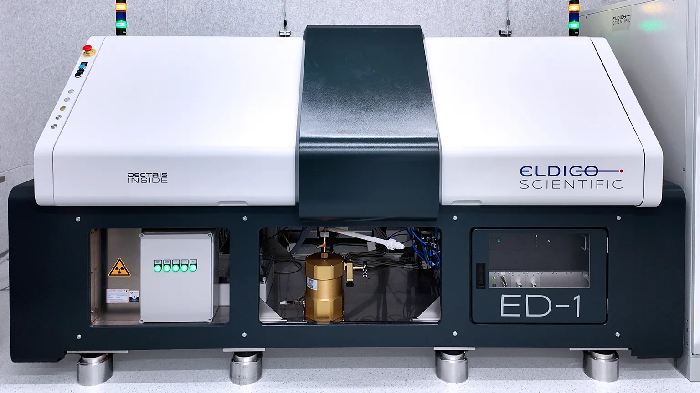
    Crystal Pharmatech, a science-driven CRO/CDMO specializing in solid-state research, preformulation studies, and formulation development and manufacturing for small-molecule drugs, today announced that installation of the ELDICO ED-1 electron diffractometer at its Suzhou, China R&D center is complete. The instrument, the first ELDICO ED-1 installed in the Asia-Pacific region, is now operational, and MicroED services on the ED-1 are open to clients worldwide.

    Crystal Pharmatech completes ELDICO ED-1 installation; Dedicated MicroED now in routine service

    Eldico ED-1. Image Credit: ELDICO Scientific AG

    Crystal Pharmatech launched MicroED services in 2021, using a cryo-electron microscope (cryo-EM) for data collection. The ED-1 now adds a dedicated, automated platform in the company’s own laboratory:

    • Built for diffraction. The ED-1 is designed specifically to collect electron diffraction data from small-molecule crystals, with a horizontal beam path, a 5-axis goniometer, and a DECTRIS QUADRO hybrid pixel detector
    • Automated. Automated calibration and data processing, and support for unattended operation, allow more crystals and more forms to be measured in less time
    • In-house. The instrument sits beside Crystal Pharmatech’s screening and crystallization teams, making MicroED a routine step in solid-form screening and selection

    Working with an ELDICO Scientific AG team on site, Crystal Pharmatech had the instrument running and collecting its first diffraction data within three days of installation. The ED-1 is housed on the first floor of the company’s Crystal Building, in a room originally designed as a livestream studio. With MicroED inside, the sign at its entrance, “Crystal Live”, takes on a new meaning: bringing crystals to life by revealing their structures. Clients and partners visiting the Crystal Campus in Suzhou are welcome to see the instrument in operation.

    Forms identified in a screen can now be taken directly to a crystal structure, without growing large single crystals. Clients can request:

    • Crystal structures and absolute configuration from sub-micron powders, from as little as 1 mg
    • Identification of hydrates, solvates, salts, and cocrystals, and of individual phases in mixtures
    • Structurally resolved polymorph landscapes to support form selection, patent and regulatory filings, and crystal structure prediction (CSP)

    Standard results are delivered in one to two weeks. An expedited service delivers analysis and report in as little as 48 hours after samples and written approval are received. Projects are covered by Crystal Pharmatech’s No Structure, No Fee commitment under agreed terms.

    “Five years after launching MicroED on a cryo-EM instrument, we now have a dedicated, automated electron diffractometer in our own laboratory,” said Dr. Alex Chen, Co-founder, Chairman and CEO of Crystal Pharmatech. “It was collecting data within three days of installation, and I can already see it becoming a workhorse for our solid-state research. Clients can now ask for the structure of each form a screen finds, quickly and on very little material.”

    We’re pleased to see the ED-1 in service at Crystal Pharmatech. Their team brings extensive experience in solid form research, and the instrument’s automated operation makes it easier to include crystal structure determination in their everyday screening work. This is exactly how we intended the ED-1 to be used, helping scientists make informed decisions during pharmaceutical development.”

    Dr. James Berwick, CEO, ELDICO Scientific AG

    See MicroED in Boston on November 19

    Scientists in the Boston area can see MicroED in practice at Crystal Pharmatech’s Boston Symposium & Executive Networking Reception, “First Time Right,” on Thursday, November 19, 2026, 12:00–7:00 pm, at the Boston Marriott Cambridge, Kendall Square. MicroED features in three parts of the program:

    • Talk: Gustavo Santiso-Quiñones, Ph.D., Co-founder of ELDICO Scientific AG, “Too Small for SCXRD, Too Complex for XRPD: 3D ED/MicroED for Sub-Micron Crystal Structure Determination”
    • Poster: Crystal Pharmatech and ELDICO Scientific AG, “What Is the Probability of Electron Diffraction Success on Routine Polymorph Screening Isolates? A Systematic Benchmark Across All Solid-Form Categories”
    • Poster: ELDICO Scientific AG, “(Automated) Electron Diffraction / MicroED: A New Tool for Pharmaceutical Solid-State Characterization”

    The poster authors will be on hand during the networking break and throughout the reception.

    Dr. Alex Chen, Co-founder, Chairman and CEO of Crystal Pharmatech, and Dr. James Berwick, CEO of ELDICO Scientific AG, will also attend and will be available to meet with interested attendees in person.

    The program also includes talks on solid-form selection, crystal structure prediction, and formulation for challenging molecules, with speakers from Biosimulytics, Accent Therapeutics, and Arvinas, and a panel with experts from Novartis, Spolia Therapeutics, Ironwood Pharmaceuticals, and EyePoint. Attendance is free for qualified biotech and pharma R&D professionals, and places are limited.

    Register for the Boston Symposium:

    The ED-1 was announced in April 2026 as part of an expanded collaboration between Crystal Pharmatech and ELDICO Scientific AG: 

    Source link

  • 27 People Who Took A Photo Of Something That Could’ve Killed Them

    27 People Who Took A Photo Of Something That Could’ve Killed Them

    1. This person found these crystals on their phone charger, which is a pretty sure sign that their phone battery might explode soon:

    A damaged charging cable with burnt and frayed insulation lies on a leather notebook, showing signs of severe wear and potential fire hazard

    2. This person grabbed onto a Pitohui bird, which is one of the few birds in the world that can poison you with venom. Lucky!

    A person holding a bird with distinct bright plumage in a forest setting, showcasing its open beak

    3. These people decided to sled on a runaway truck ramp, on exactly the kind of day that a runaway truck ramp might be needed:

    Snow-covered highway hill with people walking uphill through trees, a car parked roadside, and a "RUNAWAY TRUCK RAMP" sign visible

    4. This person maybe let the stove get a little too hot:

    Wood-burning stove in a workshop space with tools and wood nearby, showing its top glowing red, indicative of high heat

    Advertisement

    Advertisement

    Related: "29 Wild Bachelor Party Stories That Crossed Every Possible Line"

    5. This person found some phosphorus, which was actively smoking, because — spoiler alert — it's intensely flammable:

    A small unpolished red stone with visible white veins on a wooden surface

    6. This person's mirror nearly started a house fire just from the sun:

    Magnifying mirror attached to a wooden window frame reflecting lush green trees outside

    7. This person forgot that airbags are a thing and basically turned their steering wheel into a grenade:

    A steering wheel decorated with various crystals in a way that if the airbag deployed, the crystals would harm the driver

    8. This person's roommate left their Teflon pan on the burner for hours and superheated it, possibly releasing toxic gases into the air:

    A frying pan with burnt food inside is placed on a balcony floor. The pan's surface has turned blue

    Advertisement

    Advertisement

    9. This person's parents left a concave mirror by the window, nearly starting a house fire:

    A small mirror on a wooden stand sits on a windowsill next to a closed window. There is a burn mark on the windowsill caused by the mirror

    10. This person rescued a "dog" that was actually very much a coyote (and could have had rabies):

    A coyote is curled up on the back seat of a car. The text says it's a "male dog" and the finder has it at their apartment

    Related: "These 37 Fails From Last Week Made Me Laugh So Hard I Think I Have Abs Now"

    11. This guy soaked his nicotine pouches in raw deer blood, which is just begging for a prion disease:

    Tweet claiming that soaking Zyn in deer blood gives nutrient benefits and improved neurotropic effects, especially with nicotine

    12. This person picked up a blue-ringed octopus, one of the most venomous creatures on the planet:

    A hand holding a small blue-ringed octopus, with the caption "When you let your son grab this just for the content"

    Advertisement

    Advertisement

    13. This person's sister failed to empty her dryer's lint trap for...IDK, years? Which is fire-hazard central:

    A hand holding a long, thick piece of dryer lint the length of an arm

    14. This person found a bunch of potatoes that had lived in the cellar for a year (which can be deadly if they start to rot because of the gases they give off):

    Container filled with old potatoes that have grown a wild tangle of roots

    15. This person thankfully didn't light their crystal with pyrite (fool's gold) in it because when you burn pyrite, it releases sulfur dioxide:

    A person is holding a candle with crystals and yellow flower petals. The Reddit caption mentions the crystals are pyrite

    Related: "Are These People Actually The A-Hole Or Not?"

    16. This person was — I hope and pray — just making a joke about keeping the trucks running:

    Image showing trucks with a tarp, creating a makeshift camping shelter over truck beds filled with bedding. Text reads: "What a great idea. And you can keep the trucks running for warmth"

    Advertisement

    Advertisement

    17. This person found an old uranium water crock that you were supposed to drink out of (?!?!?!):

    A Facebook post from a group called "Uranium Glass Addicts" shows a ceramic item tested for radiation levels. The user expresses surprise at the item's radioactivity

    18. This person picked up what they thought was a rat snake (spoiler alert, it was a rat...tlesnake):

    Facebook post with four snake photos. User recounts mistaking a juvenile timber rattlesnake for a rat snake, now in ER for treatment

    19. This person found their grandma's "cooking spoon":

    A metal spoon with a head that has been worn down and is now white instead of silver

    This spoon is an example of vintage enamelware, which contained lead and cadmium before the 1970s. All of that lead coating ended up in grandma's food over the years.

    20. This is just...not how stairs work:

    A flight of stairs with the underside visible. The stairs are built so that the only supports are brackets meant for bookshelves

    Advertisement

    Advertisement

    21. This person found an American dagger moth caterpillar, whose hairs can cause hives and a burning sensation on the skin. So, while it might not kill you, it could definitely hurt:

    A hand with dirty fingernails holds a fuzzy yellow caterpillar

    22. This person found a tea for sale that we all hope is just named "Lily of the Valley." Because if it was actually tea made out of lily of the valley — you know, the severely poisonous plant — that would be bad:

    A bag labeled "Lily of the Valley Organic Wildcrafted" herbal tea is priced at $14.50 on a shopping app with a 15% coupon available

    Related: "13 "Unsolved" Mysteries Where Pretty Much Everyone Considers Solved"

    23. This person found a "levitating" tree, which they hopefully got far, far away from as quickly as possible:

    A tree in a forest appears to be hovering above the ground, its trunk broken and partially missing near the base

    24. This person better not have plugged those in:

    Three air fresheners filled with a purple cleaning solution in front of a large bottle of Fabuloso cleaning liquid on a kitchen counter

    Advertisement

    Advertisement

    25. This person's landlord found a solution for a wet carpet, which was leaving this plugged in and running all day:

    A vacuum cleaner with an attached cord is lying on a carpeted floor partially plugged into a power strip

    26. This person found themselves following a Final Destination truck that was even scarier than the truck in the actual movie:

    A truck loaded with large tree logs drives down a highway, with no straps fastening the logs

    27. And finally, this person was just holding a straight-up piece of raw uranium ore:

    A hand holding a rock attached to a magnetic container. The owner claims the rock is extremely heavy and valuable, asking for insights about its origin

    Your daily brain workout: You're One Of The Smartest People I Know If You Can Solve This Word Puzzle

    Also in Internet Finds: "Ex-Cult Members Are Sharing The Moments They Realized Something Was Wrong"

    Also in Internet Finds: "Crime Scene Investigators Are Sharing The "Most Horrific" Case They've Worked On"

    Read it on BuzzFeed.com


    Source link