Category: Science & Tech

  • Democrats Preparing Crackdown on Prediction Markets

    Democrats Preparing Crackdown on Prediction Markets

    With a broad mandate to mop up the corrosive graft seeping out of Washington DC under Donald Trump’s second administration, Democrats are reportedly preparing to bring the legislative hammer down on prediction markets — tech moneymakers era with deep ties to the White House.

    That’s according to Politico, which reports that Democrats are preparing to curb what California representative Maxine Waters called “predatory lending and predatory platforms, including prediction markets, so that our constituents keep more of their hard-earned dollars in their pockets.”

    As Oregon Democratic Senator Jeff Merkley told Politico, “we need to rein in this gambling, and with Democrats taking back control of Congress, now is the time for long-overdue legislative action.”

    Beyond protecting consumers from predatory gambling companies, the agenda has the added effect of targeting a key source of income for the Trump family dynasty. Trump’s eldest son, Donald Trump Jr, has emerged as a strong supporter of prediction markets, earning him advisory roles on the boards of Polymarket and Kalshi at the same time that inside traders cashed in on advanced knowledge of Trump administration moves.

    And while prediction markets are still going strong currently, the looming crackdown has the attention of financial experts, one of whom said the regulatory regime could get “pretty intense.”

    “These guys don’t have an ally in Congress,” a former Wall Street regulator, who was granted anonymity, told Politico. “To a certain extent, they might even be the new crypto as far as congressional attention from Democrats,” they said, referring to the broadly antagonistic stance Democrats held toward the crypto industry under the Biden administration.

    But when it comes to fighting hard for any regulatory regime, the proof will be in the pudding. Democrats have reportedly begun preparation for a similar crackdown on the AI industry — an effort which is broadly popular with voters, but which poses a major challenge for the party’s pro-business leadership.

    More on politics: Americans Just Resoundingly Rejected AI Data Centers

    Source link

  • Strands Hint Today: Answers for Nov. 11, No. 983

    Strands Hint Today: Answers for Nov. 11, No. 983


    How to Play (and win) Strands

    Here’s your NYT Strands hint for today, plus the spangram and all of today’s Strands answers for puzzle No. 983 on Wednesday, Nov. 11, 2026.

    Hint for today’s Strands puzzle

    Today’s Strands theme is “Work it out.”

    And here’s a hint: Pumping iron.

    Clue words to unlock in-game hints

    Your goal is to find hidden words that fit the puzzle’s theme. If you’re stuck, find any words you can. Every time you find three words of four letters or more, Strands will reveal one of the theme words. These are the words I used to get those hints, but any words of four or more letters that you find will work:

    • SCUM, LOSE, LOSER, CLOSE, CART, CARTS, SALT, SLAT, SLOB

    Answers for today’s Strands puzzle

    These are the answers that tie into the theme. The goal of the puzzle is to find them all, including the spangram, a theme word that reaches from one side of the puzzle to the other. When you have all of them (I originally thought there were always eight, but learned that the number can vary), every letter on the board will be used. Here are the nonspangram answers:

    • LATS, PECS, BICEPS, OBLIQUES, QUADS, HAMSTRINGS

    Today’s Strands spangram

    The completed NYT Strands puzzle for Nov. 11, 2026.
    The completed NYT Strands puzzle for Nov. 11, 2026.NYT/Screenshot by CNET

    Today’s Strands spangram is MUSCLEGROUP. To find it, look for the M that’s two letters down on far left, and wind across.

    Today’s NYT Wordle Hints, Answer and Help for Tuesday, Nov. 10, #1970

    Connections puzzle logo

    Today’s NYT Connections Hints and Answers for Tuesday, Nov. 10, #1248

    Today’s NYT Strands Hints, Spangram and Answers for Tuesday, Nov. 10, #982

    Today’s NYT Wordle Hints, Answer and Help for Wednesday, Nov. 11, #1971

    Source link

  • Microsoft’s Patch Tuesday surpasses 1,000 bugs for second month in a row

    Microsoft’s Patch Tuesday surpasses 1,000 bugs for second month in a row

    More than 1,000 vulnerabilities were disclosed by Microsoft in the latest Patch Tuesday release as federal cybersecurity officials ordered civilian agencies to patch exploited bugs from Google, Barracuda and Cisco. 

    Among the 1,093 bugs disclosed on Tuesday, Microsoft said one is being exploited in the wild: CVE-2026-124194. The company said it has a severity score of 6.5 and impacts Microsoft Outlook. 

    The Cybersecurity and Infrastructure Security Agency (CISA) added the vulnerability to its Known Exploited Vulnerabilities catalog and gave federal agencies until the end of the month to patch it. 

    Microsoft said the bug was discovered by Benoît Sevens using Anthropic’s Claude, writing that an attacker “could send a specially crafted message file and convince a user to open it in an affected version of Microsoft Outlook.” 

    “Opening the file could cause Outlook to connect to an attacker-controlled network location without displaying the usual external-content warning, potentially disclosing authentication information that could be used to impersonate the user,” the company said. 

    Satnam Narang, senior staff research engineer at Tenable, said an attack using the vulnerability may allow someone to sign in as the exploited user. 

    Several experts said CVE-2026-124194 was the only exploited bug outlined in Microsoft’s Patch Tuesday release but there were 63 vulnerabilities rated critical. Narang noted that Tuesday’s release brings Microsoft to more than 5,160 vulnerabilities disclosed this year, which would far surpass any previous year. 

    Last month, more than 1,400 vulnerabilities were disclosed by Microsoft after about 900 in September. 

    In addition to Microsoft’s disclosures, Google, Cisco, Adobe, Barracuda, Ivanti and several other companies released patches for dozens of bugs, several of which were spotlighted by CISA as being exploited. 

    CISA gave federal agencies until Friday to patch CVE-2026-116606 and CVE-2026-111560 — two bugs affecting Barracuda’s email security product. They also ordered all federal agencies to investigate potential compromises related to both vulnerabilities.

    Response to N-able vulnerabilities 

    A researcher also uncovered more than 30 serious vulnerabilities in N-Central, a popular remote management tool that IT teams use to monitor and run networks remotely. 

    The company behind it, N-able, took all hosted N-central environments offline and ordered customers to turn off their servers. 

    “As expected, we are observing scanning activity associated with the published proof-of-concept code. At this time, we have no evidence that any customer environment has been successfully exploited,” the company said on Tuesday. 

    “During this time, customers will be unable to access their Hosted N-central classic environment, and associated services may be unavailable.”

    Source link

  • Trump Says It’s Fine for a CEO to Cheat on His Wife With an Alleged Spy

    Trump Says It’s Fine for a CEO to Cheat on His Wife With an Alleged Spy

    Should Nvidia CEO Jensen Huang be exonerated of any wrongdoing after his affair with an alleged spy? Maybe now that he has a morally upstanding character witness like president Donald Trump on his side.

    During a presser Monday night, Trump defended Huang as an “honorable guy” after revealing that Huang had personally told him that he didn’t know that the Chinese businesswoman he was cheating on his wife with with was allegedly a Beijing operative.

    “I asked him that question: ‘Did you have any idea that she was a spy?’” Trump told reporters at the White House, per the New York Times. “He said, ‘I had no idea that she was a spy,’ and I really believe him.”

    The geopolitical gravity of the situation appeared a distant concern to Trump, who expressed a greater concern for Huang’s wellbeing.

    “I did speak to him today just to see if he’s feeling all right,” Trump continued. “I believe he’s suffering greatly. I read his statement, and I believe he’s suffering greatly. More so because of his family, his wife who he loves and his family, but he is definitely suffering.”

    When Trump was asked whether he intended to bring up the matter with president Xi Jinping during his visit to Shenzhen, China, next week, he instinctively began defending Huang yet again.

    “I’m sure President Xi will ask me about it,” Trump said, before pivoting. “I just know Jensen very well. I just think he’s a very honorable man. I mean, he’s a great — he built a great company, American company, and I think he’s a very honorable guy. And I feel very confident that he’ll be in good shape.” 

    Huang is being accused of fooling around with Alice Huang, a top executive at the Singapore-based data center and cloud computing firm Megaspeed. The affair, which he later admitted to in a humiliating statement to his company employees, could have massive effects on the AI industry. 

    The US government is alleging that Alice Huang was recruited by China’s Ministry of State Security to gather intel on Jensen Huang and possibly even push him to sell Nvidia’s coveted AI chips to China. The Chinese government denies this, and whether she was indeed a spy or just an opportunist — or, heck, if she was motivated by true love — remains unclear.

    The whole saga stinks to high heaven, though. Megaspeed was being investigated for allegedly diverting its Nvidia chips to the mainland, circumventing a US export ban on AI hardware to China. Nvidia, meanwhile, reportedly used its influence to abruptly quash the US Commerce Department into Megaspeed.

    For Trump to defend Huang isn’t too surprising. The pair have a close relationship, and Huang is widely considered too important of a figure in the AI boom to go down; it’s his company that’s providing all the hardware, and in many cases the money, to keep the gravy train chugging along.

    And he has his own skeletons in the closet, after all, with numerous cheating scandals and an even uglier rap sheet of sexual harassment and rape allegations. It’s solidarity from one unfaithful billionaire to another.

    More on AI: We Are Now Learning in Real Time Whether the Stock Market Cares About an AI Executive Admitting to an Affair With an Alleged Chinese Spy

    Source link

  • Take-Two Interactive Software Inc Stock (TTWO) Moved Up by 7.02% on Nov 10: Facts Behind the Movement

    Take-Two Interactive Software Inc Stock (TTWO) Moved Up by 7.02% on Nov 10: Facts Behind the Movement

    What is driving Take-Two Interactive Software Inc (TTWO)’s stock price up today?

    The primary catalyst driving the sharp upward momentum in Take-Two Interactive is the operational clarity and relief provided in the company’s latest quarterly earnings announcement. Heading into the print, investor sentiment had been severely clouded by apprehension surrounding potential execution delays for the company’s flagship pipeline asset. Executive management effectively dismantled these bearish concerns by firmly reaffirming the targeted launch schedule for Grand Theft Auto VI and revealing that player pre-orders are tracking significantly ahead of internal projections. This confirmation removed a major valuation overhang that had depressed the stock over recent quarters.

    Reassurance on medium-term forward guidance further reinforced the buying interest. Take-Two maintained its full-year net bookings outlook, underscoring management’s high degree of visibility into substantial revenue acceleration and expanding recurrent consumer spending in the second half of the fiscal year. Although reported top-line revenue reflected modest near-term friction in mobile engagements and select legacy sports titles, adjusted profitability came in ahead of Wall Street expectations due to rigorous cost containment and improved operating leverage. This operational discipline demonstrated that Take-Two can effectively protect cash flows while preparing for its broader commercial deployment.

    The magnitude of the advance also stems from market positioning dynamics and institutional portfolio flows. The equity had been trading near technical multi-month lows following an extended period of de-risking, creating an environment primed for a strong relief rally upon the delivery of stable operating guidance. With key downside tail risks mitigated and the multi-billion-dollar product cycle reaffirmed, institutional capital rotated aggressively back into the name, while short-covering further amplified intraday liquidity and propelled the shares higher.

    Technical Analysis of Take-Two Interactive Software Inc (TTWO)

    Technically, Take-Two Interactive Software Inc (TTWO) shows a MACD (12,26,9) value of 5.226, indicating a neutral signal. The RSI at 62.991 suggests neutral condition and the Williams %R at 16.282 suggests overbought condition. Please monitor closely.

    Media Coverage of Take-Two Interactive Software Inc (TTWO)

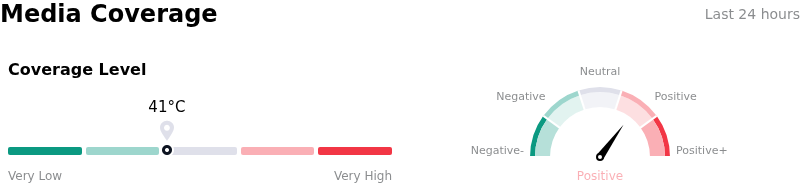
    In terms of media coverage, Take-Two Interactive Software Inc (TTWO) shows a coverage score of 41, indicating a moderate level of media attention. The overall market sentiment index is currently in bullish zone.

    SentimentAnalysis

    Fundamental Analysis of Take-Two Interactive Software Inc (TTWO)

    Take-Two Interactive Software Inc (TTWO) is in the Software & IT Services industry. Its latest annual revenue is $6.66B, ranking 50 in the industry. The net profit is $-298.20M, ranking 579 in the industry. Company Profile

    Over the past month, multiple analysts have rated the company as Buy, with an average price target of $277.82, a high of $330.00, and a low of $172.41.

    More details about Take-Two Interactive Software Inc (TTWO)

    Company Specific Risks:

    • Q2 Financial Miss and Bookings Shortfall: In its fiscal Q2 2027 results filed on Form 8-K, Take-Two reported net bookings of $1.60 billion (down 18% year-over-year), missing management’s guidance range of $1.62 billion to $1.67 billion, alongside a GAAP net loss of -$0.29 per share that trailed market expectations.
    • Acceleration in Recurrent Consumer Spending Decline: High-margin recurrent consumer spending dropped 9% year-over-year—significantly worse than management’s forecasted 5% decline—dragged down by softer-than-projected launch performance and monetization of NBA 2K27 and ongoing weakness across the Zynga mobile portfolio.
    • Sub-Consensus Q3 Bookings Guidance: Forward guidance for fiscal Q3 net bookings was set at $3.35 billion to $3.50 billion, coming in below consensus expectations of $3.51 billion and reflecting cautious assumptions for near-term monetization heading into the holiday quarter.
    • Extreme Valuation and Execution Dependency on GTA VI: Reiterating full-year bookings guidance of $8.0 billion to $8.2 billion despite recent top-line misses concentrates immense execution risk on the imminent November 19 launch of Grand Theft Auto VI, leaving the company highly vulnerable to severe downside volatility if technical launch issues or monetization delays occur.

    This article may include AI-generated content that is human-reviewed, which is for reference and general information purposes only and does not constitute investment advice.

    Disclaimer: The information provided on this website is for educational and informational purposes only and should not be considered financial or investment advice.

    Source link

  • Google Patches Critical Chrome Zero-Day Exploiting XML Vulnerability

    Google Patches Critical Chrome Zero-Day Exploiting XML Vulnerability

    Google has released a Chrome security update addressing an actively exploited vulnerability in the browser’s XML component, bringing the number of Chrome zero-days patched this year to eight. The disclosure places renewed pressure on organisations to accelerate browser updates and verify that users have relaunched affected installations.

    The vulnerability, tracked as CVE-2026-125350, is a high-severity use-after-free flaw. Google released the fix on November 9 after receiving an anonymous report three days earlier.

    “Google is aware that an exploit for CVE-2026-125350 exists in the wild,” the company stated in its Chrome security advisory. The update contains nine security fixes.

    The latest disclosure follows seven other actively exploited Chrome vulnerabilities patched during 2026. However, the existence of real-world exploitation does not establish how widespread the attacks are or which users face the greatest exposure.

    What the XML vulnerability means

    Use-after-free vulnerabilities occur when software continues accessing memory after it has released that memory for reuse. A stale reference can then point to an area that contains different data, causing the program to behave unpredictably.

    MITRE’s description of this weakness identifies several possible consequences, including crashes, corruption of data, disclosure of information and, under suitable conditions, execution of attacker-controlled code. The outcome depends on the vulnerable operation and the attacker’s ability to influence the affected memory.

    For browser users, this class of flaw is concerning because browsers routinely process externally supplied content. Nevertheless, the general capabilities of a use-after-free exploit should not be confused with a confirmed account of how this particular vulnerability has been weaponised.

    The public disclosure does not establish the precise delivery mechanism, the actions required from a victim or whether attackers combined the flaw with additional vulnerabilities. Describing it as a confirmed route to complete device takeover would therefore go beyond the available evidence.

    Confirmed exploitation, limited visibility into the attacks

    Google’s acknowledgement establishes that this is more than a theoretical security issue. A working exploit has been observed outside a controlled research setting.

    However, the company’s public notice does not identify an attacker, victim organisation, targeted country or campaign. It also does not provide campaign-specific indicators of compromise that defenders could use to identify the reported activity.

    Google says it may restrict vulnerability details while users install updates, including where other projects depend on an affected third-party library. That disclosure policy does not, by itself, establish that a particular shared library is responsible for this flaw.

    For security teams, the limited disclosure creates a practical distinction: there is enough evidence to prioritise patching, but insufficient public information to attribute suspicious activity to this exploit with confidence. Organisations should avoid treating the absence of published attack indicators as evidence that their systems are safe.

    Why browser exploitation does not automatically mean full system compromise

    Chrome’s security architecture introduces boundaries intended to limit what compromised browser components can do.

    The Chromium project’s sandbox documentation explains that renderer processes operate in a restricted environment. These restrictions limit access to operating-system resources and help prevent a flaw inside a sandboxed process from automatically granting unrestricted access to the computer.

    This distinction matters when assessing potential impact. Executing code within a restricted browser process and executing code with broader operating-system access are different outcomes. An attacker may need another weakness to cross a security boundary.

    There is no public confirmation in the reviewed disclosure that CVE-2026-125350 includes a sandbox escape. Equally, the presence of sandboxing is not a reason to delay remediation: browser isolation reduces risk, but an actively exploited vulnerability still requires prompt attention.

    Which Chrome versions contain the fix

    Google announced the following patched desktop releases:

    Article content

    The release is being distributed through Chrome’s Stable channel, with Google describing a rollout over the coming days and weeks. These are the desktop versions identified in the announcement; the version numbers should not be applied to mobile browsers or other browser vendors’ products.

    For organisations, the operational objective should be to confirm that devices are running a fixed release or a subsequent supported version. Merely recording that an update was downloaded does not establish that the active browser session has switched to the patched executable.


    Close security gaps before they lead to costly incidents. Give your SOC the threat visibility to detect and respond earlier👇🏻

    Article content

    Eight other vulnerabilities addressed in the same release

    Although the exploited XML vulnerability is the immediate priority, the update also addresses weaknesses across several browser components.

    Alongside CVE-2026-125350, Google lists high-severity issues affecting WebGL, FileSystem, Compositing, GPU, V8 and XML. Two additional GPU issues carry medium-severity ratings.

    The other XML flaw, CVE-2026-125346, is also classified as a use-after-free vulnerability. Google’s exploitation acknowledgement specifically names CVE-2026-125350; it does not identify the second XML issue as actively exploited.

    The breadth of the release reinforces the value of deploying the complete browser update. Remediation should focus on the supported fixed build rather than attempting to address individual browser components separately.

    A year of repeated Chrome zero-day patches

    The latest disclosure follows a sequence of exploited Chrome vulnerabilities spanning multiple components.

    • CVE-2026-2441 in February
    • CVE-2026-3909 and CVE-2026-3910 in March
    • CVE-2026-5281 in April
    • CVE-2026-11645 in June
    • CVE-2026-85046 and CVE-2026-87491 in September.

    The November XML vulnerability brings that reported total to eight.

    The figure describes vulnerabilities known to have been exploited and subsequently patched. It is not a count of attack campaigns, compromised organisations or affected users.

    For enterprise defenders, the recurring disclosures support treating browser maintenance as an ongoing security responsibility. A browser update process that works during routine operations must also be capable of responding quickly when exploitation is confirmed.

    How users can update and verify protection

    Google’s official update instructions direct desktop users to open Chrome’s three-dot menu, select Help, then About Google Chrome. This page displays the installed version and checks for available updates.

    Users should allow the update to complete and select Relaunch when prompted. After restarting, they should return to the same page to verify the running version.

    Google notes that Linux users should update Chrome through their package manager. Its guidance also explains that updates normally take effect when the browser closes and reopens, making long-running browser sessions a potential obstacle to completing remediation.

    What enterprise security teams should prioritise

    For managed environments, the recommended response is to accelerate deployment, verify completion and investigate exceptions.

    Security and IT teams should identify outdated installations, check whether update restrictions are delaying deployment and ensure that browser relaunches occur within an appropriately short window. Devices that remain offline, fail updates or cannot run a supported release should be tracked explicitly rather than disappearing from compliance reporting.

    Google provides administrative controls for this purpose. Its Chrome Enterprise guidance distinguishes between recommended relaunch notifications, which users can defer, and required relaunches governed by a configured notification period. Administrators can use these controls to reduce the gap between update availability and actual protection.

    A sensible verification process should measure the version that is running after restart. It should also separate patching from incident response: updating closes the vulnerable code path, while evidence of suspicious browser or endpoint activity may require a separate investigation.

    For users of other Chromium-based products, the appropriate next step is to review the relevant vendor’s security notices and available updates. Chrome’s release number alone cannot establish whether another product is affected or fixed.

    The immediate priority is clear: install the security update, relaunch Chrome and confirm the patched version is active. Further disclosures may clarify the attacks, but that additional detail is not necessary to begin remediation.

    Article content

    Article content

    Source link

  • Shark FlexFusion falls to new record low on Amazon ahead of Black Friday

    Shark FlexFusion falls to new record low on Amazon ahead of Black Friday

    SAVE $130.99: As of Nov. 10, the all-in-one Shark FlexFusion Air + Ceramic Styling & Drying System is on sale on Amazon for only $299 (normally $429.99). That’s an unprecedented 30% savings.


    $299
    at Amazon

    $429.99
    Save $130.99


    We adore the Shark FlexStyle here at Mashable (it’s our top Dyson Airwrap dupe). But if your budget has a little wiggle room, consider upgrading to Shark’s more versatile FlexFusion multi-styler.

    Released in 2024, the FlexFusion has the same ingenious twisting base as the FlexStyle, but it utilizes heat styling (not just air styling) and adds attachments for both wet and dry hair. It’s basically a prototype of the Shark Glam with a slightly bulkier build, no idling sensor, and — as of now — a much cheaper price.

    The best tech deal this week

    The Apple iPhone 18 Pro is free right now with T-Mobile

    In the lead-up to its Black Friday Week sale, Amazon has an all-in-one FlexFusion bundle on sale for only $299 — a 30% discount on its usual sticker price of $429.99. That’s its lowest price ever, according to data on the price-tracking site camelcamelcamel.

    This bundle comes with every attachment made for the FlexFusion, including an Air Straightener, a FrizzFighter finishing tool, a Wet-or-Dry Fusion Brush, two auto-wrap curling barrels, and a styling concentrator.

    Amazon has its FlexFusion offer labeled as a “limited time deal,” so don’t miss out.

    Source link

  • Nvidia Pulled Strings to Shut Down a US Government Investigation Into Chip Smuggling

    Nvidia Pulled Strings to Shut Down a US Government Investigation Into Chip Smuggling

    Over the weekend, tech billionaire and Nvidia CEO Jensen Huang publicly admitted that he had cheated on his wife with a suspected Chinese spy. The news sent markets rocking wildly, with investors worrying he could be forced to step down — a move that could trigger even more volatility.

    One person who was seemingly unsurprised by the revelation was president Donald Trump. As the New York Times reports, he knew about the affair since at least October 2025 — well over a year ago — and decided to do nothing with that information.

    And that’s just the tip of the iceberg of a burgeoning scandal, as a number of federal agencies have since been implicated in the very literal affair. It’s a hair-raising web of ulterior motives, business dealings, and top Trump administration officials making questionable decisions that reportedly had government workers appalled.

    At the center of the story is the Commerce Department’s investigation into Singaporean data center company Megaspeed, which the US government suspected of smuggling Nvidia chips into China as early as September 2024, months before Trump took office for the second time.

    Part of the Commerce Department’s investigation was looking into Megaspeed executive Alice Huang — the woman with whom Jensen Huang (no relation) had an extramarital affair with since at least June 2024, according to the NYT.

    Fast forward to August 2025, when Nvidia’s general counsel Tim Teter tried to meet with the Department of Commerce officials after claiming that Trump appointee and under secretary of commerce for industry and security Jeffrey Kessler had given him permission.

    It was an interaction that reportedly shocked government officials, who promptly turned down the offer to meet with Teter. Sources told the NYT that Kessler may have “opened himself to accusations of undue influence and potentially jeopardized his department’s work” on the investigation.

    The ongoing probe was then dumped on the Justice Department, in an apparent effort to protect it — which then instructed the Department of Commerce to stand down, according to the NYT’s sources.

    It’s a staggering series of revelations that leave plenty of glaring questions unanswered. One glaring example: why did Trump decide not to take action after being informed of Huang’s affair with a woman directly tied to a company that was actively being investigated under the suspicion of smuggling Nvidia chips into China?

    As time goes on, even more top Trump officials are being implicated in the story. In separate reporting, the NYT also found that secretary of state Marco Rubio knew about a “highly classified memo” in the spring of this year that warned Trump admin officials of Huang’s affair.

    Huang’s admission about the infidelity on Sunday triggered a major media circus.

    “I was unfaithful to my wife,” he said in a memo to Nvidia employees. “My actions hurt her and our children. There is no excuse for what I did. I am deeply sorry.”

    Considering how many government officials — including the president himself — were implicated or even directly knew about his affair with an alleged spy for up to over a year, his actions may end up hurting far more people than that.

    The news also couldn’t come at a worse time for the Trump administration. Democrats, who handily defeated Republicans in last week’s midterm elections, are already vowing to hold Trump’s feet to the fire and launch major probes into his “tentacles of corruption.”

    Meanwhile, the president is doing a poor job of covering for the disgraced billionaire. During a press briefing on Monday, he called Huang an “amazing guy,” arguing that the CEO was “suffering greatly” after extensively cheating on his wife.

    Trump also let it slip that the “FBI’s looking into it in terms of something else,” without offering any further clarification.

    In other words, we wouldn’t be surprised of plenty more revelations still to come.

    More on Huang: We Are Now Learning in Real Time Whether the Stock Market Cares About an AI Executive Admitting to an Affair With an Alleged Chinese Spy

    Source link

  • Pixel Tag, Google’s  Android-ready answer to Apple’s AirTag, is now available

    Pixel Tag, Google’s $30 Android-ready answer to Apple’s AirTag, is now available

    Google’s answer to Apple’s AirTag, the Google Pixel Tag, goes on sale starting Tuesday, allowing Android users to track items like their keys, wallet, or bag using their smartphone’s built-in Find Hub.

    First announced in August, the $29.99 device takes cues from the AirTag and other lost-item finders by offering connectivity via Bluetooth and ultra-wideband for precision finding. This lets Android device owners, including Pixel Watch wearers, locate their missing items using a combination of visual distance and directional guidance.

    Image Credits:Google

    Plus, the tag has a built-in speaker to play a chime that helps you locate your item if nearby. (Or, if you’ve lost your phone, you can press the button on the Pixel Tag twice to ring it, too.) You can choose between three different levels of loudness in the settings within the Find Hub, with the maximum volume around 80 decibels.

    Though the Pixel Tag serves the same purpose as an AirTag, Google has opted for a different design. Instead of a small, round device, like Apple’s, the Pixel Tag is slimmer and more elongated.

    Image Credits:Google

    Spec-by-spec, the Pixel Tag is 1.1-inches wide, compared to the AirTag’s 1.26 inches. As the Pixel Tag is oval-shaped, it’s 1.8-inches high from top to bottom. Thickness-wise, the Pixel Tag clocks in at a depth of 0.2 inches, compared with the AirTag’s 0.31 inches (which Apple calls its height). The slimness of the device might make it more appealing for some, particularly if they’re adding the tag to a small item, like a keychain.

    The device weighs just 0.4 oz, with the battery included.

    Unlike Apple, Google opted for a physical button you can press on the tag, which makes it more obvious how it’s meant to work.

    Google didn’t originally say that the Pixel Tag included NFC when it announced the device in August. NFC is used by Apple’s AirTag to aid people who find lost items, as they can tap the side of the tag to launch a webpage that displays the owner’s contact information. Google uses the tap gesture to instead connect the user to the device’s settings.

    Meanwhile, for lost items that are not nearby, the Pixel Tag relies on Google’s crowdsourced network of over a billion Android devices globally. The network, similar to competitive offerings from Apple and Tile, taps into the connectivity provided by other Android devices, which can identify and share the location of the lost item back to its owner. This location information is displayed on a map inside the Find Hub app.

    Image Credits:Google

    While the person who found the item can’t tap it, as with NFC-enabled devices, Pixel Tags that are put into “Lost” mode will be able to share the owner’s email, number, and a short message so the person who finds the tag can contact you. When the tag comes back into range of the user’s phone, the item is automatically marked as found.

    The Pixel Tag’s location can also be shared with up to 10 people in the Find Hub app, which could be useful for shared items like the family car keys, which multiple people might rely on.

    Like AirTag, the Pixel Tag is powered by a user-replaceable coin cell battery (the CR2032), which makes the device reusable for the long term. (Google claims the device has up to one year of battery life to start.)

    Meanwhile, the device itself is made from stainless steel and features IP67 water and dust resistance (maximum depth of 1 meter up to 30 minutes). It pairs with devices running Android 9 or newer via Fast Pair technology.

    The Pixel Tag comes in two shades: silver and a pale green, and can be bought individually or in a four-pack for $99.99.

    Alongside the launch, the company Bellroy is debuting its own keychain cases in a variety of colors and styles, which will also be sold on the Google Store.

    Post updated after publication to note that the Pixel Tag now supports NFC, which was a surprise addition not mentioned at the time of its announcement.

    When you purchase through links in our articles, we may earn a small commission. This doesn’t affect our editorial independence.

    Source link

  • The Company That Published Fake Journalists in Sports Illustrated is Collapsing Dramatically After Massive AI Rebrand

    The Company That Published Fake Journalists in Sports Illustrated is Collapsing Dramatically After Massive AI Rebrand

    Paradium.AI, the recently-rebranded media company formerly known as The Arena Group, announced staggering third-quarter losses yesterday as it continues to go “all in” on AI.

    Paradium’s stock has been declining for years, though it experienced a drop of about 14 percent today after the company revealed that it had sustained a net loss of $3.6 million in the Q3 of 2026 — a dramatic shift from the same quarter last year, when its revenue was around 30 percent higher and it logged a $6.9 million net profit.

    Trading around $.077, the company’s shares are now firmly in the realm of penny stocks.

    The company’s quarterly report was the first since its August rebrand from The Arena Group to Paradium, a move that the company claimed marked a transition to becoming a “publicly traded AI company.” As part of its rebrand, the company announced its purchase of InfoSentience, an AI company described on Paradium’s homepage as a product that “turns live structured data into accurate, on-brand stories” to deliver “AI content at scale, running in production today.” It also launched an AI-powered video-editing and distribution tool called Cutter Studios.

    Paradium’s media portfolio includes its namesake brand Parade as well as TheStreet, Athlon Sports, College Spun Media, and Men’s Journal, among others. Per its press release, Paradium said its grim results were the result of industry-wide challenges like poor traffic and distribution struggles — difficulties, ironically, that have been driven largely by AI’s transformation of the digital world and the platforms that publishers have long relied on.

    “Third-quarter results were driven by lower referral traffic, including from Google Discover, reflecting the challenging distribution environment affecting digital publishers across the industry,” reads the press release, which further noted that “these traffic reductions drove a decline in advertising revenue.” Beyond distribution, the company added that it’s battling a “$1.3 million reversal of an employee retention tax credit asset that was disallowed.”

    As it cited traffic collapse as its core woe, however, Paradium happily flagged “increased article volume” as an “operational highlight,” saying that it had used AI to churn out 15 percent more articles than it had in Q2 with the help of InfoSentience and Cutter Studios. (It also flagged that it had “launched [a] purpose-built, AI-enabled tool for content creation, editing and management in Paradium’s CMS.”)

    In a statement, Paradium CEO Paul Edmondson struck an optimistic tone, declaring that “we continue to see tremendous opportunity in the age of AI, and we’re all in.”

    “While retaining referral traffic remains part of our focus, our real momentum is powered by tools like Cutter Studios and InfoSentience, which are already increasing output and efficiency,” Edmondon’s statement continued. He also pointed to “recent CMS updates” and the “upcoming launch” of a new “AI task management system built for content management and development” called Tablation, saying that all of these tools will enable Paradium to “rapidly adapt to the future of modern publishing.”

    Paradium’s continued focus on AI for publishing is fascinating in light of its not-so-distant history with AI scandal. Back in November 2023, a Futurism investigation revealed that the company, then still called The Arena Group, had published AI-generated content bylined by fake AI writers on the website of Sports Illustrated, which at the time was the company’s crown jewel. (The content had been provided by a third-party contractor, AdVon Commerce, which published similar content at other partners across the media ecosystem.) Several executives, including then-CEO Ross Levinsohn, were fired soon after, and The Arena Group ultimately lost control of the Sports Illustrated brand.

    Fast forward a few years, the company is now called Paradium, and AI content is central to its business model.

    Paradium isn’t the only media company to suffer bleak downturns amid all-in AI pivots: BuzzFeed, once a giant of the content economy of the 2010s, also reported somber Q3 results as its own controversial AI push has yet to pay off.

    More on Paradium’s history: Sports Illustrated Published Articles by Fake, AI-Generated Writers

    Source link