Rift Helium (RIFT ) has commenced a programme of 3D seismic data acquisition at its Upepo project in Tanzania.
The programme is designed to identify and rank potential helium traps ahead of exploration drilling in the first half of 2027.
Rift is planning approximately 90 square kilometres of 3D seismic coverage, increasing the area envisaged at IPO by approximately 83% for an 18% increase in the survey budget.
The company has deliberately expanded the programme to gain a more comprehensive understanding of Upepo’s subsurface structures, improve target ranking and make better-informed drilling decisions.
The Rukwa Basin, in which Upepo lies, already boasts a demonstrated working helium system. New imaging will help assess structural closures and faults that may influence whether helium is trapped.
The survey will thus build on the five existing exploration leads, helping Rift rank targets and refine well locations before drilling.
Rift’s existing mid-case (P50) prospective helium resource estimate is approximately 19 billion cubic feet of helium. The data now being acquired are expected to support an updated independent resource assessment targeted for the first quarter of 2027.
“It is exciting to see our team acquiring 3D seismic data at Upepo.” Said Charles FitzRoy, chief executive of Rift Helium.
“This marks an important step in Rift’s exploration strategy, as we gather the information needed to better understand where helium may have accumulated and refine our drilling targets ahead of our planned exploration programme in the first half of next year. The Rukwa Basin has already demonstrated a working helium system. The critical question for Rift is where helium may have been trapped in commercially meaningful volumes. Our expanded survey is designed to give us a clearer picture of those structures, rank our strongest leads and focus drilling capital where the geological case is most compelling. We have made a deliberate decision to invest more in seismic because we believe the additional geological understanding will improve the quality of our drilling decisions. That is central to our approach at Rift: investing in the right information before committing capital to exploration wells.”
View from Vox
The company remains on schedule for its two-well exploration programme commencing in the first half of 2027, with no change to the timetable. But this seismic programme is a crucial prelude to that and will provide a meaningful guide as to what’s likely to follow. So far Rift has been keeping to schedule, and progress has been good.
TOKYO – Nintendo sold 5.2 million copies of its The Legend Of Zelda: Ocarina Of Time remake in just four days, invigorating the Switch 2 platform that had been waiting for a blockbuster hit.
Released on Nov 5 for US$59.99 (S$77), the 2026 edition is a complete recreation of the 1998 classic action-adventure game for the Nintendo 64 console, replete with new graphics, level and character designs.
It ranks among the best-reviewed video games of recent times, earning a score of 96 out of 100 from both players and professional reviewers on aggregator Metacritic.
The Switch 2 console has had an uneven first year on the market, challenged by the rising cost of memory pushing hardware prices up.
The fast start by the new Ocarina Of Time takes the Zelda game past the cumulative sales of Donkey Kong Bananza, another popular title from 2025. Only Mario Kart World, which was part of a launch bundle with the Switch 2 console, has sold more units so far.
The first Switch, released in 2017, got a huge boost from having The Legend Of Zelda: Breath Of The Wild as a launch-day title that helped draw in gamers from outside the Nintendo ecosystem.
Though a remake, the new Ocarina of Time may have a similar effect as Nintendo heads into the crucial holiday season. BLOOMBERG
Recently, a video circulating online shows a Waymo driverless taxi attempting to evade a police car on a highway. The incident actually occurred in May 2026 in San Francisco, USA.
That day, passenger Elliot Slade and his fiancée hailed a Waymo driverless vehicle through the platform, planning to travel from San Mateo back to their home in the Mission District. The highway section where the incident occurred was undergoing construction, and the California Highway Patrol was conducting a traffic control operation by pacing vehicles at reduced speed, with a patrol car ahead slowing traffic and guiding civilian vehicles to queue up at lower speeds. Other vehicles in the traffic flow slowed down in line, but the Waymo did not stop to queue—it activated its turn signal and attempted to maneuver around the patrol car to continue forward. After entering the construction-only lane, the vehicle continued to accelerate for approximately 20 seconds. Eventually, the vehicle exited the highway and came to a stop in a residential area. The passengers connected with Waymo back-office staff by phone, and Slade stated he demanded to get out immediately and refused to continue the trip.
After the incident, Waymo responded that it had temporarily suspended highway Robotaxi operations in four cities—San Francisco, Phoenix, Los Angeles, and Miami—and that the team would update and recalibrate the vehicle software based on this incident, with highway routes to be restored after further evaluation. Waymo subsequently provided Slade with 3 ride vouchers, each worth up to $40. Slade said he most likely would not use them, would no longer ride in driverless taxis that require highway travel, and stated that unless an independent investigation is completed and full data is made public, it would be difficult for him to trust autonomous vehicles again.
Wired headphones may now seem out of place on a modern pair of headphones, but Sony is bringing back the very iconic MDR-3R – in its original design that accompanied the original Walkman in 1979, right down to the blue and orange ear pads. But with a modern twist: It now now connects through USB-C.
In short, it’s just like the original headphone where you just plug it into the headphone jack of a device. Everybody loves retro devices in 2026 and I can see why the resurrected MDR-3R will be appealing for both old and young audiophiles. But there is also other quality of life changes, including a built-in microphone for calls and an in-line remote, so the retro look doesn’t mean giving up the conveniences we expect from contemporary wired headphones today.
Retrolicious design
Image: Sony
The MDR-3R keeps the original’s lightweight, open-ear design and uses the same 23mm driver units as the original MDR-3. But Sony has also made some subtle refinements to cater to the modern listening ears, while keeping to the original sound. You also get both blue and orange ear pads in the box. Even the packaging and instruction manual borrow from the original.
Sony is also leaning into the headphones’ 1980s roots with a Stranger Things Edition. Inspired by Max’s headphones and the TV show’s Upside Down, it features an engraved Stranger Things logo and custom packaging. If you’ve watched the Netflix hit series, you’ll get the synergy here.
Availability and pricing
Sony MDR-3R Stranger Things edition
Image: Sony
The standard MDR-3R will be available for S$89, while the Stranger Things Edition goes for S$129. Pre-orders are open through Sony Store and Sony Store Online, with both models launching in Singapore from December 2026.
Kevin Scott, Microsoft’s chief technology officer, speaks during an interview on the sidelines of the Nikkei Forum Global Management Dialogue 2026 in Tokyo on Nov 11. (Photo by Satoko Kawasaki)
TSUBASA SURUGA and KOSUKE SHIMIZU
November 11, 2026 14:51 JST
TOKYO — Technology companies building data centers that power artificial intelligencemust show their benefits to local communities rather than simply promise economic gains, Microsoft’s technology chief told Nikkei Asia, as opposition to the projects intensifies.
If you’re looking for hints and answers for Strands for Wednesday, November 11, 2026, read on—I’ll share some clues and tips, and finally the solution to the puzzle with the theme “Work it out.”
For an easy way to come back to our Strands hints every day, bookmark this page. You can also find our past hints there as well, in case you want to know what you missed in a previous puzzle. (If you play Wordle or Connections, check out our hints for those games, too.)
Below, I’ll give you some oblique hints at today’s Strands answers. And farther down the page, I’ll reveal the spangram and the answers. Scroll slowly and take just the hints you need!
Credit: Strands/NYT
Hint for the spangram in today’s Strands puzzle
How a personal trainer might categorize various parts of the body or organize a workout.
Hint for the theme words in today’s Strands puzzle
Things you might want to grow or strengthen at the gym.
BEWARE: Spoilers follow for today’s Strands puzzle!
We’re about to give away the answers to today’s Strands puzzle.
What is the spangram in today’s Strands?
Today’s spangram is MUSCLEGROUP.
What are the theme words in today’s Strands?
The theme words today are BICEPS, OBLIQUES, PECS, LATS, QUADS, HAMSTRINGS.
Here’s what the board looks like when the puzzle is solved:
Credit: Strands/NYT
How I solved today’s Strands
If two people were in an argument, they might be told to “work it out,” so I’ll look for words related to conflict resolution.
I see SPECIES in the upper left, and that’s not a hit, unsurprisingly.
I can make QUIB in the upper right—I thought I might be able to make QUIBBLE, but that doesn’t work.
I guess “work it out” could also be related to exercise—I see SQUAT, but that’s not a theme word, either.
SMASH, SQUIB, and SQUARING aren’t theme words.
Oh, I see MUSCLEGROUP going across the center—it’s the spangram. 🟡 OK, so it is exercise related after all.
BICEPS is across the top row. 🔵
The QU in the top half of the puzzle is part of OBLIQUES. 🔵
What do you think so far?
The QU in the bottom half is part of QUADS. 🔵
HAMSTRINGS is in the bottom right. 🔵
PECS is below the start of the spangram. 🔵
Lastly, LATS. 🔵
Strands #983
“Work it out”
🟡🔵🔵🔵
🔵🔵🔵
How to play Strands
You can find the Strands game on the New York Times website and in the NYT Games app.
When you start playing, you’ll see a game board with an assortment of letters, flanked by a clue that gives a hint at the board’s theme—this will be a phrase, like “Better with age.” Your job is to find the hidden words within the board that reflect the puzzle’s theme.
A crossword crossed with a word search
The most important word to find is the “spangram,” a word that more explicitly states the puzzle’s theme. (For example, the spangram for the puzzle with the theme “Better with age” is FERMENTED, which describes products that are, you guessed it, better with age.) The spangram will span the entire game board, either from left to right or top to bottom (hence the name). When you find the spangram, it will be highlighted in yellow. Solving the spangram usually makes the rest of the puzzle much easier to complete.
In Strands, words can travel any direction (up, down, left, right, and diagonal), and you will only use each letter once. There is only one correct solution. When you correctly identify one of the puzzle’s words (for example, KOMBUCHA, MISO, or KIMCHI), it will be highlighted in blue.
If you are struggling to solve the puzzle, you can submit any non-theme words you see (as long as they are four letters or more) to receive credit toward a single hint. If you submit three non-theme words, the “Hint” button will be clickable; if you click it, all of the letters in one of the theme words will be highlighted for you. You will still have to link these highlighted letters in the right order to form one of the theme words. If there is already a hint on the board and you use another hint before solving for that word, that word’s letter order will be revealed.
How to win Strands
Unlike Connections and Wordle, you cannot fail Strands. When you submit guesses, you will either correctly identify an answer, receive credit toward a hint, or the text will shake back and forth, indicating that the word you submitted is too short or not valid. You can’t run out of guesses, and there is no time limit.
You win when you’ve correctly used all the letters on the board, meaning that you have identified the spangram and all of the theme words. Like other NYT games, upon solving the puzzle, you will see a shareable card that indicates how you performed that day: blue dots 🔵 indicate theme words you found, the yellow dot 🟡 indicates when you found the spangram, and a lightbulb 💡 indicates words that you received a hint for.
Not the day you’re after? Here’s the solution to yesterday’s Strands.
Sony’s most popular pair of headphones has to be the flagship WH-1000X wireless headphones series, and we’ve been consistently impressed by them over the last few years. However, Sony has released a new pair in the series that’s even more expensive.
The new pair of headphones is called the 1000X The Collexion, and while most readers might think of them as the the new flagship product simply because of their elevated price, Sony states that these headphones are “a new expression of the 1000X series philosophy”, and that the WH-1000XM6 remains the brand’s flagship.
Promising to deliver a more refined experience with premium materials, are these headphones actually worth the S$839 price tag?
Design and fit
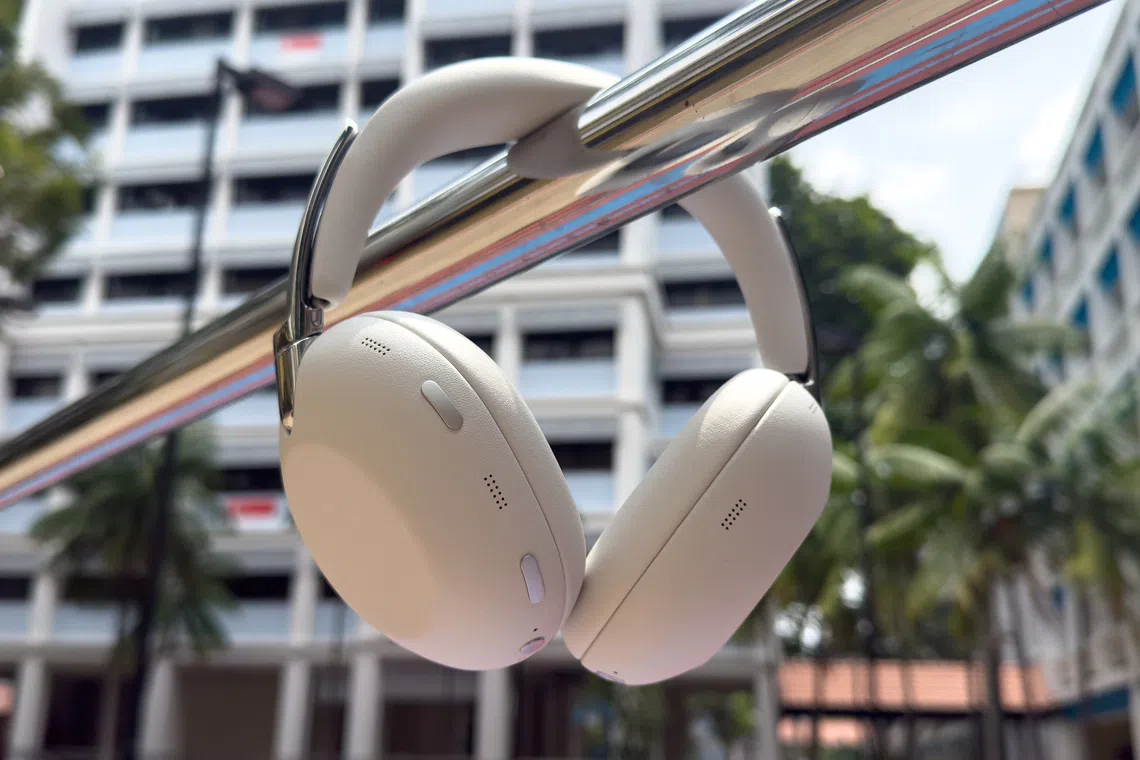
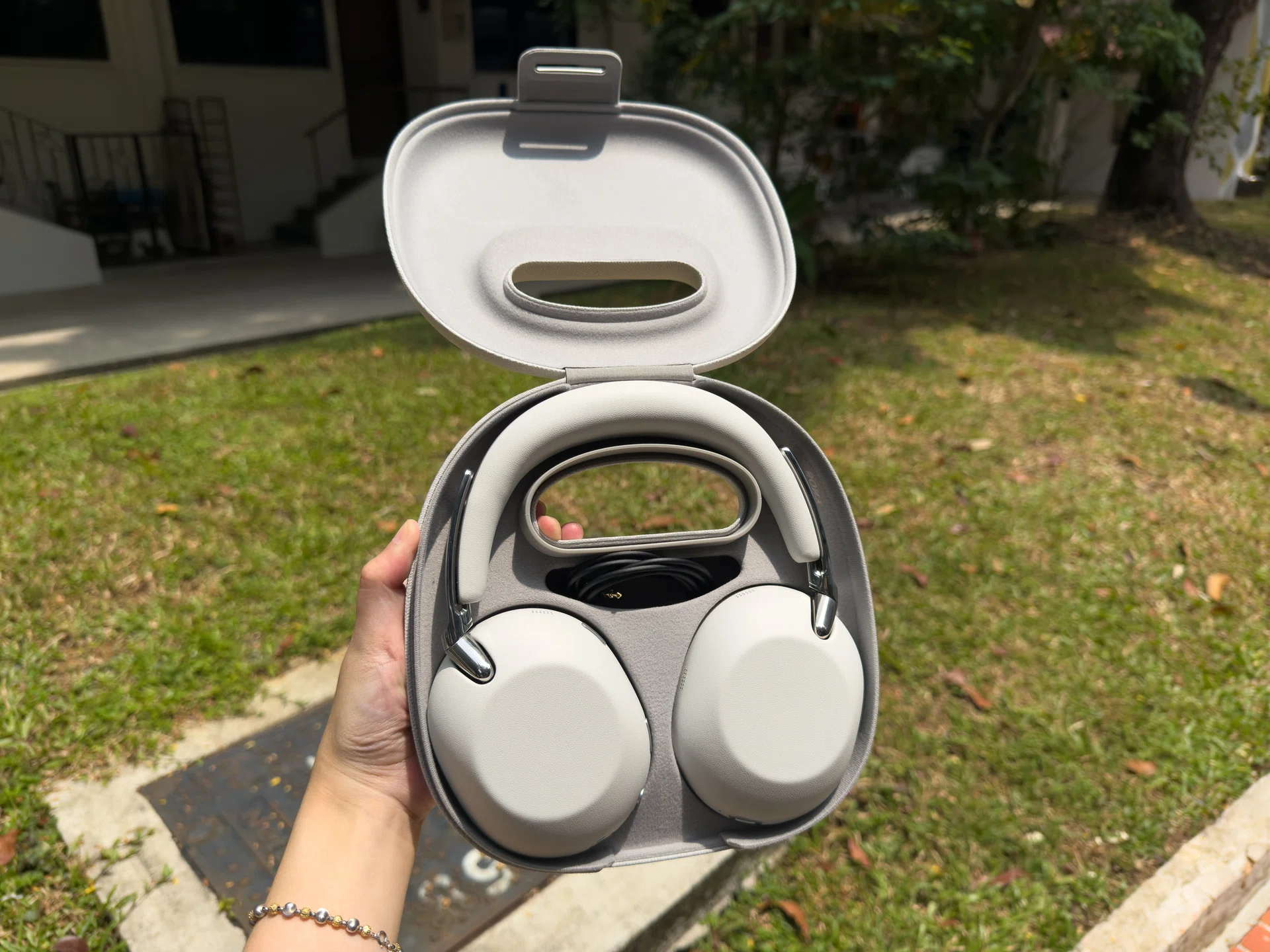
This is a gorgeous pair of premium consumer headphones from Sony.
Photo: HWZ
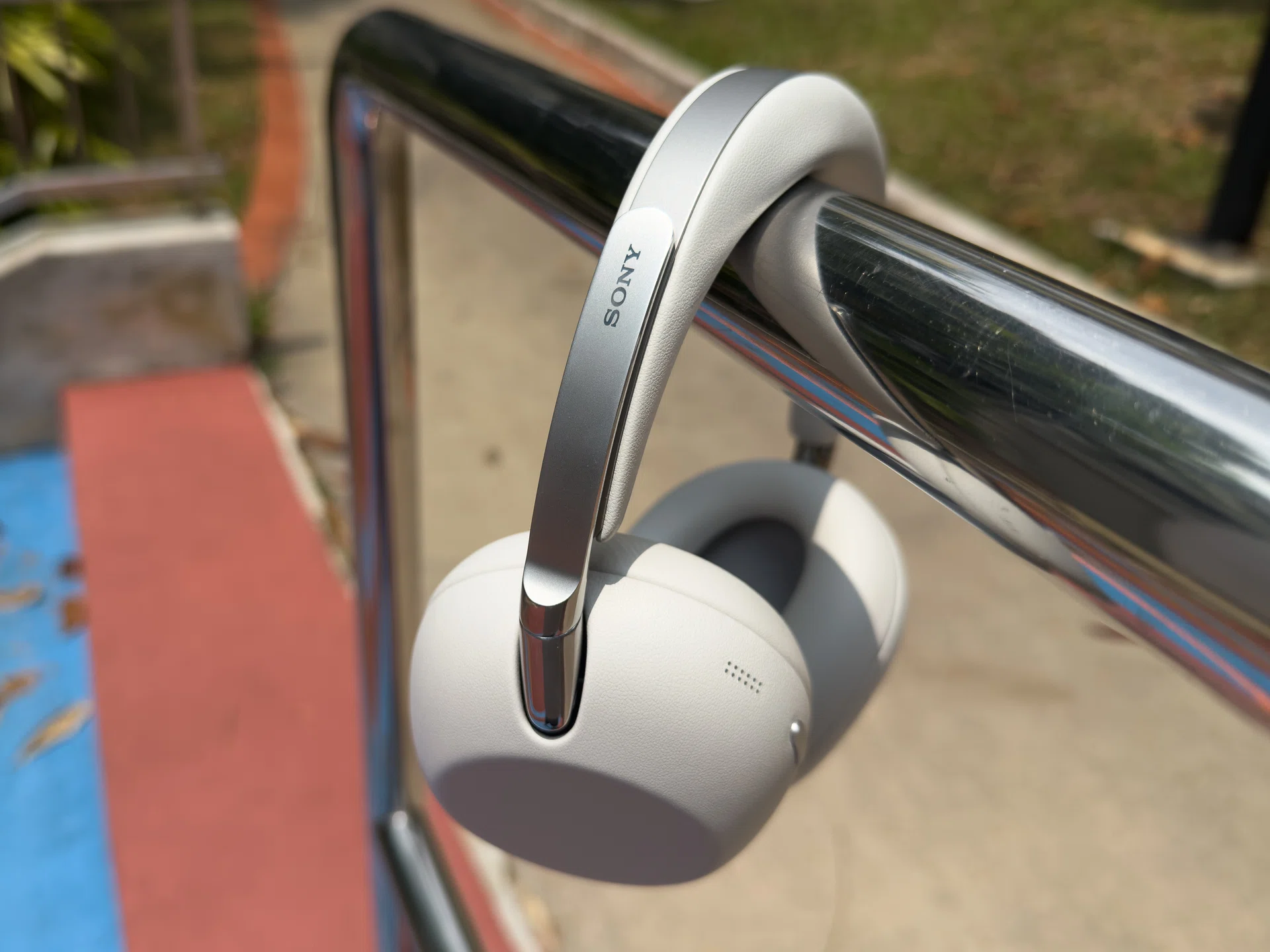
Off the bat, the 1000X The Collexion headphones look absolutely gorgeous. The sliders are made with stainless steel, combining both a sandblasted matte finish with glossy accents. The rest of the headphones are covered with faux leather that wraps around the outside of the earcup, with the same material used for the earpads as well as headband.
While the use of faux leather does make it feel more premium, it raises the question of repairability. Earpads can be replaced, but it’s unlikely you’ll be able to get the entire earcup re-wrapped.
The earpads use a different material compared to the WH-1000XM6, and while it’s relatively deep, the earpads are a bit narrow so larger ears might end up brushing against the back of the earpads. Even after six hours of non-stop music listening, the headphones were still quite comfortable. The clamping force wasn’t too strong, and the headband has enough cushioning to avoid hotspots at the crown of the head.
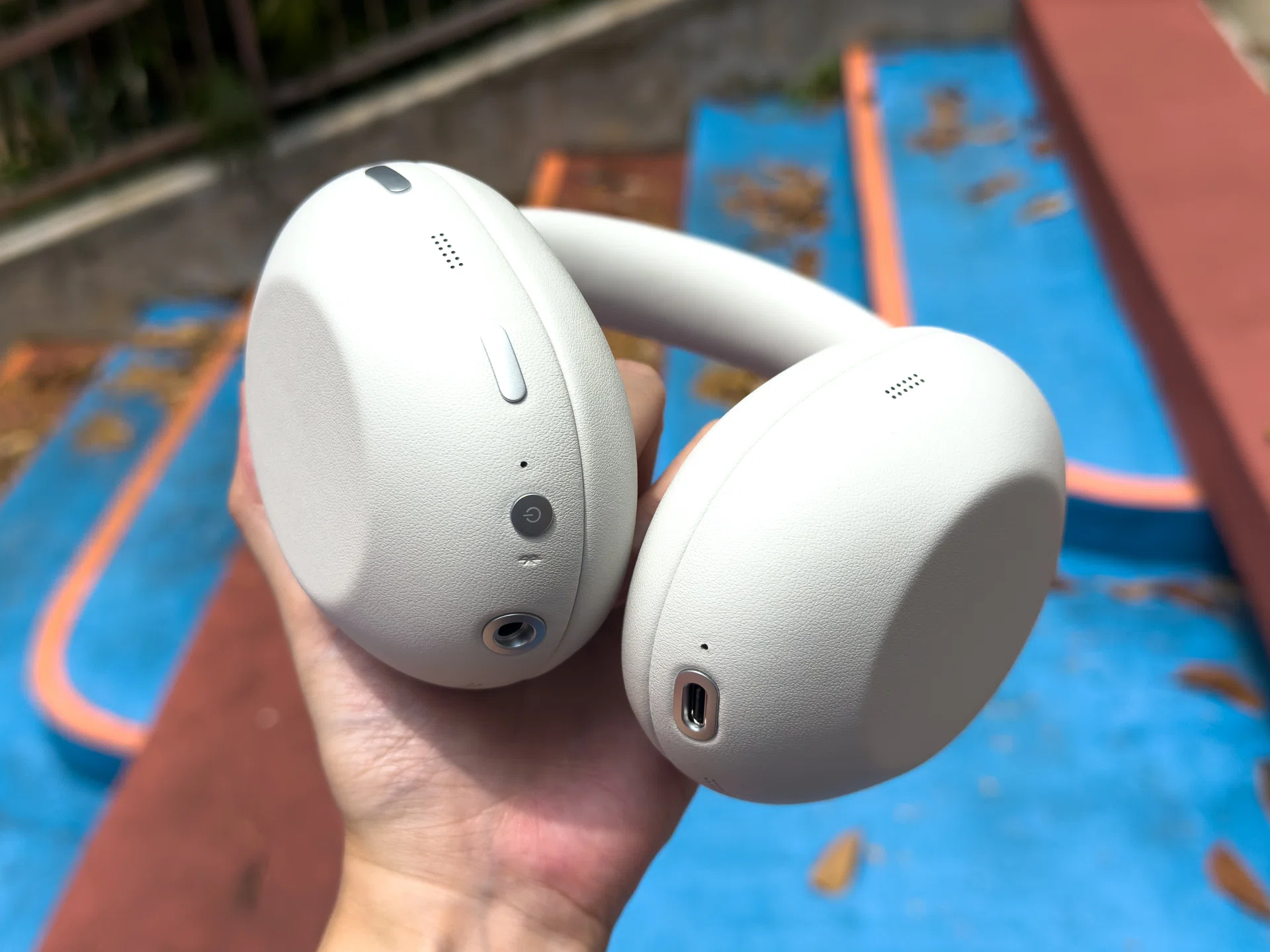
No accidentally hitting the listening mode button.
Photo: HWZ
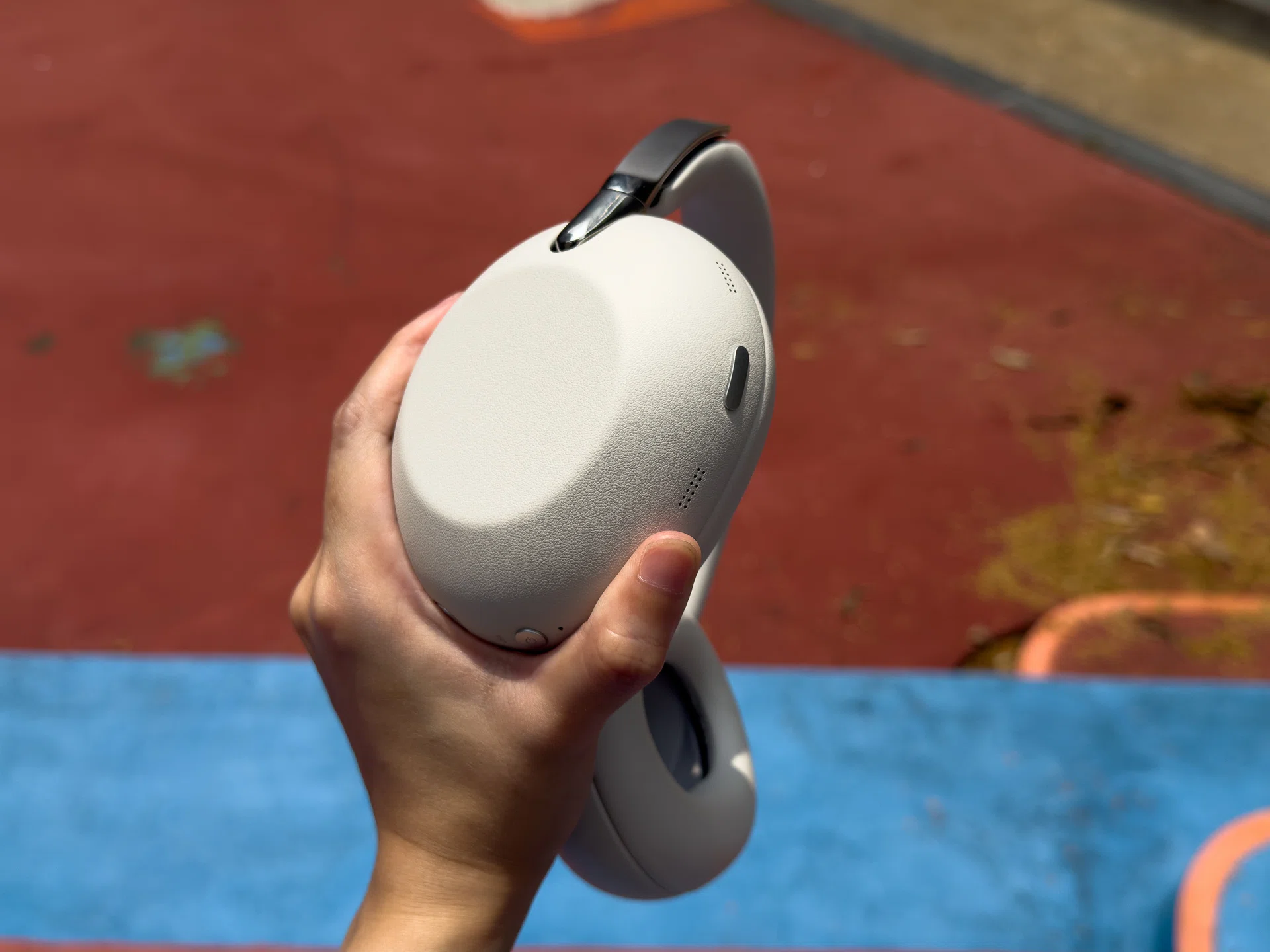
The left earcup has the power and noise-cancelling buttons, along with a new listening mode button that switches between the Standard, Music and Cinema 360 Upmix modes. The listening mode button is higher up on the earcup, so you won’t accidentally hit it when trying to find the ANC button.
As for controls, it’s essentially the same as the WH-1000XM6. The right earcup has the same touch controls, including the handy option to press your palm against the earpad to temporarily activate Transparency Mode for quick conversations.
Unfortunately, there’s no USB-C audio. The only way to listen wired is through the 3.5mm headphone jack, which is disappointing for headphones that cost over S$800. The Bowers & Wilkins Px8 S2 might be slightly more expensive, but those offer 24-bit audio over USB-C.
Sound & mic quality
The 1000X The Collexion headphones are using a new, bespoke 30mm driver unit with a high-rigidity dome that’s made from a carbon composite material, which is supposed to improve instrument and vocal separation while delivering a wider soundstage and clearer high-frequency detail.
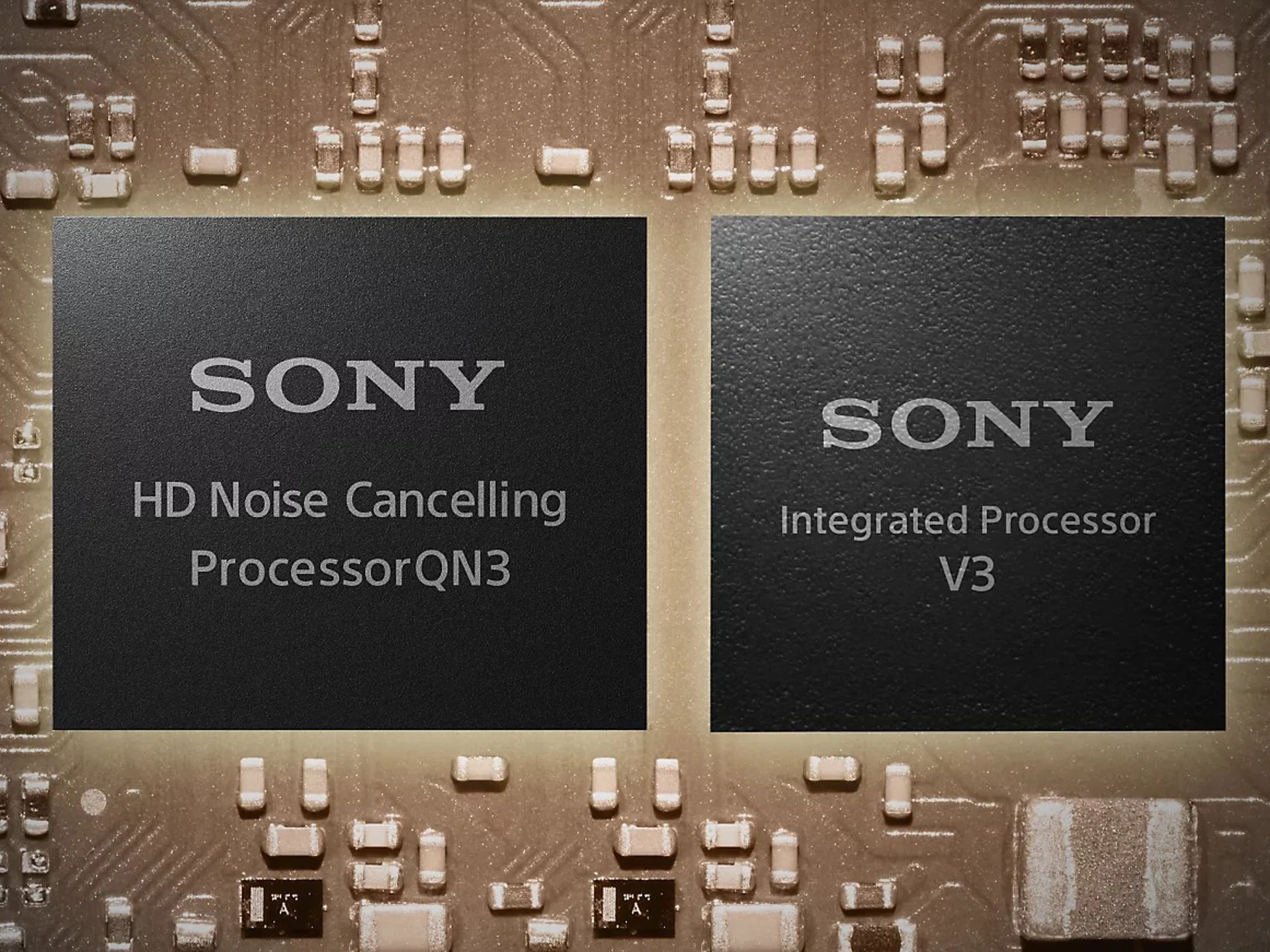
The headphones get the newest processors.
Photo: Sony
The headphones are not only equipped with the same HD Noise Cancelling Processor QN3 as the WH-1000XM6, but it also gets the Integrated Processor V3, which is a newer chip than the Integrated Processor V2. This also enables the new Music 360 Upmix feature, which I’ll talk about in a bit.
If you’re wondering about whether this means the headphones sound different, I can tell you that it definitely does. The 1000X The Collexion is more analytical than the WH-1000XM6, with less bass boost and a tighter and cleaner sound that’s more focused on detail and spaciousness.
Despite that, the low end is still substantial, with good rumble and texture. Something to take note of is that the headphones are rather anaemic when listening at low volumes, so if you’re used to listening at softer volumes like I am, you’ll likely be slightly underwhelmed by the sound until you crank up the volume. 35-45% works well enough, with an average SPL of around 65-75dB.
The new Music 360 Upmix feature boosts the volume by about another 5-10dB, and opens up the soundstage significantly, making it less in-your-head. It’s definitely personal preference, but I’ve found it to work quite brilliantly with tracks that are predominantly centred. Enabling the feature makes it feel more like you’re listening to a pair of open-back headphones. A track I really enjoyed more with Music 360 Upmix turned on was Ed Sheeran’s Bad Habits.
With this feature, vocals get more airy with a touch less timbre, while guitars, drums and other instruments get brighter. This can backfire occasionally with tracks that are heavy on cymbals, as it can get a bit too sharp and sibilant. Complex tracks with plenty of vocal layering also don’t work well with this feature, as the softer backing vocals end up being boosted too much and start to compete with the main vocal.
Wired listening only via the 3.5mm headphone port.
Photo: HWZ
Some tracks just don’t work well with the upmix feature, however, resulting in a tinny sound and artificially expanded soundstage. It also changes the instrument placement, with most of the mix now being more centred in the soundstage. Depending on the track, this can be good or bad, with TOOL’s Chocolate Chip Trip really feeling like the instruments were going around and behind your head. But the sound does change since the percussion gets more airy and loses a bit of heft while the drums get slightly deeper.
Live tracks you’re used to might also sound different because of the feature, with the 1994 Live on MTV version of Hotel California sounding more like a studio recording with the feature on.
On the other hand, Game 360 Upmix is fantastic. I tested it out with Gran Turismo 7 on the PS5, and with the feature turned on, it boosted the road and engine sounds, making it much more immersive.
Do take note that 360 Upmix doesn’t work when listening wired, but the best part about it is that it’s source-agnostic, so you can use it with any content when the headphones are connected via Bluetooth.
It has the same microphone array as the XM6, but ANC isn’t as effective somehow. It can cancel out lower-pitched rumbles and commute noise, but higher-pitched sounds will still slip in unless you’re listening to music at a higher volume than normal.
As for call performance, the mic array does a good job of isolating your voice and keeping it clean and audible in most situations, even in windy situations.
Connectivity & battery life
The headphones come with Bluetooth 6.0, and support for the SBC, AAC, LDAC and LC3 codecs. Connection in general is rock solid. I haven’t experienced any stuttering or audio dropouts in crowded MRT stations or shopping malls. The headphones are also able to stay connected to my phone even when I moved about 10 meters away with two solid walls in between.
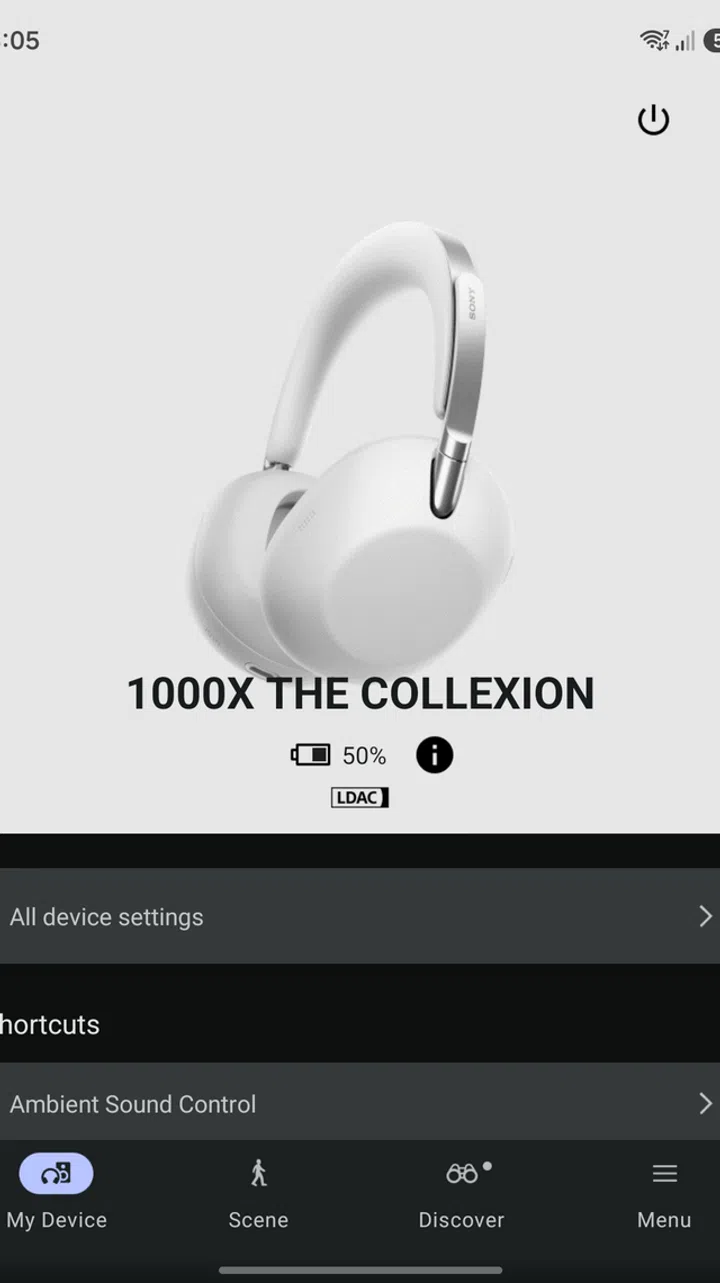
Sony Sound Connect app
Photo: HWZ
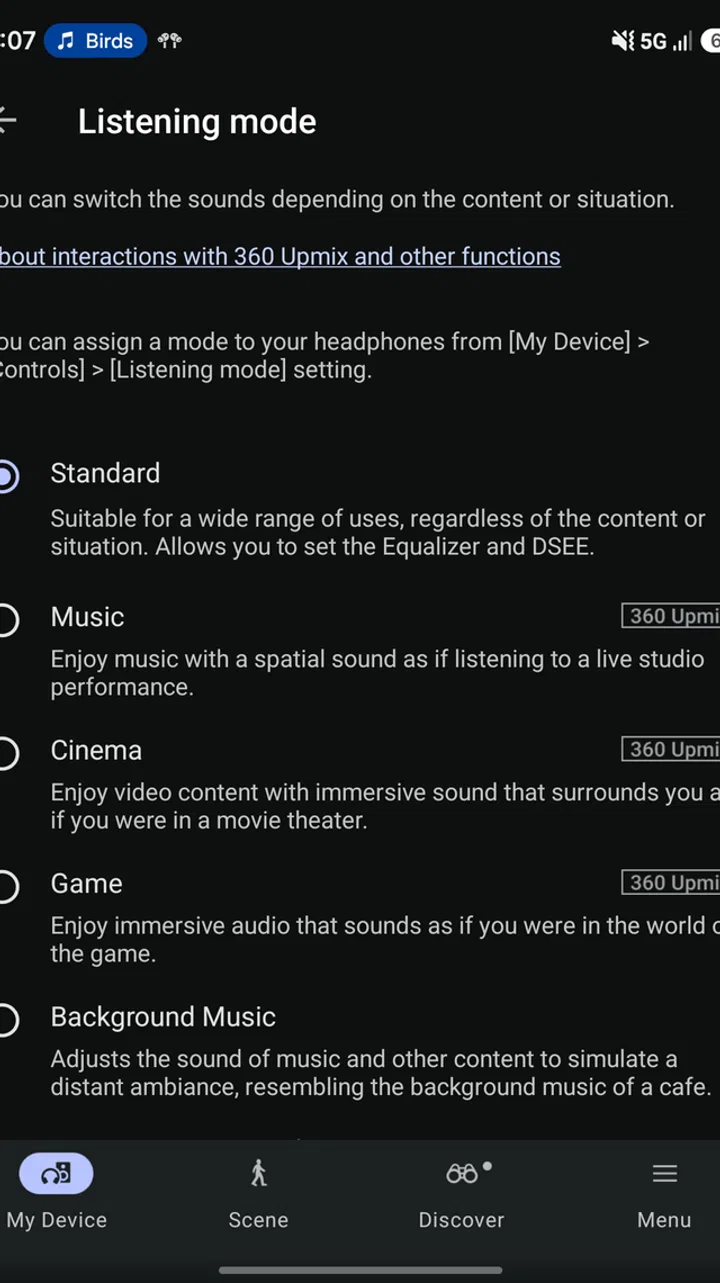
More 360 Upmix features to choose from.
Photo: HWZ
As always, you’ll want to download the Sony Sound Connect app to make sure you can get the most out of these headphones. All the regular customisation options from the WH-1000XM6 are available here, along with firmware updates and more.
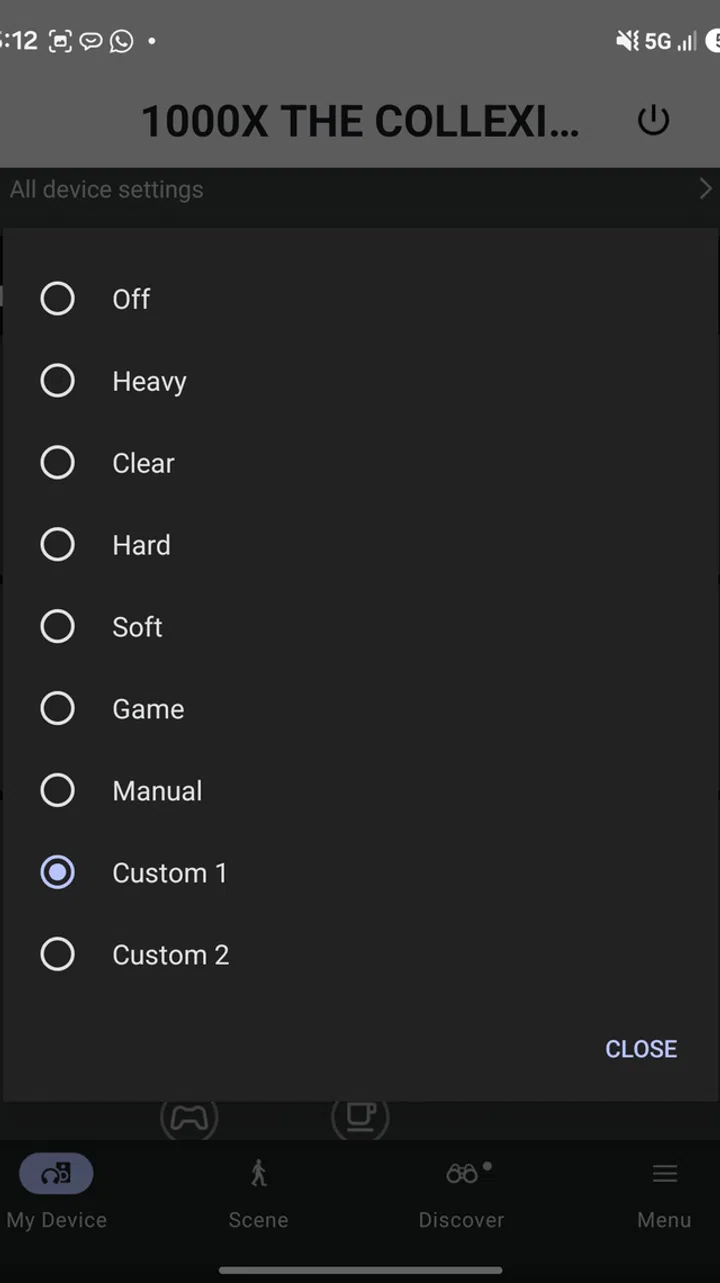
Plenty of EQ presets, with two custom options.
Photo: HWZ
10-band equaliser makes it easy to tweak the sound.
Photo: HWZ
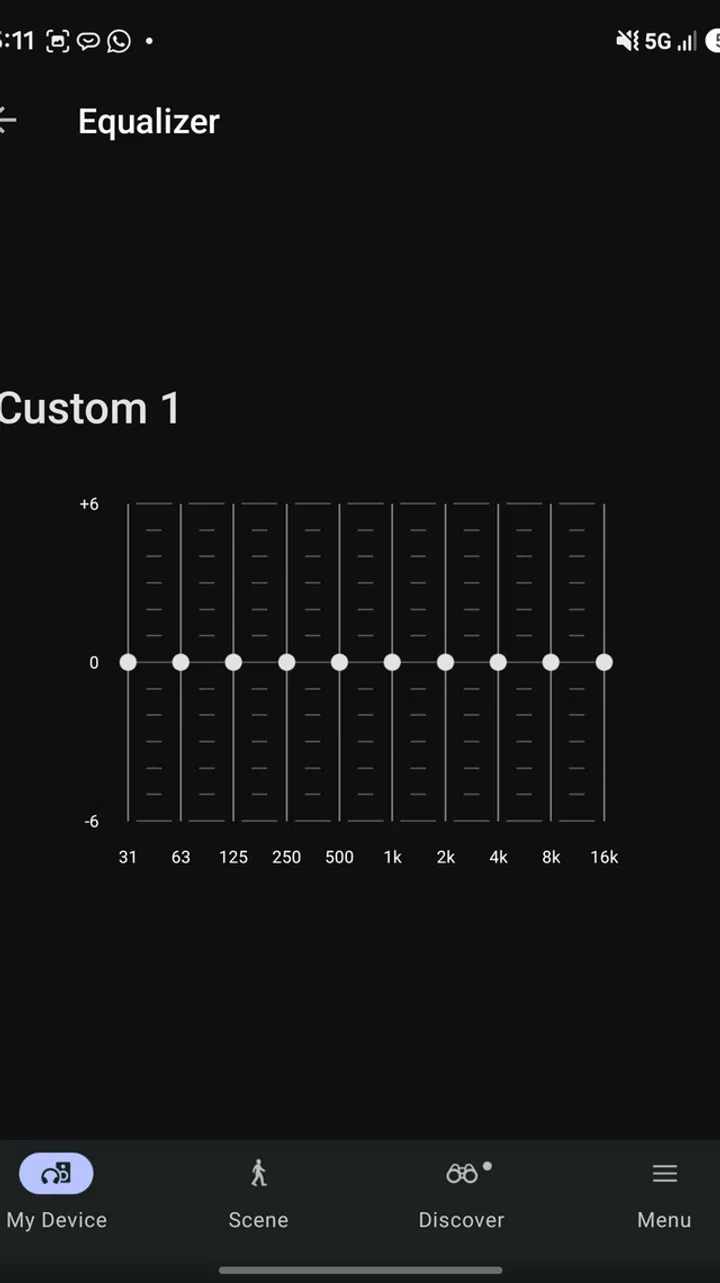
You can change between the 360 Upmix listening modes here, and tweak your EQ. There are technically six presets, but the last one, Manual, is reserved for a custom setting based on a preset. You also get two slots to save your own custom EQs, with the 10-band equaliser offering adjustments from 31Hz all the way to 16kHz.
Battery life isn’t too bad at up to 24 hours, although it’s a notch below the WH-1000XM6’s 30 hours with ANC turned on. Regardless, it’s enough for you to take any non-stop flight in the world and not have to worry about the headphones dying halfway.
Final thoughts and buying advice
It might be the most expensive, but it’s not the flagship.
Photo: HWZ
When Sony first explained that the 1000X The Collexion headphones weren’t the new flagship, I didn’t quite get it. Most of us have been conditioned to understand that the flagship product is the newest, most expensive model and that it’ll give us the best performance or sound. That’s not the case here.
While the 1000X The Collexion might be the most expensive wireless headphone model in Sony’s lineup, there are some aspects where the headphones don’t outperform the WH-1000XM6, most notably in terms of battery life and ANC.
If you’re looking for the ultimate noise-cancelling headphones, the Sony WH-1000XM6 is still the one to go for. And if you’re looking for the longest-lasting pair, that title would most likely be taken by the Sennheiser Momentum 5 Wireless.
But if you’re after a premium product that offers a combination of great sound, effective ANC and interesting features like 360 Upmix for games, movies and music, then the 1000X The Collexion ticks those boxes. The metal accents and build quality are excellent, without any of the plasticky feeling you get with most other headphones these days. And while it doesn’t support lossless wired listening, fussy listeners should be happy that there’s support for the high-quality LDAC codec.
It’s quite clear that these headphones are not here to usurp the flagship position, but rather to offer a new option for consumers who are looking for a different sound and experience.
Availability and pricing
The Sony 1000X The Collexion is available in Platinum and Black, with an RRP of S$839. The headphones can be purchased at Sony’s online webstore, Shopee, Lazada, and other authorised retailers.
Alphabet’s Google on Tuesday widened access to Gemini 4 Carbon, the most capable model it has built, moving the system out of a two-week restricted trial with a handful of cybersecurity firms and into the hands of paying developers worldwide, according to the company.
The model is now callable through the API in Google AI Studio and Gemini for business. Subscribers to Google AI Ultra, the $100-a-month tier, can also reach it inside the Gemini app, AI Mode in Search and Antigravity, the company’s agentic software development platform. Pro-tier and free users are excluded for now.
Google is holding introductory API pricing at the same level as the prior Gemini 4 Argon model: $2 per million input tokens and $10 per million output tokens. That rate expires Nov. 30, after which the company said the price doubles.
Gemini 4 Carbon at launch
Detail
API input price (introductory)
$2 per million tokens
API output price (introductory)
$10 per million tokens
Price change
Doubles after Nov. 30
Consumer access
Google AI Ultra subscribers only ($100/month)
Developer access
API via Google AI Studio, Gemini for business
Restricted variant
Carbon for cyber, via Fairwind program application
Google positioned Carbon as a tool for hard problems rather than everyday chores. The company said the model suits complex programming, deep debugging and scientific research, and that it consumes more tokens because it reasons and verifies its output repeatedly. For routine work, Google continues to recommend Argon, the first Gemini 4 model and a less advanced system.
The launch came with a security demonstration. Wiz, the cybersecurity company Google owns, ran Carbon against two large software vendors and surfaced previously unknown zero-day vulnerabilities in under two hours, then helped the affected companies patch them. Google said work of that kind has typically taken weeks. The caveat: Wiz was using Carbon for cyber, a specialized edition that still requires an application through the Fairwind program. The version released this week is the general-purpose model.
Benchmark results released alongside the launch put Carbon at the top of several third-party leaderboards, including CursorBench 4.0, Perplexity’s WANDR and Zapier’s AutomationBench, while Google claims cost per task more than 2X lower than rival external models. On security-specific tests such as SEC-bench Pro, ExploitGym and CWE-bench v1, the company said the model can identify, exploit and remediate vulnerabilities.
Google also said Carbon has shown gains in protein structure prediction, a step in drug development, and that it is granting 10,000 scientists six months of free access to support their research. Thousands have already been onboarded, the company said.
Multimodal work is part of the pitch as well. Google and Artificial Analysis built the Multimodal Knowledge Agent benchmark, on which Carbon placed second while keeping average cost per task roughly 6X below the top model. Using Antigravity’s /swarm feature, the company demonstrated the model coordinating multiple agents to rebuild a 3D model of the Eiffel Tower’s construction from historical photographs and engineering plates, and to assemble an interactive textile visualizer from academic research.
For Google, the release sharpens a two-tier product line: Argon for volume work, Carbon for high-precision tasks in legal and financial analysis, full-stack development and 3D design. The Nov. 30 price step gives developers a narrow window to lock in work at the lower rate, and the gated cyber edition keeps the most sensitive capability behind an application process even as the general model goes wide.
Most of us have probably been told at some point that playing video games is a waste of time. Apparently, nobody told Logitech.
The company has announced Logi Game Day, a new global employee benefit that gives every Logitech employee an additional day off specifically to play video games.
Yes, you read that correctly. An extra day off. To game.
Logitech is even giving the perk its own acronym: GTO, or Gaming Time Off.
And this isn’t just an American initiative. Logitech says the benefit applies to employees globally, with its Australian leadership backing the move.
It’s an interesting development from a company that has spent much of 2026 researching the relationship between gaming, cognitive skills and workplace performance. Rather than simply publishing another report about why gaming might be good for us, Logitech is putting its money where its mouth is.
Gaming Time Off Is Now a Company Benefit
Announced on 11 November 2026, Logi Game Day marks the first company-wide gaming day in Logitech’s history.
The premise is straightforward. Employees receive an additional day away from work to spend gaming, whether that’s tackling a single-player adventure, competing online or getting together with friends.
In a LinkedIn announcement, Logitech described the initiative as an extra day off and confirmed that every employee could now take Gaming Time Off.
It’s a surprisingly refreshing approach to workplace benefits, particularly when so much corporate discussion about productivity centres on getting more out of employees.
Logitech is approaching the question from the opposite direction: what happens when employees are given time to disconnect, enjoy themselves and recharge?
“It’s time to retire the stereotype that gaming is a waste of time,” said Hanneke Faber, Logitech’s CEO.
“As a company designing products for work and play, we see every day how engagement in one sphere supports performance in the other.“
The company hasn’t specified whether employees must take their Gaming Time Off on a particular date or whether they can schedule it individually.
Logitech Has Been Building the Case for Gaming at Work
This announcement doesn’t come out of nowhere.
Back in September, Digital Reviews covered Logitech’s research into Australian IT decision-makers, which found that respondents overwhelmingly recognised skills developed through gaming as valuable in professional environments.
That research involved 200 Australian IT decision-makers, with every respondent agreeing that gaming skills could translate into workplace capabilities.
We’re talking about problem-solving, strategic thinking, making decisions under pressure and working collaboratively.
Logitech’s broader Ctrl Tomorrow study also found that 81% of gamers surveyed believed gaming helped build real-world confidence, reduce anxiety and support stronger day-to-day performance.
Now, it’s worth keeping those findings in perspective. These are survey responses about perceived benefits, not evidence that spending another six hours playing Call of Duty will automatically make someone better at their job.
But there’s a reasonable argument that gaming involves more than sitting in front of a screen pressing buttons.
Anyone who has tried coordinating a group of players through a difficult online mission knows that communication, patience and teamwork can make the difference between success and watching the whole squad fall apart.
And perhaps there’s something to be said for giving people permission to switch off from work without feeling guilty about it.
Australian Logitech Employees Are Part of the Plan
Damien Lepore, Logitech’s Managing Director and Cluster Head for Australia and New Zealand, says gaming is already firmly embedded in Australian culture.
“Gaming is a major part of Australian life — research shows 82% of the country play video games, and when we surveyed local IT decision-makers earlier this year, every one of them said gaming translates directly to the skills they rely on at work, from problem-solving to performing under pressure.“
Lepore says the initiative reflects how Logitech wants to support its own people.
“It’s clear gaming isn’t something people leave at the door when they enter the office, and that’s the case here at Logitech ANZ too.”
“Game Day shows we’re meeting our people where they are — if you want a resilient, highly productive team that feels valued, you need to see what matters to them and act on it.“
It’s also a fairly strong statement about workplace culture. Plenty of companies talk about employee wellbeing, flexibility and work-life balance. Logitech is offering its staff something tangible.
And given the company’s gaming hardware business, there’s probably no shortage of keyboards, mice and headsets available for the occasion.
Gaming Isn’t Just for Kids, Either
There’s another interesting connection here.
Earlier this month, we explored Logitech’s research into Australian parents gaming with their children.
That research highlighted how gaming has become a shared family activity rather than something parents necessarily try to drag their children away from.
It challenges the familiar stereotype of gaming as an antisocial activity, particularly when parents and children are spending time together in virtual worlds.
Logitech’s latest initiative extends that conversation into the workplace.
Gaming isn’t necessarily something people grow out of when they finish school, enter the workforce or become parents. For many Australians, it’s simply another way to unwind, connect with others and enjoy some downtime.
And apparently, it’s now a legitimate reason to take a day off at Logitech.
Game Day Celebrations Are Coming
Logitech G will celebrate the initiative with a streaming event at its Americas headquarters in San Jose on 19 November 2026.
The event will be hosted by Logitech G General Manager Robin Piispanen, a former competitive gamer who believes shared gaming experiences can strengthen workplace relationships.
“Whether diving into a game like GTA VI or Call of Duty Modern Warfare 4, shaving seconds off lap times in Forza, or teaming up in an online battle, Game Day gives our team a shared purpose,” Piispanen said.
Logitech’s Chief People Officer, Elaine Laird, sees the benefits extending beyond gaming itself.
“Play is not the opposite of work,” she said.
“When people have dedicated time to log off, decompress and immerse themselves in play, they return with clearer focus, renewed energy and fresh approaches to complex challenges.“
A Perk That Might Be Worth Watching
There’s something appealing about a company telling its employees to spend a day doing something they enjoy, without dressing it up as another compulsory team-building exercise.
Of course, Logitech also happens to sell a substantial range of gaming hardware, so encouraging gaming is hardly disconnected from its business interests.
But that doesn’t make the employee benefit any less interesting.
The research suggests gaming can help develop useful skills. Logitech is now giving its employees the opportunity to put that philosophy into practice.
Whether Gaming Time Off leads to measurable improvements in productivity, employee satisfaction or workplace collaboration remains to be seen.
For now, though, Logitech employees have something rather unusual to look forward to: an extra day off where playing video games is the whole point.
O3-type layered oxides are attractive SIB cathodes because they combine high theoretical capacity with high initial sodium content and flexible TM chemistry. At high voltages (≥4.0 V), deep sodium extraction weakens electrostatic screening between adjacent TM–O slabs, promoting slab gliding, O–P phase transitions, and redox-coupled distortion of TMO6 octahedra. These structural changes can accelerate lattice degradation and compromise electrochemical reversibility. Electrochemically inactive dopants can reinforce the framework, but they may also dilute the redox-active components and reduce reversible capacity. Moreover, their selection has remained largely empirical, often guided by average ionic radius, oxidation state, or elemental composition. Such averaged descriptors cannot fully account for the distribution of ionic field strengths among constituent TM cations, which is associated with local bonding heterogeneity, strain accumulation, and nonuniform phase evolution. A quantitative descriptor that connects dopant chemistry with ionic field strength heterogeneity is therefore essential for designing structurally reversible, high-voltage O3-type cathodes.
The study, published (DOI: 10.1021/jacs.6c11691) online on October 20, 2026, in the Journal of the American Chemical Society, comes from Nankai University, Nanjing University of Science and Technology, the China Spallation Neutron Source Science Center, the Institute of High Energy Physics, Chinese Academy of Sciences, and the Haihe Laboratory of Sustainable Chemical Transformations. The team combined synthesis, structural analysis, electrochemical testing, and computation to test the design rule for O3-type SIB cathodes. The work systematically investigates how ionic field strength disparity influences local TM–O coordination, phase evolution, lattice-strain accumulation, and electrochemical stability under high-voltage operation.
The study compares a low-η cathode (η = 0.34) with a high-η analogue (η = 0.395). Both adopt the same O3-type framework, but the low-η material follows a more reversible O3–P3–O3 path structural evolution, and avoids the additional high-voltage phase transitions seen in the high-η sample. In situ X-ray diffraction reveals smaller changes in lattice parameters for the low-η cathode, indicating improved structural stability during deep desodiation. Differential electrochemical mass spectrometry (DEMS) shows no detectable O₂ evolution within the investigated voltage window and substantially suppressed CO₂ generation, suggesting mitigated oxygen-related degradation and interfacial side reactions. Furthermore, synchrotron X-ray absorption spectroscopy and atomic-resolution strain mapping reveal reduced local coordination disorder, improved structural reversibility, and suppressed heterogeneous strain accumulation. These improvements are consistent with an ionic field strength compensation mechanism, in which inactive cations with intermediate field strengths mitigate disparities among redox-active cations, promoting more homogeneous TM–O bonding and coordinated structural evolution during cycling. Notably, the low-η cathode exhibits a much smaller increase in η during desodiation (7.35%) than the high-η counterpart (17.72%), further supporting the importance of maintaining a stable ionic field strength distribution. The descriptor also enables composition-guided dopant screening, as demonstrated by two additional cathode chemistries with improved electrochemical performance. A control pair with comparable average ionic radii and TM valence states but different η values further confirms the significance of ionic field strength disparity beyond conventional averaged descriptors.
The authors said η turns dopant selection from an empirical search into a quantitative design task. They said the descriptor captures local chemical-field disparities that average composition, radius, or valence cannot resolve, and that lowering it helps synchronize TM–O bond changes and phase evolution during deep desodiation. They added that low η does not require maximal compositional complexity and that simpler cation combinations may avoid capacity and processing penalties. They also said the framework should be extended cautiously to oxygen-redox cathodes, where TM migration and lattice-oxygen loss add separate failure modes.
The approach could accelerate cathode development for stationary storage and high-voltage SIBs by narrowing dopant candidates before costly cell testing. Because η is calculated from formal valence, ionic radius, and cation fraction, it can be adapted to other multicomponent O3-type layered oxides. The results also suggest that low disparity, rather than high entropy alone, should guide composition design; excessive inactive ions can reduce reversible capacity and increase synthesis risk. Before commercial use, the rule needs validation across more compositions, including oxygen-redox-active cathodes, and under practical full-cell conditions. By connecting cation-level chemical descriptors with macroscopic electrochemical performance, this work provides a quantitative foundation for the design of more durable sodium-ion battery cathodes.
###
References
DOI
10.1021/jacs.6c11691
Original Source URL
https://doi.org/10.1021/jacs.6c11691
Funding information
The Acknowledgments list the Ministry of Science and Technology of China (2025YFE0100200); National Natural Science Foundation of China (22479080, 92372203, 92372001); Tianjin Natural Science Foundation Project (24JCJQJC00220, 24ZXZSSS00310); Haihe Laboratory of Sustainable Chemical Transformations (25HHWCSS00013); Fundamental Research Funds for the Central Universities of Nankai University (63253167, 63261001); and the “111 Center” (B25010).
About Journal of the American Chemical Society
The Journal of the American Chemical Society (JACS) is the flagship journal of the American Chemical Society and one of the world’s most authoritative and influential journals in the chemical sciences. Established in 1879, JACS aims to publish high-quality, original research that advances fundamental understanding across all areas of chemistry and its interfaces with other disciplines. The journal welcomes contributions in analytical, physical, inorganic, and organic chemistry, as well as in biological and medicinal chemistry, sustainable and environmental chemistry, computational and theoretical chemistry, materials and nanoscience, catalysis and energy, chemical engineering, and chemical education. By fostering innovation and excellence in both established and emerging fields, JACS continues to shape the frontiers of chemical research and to inspire scientific discovery worldwide.