For years now, some of the biggest players in the AI space have been investing in smaller startups — which in turn use the same exact money to purchase services from the same large companies.
Investors have watched this circular financing with quiet but growing trepidation. After all, as the Wall Street Journal points out, if the AI bubble were to pop, the consequences could be dire. Now, with fears over a sudden collapse are as palpable as ever, such a “tangled web of AI bets,” as the newspaper puts it, could spell disaster.
The signs aren’t exactly hard to identify. Just last week, Google’s parent company Alphabet experienced the biggest drop in its market value in its history, wiping out well over half a trillion dollars in value.
The accompanying crash likely didn’t just send jitters across tech markets. Since the AI industry is effectively propping up the entire US economy, its failure could have far-reaching consequences to a public that’s increasingly skeptical of its offerings.
Since most of these companies’ fates are inextricably linked by circular financing, a major economic downturn or weakening demand could have cascading repercussions, especially considering much of the sector’s financing is based on debt.
Beyond the tech industry’s very bad week, data center operators aren’t looking much better. Nvidia customer CoreWave, which analysts have dubbed the “AI trade’s canary in the coal mine,” has also seen its shares decline over months, raising plenty of flags.
Despite the widespread unease, enormous data center expansion efforts are in full swing, major bipartisan backlash notwithstanding. It’s an unprecedented all-in that could jeopardize the entire economy if it were to collapse.
Even beyond the US, the circular financing is starting to worry investors in Asia. The Bank of Korea recently warned of a “semiconductor version of Dutch disease,” an economic concept describing a booming sector that overtakes all other tradable market segments.
Yet the country is doubling down, with president Lee Jae Myung pledging today to “boldly invest in AI and future growth engines,” effectively doubling AI and chip spending for next year.
Only time will tell whether that’ll be the right move as more and more investors get cold feet.
More on the AI bubble:Stock Market Bloodbath Spikes Fears of AI Bubble Bursting
Everland’s youngest giant panda Shubao / Courtesy of Samsung C&T
Shubao, the youngest giant panda at Everland, has drawn about 50,000 visitors in roughly 10 days since she first went on public view, the theme park’s operator said Tuesday.
Samsung C&T’s resort division, which runs Everland in Yongin, Gyeonggi Province, said the cub began appearing at the park’s Panda World enclosure on Oct. 30. She was on view for about an hour a day in her first week. Everland has since raised that to three to four hours as she gets used to visitors.
Shubao was born June 3 to mother Aibao and father Lebao. She is the fourth giant panda born in Korea, after Fubao in 2020 and twins Ruibao and Huibao in 2023. Fubao moved to China in April 2024.
Crowds are also coming to see the twins before they leave for China in the third week of December. Under international conservation rules, giant pandas born outside China must move there before they turn 4, when they reach breeding age. About 100,000 people have visited the twins at their enclosure in the month or so since Everland announced their departure.
The twins will start a month of quarantine on Friday, but will stay on limited public view until Dec. 11 — the last day all five pandas will be together at the park.
Everland has planned a series of farewell events. On Wednesday and Thursday, zookeepers including Kang Cheol-won — known to fans as “Panda Grandpa” — will hold a talk concert and share stories about raising the twins. Through Wednesday, a large LED screen in the park’s Four Seasons Garden will show footage of the panda family.
Graduation-themed merchandise for the twins, including albums, gowns and caps, goes on sale Nov. 20, along with special food and drinks. Since June, fans have been collecting stamps in a nationwide travel project themed around the twins. Those who completed it can trade the stamps for certificates and medals.
Two photo essay books about the twins by an Everland zookeeper and the park’s photographer opened for preorder Nov. 3. Both made the bestseller lists at major Korean online bookstores that day.
This article was published with the assistance of generative AI and edited by The Korea Times.
Chances are, your skin care routine already has a cleanser, serum and moisturizer, but red light therapy is bringing something entirely different to the bathroom counter. Wearable LED masks have made the once spa-centric treatment much easier to try at home, with potential benefits that include improving the appearance of fine lines and wrinkles and supporting smoother, more youthful-looking skin. And honestly, any skin care step you can tackle from the couch is worth a shot.
Quick Overview
That said, this isn't the kind of beauty buy you should choose based on a cute color or tempting price tag alone. A thoughtfully designed device matters when you're dealing with light therapy for your face. INTEO offers a dedicated, high-quality lineup of at-home LED masks for shoppers who want to bring red light therapy into their regular skin care routine.
Save 32% on INTEO red light therapy
Amazon
Upgrade your skincare routine with this face and neck red light mask set that touts four wavelengths and light colors to help treat varying skincare concerns.
More: 8 self-care gifts that help make stressful days a little easier
Amazon
More: Red light therapy is the easiest way to upgrade your skin care routine
Amazon
Red light therapy goes beyond your face. This lamp features five brightness settings, nine timer options and can help offer full-body benefits like pain and inflammation relief.
What is red light therapy?
Unlike a serum or moisturizer, red light therapy takes a different approach to skin care by exposing the skin to specific wavelengths of visible light in order to stimulate cellular activity in the skin. Most of INTEO's products provide multiple light options for facial, neck, and upper chest care.
What are the potential benefits of red light therapy?
Red light therapy has attracted viral interest in skin care for its low maintenance benefits, and can help to:
Advertisement
Advertisement
Calm redness and irritation
Boost collagen production
Improve fine lines and wrinkles
Assist with wound healing and scar reduction
Improve skin texture and tone
Shop INTEO red light therapy
USA TODAY Shopping will be covering all the best deals and drops, so be sure to sign up for text alerts, check us out on Flipboard, follow us on TikTok, sign up for our newsletter and follow us on Instagram to stay updated!
This article originally appeared on USA TODAY: Give your skincare routine a glow-up with this red light mask
Our editors independently choose our recommendations. Some content is produced with paid support from a third party, however our editorial decisions remain independent. If you buy through our links, the USA TODAY Network may earn a commission. Prices and availability may change.
As crucial elections loom in the United States, AI chatbots are dumping political misinformation onto the populace with astonishing confidence.
There’s evidence that the problem is widespread. According to recent reporting by the Washington Post, top AI chatbots are giving horribly flawed information to users asking for voting guides on the midterms. For example, when WaPo tasked ChatGPT with creating a voter guide for all the races and candidates relevant to a resident of Missouri, the chatbot added a Senate seat that isn’t even up for re-election. A similar test for a resident in Wyoming claimed that local politicians running in municipal elections were running for federal seats.
In all, WaPo took a look at 3,000 AI-generated voting guides, which frequently shared false voting information that usually traced back to other AI-generated websites. In other words, the AI chatbots are eating their own slop and passing it off as authoritative election information.
Overall, the paper found chatbots failed to find which congressional district an exact address was located in a whopping 48 percent of the time, while those that did got it wrong 22 percent of the time.
Luckily, the share of users actually querying the chatbots seems to be relatively low. According to a late-October survey by the Pew Research Center, just eight percent of US voters say they’ve used an AI chatbot like ChatGPT, Copilot, or Gemini to look up information relevant to the ballot-box.
While the ideal number would be zero voters in any nation receiving AI-generated election misinformation, it seems in 2026, we’ll have to take what we can get.
More on elections: Political Candidates Spending An Obscene Amount of Money on AI-Generated Election Slop
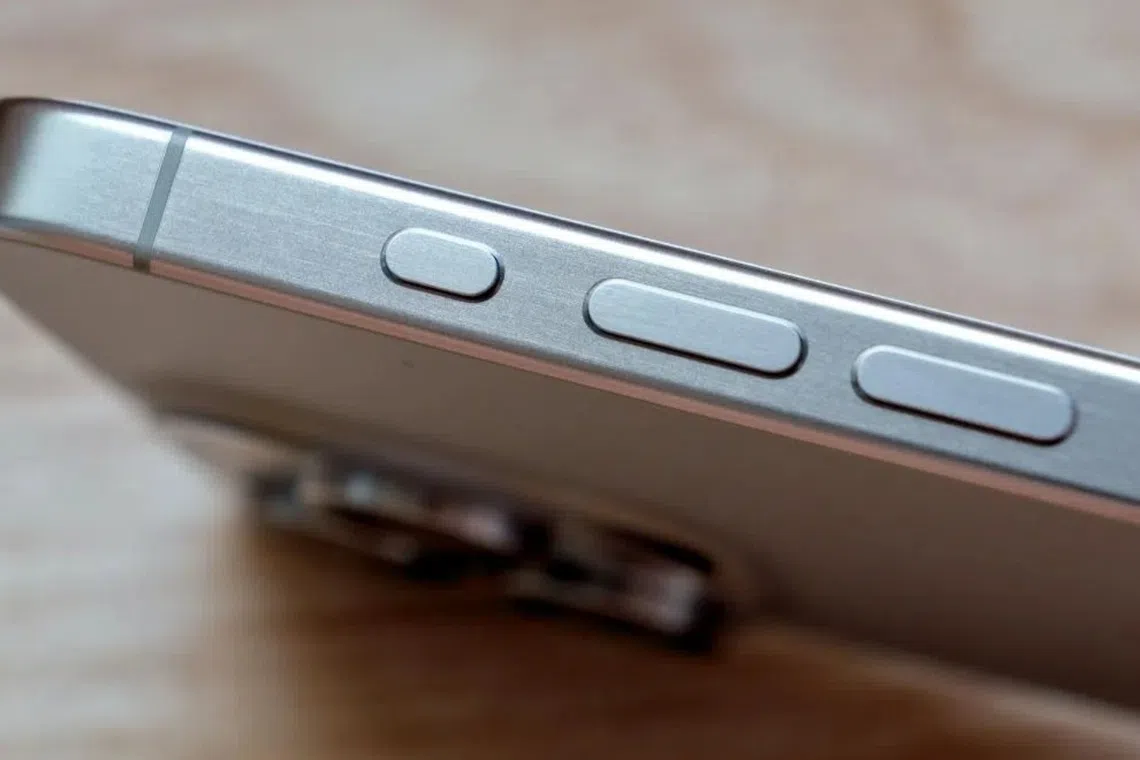
According to a new rumour, Apple may ditch the iPhone’s Action Button next year. Tipster Instant Digital claims Apple plans to merge the Action Button with Camera Control on its iPhones starting in 2027. The idea is to reduce the number of buttons on the iPhone.
A single press of the combined button would reportedly launch the camera, while a long press could open an app, perform an assigned function or run a shortcut. This would give users a way to retain the Action Button’s customisable functionality without requiring a separate physical control.
Apple introduced the Action Button on the iPhone 15 Pro in 2023, replacing the traditional Ring/Silent switch. The button is now available across the iPhone lineup, except for the iPhone Duo.
Combining the Action Button and Camera Control could make sense as Apple explores a major redesign for its 20th-anniversary iPhone, reportedly due in 2027. Both controls support press-based interactions and customisable functions, so consolidating them could simplify the device’s physical layout.
The Action Button’s future remains uncertain. In 2024, Patently Apple reported on a published patent application describing how Action Button functionality could be expanded to all three buttons on the left side of an iPhone. As is the case with all patents, this does not necessarily mean Apple plans to bring the concept to market.
Take-Two Interactive (TTWO) stock jumped in extended trading as anticipation for next week’s launch of “Grand Theft Auto VI” overshadowed mixed second quarter results.
“Pre-orders for Grand Theft Auto 6 are tracking far in excess of our initial expectations. And we know that the numbers will speak for themselves soon enough,” CEO Strauss Zelnick said on the earnings call.
Zelnick also noted that as preorders for GTA VI reach “unprecedented levels, we expect to deliver an historic year for our company.”
In the fiscal second quarter, Take-Two posted a loss of $0.29 per share on revenue of $1.5 billion. Wall Street analysts were looking for an $0.86 loss per share on $1.65 billion in revenue, according to S&P Global Market Intelligence.
The company reiterated its full-year outlook for net bookings of $8 billion to $8.2 billion. Revenue is expected at $7.98 billion to $8.18 billion.
Content warning: this story includes descriptions and censored AI-generated images of sexual abuse.
Facebook is hosting a large number of accounts dedicated to AI-generated content depicting coaches inappropriately touching young female athletes — and Meta isn’t taking them down, even when they’re directly reported by users.
In the videos the accounts share, the coaches are older men. They’re shown in gyms and dance studios, with their hands on leotard-wearing athletes practicing gymnastics, ballet, and yoga. All the young athletes are women — or girls. Though precise ages aren’t specified, some look as young as teenagers, at times shown with braces on their teeth.
In the AI-generated clips, which are nearly photorealistic, the athletes are often portrayed sweating profusely and breathing suggestively. The coaches run their hands over their lower backs and inner thighs as they stretch or practice poses, caressing and squeezing their bodies, and sometimes patting them on the buttocks or chest. In some videos, the older authority figures are shown touching the girls’ genitals over their outfits. More creepy videos show athletes sitting in a coach’s lap, or coaches kissing them on the mouth.
The AI-generated girls in the clips react as though the touching is normal, often smiling and giggling as the harmful behavior occurs.
But the touching depicted in the videos isn’t normal. It ranges from unnecessary to inappropriate to obviously abusive, mirroring the kind of real-world sexual abuse and grooming that are rampant in the sports they depict and in women’s athletics writ large.
“I do consider this abuse material. These images sexualize and normalize abusive interactions between coaches and young athletes within a sporting environment where significant power imbalances already exist,” Kim Shore, a gymnast and safe sport advocate who consults with Gymnasts for Change International, told Futurism after reviewing numerous accounts publishing the AI content. “What is particularly disturbing is how easily inappropriate or abusive conduct can be disguised as playful, affectionate or helpful coaching behavior. This reinforces some of the very narratives that have allowed abuse to flourish in sport for decades.”
But according to Facebook’s moderation system, the disturbing clips don’t violate Meta’s standards.
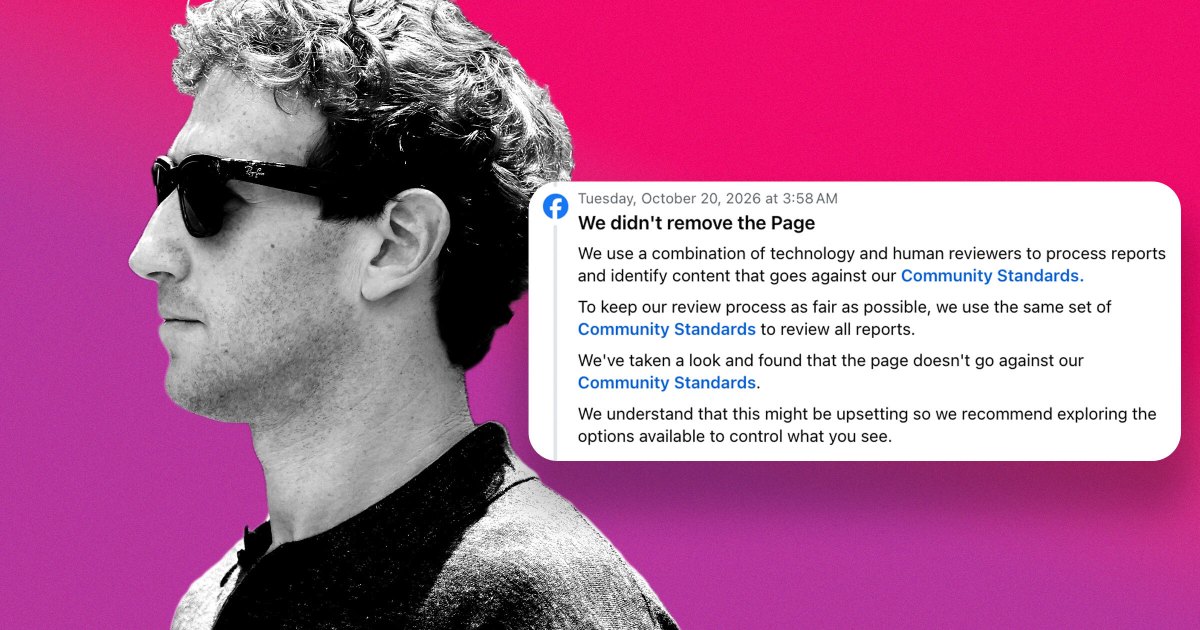
Using an ordinary Facebook account, we alerted the social media platform to ten different accounts publishing this kind of content, reporting them for adult content and sexual exploitation. A full week later, we received notices from Facebook that eight of the accounts didn’t violate the site’s rules, and would not be removed from the platform. (Two of the accounts vanished, though it’s unclear whether that had anything to do with our reports.)
“We use a combination of technology and human reviewers to process reports and identify content that goes against our Community Standards. To keep our review process as fair as possible, we use the same set of Community Standards to review all reports,” read each of the eight identical notifications. “We’ve taken a look and found that the page doesn’t go against our Community Standards.”
“We understand that this might be upsetting,” they added, “so we recommend exploring the options available to control what you see.”
Some of the clips — which can attract more than 100,000 views apiece — are thinly veiled as educational, insinuating that the predatory coaches are helping the girls’ perfect their technique.
“Keep your hips square,” an instructor is shown telling a young-looking ballerina in one video as he moves his hands to her private parts.
“I’m trying,” she replies coolly, without flinching.
Other accounts make little effort to hide their prurient intent. One has published nearly 20 slightly-different versions of the same AI video, which depicts an elderly coach alone with a leotard-wearing gymnast who looks no older than a teenager. In the comments of each clip, the poster urges viewers to click a link marketing a “members only” channel on WhatsApp — another platform owned by Meta — for the “prettiest video call anytime.” Another account’s header image shows a male coach’s hand directly on the crotch of a young female gymnast doing a split-legged headstand.
In its Community Guidelines for “Adult Nudity and Sexual Activity,” Meta claims to forbid content showing “impending sexual activity, as indicated by positions which suggest contact is about to be initiated between a person’s hand… with another person’s genitals or anus.” Under guidelines for “Adult Sexual Exploitation,” its guidelines claim to prohibit material in which a “person in the imagery is (near) nude, engaged in sexual activity or in a sexually suggestive pose (this includes digitally created or AI-generated imagery).”
Regarding “Child Sexual Exploitation, Abuse, and Nudity,” Meta claims to forbid “content (including photos, videos, real-world art, digital content, and verbal depictions) that sexualizes real or non-real children,” as well as “stimulation of genitals or anus, including when activity is imminent or not directly visible.”
After receiving the support messages stating that the AI videos didn’t violate Meta’s Community Standards, we reached out to Meta’s media relations team, sharing links to the accounts we’d reported and asked why the content didn’t breach the social media giant’s guidelines. Shortly after we reached out, we noticed that all of the pages had been removed, and several of the support messages we’d previously received had been updated with a new response.
“We removed the Page you reported,” read the new message. “We reviewed the Page and found that it goes against our Community Standards.”
In a statement, Meta told Futurism that “whether it’s real or AI-generated, content that depicts abuse or exploitation has no place on our platforms. We’ve removed these accounts for violating our policies.”
But it wasn’t until it was contacted by a journalist that Meta backtracked on its initial assessment that the pages didn’t violate its policies, a lapse that raises serious concerns about the company’s moderation practices and the effectiveness of the reporting policies available to everyday users. Why was this content held to a different standard when it was raised by a reporter, and not when it was flagged through official Facebook channels by a normal account holder?
Asked about the gap between its response to a user on the platform versus a media inquiry, Meta defended its record on removing abusive material from its platform.
“While there are times we miss things, we work hard to enforce our rules, which is shown by the fact that just last quarter, we proactively found and removed 98 percent of child endangerment posts before they were ever reported to us,” it said.
After we reported the abusive pages, Facebook’s recommendation algorithm started serving up many more similar AI videos of coaches inappropriately touching, kissing, and groping young athletes in the feed of the account we used to flag it. The implication is dark: that Meta has the tech it needs to identify the disturbing clips, but instead of using it to crack down on the content, it’s using it to recommend more of the material to users who have interacted with it.
The accounts often publish several near-identical AI videos per day, with some videos accumulating huge numbers of views. One video served to us after Meta shared its statement showed more than 176,000 views just two days after it was posted.
“I really enjoyed that session. I feel fresh and positive now,” a girl decked in a pink leotard and matching socks, standing on one leg and holding the other in the air, tells the camera as a gray-haired trainer pats her genitals. Hash tags in the video’s caption include “#ballettok,” “#ballerina,” and “#balletmemes.”
It’s hard to imagine that some of the videos aren’t being served by Meta’s algorithms to actual young athletes, raising the risk that they’ll see the grooming and abuse behavior normalized as they navigate the possibility of real-world exploitation.
“I’m extremely concerned that children who are exposed to this content will internalize the message that if something similar is happening to them, they have to endure it because it is normalized in similar environments… they will be forced to further suppress their innate wisdom that this type of contact with an adult is not okay,” Shore told us. “Sport already does this to children by normalizing physical discomfort like training on injuries. Young athletes are taught to trust their coaches, follow instructions and accept physical contact as part of training. These images reinforce the dangerous idea that inappropriate touching or sexualized behavior is simply part of the coach-athlete relationship and athletes should accept it, tolerate it or even be grateful for the attention.”
Shore added that one of her “greatest concerns” is that real-world predators could model behavior based on the abuse material proliferating on Facebook.
“This AI-generated material acts a ‘how to’ manual for inappropriate behavior, particularly when abusive interactions are presented as ordinary coaching practices or expressions of care. It risks giving adults who are already inclined to exploit their authority examples of how to disguise abusive conduct as legitimate coaching, affection or playfulness,” she said. “We need to recognize that this material doesn’t exist in isolation. It circulates within a sporting culture where athletes have historically been conditioned to comply with authority, where boundaries have too often been blurred, and where abuse has frequently been minimized or excused.”
“This content is normalizing behaviors,” she added, “that safeguarding efforts have spent decades trying to challenge.”
As Futurism previously reported, Meta has also declined to remove AI-generated content depicting extreme physical child abuse. The company has elsewhere failed to catch hundreds of paid advertisements containing real and AI-generated child sexual abuse material, as Wired reported in September. Meta also faced backlash last year after Reuters reported on internal documents stating that Meta chatbots were allowed to “engage a child in conversations that are romantic or sensual.”
Women’s and youth sports are notorious hunting grounds for abusers. According to a global 2021 study by the World Players Association, 13 percent of child athletes are subject to some kind of sexual abuse during their time in sports. That figure is likely an undercount, as TIME noted at the time, given that sexual abuse often goes unreported.
In that context, the AI-generated Facebook clips of older men abusing their proximity to girls’ and women’s bodies to groom, sexualize, and exploit them is particularly appalling. That the athletes depicted in the videos are shown acting enthusiastic in the face of the predation is even worse, adding an air of normalization — or even romanticization — to the clearly exploitative encounters displayed in the AI-generated clips.
But instead of taking its responsibility to police its platform seriously, it seems like Meta is operating by two different standards: dismissing regular users who report disturbing material, while jumping into action when it senses the threat of negative attention.
Do you know anything about Meta’s content moderation strategy? Email us: tips@futurism.com. We can keep you anonymous.
More on Meta and AI content moderation:Facebook Is Hosting Huge Numbers of Horrifying AI-Generated Videos of Violent Child Abuse, and Meta Is Barely Even Pretending to Care About Taking Them Down
Google has made Gemini Omni 1.2 Flash generally available through the Gemini API and Gemini for business, pricing 720p video generation at $0.07 per second.
The release extends native video generation from 10 seconds to 15 seconds. Users can choose durations in one-second increments between three and 15 seconds. At the stated 720p rate, a 15-second generation equates to $1.05.
Google says the price is 30% lower than Gemini Omni 1.1. The update also introduces a workflow for drafting, editing and upscaling videos, allowing users to refine an existing clip through follow-up instructions.
Omar Pera, CPO at Magnific, describes the production challenge: “The first generation is a starting point. Professional teams need precision to get from there to a finished shot.”
Editing the same clip through follow-up prompts
Gemini Omni 1.2 Flash supports conversational editing across full 15-second clips. Google says users can replace a product or background, adjust lighting or weather, and change the aspect ratio without regenerating the entire video.
The workflow allows teams to draft at 360p or 720p, refine selected details and upscale chosen outputs to 1080p or 4K.
Generation can combine character, product and style images with audio cues and short motion references of up to three seconds. Google reports improvements in maintaining faces, clothing, packaging text and brand colors as the camera angle changes.
Its examples include a virtual try-on sequence built from a model photograph and front-and-back images of three outfits. The demonstration is intended to show how garment details and the model’s identity can be maintained through turns and transitions.
Another example uses a studio lighting poster to compare reference following in Omni 1.1 Flash and 1.2 Flash. Google describes the newer version assembling the poster’s letters, materials and lighting details in sequence while preserving their appearance.
The release also includes a four-shot, 15-second science explainer generated from a single visual reference, with explanatory labels incorporated into the video.
More control over characters, speech and camera movement
Google says the update reduces visual drift, including objects changing shape or appearance during motion and scene transitions. The improvements cover sequences generated between a supplied first and last frame, as well as extensions to existing clips.
Dialogue generation also receives an update. The company reports more natural speech, clearer lip-sync and better assignment of distinct voices to different characters.
One demonstration combines a scene image with character, mouth and voice references to generate a 15-second animated conversation. Another uses architectural photographs to guide a continuous camera movement through the Pantheon.
Within creative software, partners are describing workflows that combine generation with further direction and editing.
Itay Schiff, Creative Director of Figma Weave, says: “In Figma Weave, teams can direct an entire video sequence from a single generation, then refine it with references and branching versions on the canvas.”
Adobe also plans to add Gemini Omni Flash 1.2 to Firefly, where creators already have access to Gemini Omni Flash. Its stated additions include longer outputs and closer adherence to reference images.
Access varies across Google products
Developers can prototype with the model in Google AI Studio and access it through the Gemini API. Businesses can use the Google Cloud console and build applications through the API.
For Google Vids, the company says users can generate 15-second clips at no additional cost with a Google account or Google Workspace subscription.
Flow supports scene direction and conversational edits, while Google Ads provides a route for producing video campaigns.
Google says generated outputs carry an imperceptible SynthID watermark. Provisioned Throughput is also available through Google Cloud for organizations using the model at scale.
The company acknowledges that development is continuing on fast sports action, rapid script changes and complex physics.
Access through the Gemini app is rolling out to Google AI Ultra subscribers, where users will be able to create 15-second videos.
ETIH Innovation Awards 2027 open for entries
The ETIH Innovation Awards 2027 are now open for entries, with 26 categories recognising companies, institutions, projects and individuals making a measurable impact across education technology. The global awards span AI in education, digital learning, higher education, skills and workforce, inclusion, education operations, evidence and impact, with entries managed through ETIH’s new online awards platform.
Entries are open worldwide, with the early-bird deadline on Friday 18 December 2026 and the final entry deadline on Friday 26 February 2027 at 23:59 UK time.
Explore the 2027 categories and judging criteria, read the How to Enter guide or start an entry through the ETIH Innovation Awards 2027 platform.
The ambitious new Orient Star Skeleton 75th Anniversary Flagship Model RE-BR0001N represents two major milestones for the brand — 75 years as a manufacture and 35 years of making skeletonised watches.
A limited edition of 130 pieces, the Orient Star Skeleton introduces the new F9 movement family, which combines the best of the brand’s finishing and technology, including a prominent blue silicon escape wheel and gleaming diamond-milled chamfers, in a zaratsu-polished stainless steel case.
Initial thoughts
Orient Star cites no fewer than three inspirations for the design of the open-worked dial plate: Zen garden ripples, the use of negative space (“ma”/間 in Japanese) and the orbits of planets — the latter fitting into Orient Star’s overall astral theme. Regardless, the overlapping circular design is appealing and creates ample surface area for decoration.
The Orient Star Skeleton is an inherently movement-forward watch, with its cal. F9B82 displayed proudly beneath its chamfered dial plate. But there’s more to the Skeleton than its open-worked dial. In particular, the gleaming case is as sharp and shiny as you’d expect of a Japanese luxury watch, addressing a relative weakness of past models and helping justify entry into a new price segment.
While the interlocking ring motif brings order to the dial, the balance wheel is arguably overemphasised, breaking the symmetry. This pattern interruption feels abrupt in part because it reveals the less attractive underside of the balance wheel.
That said, it is without question the most luxe Orient Star Skeleton to date and its most expensive contemporary offering, with a price tag of US$8,000. Orient Star plans to build 130 of these watches, showing confidence in the new product despite its upmarket positioning.
Of course, it is only expensive compared to Orient Star’s usual fare — the pricing makes more sense compared to Swiss skeleton watches of similar quality. To sweeten the deal, the watch comes with a 10-year warranty, and up to three complimentary full services during this period, should you choose to follow Orient Star’s recommended 3-5 year service interval.
The star of the show
While the open-worked dial plate gleams brightly at arm’s length, a closer look reveals a degree of hand craftsmanship that is uncommon in this segment.
The black accent lines, for example, are not printed. In fact, the grooves are flooded with black ink using a handheld syringe, adding depth to both the colour and geometry. The vertically brushed texture is applied freehand as well, by dragging the dial plate across an abrasive surface.
The polished chamfers are diamond-cut, a process that, if well executed, results in an extremely smooth, mirror-like surface. Single-point diamond turning (SPDT), with a stationary diamond cutter and spinning workpiece, is used everywhere from Grand Seiko dial furniture to Patek Philippe movement parts.
The inverse, with a spinning cutter and a stationary workpiece, is often used to machine bevels on bridges and plates. This approach is particularly vulnerable to chatter during cutting, which can be seen here, but the smoothness of these bevels is above average.
Inking and graining the dial plate by hand. Image — Orient Star
The dial plate frames Orient Star’s Milky Way-styled silicon escape wheel. While silicon components took the Swiss watch industry by storm years ago, Orient Star was the first, and remains the only, Japanese brand to adopt the material.
While metal escape wheels can be press-fit or riveted into place without issue, silicon parts require a lighter touch. Rather than gluing the escape wheel into place, as is the norm, Seiko Epson engineers designed a series of flexible arms into the escape wheel that tightly hug the escape pinion.
A hard oxide surface treatment protects the escape wheel, so the colour won’t wear away, and it’s unaffected by UV light.
The escape wheel’s vivid blue colour comes from a layer of poly-crystalline silicon. The thickness of this layer determines the wavelength of light it reflects, which can range from blue-green to purple. The same phenomenon colours the heat-blued steel hands; heating the steel causes it to react with atmospheric oxygen, forming an oxide layer.
This is complicated somewhat by the open-worked design of the dauphine-style hands, which can result in uneven heating and inconsistent oxide-layer thickness, and thus blotchy colour. Due to this design, the failure rate is around 50%, meaning that only half the hands produced are deemed suitable for use.
The open-worked dial plate exposes some of the differential for the power reserve display.
As a final flourish unique to this model, the heads of the screws affixing the dial plate to the movement are lapped. This imparts a very flat, mirror-finished surface to the dial-side screw heads, causing them to turn black when viewed from certain angles.
An elevated case
While some previous Orient Star models featured dials made by Seiko Epson’s Shinshu Watch Studio, a centre of high-end Japanese watchmaking, this is the brand’s first model with a case made there as well. The difference in quality between this case and those of other Orient Star references is revealing.
Not only is the case construction more complex, especially the lugs, it is also zaratsu polished. This polishing technique, akin to lapping, is most associated with Grand Seiko products, and uses the side of a spinning tin plate to create a mirror-like finish not possible with normal soft polishing wheels.
The case back is fixed with four screws behind the lugs, an approach also used on early Spring Drive watches that allows for thinner-walled cases — ideal for a skeletonised watch. This gave Orient Star room to expand the movement from 27.6 mm to a pocket watch-sized 36 mm in diameter to fill the 40 mm case without a spacer. Moreover, the case is well proportioned at just 9.5 mm tall.
But Orient Star did more than just enlarge the dial plate. The brand made good use of the extra space by rearranging the train, putting the balance, escapement and fourth wheel in a straight line.
The open-worked dial plate appears especially vivid thanks to the anti-reflective coating on the sapphire crystal, which causes the crystal to almost disappear without the typical blue hue, though the case back crystal seems to be uncoated.
Made of hand-massaged, vegetable-tanned goat leather, the strap is claimed to be durable enough for long-term wear despite its smooth, supple feel. This is the second watch we’ve reviewed recently with a goat leather strap, and in both cases we came away impressed with the on-wrist experience.
A next-generation calibre
While the first member of the F9 calibre family focuses on aesthetics, it comes with a few technical improvements compared to Orient Star’s F8 platform. Most obvious is the addition of an eccentric screw to the regulator for more precise adjustment.
The difference is quantifiable — moving the regulator pin directly by 1° changes the rate by ~15 seconds/day, while turning the eccentric screw by 1° only changes the rate by ~1 second/day. Orient Star has tightened the timekeeping tolerance as well, now +10 to -4 seconds per day.
Finally, to improve power transmission, the leaves of the second, third, and fourth wheel pinions are buffed individually using abrasive powder and a boxwood polishing wheel — a labour-intensive but effective trick also used to squeeze longer power reserves out of Spring Drive models.
This is an example of functional finishing, which is often overshadowed by purely decorative embellishments like bevelling. The result is at least two more hours of going, bringing the power reserve up to three full days.
Key facts and price
Orient Star Skeleton Ref. RE-BR0001N
Diameter: 40 mm Height: 9.5 mm Material: Stainless steel Crystal: Sapphire Water resistance: 30 m
Movement: F9B82 Functions: Hours, minutes, seconds, and power reserve Frequency: 21,600 beats per hour (3 Hz) Winding: Hand winding Power reserve: 72 hours
Strap: Black goat leather with stainless steel folding clasp
Limited edition: Yes, 130 pieces Availability: From December 2026 at retailers and the Orient Star online store Price: US$8,000 excluding taxes (JPY1,100,000)
For more, visit orient-watch.com.
This was brought to you in partnership with Orient Star.
In August 2025, the Trump administration raised eyebrows by making a $8.9 billion investment in US chipmaker Intel, as part of a massive $100 billion drive to boost semiconductor supplies.
At first, it looked like an excellent investment as the AI race heated up as Intel saw shares shoot up, reaching just over $92 a share by Thursday of last week, more than quadrupling the government’s initial investment, as Yahoo Finance reports.
But by Friday, the situation looked dramatically different. Intel experienced its worst one-day stock performance since 1974, with shares cratering almost 30 percent on Friday alone. According to Yahoo, that means the value of the government’s 9.9 percent equity stake crashed from almost $40 billion to well under $30 billion, slicing over $11 billion in taxpayer-funded investment off its stake.
Intel’s shares are currently hovering at just over $60, well short of the “NOW $95” displayed in an AI slop image president Donald Trump shared of himself as a day trader in September.
The dramatic swing perfectly encapsulated why the government taking a major stake in a publicly traded company could result in investors being taken on a rollercoaster ride as the value of the Trump administration’s portfolio swings wildly.
Intel’s bruising Friday came after its shares had risen some 150 percent since the beginning of the year, cashing in on the seemingly limitless appetite for AI investments. But the company’s reported Q4 revenue outlook fell short of Wall Street expectations, triggering the major $150 billion market value wipeout.
Nonetheless, the chipmaker still managed to beat expectations in its third-quarter earnings report. The big elephant in the room was the personal computing industry, which has largely collapsed thanks to AI causing prices to skyrocket, suppressing consumer demand. Compounding its PC market woes are supply side production problems, as CNBC points out.
Investors are now divided on whether it’s time to buy the dip or wait it out as the stock swings drag on. Intel isn’t alone in feeling the hurt, with Google parent company Alphabet incurring massive losses and wiping out over half a trillion dollars in market value last week.
Zooming out, Big Tech is navigating a major point of reckoning as investors continue to ask hard questions about its ability to keep the party going and sustain its massive data center investments.
With existing supply woes, Intel is trapped between a rock and a hard place: either pursue a declining PC sector or make a major pivot to data center-friendly server processors, neither of which are a guarantee of future success.
Meanwhile, US taxpayers are along for the ride as the value of the Trump administration’s major investments in Intel continue to fluctuate wildly.
More on the AI industry:Investors Are Getting Palpably Nervous About the AI Industry’s Financial Situation