David Licauco and Ashtine Olviga are ready to bring romance, friendship, and dreams to life in the official trailer of the Philippine adaptation of hit Korean series “Fight For My Way.”
Source link
Author: Merrel Briona
-

David Licauco, Ashtine Olviga navigate romance, friendship, dreams in 'Fight For My Way' trailer
-

Trump, other Quad leaders to meet in Manila on Tuesday, sources say
Leaders of the US, Japan, Australia and India are expected to meet on Tuesday on the sidelines of a key Asian meeting in Manila, two people familiar with the planning said, marking the first summit of the “Quad” nations in two years.
Source link -

Employees Who Use AI End Up Working Vastly More Time Per Day
The world’s capitalists have been waiting with bated breath for the day AI finally delivers on the tech industry’s longstanding promise to create a tool more efficient than human workers.
In the four years since AI first became broadly available as a commercial product, these productivity returns have mostly failed to materialize. Now, there’re signs that the push to automate labor is actually backfiring in ironic fashion, as workers who’ve been forced to adopt AI tools are becoming less efficient as time goes on.
A new analysis published by the workplace surveillance company ActivTrak, first covered by Gizmodo, found that white collar workers who use AI put in up to 90 minutes more work each day compared to non-users.
To arrive at that blistering number, company analysts looked at anonymized work activity from over 9,100 employees at over 450 companies from the period between April and September. For non-AI users observed over that time, the average active workday was 7.6 hours — compared to between 8.4 and 9.1 hours for heavy AI users.
For workers, the findings may add to the body of evidence suggesting that sorting through AI-generated slop takes more time than it would to just do workplace tasks by hand. It could also point to the fact that employers aren’t necessarily using AI to replace jobs wholesale, but as an excuse to demand even more labor per worker regardless of any true efficiency gains.
From a management point of view, the findings suggest that heavy AI users are having to spend extra billable time working after hours, while experiencing a higher frequency of interrupted work than light- or non-AI users.
As head of ActivTrak’s productivity research division Gabriela Mauch wrote in the company’s press report, AI “may help employees complete tasks faster, but our research shows it contributes to longer workdays, more application switching and shorter focus sessions.”
More on AI: There Are Now Growing Signs That AI Is Hurting Employment in the Job Market
-
Cao Shu: Lightning on the Upper Reaches of the Lethe – Announcements
Text by Iris Long.
“Time is paradoxical; it folds or twists; it is as various as the dance of flames in a brazier—here interrupted, there vertical, mobile, and unexpected.” —Conversations on Science, Culture, and Time: Michel Serres with Bruno Latour
Across many mythological traditions, the River Lethe is imagined as a river of oblivion, whose waters erase all memory. Even the word lethargy derives from the same root. Lethe can also be understood as the hidden current beneath linear time: a subterranean river into which all things dissolve back into indistinction, before they are permitted to return as singular beings.
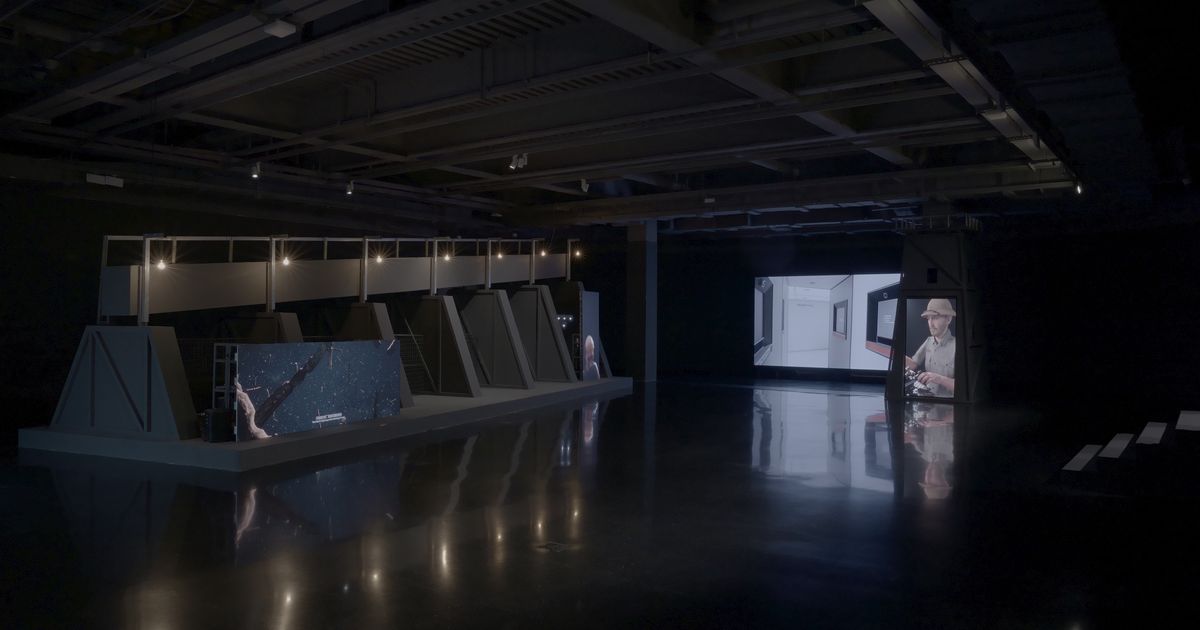
Lightning on the Upper Reaches of the Lethe seeks to seize those fleeting instants when the chaos of history is briefly illuminated—when seemingly unrelated things suddenly become connected, and obscure constellations of relation momentarily conduct once more. Cao Shu’s works trace a series of unsettling synchronisms across modern history: nineteenth-century colonial surveys attempting to prove that two differently named rivers shared a single origin; the ghostly overlap between the flash that erased bodies in Nagasaki and the photographic flash that fixes a subject upon film; science-fiction film narratives propelled by absent protagonists; and images from the visual cortex of deceased mice, drawn onward by invisible memories.
These seemingly disparate episodes converge upon a single question: might there be such a thing as an irrational history of technology? Colonial triangulation, polygonal meshes in digital modelling, datasets for training artificial intelligence, and the meticulous archives of cortical activity all translate the heterogeneous sea of lived phenomena into a lucid, linear cognitive universe.[1] Yet beneath this technological surface—so clear, so rectilinear—the meandering river of Lethe continually returns, folding fear and memory back into the landscape.
Mark Hansen has proposed the notion of a worldly sensibility[2], directing attention to the conditions under which experience takes shape before we can ever say I feel. Bodily processes, environmental forces, and technical operations unfold beneath the threshold of consciousness, feeding forward into perception and action, while consciousness itself arrives only afterwards. Cao Shu’s practice is remarkably attuned to these opaque moments of feed-forward—to the upstream of Lethe, where anima and animus have yet to be separated by conscious interpretation, and where the non-human mysticism of climate and geology[3] remains at work.
In this sense, Lightning on the Upper Reaches is not merely a collection of stories woven from coincidence and omen. It proposes a more permeable mode of historical perception, one capable of gently unsettling the linear narrative of progress constructed through invention, institutions, and media. Each flash of lightning briefly illuminates the darkness before the world falls back into shadow. Yet the lightning returns, again and again, upstream of Lethe.
[1] Grimm, Jon Auring (2025) “The Movement of the Whole and the Stationary Earth: Ecological and Planetary Thinking in Georges Bataille’. Journal for Cultural Research 29(1–2): 4–21.
[2] Hansen, Mark BN (2015a) Feed-Forward: On the Future of Twenty-First Century Media. Chicago: University of Chicago Press.
[3] Thacker, Eugene (2011) In the Dust of This Planet: Horror of Philosophy, Vol. 1. Winchester, UK: Zero Books.
-

BINI Mikha pinuri ni Gabriel Go: I gotta give it to her
HINANGAAN ng Special Operations Group-Strike Force (SOG-SF) head ng Metropolitan Manila Development Authority (MMDA) na si Gabriel Go si BINI Mikha Lim sa ipinakita nitong accountability matapos masita sa paggamit ng cellphone habang nagmamaneho.
Sa kanyang Facebook post nitong Huwebes, November 12, bagama’t nagkamali ang dalaga ay mabilis nitong kinilala ang pagkukulang at handa siyang harapin ang epekto ng kanyang ginawa.
“Nagkamali man pero handang harapin ang pagkakamali at tinanggap ito bilang aral,” saad ni Go.
Si Go ay kilala ng madlang pipol sa paghuli sa mga lumalabag sa traffic at road rules.
Baka Bet Mo: BINI Mikha nagsisi sa ginawang mali: I promise to do better
View this post on Instagram“I gotta give it to her, this is what you call ACCOUNTABILITY!” papuri pa ni Go sa ginawa nitong BINI Mikha.
Kalakip ng kanyang post ay ang screenshot ng official statement na ibinahagi ng BINI member.
Matatandaang nag-viral si Mikha matapos pansinin ng netizens ang kanyang livestream habang nagmamaneho.
Dahil rito ay naglabas ang Land Transportation Office (LTO) noong Miyerkules, November 11 ng show cause order para sa dalaga.
Agad namang pumunta sa tanggapan ng LTO si Mikha upang magsumite ng sinumpaang paliwanag at mga dokumentong susuporta sa kaniyang panig at tanda na rin ng pagpapakita ng pag-ako sa pagkakamali.
“I want to sincerely apologize for my actions. There is absolutely no excuse for using my phone while behind the wheel. It was careless and irresponsible,” saad ng singer-performer.
Kabilang sa mga posibleng paglabag na sinusuri ng ahensiya ang Republic Act No. 10913 o Anti-Distracted Driving Act, reckless driving, at pagiging improper person to operate a motor vehicle.
The post BINI Mikha pinuri ni Gabriel Go: I gotta give it to her appeared first on Bandera.
-

Prosecution sees no need for more evidence in Sara Duterte impeachment trial
The House prosecution panel does not see the need to present more evidence on the alleged unexplained wealth of Vice President Sara Duterte in her ongoing impeachment trial.
Source link -

'Pinoy Big Brother' welcomes discussions with MTRCB following complaint submissions
Though ABS-CBN has not yet received formal notice from the MTRCB, the network is "ready to participate in discussions with the Board should we be called upon."
Source link -
Intel Reclaims Desktop CPU Crown as AMD’s Share Slips Below 30% — BigGo Finance
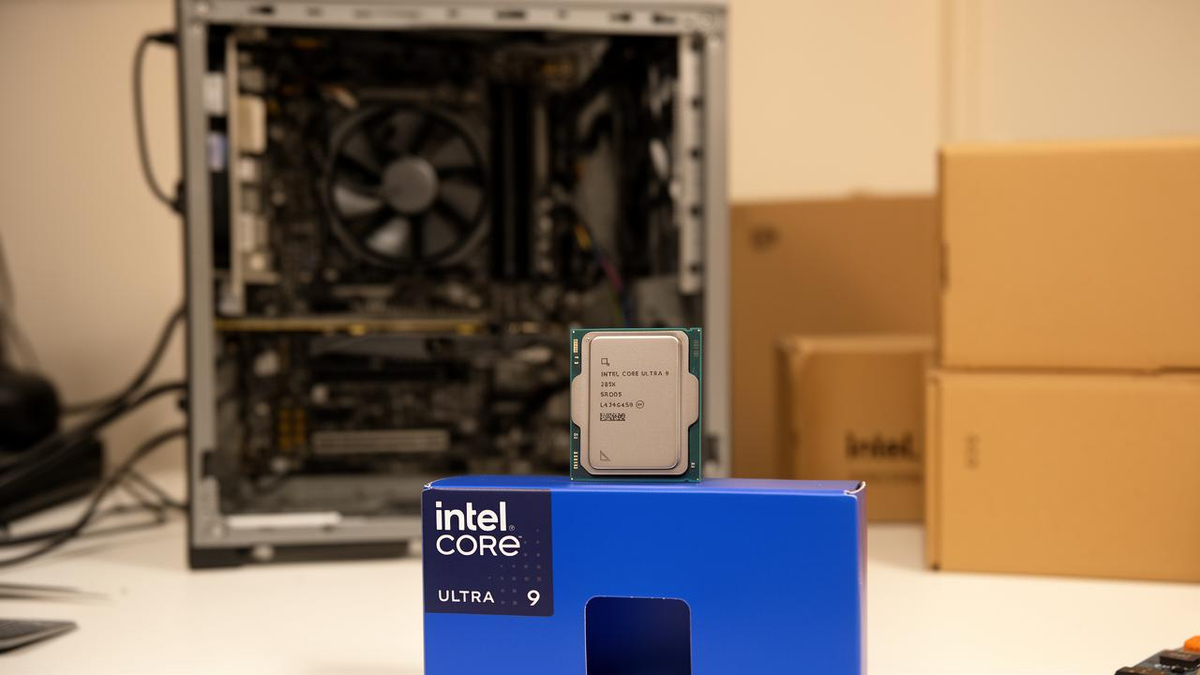
Intel clawed back a meaningful slice of the desktop processor market from Advanced Micro Devices in the third quarter of 2026, ending a long stretch of share losses and pushing its rival below the 30% mark for the first time in years, according to Mercury Research.
The chipmaker gained roughly 5.1 percentage points of desktop CPU share in the July-to-September period, lifting its total to about 70.1% while AMD held 29.9%. The reversal arrived against a softening backdrop for the broader PC market, making the swing all the more notable.
Mercury researchers attribute the shift largely to Intel steering manufacturing capacity toward desktop chips as laptop CPU demand cooled. The company had been under-supplying the desktop segment earlier in 2026, and it capitalized when demand surged during the quarter. A second factor, the firm said, was Intel’s steady volume through OEM and system-builder channels while AMD’s shipments sagged in its core gaming and enthusiast categories, where rising hardware prices and supply constraints took a toll.
AMD’s growing emphasis on higher-margin data-center silicon also played a part. The company has acknowledged it could not keep up with retail demand, choosing instead to prioritize capacity for data-center and AI products as it chases a milestone: surpassing Intel in total quarterly revenue by the end of 2026.
The revenue milestone now looks within reach. AMD reported third-quarter revenue of $13.4 billion, up 45% from a year earlier and above the high end of its own guidance of about $13 billion. Data-center sales reached $8.5 billion, a 97% jump, and the segment’s share of total revenue climbed to 64% from 47% a year ago. Operating margin in the unit widened to 34% from 25%. Client revenue, which covers desktop and notebook processors, rose 7% to $2.9 billion on Ryzen mobile sales even as desktop share slipped, while gaming revenue fell 40% to $773 million on lower semi-custom and graphics sales.
Intel’s own quarter was hardly weak. Revenue rose 21% to $16.5 billion, with the data-center and AI unit up 78% to $7.3 billion, while the client computing and physical AI group slipped 5% to $8.1 billion. Intel chief financial officer David Zinsner said the company expects the PC slowdown to continue at least through the first half of next year, even as demand for its data-center products runs well ahead of available supply.
Metric AMD Intel Q3 2026 revenue $13.4 billion, up 45% $16.5 billion, up 21% Q3 2026 data-center revenue $8.5 billion, up 97% $7.3 billion, up 78% Q4 2026 revenue outlook About $17.0 billion $15.0 billion to $16.0 billion Q4 2026 non-GAAP gross margin outlook About 55% About 38% Note: Figures are from company earnings releases. Intel’s fourth-quarter outlook includes about $300 million of revenue it expects to lose to the Fab 28 shutdown.
On data-center revenue, AMD has already moved ahead of Intel. The edge, however, comes from AI accelerators and rack-scale systems; excluding Instinct GPU sales, Intel remains the larger server CPU supplier.
AMD guided fourth-quarter revenue to about $17 billion, a 66% increase, with data-center sales expected to rise roughly 50% sequentially. Even at the low end of that range, roughly $16.5 billion, AMD would still exceed Intel, whose guidance tops out at $16 billion. Adding back the $300 million of Fab 28 impact would lift Intel to $16.3 billion, still short of AMD’s floor. Shipments of AMD’s Helios AI infrastructure platform are expected to push data-center AI revenue above server CPU revenue on a quarterly basis for the first time. Management projects 2027 revenue growth above 80%, with data centers accounting for more than 80% of the total and server sales roughly doubling.
Counterpoint pegs AMD’s 2027 data-center revenue at about $77 billion. Should that play out, demand for high-bandwidth memory and server DRAM would rise in tandem, opening additional orders for memory suppliers such as Samsung Electronics (005930.KS) and SK Hynix (000660.KS).
The desktop share picture contrasts with the server arena, where Intel keeps the lead but continues to cede ground. Intel supplied 64.5% of server CPUs sold in the quarter, down from 72.2% a year earlier and a single point below the prior quarter. AMD’s server share rose 7.7 points year over year to 35.5%, though the sequential gain of one point suggests the pace of advance has slowed.
Including IoT and embedded SoCs, Intel’s overall CPU share edged up 0.2 points from the second quarter to 66.1%, but remained three points below the 69.1% recorded a year earlier.
Segment Intel, Q3 2025 Intel, Q3 2026 AMD, Q3 2025 AMD, Q3 2026 Desktop 66.4% 70.1% 33.6% 29.9% Server 72.2% 64.5% 27.8% 35.5% Overall, including IoT and embedded SoC 69.1% 66.1% 30.9% 33.9% Note: Unit shares as reported; components may not sum exactly to 100% because of rounding.
Supply capacity looms as the decisive variable for 2027. Intel has flagged tight yields on its Intel 3 process, a shortage of advanced substrates and the two-week shutdown of its Fab 28 plant in Israel after a fatal accident, which the company estimates will cost about $300 million in fourth-quarter revenue and 200 basis points of gross margin, with a similar revenue hit expected in the first quarter. Intel expects the industry to remain supply-constrained through 2027 and into 2028. AMD, by contrast, has secured production through TSMC to support its growth targets, including the Zen 6 Epyc 9006 server line now shipping on the foundry’s N2 process. Counterpoint said the ability to actually raise shipment volumes will determine competitive standing in the data-center market next year.
-

BTS members Jin, J-Hope, Jimin, V undergo military reserve training
BTS members Jin, J-hope, V and Jimin are back in uniform as they undergo military reserve training.
Source link