Alanis Morissette has come out as pansexual.
Source link
Blog
-

Alanis Morissette comes out as pansexual: 'I get everything'
-

PCG: Contaminated materials recovered from Bataan oil spill, shifts to monitoring
The Philippine Coast Guard (PCG) has shifted from active oil spill response to monitoring operations after recovering oil-contaminated materials in the coastal waters of Mariveles, Bataan.
Source link -

Are your questions wise or foolish?
Our Gospel today (Matthew 25:1-13) ends with the five foolish virgins being locked out of the wedding banquet because they brought no extra oil for their lamps.
Source link -
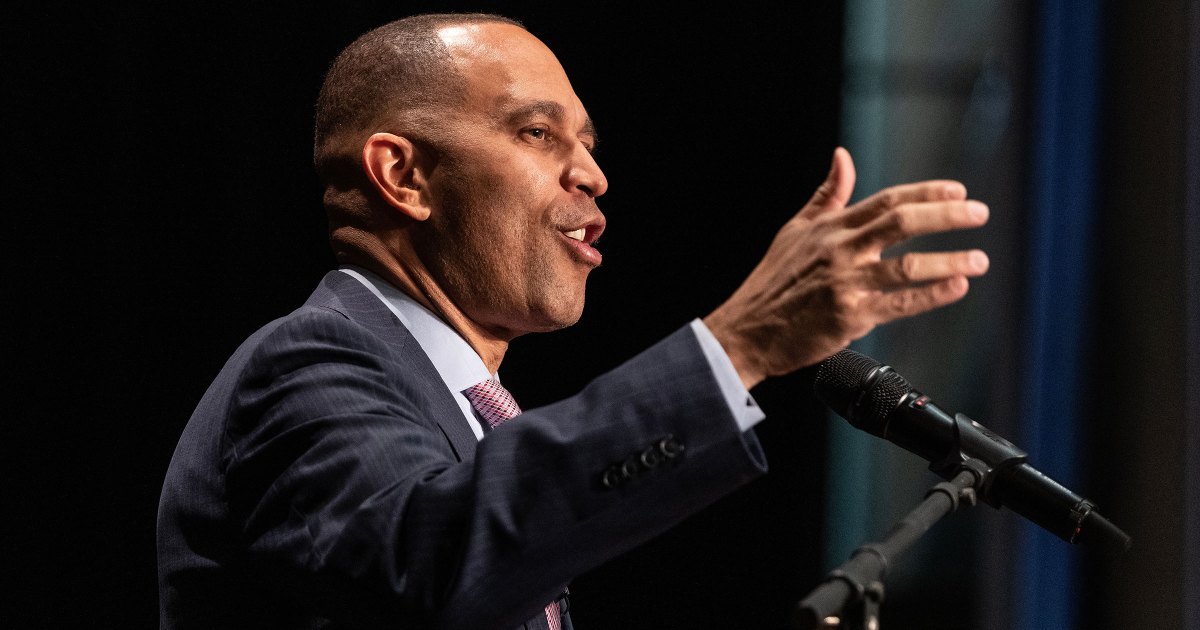
Hakeem Jeffries Is Bankrolled by the Most Controversial Tech Companies in Existence
The so-called “bluenami” that swept across the US on Tuesday is already hitting the breakwater.
With Democrats seizing a firm majority in the House along with the Senate, longtime party loyalist Hakeem Jeffries is poised to take up the mantle as speaker. But for all the progressive excitement around the bruising beatdown delivered to Donald Trump and the Republican party, Jeffries’ own backers include some of the most notorious power players in the tech industry, setting up immediate tension with voters who rallied around an anti-Silicon Valley message to push the Democrats back into power.
As collated by the investigative publication Sludge, Jeffries has a lengthy history of groveling to some of the most divisive tech and weapons corporations on the planet.
His donor list includes controversial figures like Anduril CEO Brian Schimpf and his COO Matthew Grimm, who together spent nearly $150,000 boosting Jeffries’ fundraising committees. Some might recognize Anduril as the AI weapons tech corporation co-founded by Palmer Luckey, a tech billionaire whose recent projects include a company working on genetically enhanced dogs for military purposes.
Another controversial donor includes Mehdi Allhassani, current head of government affairs at the AI surveillance company Palantir, from whom Jeffries received $44,300 this election cycle.
Jeffries also has the backing of cryptocurrency advocacy groups and investment executives at firms including Bain Capital, DE Shaw, and Renaissance Technologies, Sludge reports.
Beyond the incoming speaker, we know that the ultra-powerful tech industry lobbied Republicans and Democrats alike in the runup to the midterm elections. In fact, tech spending on the recent elections eclipsed any other private industry political funding in modern US history — emblematic of the fact that both ruling parties are, first-and-foremost, pro-business.
As lawyer and political consultant Briahna Joy Gray wrote on social, when it comes time to pander to the country’s supremely powerful corporate class, Republicans and Democrats are “two wings of the same bird.”
“The same corporate donors give to both sides,” Gray observed, “so they win regardless of electoral outcomes.”
More on US politics: Political Candidates Spending An Obscene Amount of Money on AI-Generated Election Slop
-
NVIDIA FOX blueprint puts AI agents on factory defects
NVIDIA’s Factory Operations Blueprint (FOX) is a reference architecture for factory agent workflows, including a defect-to-report example, with operator review rules set by the plant. Per daily.dev, Siemens’ Erlangen site reports up to 20% cost savings from FOX-based order-planning agents.
An automated optical inspection camera on a surface-mount line flags a circuit board. In NVIDIA’s reference example, software agents take it from there: a Visual Inspection Agent takes a second look, a robot carries the board to rework, and a Root Cause Analysis Agent works through the machine data until it can hand back a PDF report with the evidence and a recommended corrective action.
The example comes from the NVIDIA Factory Operations Blueprint, or FOX. It’s a reference architecture for putting a “factory manager agent” on top of the systems a plant already runs, with specialist agents underneath it.
NVIDIA frames the problem with a Siemens report estimating that unplanned downtime costs an average large plant in the surveyed sectors $253 million a year. Its diagnosis is about coordination more than data: whether the issue is a failed board or a rush order, teams have to gather evidence across systems, consult specialists and agree on the next step, and turning available data into a response takes substantial time.
For an electronics plant operations leader, the practical question is how much of the chain from alert to corrective action the agents get to finish on their own. FOX makes that a setting the plant writes.
A manager agent and its specialists
NVIDIA’s Nov. 4 technical blog lays out the build in three moves: developers connect their existing data and tools, configure specialist agents, and define which decisions require operator review. In daily.dev’s summary of the post, those existing sources are the plant’s MES, ERP and machine databases. The manager agent runs on a large language model such as NVIDIA Nemotron, with NemoClaw as the default agent harness and NVIDIA OpenShell isolating execution. Together they interpret tasks, keep persistent memory and enforce access policies.
Infraday reviewed NVIDIA’s Oct. 21 announcement and says FOX links operational signals to engineering and enterprise context, including CAD, product-lifecycle data, simulations and IT/OT systems.
Infraday’s broader read is that the release pushes industrial AI past isolated computer-vision models by letting agents correlate machine logs with visual findings. In the SMT example, that correlation is the handoff in the middle of the chain. The specialists each carry a distinct job:
- Visual Inspection Agent: calls NVIDIA Cosmos, a world understanding model, to compare a suspected defective component against the factory’s handbook using in-context learning, without fine-tuning.
- Root Cause Analysis Agent: uses Kumo Anomaly to scan time-series machine readings, such as reflow oven temperatures, for unusual patterns that could be contributing to defects.
- Fleet Management Agent: demonstrated with NVIDIA Isaac Sim and ROS 2, it coordinates the robots that handle physical moves like the trip to rework.
The no-fine-tuning detail deserves attention in a high-mix plant. If the inspection agent reads defect criteria from a handbook instead of a retrained model, updating it for a new product could be a documentation task more than a data-science project. That’s an inference from the described design, and early-access users will be the ones to test it.
The more consequential detail is the review line. In FOX, which decisions need an operator’s sign-off is something the plant writes into the configuration, right alongside its data connections and its specialist agents. A quality engineer who wants every rework dispatch approved, and a plant that lets the agent move boards but holds back process changes, are both describing configurations, not different products.
What Erlangen’s numbers measure
At Siemens’ Erlangen electronics factory, frequent changeovers for new products or orders make both production planning and inspection important.
Siemens Erlangen, as reported by NVIDIA
1,000+
Products produced a year at the Siemens Electronics Factory in Erlangen
Up to 20%
Cost savings the end-to-end agentic rush-order planning system can enable
40%
Reduction in inspection-process calibration time, as reported by NVIDIA
Up to 40%
Reduction in time to market from Siemens PLM software and Process Preparation X with Cosmos and Omniverse
NVIDIA Technical Blog; NVIDIA industrial AI announcement, Oct. 21, 2026
According to daily.dev’s summary of NVIDIA’s post, the FOX-based order-planning agents at Erlangen can enable cost savings of up to 20%.
That figure comes from planning, not defect handling. When a rush order arrives, Nemotron-powered agents built on FOX run simulations through Siemens Intelligence Center X. The simulations weigh costs, existing orders, supply levels and line setups, so a planner no longer has to query each system by hand. Infraday adds that, according to NVIDIA, Siemens is integrating FOX-based agents into Intelligence Center X. A quality leader reading the headline should file the 20% under order planning, not under the defect-to-report chain.
The two 40% figures measure different things. According to daily.dev, the time-to-market figure applies when Siemens combines its PLM software and Process Preparation X with Cosmos and Omniverse, which can cut time to market by up to 40%. The second figure is about inspection: NVIDIA reports a 40% reduction in inspection-process calibration time at Erlangen. Infraday notes that the Process Preparation X work relies on Cosmos Data Factory tools to create defect images for inspecting circuit boards. Of the four figures, calibration is the closest to the inspection workflow in FOX’s reference example.
Infraday, reviewing the announcement, flagged the Erlangen results as vendor-reported, which is the right weight to give them: one site, one vendor pair, measured by the people selling it.
NVIDIA ran the same stack in its own data centers first
NVIDIA built its AI Factory Operations Agent to streamline its own internal DGX SuperPOD operations and reduce manual work for its site reliability engineers. The system correlates root causes across compute, network, hardware and scheduling layers.
The starting problem will sound familiar to anyone who runs a line. As GPU clusters scale, SREs often check multiple dashboards to work out why training performance dropped. NVIDIA’s answer splits the work among Job Recovery, Hardware, Observability, Research, Kubernetes and Cluster Management agents that talk to each other through the Model Context Protocol (MCP). Engineers query them in natural language through a chat interface, switch between investigations and can track every action for auditability.
The parts list is where the heading earns itself. That system is built on the NemoClaw blueprint with OpenShell and runs fully on-premises with locally served Nemotron models across DGX H100, DGX B200 and DGX GB300 production clusters. Those are the same three components FOX’s manager agent uses, which suggests the factory blueprint’s harness has already carried production load in NVIDIA’s own operations. A server hall and an SMT line are still very different workloads.
The production lessons NVIDIA lists read like advice for a plant manager: draw clear boundaries between agents, start with read-only investigation to build trust, and show the reasoning so engineers can check the evidence before acting. NVIDIA points readers to the open source framework and code for that system on GitHub.
Two more lessons on NVIDIA’s list map onto the factory case. Cross-layer correlation caught root causes that isolated tools missed, and precise MCP tool definitions mattered. On a board line, a solder defect seen by AOI and a temperature drift in the reflow oven live in different systems, which is why the Root Cause Analysis Agent’s value would depend on joining them. For multi-tenant AI factories, NVIDIA also scopes agents, tools, sandboxes and Kubernetes permissions per tenant, with OpenShell enforcing kernel-level sandbox restrictions. That is the same discipline of limiting what each agent can see and touch that a plant exercises when it writes its review line.
The repository is moving quickly. It had 581 commits as of Nov. 6, and a Nov. 3 commit added an option to run inference on a single B200 GPU, which could lower the hardware bar for teams that want to study the pattern before FOX reaches them.
For plants where an agent’s recommendation can turn into a physical action, the read-only-first sequence matters more on the factory floor than in a server hall.
Before an early-access build reaches a live SMT line, map each step from inspection alert to rework dispatch to report, and mark which ones the agent may execute and which only produce a recommendation for an operator.
On-premises, early access, no ship date
FOX supports fully on-premises deployment on an NVIDIA DGX Station, keeping production records, images, prompts and investigation results inside the factory network. Per daily.dev, a fully on-premises setup requires every model and endpoint to stay within that network. In practice that means the manager agent’s language model would be served locally, and so would the specialists, including Cosmos for inspection and Kumo Anomaly for time-series analysis.
FOX remains in early access. Infraday calls it a developer blueprint in early access rather than a completed product for factory deployment, so results will vary with each implementation.
Developers request access through NVIDIA, which steers them to its Agent Toolkit for agent development and its video search and summarization (VSS) blueprint for building further specialist agents. FOX also arrived inside a wider Oct. 21 announcement that covered digital-twin applications in automotive, semiconductor, aerospace and process industries. Infraday’s verdict on who should be paying attention is specific: factory software teams and systems integrators who can now evaluate agent workflows linking visual inspection, machine logs and engineering data.
-

Korean superstar Park Bo-gum certified hairdresser na!
HINDI lang sa pag-arte at pagpapakilig magaling ang South Korean actor na si Park Bo-gum – may bago na naman siyang talent na maipagmamalaki!
Bumandera sa social media ang latest achievement ng Korean heartthrob matapos maipasa ang national technical qualification examination para maging certified general hairdresser.
Ayon sa The Korea Times, nakuha na ni Bo-gum ang kanyang qualification bilang hairdresser bago ang pagbabalik ng kanyang reality show na “The Village Barber 2” ngayong Nobyembre.
Hindi biro ang pinagdaanan ng aktor dahil napakahirap ng naturang pagsusulit, na may average passing rate lamang na 20 hanggang 30 porsiyento.
Baka Bet Mo: Korean superstar Park Bo Gum bakit nag-sorry kay Anne?
Nagsimula ang kaniyang journey bilang aspiring hairdresser sa unang season ng “The Village Barber.”
Sa kabila ng kanyang super busy schedule sa showbiz, nagsikap siyang mag-aral at maghanda para sa nasabing examination.
Gayunman, hindi siya pinalad sa kanyang unang pagsubok dahil hindi niya naipasa ang practical examination.
Pero hindi sumuko ang K-Drama star, sa halip na panghinaan ng loob, lalo pa niyang hinasa ang kanyang kakayahan habang naghahanda para sa ikalawang season ng programa habang tinutupad ang iba pa niyang commitments.
And finally, nagbunga rin ang kanyang pagsisikap matapos ngang maipasa ang examination sa ikalawang pagkakataon.
Hindi rin ito ang unang lisensiyang nakuha ni Bo-gum sa larangan ng hairstyling. Mayroon na rin siyang national barbering license na nakuha niya noong ginagampanan niya ang kanyang military service.
Dahil sa bagong achievement na ito, mas marami pang pagkakataon ang aktor na maipamalas ang kanyang husay sa hairdressing sa pagbabalik ng kanyang show.
Sa “The Village Barber 2,” muling mapapanood si Bo-gum kasama ang kaniyang mga celebrity friends sa pagpapatakbo ng isang hair salon sa isang tahimik na seaside village.
Hindi lamang pagpapaganda ng hairstyle ng kanilang mga customer ang kanilang misyon kundi maging ang pagbuo ng espesyal na ugnayan sa mga taong bibisita sa kanilang salon.
Muling makakasama sa programa si Lee Sang-yi, na bahagi rin ng unang season, habang bagong dagdag naman sa grupo si Ko Kyung-pyo.
Sa teaser na inilabas noong huling bahagi ng Oktubre, ipinasilip na rin ang bagong lokasyon ng kanilang salon na may magandang tanawin ng dagat at sikat ng araw.
Kapansin-pansin din ang bagong salon na napalamutian ng mga namumulaklak na baging na nagbibigay rito ng kakaibang ambiance.
Sa panibagong tagumpay ni Bo-gum, mukhang hindi lang acting skills ang dapat abangan ng kanyang fans. Ngayon, certified hairdresser na rin ang kanilang Oppa!
Mapapanood ang “The Village Barber 2” sa tvN ngayong Nobyembre.
The post Korean superstar Park Bo-gum certified hairdresser na! appeared first on Bandera.
-

Borongan Diocese to Catholics: Reject destructive mining, protect mangroves
The Diocese of Borongan on Sunday urged Filipino Catholics to oppose destructive mining and protect mangroves in commemoration of the 13th anniversary of Super Typhoon Yolanda’s devastation of Eastern Visayas.
Source link -

BioWare Documentary Lines Up 15 Interviews [2026]
A documentary about BioWare was already being filmed when Electronic Arts announced the studio’s closure, and PC Gamer reports that the filmmakers now describe the finished work as a “profound valediction.” The BioWare documentary, titled Massive Effect: The BioWare Story, is aimed at a 2027 release. The announcement landed on Nov. 6, about two weeks after EA shut the Edmonton studio.
Most early coverage focused on the timing. Our earlier report on the production timeline covered how filming began two years before the October 21 closure. This piece looks at something else: who agreed to sit in front of the camera, what that list says about the film’s reach, and which details nobody has confirmed yet.
The roster is the story inside the story. Fifteen named interview subjects span the studio’s founders, its best-known writers and directors, a leading voice actor, a former EA chief executive, and a Lucasfilm Games executive. That mix suggests a film built to cover both the creative history and the corporate machinery that ended it.
Google · Preferred SourcesDon’t miss new tech stories on Google
Add Tech Insider once in the Google app and our stories appear in your news suggestions.
Add Now
What the BioWare documentary announcement confirms
The confirmed facts are short and specific. The film is called Massive Effect: The BioWare Story. Akash Sherman writes and directs. Shane Fennessey and Adam Scorgie produce, through Fennessey Films and Score G Productions. The broadcaster is Super Channel in Canada, and the planned release year is 2027.
The closure itself is dated. EA announced it on October 21, 2026, and reports put the number of jobs cut at 400. Filming started two years before that date and kept going afterward, which means the crew captured both the final stretch of a working studio and the aftermath.
Those two facts, a two-year shoot and a sudden shutdown, change the film’s nature. A planned retrospective on a studio’s golden era became a record of an ending. Sherman said as much in his statement, and the outlets that picked up the news, including Game Informer, framed the project around BioWare’s final years rather than its peak.
Massive Effect: The BioWare Story and the team behind it
Director and producers
Sherman holds both the writing and directing credits. His own words explain his stake. In the announcement he called the BioWare founders his “hometown heroes,” a nod to the studio’s Canadian roots. That personal framing matters for tone. A director who grew up alongside the studio’s games will likely lean toward affection and craft over a cold business autopsy.
Fennessey and Scorgie share producing duties. Their companies, Fennessey Films and Score G Productions, are the production banners attached to the project. Neither the fact sheet nor the coverage we reviewed gives a budget, and we will not guess at one.
Super Channel as the Canadian home
Deadline described the project as a Super Channel feature documentary. Super Channel is a Canadian broadcaster, so the first audience is domestic. That fits a story about a studio that began in Canada and employed Canadian developers for decades. It also leaves an open question for US and global viewers, because no outlet has confirmed distribution outside Canada.
The 15 interview subjects, grouped
The confirmed interview list is long for a feature documentary on a game studio. The announcement named the participants, and the list adds up to exactly 15 people. We grouped them below by the categories the reporting uses.
One caution applies. The announcement confirms who sits for interviews, not how much screen time each person gets or what they say. A name on the list tells us the film sought that perspective. It does not tell us the film adopts it.
Group People named Count BioWare founders Ray Muzyka, Greg Zeschuk, Augustine Yip 3 Developers Casey Hudson, Mark Darrah, David Gaider, Drew Karpyshyn, Aaryn Flynn, Mac Walters, Trent Oster, James Ohlen, Caroline Livingstone 9 Voice actor Jennifer Hale 1 Former EA leadership John Riccitello, former EA CEO 1 Lucasfilm Games Douglas Reilly, vice president 1 Total 15 Nine of the 15 are developers, so the film leans on people who built the games. Three founders anchor the origin story. The other three voices come from outside the dev rooms: a performer, a former publisher chief, and a licensing partner. Each of those outsiders gives the film a vantage point the developers cannot.
Filming began two years before the closure
The two-year lead time is the detail that sets this project apart from a quick tribute. Documentaries made in a rush after a shutdown usually stitch together archive footage and a handful of fresh calls. This one had cameras rolling long before anyone outside EA’s leadership knew the studio was in danger.
That head start likely explains the size of the roster. Booking founders, former executives, and a Lucasfilm vice president takes months of scheduling. It is hard to see how a project started after October 21 could line up 15 people for a 2027 release. By contrast, a film already in production could simply add the closure as its final act.
Sherman’s statement confirms the pivot. In his words, “With the studio’s recent closure, the film is now a profound valediction.” The line comes from the same announcement Eurogamer covered under a headline about capturing BioWare’s final moments.
BioWare closure on October 21: the context
EA announced the closure on October 21, 2026. Coverage from The Verge, Engadget, CNET, and others said roughly 400 jobs were cut across a wider EA restructuring, and reports said EA also ended early work on the next Mass Effect game. Those reports described the move as part of a push toward fewer, larger projects.
We have tracked the fallout across several stories. Fans organized a petition that reached 1,662 signatures against a 500-signature threshold. Veteran designer Warren Spector criticized EA’s $38.65 million executive pay figure in the same news cycle. And the Canadian angle, covered in our look at how the shutdown hit Canada’s game industry, explains why a Canadian broadcaster stepped in.
The documentary does not undo any of that. It does give the closure a permanent record, and one that the people involved helped shape.
What the founders and director said
Four statements from Sherman define the film’s stance, per PC Gamer’s report. He called the BioWare founders his “hometown heroes.” He described the project as a “privilege and responsibility to share the journey of underdogs who came together to create deeply beloved storytelling.” He said the studio’s “golden era kindled a spark in me and in an entire generation.” And he called the film “now a profound valediction.”
Ray Muzyka and Greg Zeschuk gave a joint statement, as reported by Playday. They said that when the production team asked for their blessing to tell the BioWare story, they were “honored and deeply moved.” They added that BioWare “was never just about the logo or the building,” but about “the stories brought to life by the amazing people on our dev teams, and the fans who defended those worlds, championed them and carried them forward.”
The founders’ blessing carries weight. Muzyka and Zeschuk are on the confirmed interview list, and their public endorsement signals cooperation rather than an outside critique. Their wording also steers the story toward people and fans, not corporate structure. That choice could shape how hard the film presses on EA’s decisions.
Why the interview list matters: three outside voices
Developer interviews are expected. The three non-developer participants are where the film can surprise. We read their inclusion as editorial signals, and the readings below are our analysis rather than anything the filmmakers have said.
John Riccitello, former EA CEO. Having a former chief executive of the parent company on camera means the film is not limited to the creative side. A publisher’s perspective on acquisitions, budgets, and expectations can put the closure in a longer corporate arc. Whether he defends or criticizes EA’s handling is unknown.
Douglas Reilly, Lucasfilm Games vice president. BioWare’s licensed work with another major entertainment brand gives Reilly a partner’s view. A licensor can speak to what it expected from the studio and what the collaboration produced.
Jennifer Hale, voice actor. Performers sit between developers and audiences. Hale can describe how scripts became performances, which is often where players feel a studio’s craft most directly.
What remains unconfirmed
The gaps are as informative as the facts. The reporting we reviewed leaves several basic details open. Treat any outlet that states them as fact with caution until the filmmakers or Super Channel publish them.
Detail Status What reporting says Title Confirmed Massive Effect: The BioWare Story Director and writer Confirmed Akash Sherman Producers Confirmed Shane Fennessey, Adam Scorgie Canadian broadcaster Confirmed Super Channel Release year Planned 2027 Exact premiere date Unconfirmed Not announced Runtime Unconfirmed Not announced Budget Unconfirmed Not announced Distribution outside Canada Unconfirmed Not announced Release format Unconfirmed Not announced The distribution gap matters most for readers outside Canada. A Super Channel broadcast does not automatically mean a streaming release in the US, the UK, or Europe. Until a distributor is named, global fans should plan around a wait.
How BioWare’s ending compares with other studio losses
BioWare is not an isolated case. Our coverage this year has tracked a run of studio closures, hiring freezes, and ownership changes. The table pulls figures from those earlier reports so readers can see the pattern.
Studio or topic Key figure from our coverage Situation BioWare 400 jobs reported cut Closed by EA on October 21, 2026 Acquired studios overall 1 in 3 closed Arkane Lyon flagged as at risk Arkane (union complaint) 19-month hiring freeze Union says Microsoft is sabotaging Blade Double Fine 7 years under Xbox Went independent Nintendo (retention) 38 years of staff continuity cited Aonuma argues for keeping veterans Our analysis of acquired studios and the one-in-three closure rate shows why the BioWare film will resonate beyond fans of one franchise. The Nintendo contrast is sharp. When Eiji Aonuma talked about keeping long-term staff, he made the opposite argument to the one BioWare’s ending illustrates.
Historical context: from Edmonton to a final chapter
Closure coverage described a studio founded in Edmonton in 1995 that operated for more than 30 years. EA acquired BioWare in 2007. Its role-playing legacy includes Baldur’s Gate, Neverwinter Nights, Star Wars: Knights of the Old Republic, Mass Effect, Dragon Age, and Anthem.
The later years were rougher. Reports on the closure said Mass Effect: Andromeda in 2017 and Dragon Age: The Veilguard in 2024 drew mixed reactions and disappointed parts of the fan base. Sherman’s framing of an “underdogs” story and a “golden era” points the film toward the earlier decades, with the late years serving as the unavoidable final act.
For a deeper look at the games themselves, our piece on BioWare’s four RPG worlds walks through the franchises the documentary will need to cover.
Market and industry impact
A single documentary will not move EA’s stock or the console market. Its impact is cultural and reputational. When a publisher closes a studio with this much name recognition, the story tends to outlive the news cycle. A feature film guarantees a second wave of attention in 2027, timed to a release that EA does not control.
For the industry, the film adds a data point to a broader argument about consolidation. Studios acquired by large publishers carry the risk of closure when strategy shifts. A documentary featuring a former EA chief executive makes that risk concrete for developers weighing acquisition offers and for workers weighing job moves. We stress that this is analysis, since no outlet has quantified any effect on EA’s business from the film.
For Canada, the film is also a cultural-industry story. A domestic broadcaster funding and airing a feature on a Canadian studio signals appetite for local game-industry history. It may encourage more filmmakers to document game developers, a niche that has had far fewer features than film or music.
Where the film could land: three open questions
Three questions will decide whether the film becomes a defining record or a gentle tribute. First, how much room does it give to the late-era games that disappointed fans? A closure film that skips Andromeda and The Veilguard would feel incomplete, while one that dwells on them could overshadow the golden era Sherman wants to celebrate.
Second, how candid will the EA voices be? Having a former chief executive on the list opens the door to a direct account of corporate decisions, but interviews with executives often stay diplomatic. The film’s credibility with developers will hinge on whether that interview adds information or just polish.
Third, who gets the last word? The fact that the founders blessed the project suggests they will help frame the ending. Whether current and recently laid-off staff speak on camera is not confirmed, and their absence or presence will color the film’s final chapter.
Predictions: what to expect before and after release
- A trailer or premiere date before mid-2027. Productions with a named broadcaster and a stated release year usually reveal a date within months. This is our expectation, not a reported schedule.
- A distribution deal beyond Canada. A cast of recognizable names gives a distributor a clear pitch to fans outside Canada. No deal has been confirmed.
- EA stays quiet. The publisher has little to gain from engaging with a film about a studio it closed. We expect statements to come from the interview subjects instead.
- More closure-era projects. Other filmmakers and podcasters will likely chase similar retrospectives on shuttered studios, as the format now has a proven news hook.
- Renewed fan campaigns. The petition and community response may revive once the film gives fans a shared object to rally around.
What fans and developers can do now
Right now, the practical step is to watch for official channels. Super Channel and the production companies will announce dates first. Fans outside Canada should follow Sherman and the producers for distribution news and avoid unofficial streams that claim to be early copies.
Developers affected by the layoffs have their own resources. We have not verified a specific support program tied to BioWare, so check with former colleagues and local organizations rather than relying on rumors.
Players have a simpler option. The studio’s older games remain the best primer before the film arrives, and revisiting them will make the interviews land harder. Readers who want context on how fast the broader industry is shifting can also follow our reporting on Switch 2 sales and Sony’s results, which show where publisher money is flowing while studios like BioWare disappear.
For more of our reporting in this space, the gaming section collects the closure fallout, platform news, and industry analysis in one place.
FAQ: the BioWare documentary
What is Massive Effect: The BioWare Story?
It is a documentary about the history and closure of BioWare. Akash Sherman writes and directs, and Shane Fennessey and Adam Scorgie produce.When will the BioWare documentary be released?
The planned release year is 2027. Reporting from Push Square and others did not give an exact date, and none has been confirmed.Where can I watch it?
Super Channel in Canada is the confirmed broadcaster. Distribution outside Canada and the exact release format have not been confirmed.Who is interviewed in the film?
Fifteen people are confirmed, including BioWare founders Ray Muzyka, Greg Zeschuk, and Augustine Yip, voice actor Jennifer Hale, former EA CEO John Riccitello, and Lucasfilm Games vice president Douglas Reilly, along with nine developers listed in the table above.When did EA close BioWare?
EA announced the closure on October 21, 2026. Reports put the number of jobs cut at 400.Was the documentary made because of the closure?
No. Filming began two years before the closure announcement and continued afterward, so the closure became the film’s ending rather than its origin.Do we know the budget or runtime?
No. Budget, runtime, and premiere date are all unconfirmed in the available reporting.
-
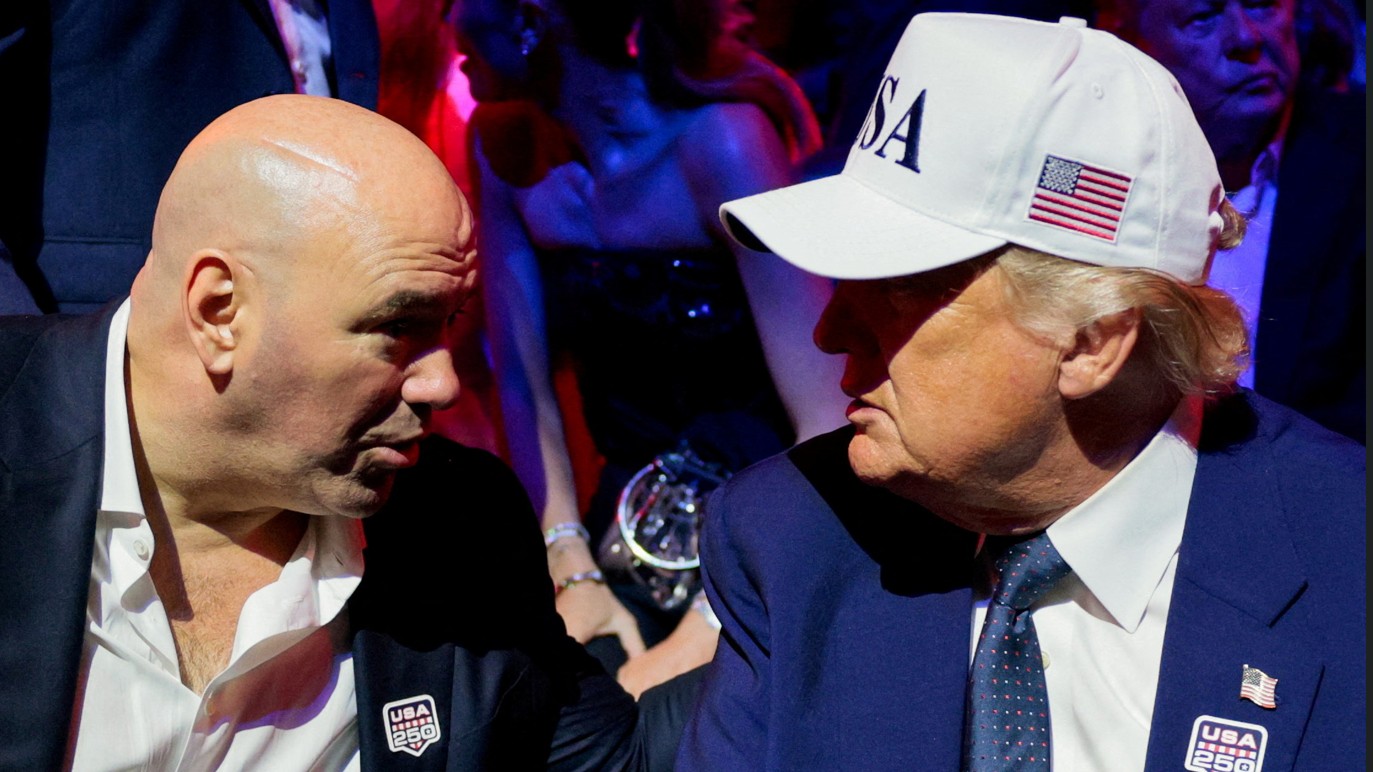
Trump asks UFC chief Dana White to be White House press secretary
US President Donald Trump on Saturday said he had asked mixed martial arts promoter Dana White to serve as White House press secretary and called on him to bring some fighters along as assistants “even though some are not from our country.”
Source link -

Lotto Results Today – November 7, 2026
Grand Lotto 6/55
22-43-34-12-06-27
P 341,271,436.97
Lotto 6/42
18-33-28-23-19-04
P 10,000,000.00
6D Lotto
0-6-6-6-3-1
P 6,445,254.88
3D Lotto 2PM
2-4-1
P 4,500.00
3D Lotto 5PM
4-0-7
P 4,500.00
3D Lotto 9PM
4-4-7
P 4,500.00
2D Lotto 2PM
05-07
P 4,000.00
2D Lotto 5PM
18-29
P 4,000.00
2D Lotto 9PM
02-16
P 4,000.00
