Category: Science & Tech

  • LEGO Yoshi Teased for 2027

    LEGO Yoshi Teased for 2027

    Nintendo has teased a new LEGO Yoshi set.

    A news update posted to the Nintendo Today! app on Monday, November 9 is labelled “New LEGO Super Mario Set Hatching Soon,” with the subtitle “Adults Welcome.” Clicking into the post reveals a full chunk of Yoshi’s face in plastic brick form.

    The teaser confirms that the set is a new addition to the Super Mario theme, owing to the rideable dinosaur’s debut in Super Mario World. However, the ‘adult’ focus of the teaser suggests the Super Mario line is branching out into more complex sets built for display.

    There’s no word on pricing or release date, but based on the copyright information, we expect LEGO Yoshi to release in early 2027.

    It’s hatching time.

    The LEGO Super Mario theme currently has about 20 sets in rotation, but well over 100 sets have been released since the lined first debuted in 2020. The previously released LEGO Mario & Yoshi set, which evokes a retro pixel art look, is set to join the most of those sets in retirement this December. Apparently LEGO can only handle own Yoshi at a time.

    The Super Mario theme has generally stuck to the old-school ethos of being built for interactive play, the bulk made up of smaller sets with one or two minifigures. In recent years, however, the company has branched out with larger decorative builds for adult fans.

    I think it’s safe to say we’re looking at a giant LEGO Yoshi, which falls into the latter category. The closest approximation that currently exists in the Super Mario line is the Mario Kart sets dedicated to Mario and Luigi, priced at $179.99 and $169.99, respectively.

    The Super Mario Galaxy Movie: Yoshi Egg Playset Image Gallery

    While LEGO generally sticks to modern depictions of the Super Mario characters, the company has also experimented with sets like the LEGO Donkey Kong Arcade. The ‘hatching’ reference may just be for marketing’s sake, but it would be cool to see LEGO try and replicate something like the Hatchin Yoshi toy that was released alongside The Super Mario Galaxy Movie.

    Like Nintendo, LEGO is generally trying to balance its appeal across generations with different ‘levels’ of sets. The LEGO Pokemon theme, for example, originally launched with three massive and particularly expensive builds dedicated to individual pocket monsters. A year later, the toy company released more than a dozen smaller (and cheaper) Pokemon sets using its new Smart Play technology. The strategy generally feels like “here’s one for the adults,” then “here’s some for the kids.”

    The challenge with the more adult-focused sets is they’re significantly more expensive. LEGO uses a relatively standard “price ber brick” model for its sets, which have only gotten bigger with time. Still, the strategy seems to be working well for LEGO, who reported record-breaking revenue in the first half of 2026.

    Blythe Dujardin Avatar

    Blythe (she/her) is an Audience Development Coordinator at IGN who spends way too much time in character customization screens and tracking down collectibles.

    Source link

  • Trump Says He Secretly Threatened to Arrest the Head of a Top AI Lab

    Trump Says He Secretly Threatened to Arrest the Head of a Top AI Lab

    By now, it’s obvious that Donald Trump has never had a secret he couldn’t resist blurting out on television.

    His latest slip-up — if we can really call it that — happened during an interview with CBS’ new and improved 60 Minutes program on Sunday evening.

    During the interview, Trump took a bizarre left-turn in the conversation to share news that the White House almost moved to arrest a top tech executive over some vague problems with AI safety. It was a “situation where somebody was reported to us to be doing something bad with AI,” Trump explained, using the original term that he later claimed to be officially replacing with “super intelligence.”

    That “somebody” is apparently an executive at one of the country’s top AI labs, or as Trump put it, “one of the big ones.” Any more details were scarce, other than the fact that person in question has a wife and kids.

    “We called them very strongly and said, get ready to go to jail. Please give your wife a kiss goodnight,” Trump said. “We said, ‘go home right now. See your wife and children. Give them a kiss good night. Because tomorrow morning, you’re going to jail.’”

    That would seem to rule out tech figures like Apple’s Tim Cook, who has no children of his own, and OpenAI’s Sam Altman, who has a husband and one son. Elon Musk is divorced, so he doesn’t quite fit either, and it might also rule out Anthropic’s Dario Amodei, who may or may not have children. But narrowing Trump’s target down any further would be pure guesswork — figures like Meta’s Mark Zuckerberg and the now-embattled Nvidia CEO Jensen Huang do have wives and children, facts which have netizens divided on who Trump is ultimately referring to.

    “It has to be Dario, everyone else has bent the knee,” one poster suggested on Reddit.

    “Dario doesn’t have kids right?” another user chimed in. “Has to be Zuck.”

    Others made it clear they don’t trust a word that comes out of Trump’s mouth. “It doesn’t have to be anyone,” a Redditor said, receiving over 400 upvotes. “Trump lies.”

    More on AI: Trump Living in Alternate World of AI Slop, Insiders Say

    Source link

  • Instagram’s Effect Builder makes new filters from AI prompts

    Instagram’s Effect Builder makes new filters from AI prompts

    After expanding its Edits app to macOS last week, Instagram’s next move is launching this Effect Builder that generates custom filters for your Stories posts with AI. Available now for US residents who are over 18, it has a prompt box for describing your filter idea to the chatbot, with an option to attach style reference images.

    Then you can upload your own photos to preview the AI-generating effects, and ask for changes in follow-up prompts. There’s also an option to allow Instagram’s AI to rewrite your prompt, which turned my one-line test prompt “Make a filter that turns photos into comic book pages” into several AI-generated paragraphs of detailed style requests on everything from color palette to lighting. The filter Effect Builder generated as a result still looked nearly identical to its output for my original one-liner.

    You can submit your filters to Instagram directly from Effect Builder, but effects have to pass a safety review before they’ll be available to other users. Instagram says after an effect is approved, it “shows up in Instagram Stories for anyone to use, and whenever someone uses your effect we’ll link back to your profile so that it’s easy for others to find your work.”

    Source link

  • Bluetooth Core 7.0 Speeds Are Set to Quadruple in 2027, Especially for Audio

    Bluetooth Core 7.0 Speeds Are Set to Quadruple in 2027, Especially for Audio

    Wireless tech is about to get a whole lot snappier. On Thursday, the Bluetooth Special Interest Group, the trade association that oversees Bluetooth, officially unveiled Bluetooth High Data Throughput, a flagship upgrade set to arrive as part of the Bluetooth Core 7.0 standard. The revision supercharges Bluetooth Low Energy by pushing maximum bit rates to 7.5Mbps, effectively quadrupling the throughput of the existing LE 2M technology. Compatible devices are slated to hit store shelves starting in 2027.

    That’s good news for phone users, tablet havers, laptop groupies, smart speaker stans and more. Bluetooth is still the most popular medium-to-short-range wireless standard for connecting devices. But this is a big rollout, and the changes will start with premium wireless, such as earbuds, with other applications following.

    Those other applications could include spatial computing, exchanging AI-related info with local devices, connecting to health wearables and a host of smart home applications, like playing Spotify through an Amazon Echo Studio or dimming a smart bulb.

    “In practical terms, a smartwatch could sync hours of sensor-rich training data to a phone in seconds. A smart home product could complete a firmware update with little visible downtime,” Damon Barnes, Director of Technical Marketing at the Bluetooth Special Interest Group, told CNET. “Smart glasses and other AI-enabled devices could exchange more data with a companion device or the cloud. And in audio, the additional capacity can support richer experiences, including high-resolution, lossless, surround, and spatial audio.”

    A representative from the Bluetooth Special Interest Group didn’t respond to a request for comment.

    What makes Bluetooth HDT so speedy?

    The biggest change in this update is a new physical layer for Bluetooth. Layers are like different sections of the Bluetooth protocol, and the physical layer is the bedrock of the standard, the foundational layer involved in transmitting and receiving data signals.

    Improvements in the physical layer can have very significant effects on all Bluetooth communications. In this case, new modulation schemes let the physical layer handle data more efficiently and transmit more data at once, which is why the speed increases are so significant.

    These improvements also make the new standard more efficient, saving battery life in many applications. So your smart lock may last longer before you need to exchange the AA batteries, earbuds won’t need to go back in the case as fast, and so on.

    When and what you can expect with Bluetooth HDT

    We know the first flagship devices are expected to appear with the technology in early 2027, but don’t have an exact date.

    Barnes also told use that since the update is starting with wireless audio, the first devices to see it will be headphones, earbuds and speakers.

    With protocol changes like this, it can take some time for new products to reach the market, and manufacturers may take a long time, even years, to adopt it.

    Source link

  • The Death of the Cybertruck Proves That Elon Musk Can’t Actually Predict the Future

    The Death of the Cybertruck Proves That Elon Musk Can’t Actually Predict the Future

    The Tesla Cybertruck is dead — and with it, whatever credibility Elon Musk had as a prognosticator of the future.

    The angular, heterodox pickup represented the culmination of Musk’s eccentric brand of genius, at least to his legions of followers. It wasn’t supposed to just be an oddball soon-to-be curiosity like the DeLorean, but something that would transform the automotive industry.

    That future did not come to pass. Last week, Musk announced on X that production of the truck would cease next summer, sending off this iconic symbol of himself with a single ignominious tweet.

    Musk had previously mythologized his creation as a supposedly “apocalypse-proof” tank that could stop bullets, wade through water, and drive itself. Its stainless steel exterior and low poly design evoked a brash optimism of a future where aerodynamics, and perhaps practicality, were no longer a concern. 

    Most importantly, in the billionaire’s telling, it would sell in incredible numbers. Musk originally predicted that he would move up to 500,000 Cybertrucks every year, before setting a more realistic target — in relative terms, at least — of 250,000. 

    It says a lot that Musk actually put his money where his mouth was, pouring about $2 billion of Tesla funding into the Cybertruck’s development. Musk also built his Gigafactory Texas in part to manufacture hundreds of thousands of the brutalist pickups per year.

    In the end, Tesla didn’t manage to sell its annual target at any point during the truck’s short-lived lifespan. In the three years it was being built, it sold around just 71,000 Cybertrucks total, estimates show. Experts say it could be the biggest flop in automotive history — even more disastrous than the notorious Ford Edsel.

    Besides entering an already niche market — how many customers are there for a bizarre-looking electric pickup truck that costs around $100,000, depending on the model? — it didn’t help that a lot of what Musk promised about the truck didn’t turn out to be true. It wasn’t as cheap as the $40,000 price tag Musk originally set. It couldn’t double as a boat, as some drivers learned the hard way. And with 11 recalls under its belt for issues like its stainless steel body panels flying off and reports of it bricking after going through a car wash, it was far-from apocalypse proof. And somehow Musk, in his capital-A Abundance of wisdom, thought it would revolutionize the automotive industry.

    Remember, this is the same guy promising to not just put data centers in space — something that many experts are skeptical is feasible — but do so in such quantities that it’d amount to building a “sentient sun,” in Musk’s own words. His Grok AI will unlock the “true nature of the universe.” His Starship megarocket will help “extend the light of consciousness to the stars” and “make life multiplanetary.” And of course, humans will be colonizing Mars any day now; two years ago he predicted the first humans would reach the Red Planet in four years. We have two more years to go.

    In any case, Musk seems to be in denial that his brainchild was a failure, arguing in a Sunday tweet that his winding down of its production was “not a case of [the] Cybertruck being unprofitable.”

    More on Elon Musk: Governor-Elect of Texas Announces Plans to Bring Elon Musk Under Control

    Source link

  • PlayStation cancels Ratchet & Clank: Ranger Rumble a year into soft launch

    PlayStation cancels Ratchet & Clank: Ranger Rumble a year into soft launch

    PlayStation has canceled Ratchet & Clank: Ranger Rumble, its free-to-play mobile spin-off of the platforming series, a year after it entered soft launch.

    The game’s final update rolled out on November 6, according to a statement on its official website. It will be delisted from the App Store and Google Play on November 21, and its servers go offline on May 1, 2027.

    “We’ve made the difficult decision to cease development of Ratchet & Clank: Ranger Rumble,” the statement reads.

    Players can no longer spend real money in the game, and the previously paid Super Pass has been made free. Qwark Pass seasons will keep running until shutdown.

    French studio Oh BiBi developed Ratchet & Clank: Ranger Rumble in partnership with Insomniac Games. It initially soft-launched in November 2025 in the Philippines and Indonesia, and later expanded to Norway, Sweden, Finland, Denmark, France, Canada, and the UK. Global pre-registration opened in July, but it never received a worldwide release.

    Ranger Rumble generated around $62,000 in player spending and 391,000 downloads across iOS and Android during its year in soft launch, according to AppMagic estimates.

    Sony’s San Diego Studio has had more success with MLB The Show Mobile, which launched globally in May after a soft launch the previous October. AppMagic estimates it has brought in $2.3 million from 1.9 million downloads.

    Sony set out ambitious mobile targets in 2022, telling investors that mobile titles would make up 10% of its first-party releases by March 2023 and 20% by March 2026. Later that year, it acquired mobile developer Savage Game Studios and hired executives from Apple, Kabam, Meta, and Tencent to build out a dedicated mobile division.

    Savage Game Studios – later renamed Neon Koi – closed in October 2024 without releasing a game, alongside the high-profile closure of Concord developer Firewalk Studios.

    Sony’s biggest mobile earners sit outside PlayStation, at Sony Music-owned Aniplex, publisher of Fate/Grand Order and Disney Twisted-Wonderland. AppMagic estimates the Sony group’s mobile apps have grossed $4.9 billion to date, with 88% of that coming from Japan.

    Source link

  • Financially motivated threat cluster uses AI-enabled tools against banking sector

    Financially motivated threat cluster uses AI-enabled tools against banking sector

    A financially motivated threat group has used the Artex pen-testing framework in attacks against banking and other industry firms in Southeast Asia and across the globe, according to a report Friday by Microsoft Threat Intelligence. 

    The Cambodia-based actor, tracked as Storm 3358, began the attacks in October using a combination of Artex along with conventional tools, according to researchers. The hackers exploited server-side request forgery and anonymous file-upload flaws before installing remote-access Trojans. 

    The campaign marked the latest in a growing wave of attacks using Artex, an AI-enabled pen-testing tool that allows hackers to automate attacks well beyond human capabilities. 

    In recent months, hackers have used Artex against South Korean banks, dozens of Japanese companies and abuse of ConnectWise Cloud Backup against Microsoft 365 tenants, linked to a China-based actor tracked as Storm-0940.

    CrowdStrike linked threat activity from an actor it tracks as Vapor Panda to a global espionage campaign using Artex against 200 organizations across the globe. 

    The Indian Computer Emergency Response Team last week reported a campaign using Artex and other AI-enabled tooling against a range of fintechs, digital lenders and non-banking financial companies. 

    Indian officials said a threat actor tracked as Crafty Falcon has used Artex and other AI-based tools like Cairn and the PentAGI pen testing framework. 

    Microsoft researchers on Thursday reported hackers using Artex to scan GitHub for exposed credentials.

    Observed tactics

    The Cambodia-based actor has used vshell and AdaptixC2 remote-access Trojans to gain persistence and enable lateral movement, according to researchers. Hackers have also used utilities such as curl and netcat to download the remote-access Trojans onto compromised systems. 

    Researchers said that setting up defensive honeypots or decoys can sometimes divert autonomous AI attackers away from legitimate targets. They often convince the agent that a successful attack has been completed and drain time and financial resources from the attacker.

    Source link

  • Scientists Stumped by Why Mysterious Object Is Accelerating as a Japanese Spacecraft Rushes to Catch It

    Scientists Stumped by Why Mysterious Object Is Accelerating as a Japanese Spacecraft Rushes to Catch It

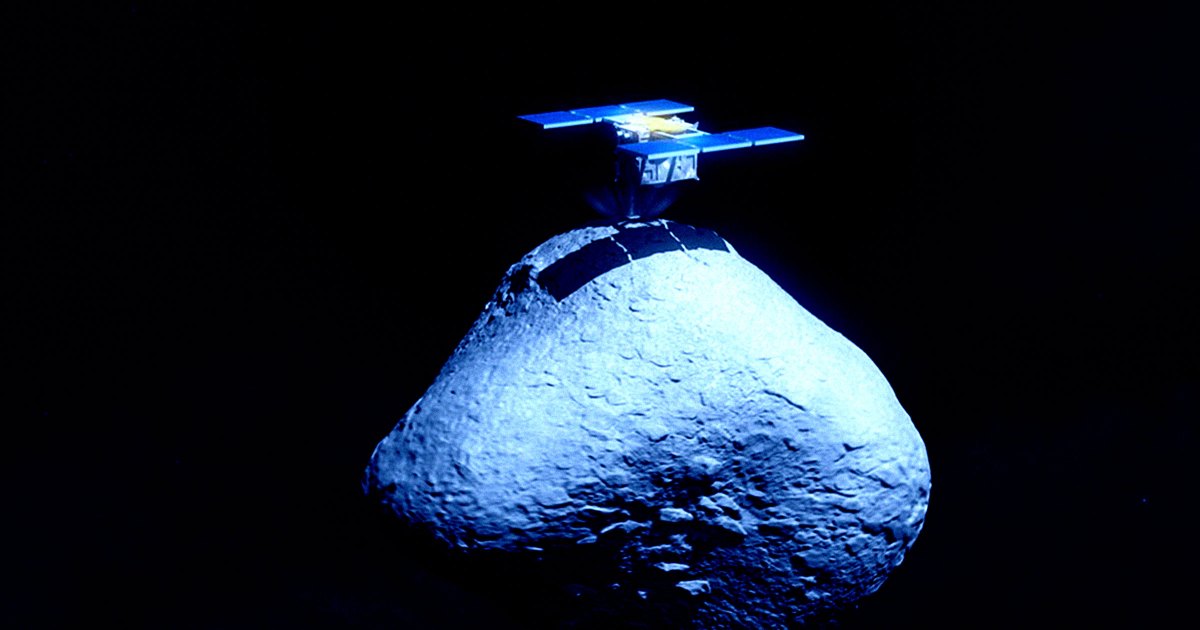
    There’s something puzzling about 1998 KY26, a mysterious object that the Japanese space agency’s Hayabusa2 spacecraft is on its way to visit: it’s accelerating. That isn’t necessarily out of the ordinary for asteroids and comets, but it appears to be driven by a propulsion source that scientists have yet to understand, as ScienceAlert reports.

    One explanation, from Harvard astronomer Avi Loeb, suggests that 1998 KY26 is a derelict Soviet spacecraft that launched almost 40 years ago. More conventional attempts to account for its acceleration proffer that it’s a “dark comet,” a type of space object that acts like a rocky asteroid, but experiences acceleration that can’t be accounted for by gravitational forces.

    Yet according to new research published in the journal Icarus, it’s too warm to be a dark comet, which can accelerate by releasing ice that sublimates into gas. If that were the case, observations show that it would’ve run out of ice reserves a long time ago.

    “Our temperature model results indicate that the water outgassing rate on 1998 KY26 would be too high to maintain buried ice, refining the understanding of the asteroid’s composition,” authors of the paper and Georgia Institute of Technology aerospace engineers Korbin Hansen and Masatoshi Hirabayashi wrote.

    1998 KY26 is a 36-foot space object that rotates every five and a half minutes and is currently located 186 million miles away from Earth. After modeling its temperature using pre-existing data, Hansen and Hirabayashi found that even its coldest regions measured upwards of -77 degrees Fahrenheit. While that may sound chilly, it’s too warm for stores of ice that could sublimate into gas and provide thrust.

    At such warm temperatures, 1998 KY26 would’ve run out of fuel in just 62 years, a blink of an eye for an object suspected to be billions of years old, as ScienceAlert points out.

    The team concludes that “1998 KY26 is likely a dehydrated asteroid,” meaning that it lost its stores of water long ago. Other explanations for its acceleration could be solar radiation or “thermal emission forces” pushing it.

    Fortunately, Hayabusa2 is expected to rendezvous with the mysterious object in July 2031, which could give scientists a first-hand look at whatever is going on.

    More on dark comets: Paper Claims the “Asteroid” Japan’s Probe Is Approaching Is Actually a Derelict Spacecraft

    Source link

  • AI/ML Now: Hybrid Machine Learning for Experiment-Efficient HPLC

    AI/ML Now: Hybrid Machine Learning for Experiment-Efficient HPLC

    High-performance liquid chromatography (HPLC) method development is still largely trial and error, and the experiments can quickly use up a laboratory’s time, solvent and instrument capacity. In this interview, Maximilian Besenhard of University College London (UCL) discusses his group’s recent Journal of Chromatography A paper.1 which proposes a hybrid framework that combines mechanistic and data-driven modelling to cut the number of experiments needed to reach an optimized method.

    The framework runs in two stages. First, a mechanistic model is calibrated while it is being used to optimise the method. Then a data-driven model is trained on the experiments from that first stage. Besenhard explains why combining the two approaches works better than using either one alone, and how the framework decides when to hand over from one to the other. He compares the number of experiments needed with conventional and purely data-driven approaches. He also covers what users need to know before they start, such as how many components are in the sample.

    The conversation then turns to practical questions: What tends to make a mechanistic model poorly calibrated and how analysts can spot it, and what a calibrated model reveals about method robustness beyond the optimized conditions themselves. Finally, Besenhard describes the hardware, software and expertise a lab would need to adopt an autonomous “digital twin” workflow for HPLC method development.

    Source link

  • CityUHK gallery merges technology with creativity

    CityUHK gallery merges technology with creativity

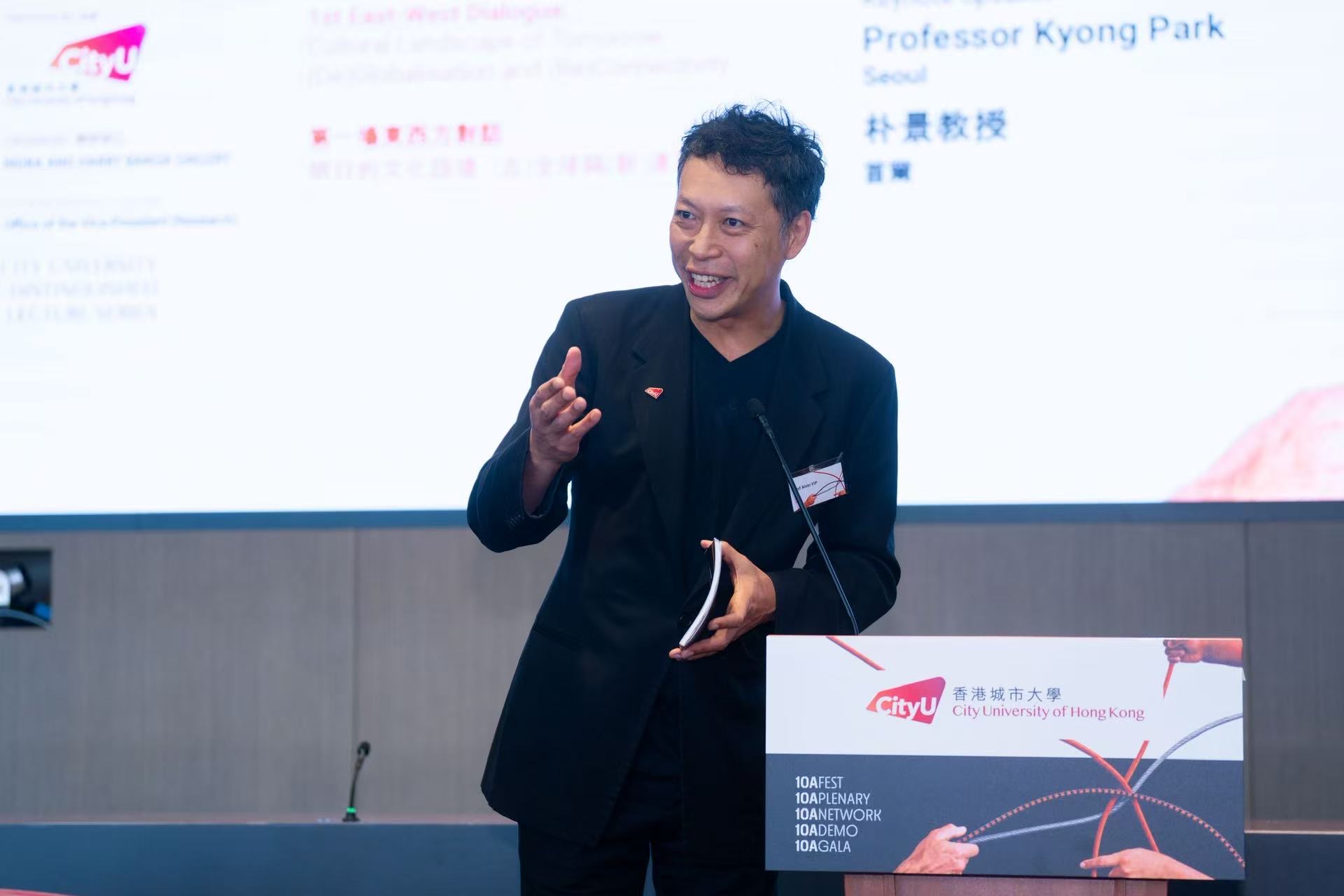
    Alvin Yip, adjunct professor of architecture and director of the Indra and Harry Banga Gallery, highlights the gallery as the principal art-tech exhibition platform at City University of Hong Kong. (PROVIDED TO CHINA DAILY)

    A City University of Hong Kong (CityUHK) gallery, celebrating its 10th anniversary this year, continues to explore unconventional ways to blend the university’s technical prowess with creative practices.

    Alvin Yip, director of the Indra and Harry Banga Gallery, said that in today’s hyper-competitive global higher education landscape, CityUHK — and especially the gallery — stands out among institutions seeking to break down the rigid walls between scientific discovery and cultural expression.

    Founded in 2016, the Indra and Harry Banga Gallery sets itself apart from traditional university museums, which have historically relied on private donations of classical artifacts. Yip emphasized the gallery’s ambitious curatorial philosophy, positioning it not only as a repository for beautiful objects, but also as a dynamic engine for interdisciplinary collaboration and a showcase for technological innovation.

    “Our mission is defined by being interdisciplinary, intercultural, international, and interperiod,” Yip told China Daily in a recent interview.

    Yip said the gallery deploys three distinct art-tech methodologies to translate complex academic data and scientific research into engaging public experiences.

    The first methodology is digital museology, which uses advanced technologies to reconstruct lost or fragmented historical contexts. The gallery has previously used these tools to digitally animate the original, intricate architectural designs of the Yuanmingyuan (the Old Summer Palace) and create interactive digital models of Leonardo da Vinci’s visionary flying machines.

    In another exhibition of traditional African art, curators developed an interactive game to help digital-native visitors understand the complex cultural contexts behind ritual masks and costumes.

    The second methodology, “prototyping”, uses artistic media to make technological innovations emotionally resonant. For instance, a recent landmark exhibition featured 23 original scientific research outputs from Hong Kong, using filmmaking and narrative arts to transform abstract data into compelling human stories.

    The third approach focuses on integrating art-tech practices, in which digital and physical elements are inseparable. One striking example involves close collaboration with professors from CityUHK’s School of Creative Media, through which the gallery regularly transforms rigorous academic theories into playable, immersive video game experiences.

    The gallery’s agility comes from operating across disciplines within the university. This allows the space to act as a neutral, cross-disciplinary bridge, bringing together researchers from fields as varied as architecture, computer science, and creative media.

    Looking to the future, Yip is eager to incorporate the next wave of technological developments, viewing generative artificial intelligence, virtual reality, augmented reality, and extended reality as vital extensions of the physical space rather than replacements for it.

    He playfully referred to these tools as “new toys” that lower the technical barriers to creative expression. For instance, AI is significantly reducing the cost and complexity of controlling industrial hardware, such as robotic arms used in interactive artistic performances.

    Ultimately, the gallery’s most profound mission is regional: to bring together museum directors and cultural practitioners from the Chinese mainland, the Hong Kong Special Administrative Region and Southeast Asia, to pioneer a distinctively Asian museological language, he said. For instance, by intentionally bringing future technologies and historical objects into the same physical space, the gallery seeks to move beyond the chronological or siloed categorization that has defined Western museology for centuries.

    By moving away from post-colonial Western storytelling frameworks, the initiative aims to reclaim cultural sovereignty in how Asian history and local innovations are interpreted, he said.


    Contact the writer at vivienxu@chinadailyapac.com

    Source link