- Ocarina of Time review: Does Nintendo’s Zelda remake match its original? BBC
- The Legend of Zelda: Ocarina of Time has revived the midnight game launch – but was it worth the wait? The Guardian
- Master Quest references potentially found in Zelda: Ocarina of Time remake files [update: more details] Nintendo Everything
- PSA: Want To Learn Link’s Ocarina Tunes? Nintendo’s Got The Sheet Music For All Of Them Nintendo Life
- Costco members can get $5 off the reimagined Ocarina of Time The Verge
Category: Science & Tech
-

Ocarina of Time review: Does Nintendo's Zelda remake match its original? – BBC
-
Google Staffers Say They’re Being Silenced From Telling the Public the Truth About AI
Workers at one of the most advanced AI labs on the planet say they have important information to share — but their employer is preventing them from speaking out.
New reporting by the Washington Post revealed a growing divide between workers and management at Google’s DeepMind lab in London, where employees are gagged from letting the public know about their concerns due to a sweeping non-disparagement agreement.
Non-disparagement agreements are a kind of legal corporate censorship, by which companies can ensure workers aren’t able to disclose info the company deems to be negative or critical. At the DeepMind labs, it appears to be having its intended effect, scaring workers who say they’d like to be able to keep the public involved as the technology progresses.
“This technology is just really consequential and it’s also changing really fast,” one anonymous DeepMind staffer told WaPo. “The public wants to know and deserves to know and often this is the only way that people find out about the harms and potential harms that are happening.”
Two of the lab’s staffers told the paper of a discussion group organized by their fellow workers to discuss the implications of the non-disparagement clause, which many signed as a condition for employment. Dozens of employees took part, some of them openly criticizing it with references to the dystopian surveillance state featured in George Orwell’s “1984.”
Though questions are swirling over whether Google’s top brass would ever invoke the clause to go after staff — or if Google even could, legally speaking — workers say the agreements go too far regardless.
As one DeepMind staffer told WaPo, even “if it’s not enforceable,” the attempted gag order speaks for itself: “the reason is to basically intimidate people.”
More on Google: Google Announces It’s Shutting Off Search Engine Access for Schools That Ban AI
-

Zelda: Ocarina of Time Remake Now Boots on Jailbroken PS5 and iPhone 17 Pro Max
Nintendo’s Zelda: Ocarina of Time remake launched on Switch 2 on November 5, and it is already running on a jailbroken PlayStation 5 and an iPhone. On PS5, Vampinity posted results in the GitHub repository for EglantinePS5, a PS5 port of a Switch emulator based on Eden. On firmware 12.40, the game loads a save, and Link can walk out of his house into Kokiri Forest at roughly 15 to 20 FPS. However, it runs out of memory a couple of minutes in, with heavy white fog and missing geometry in the forest. Vampinity calls it “nowhere near playable” and says Claude wrote the patches. Apparently, much of the shader work was borrowed from forks of Lichii, the emulator that got the remake running on PC on launch day.The iPhone port comes from developer Joe Jiang, who showed Kokiri Forest running on an iPhone 17 Pro Max. According to Jiang, memory was the hardest part, since the game wants about 9 GB while a single iPhone app is capped at 8,192 MB. He claims his approach keeps quality intact and peaks at just 3.4 GB when loading scenes. Apparently, the method isn’t specific to Ocarina, and Jiang says it could bring any Switch or Switch 2 game to iOS, iPadOS, Apple TV, Android, and HarmonyOS. He hasn’t released it yet, but it isn’t the first Switch 2 game on iPhone. Mario Kart World booted on one shortly after the console’s first jailbreak went public. The PS5 port, meanwhile, needs the Relapse jailbreak, which covers firmware 7.00 through 13.60. Neither is a practical way to play the game yet, but I’m sure Nintendo isn’t too happy about the remake breaking containment this quickly.
-

Nintendo Rehires Voice Actor From N64 OCARINA OF TIME
The Legend of Zelda: Ocarina of Time remake has landed, and it’s already a critical and commercial success. It seems to have delivered on everything we all hoped, staying faithful to the legacy of the original, while adapting it with all the modern sensibilities and quality of life updates that make the experience of playing all the smoother. The 2026 Ocarina of Time has its own identity, certainly, but the love for the original can be felt in every inch. The new game also fleshes out the framework of Ocarina of Time, expanding dialogue options and bright, detailed art style. This likely marks a new era for the franchise. Folks are already wondering about Majora’s Mask, the N64’s other major The Legend of Zelda title.

Nintendo There’s so much to talk about, from the graphical overhaul to its impressively stable 60FPS it consistently runs at. Right now though, let’s talk about VAs and sound design. In the most recent of Nintendo’s Ask the Developer interviews, Ocarina of Time music lead Masato Ohashi talked about recreating the soundscape of the first game while adding a new, orchestral depth to the tunes we all remember from childhood. He also spoke about the practical side of things, like how they used live recordings of someone playing an actual ocarina, to get the realistic breathiness we hear when Link plays it in the game.

Nintendo And of course, one of the biggest changes from the original: voice acting. While there’s plenty of little sounds and noises (like Link shouting), there’s very little in the way of spoken words. Navi, however, Link’s fairy companion, gets a few little phrases—”Look!” and “Watch out!”, and of course, Navi’s legendary, “Hey, listen!” Here’s a one hour loop of it on YouTube, if you want that for some reason. While the American cast does not include anyone returning from the American dub of the original game, the Japanese version did score the most important reprise of all: Kaori Mizuhashi returns as Navi’s Japanese voice actor for the remake. The funniest part? The auditions were blind. The team didn’t even realize they’d done it.
Nintendo “As fate would have it, one of the actors we selected had actually voiced the same character in the Nintendo 64 version. None of us saw that coming.” —Eiji Aonuma, The Legend of Zelda Producer
I’m happy for Japanese fans of the game and the sweet nostalgia they’re no doubt getting from this. On the American side of things, Lisa Reimold does an excellent job as Navi, but I’m glad that at least one voice actor from the first iteration of the game returned for the remake. It’s another beautiful way that this version of The Legend of Zelda: Ocarina of Time honors its origins.
-
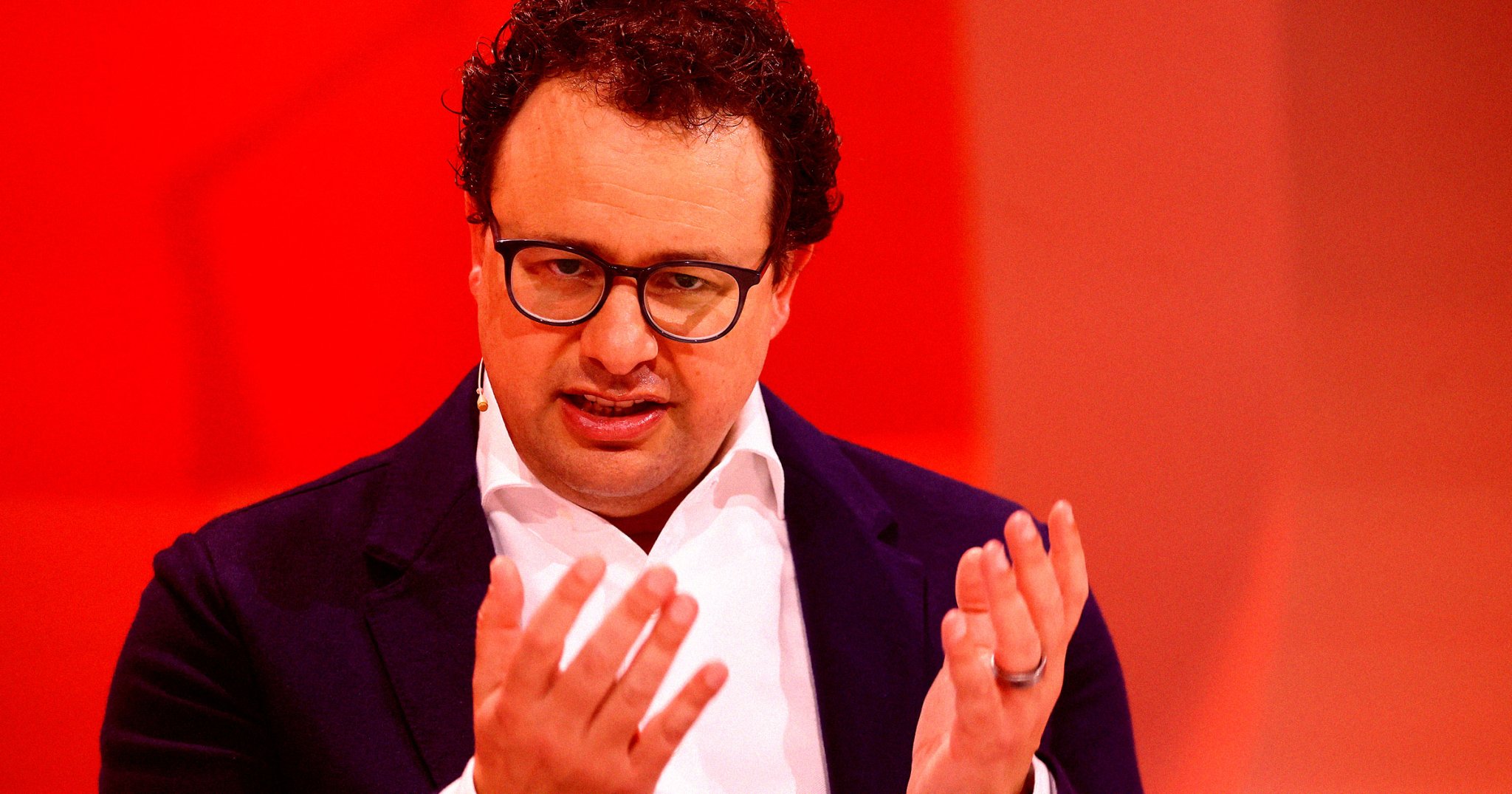
Tech Industry in Denial That the Midterms Show Everyone Hates Them
Big Tech bet big on Trump ahead of the midterms, and it backfired. A blue tsunami overpowered largely pro-AI Republican candidates across the country — even, crucially, in Texas, where the election has now imperiled vast plans for data center construction.
But industry insiders, it seems, are in denial that the midterms are actually a rebuke against tech, Ars Technica noted.
Take Adam Kovacevich, a former Google exec and CEO of Chamber of Progress, a tech industry trade group and policy coalition that was formed with backing from heavyweights like Google, Amazon, Meta, and Apple.
“The results offer little evidence of a voter mandate to crack down on AI or data centers,” Kovacevich said, per Ars, noting that “Democratic gubernatorial candidates who opposed data center bans won at a higher rate than those who supported them.”
“Let’s not confuse an anti-Trump wave with an anti-tech mandate,” he added.
Sure, you could gripe that AI’s role in the election is being a overstated, given that Trump is so radioactive, and that other issues like cost of living were more in the front of voters’ minds. But it was still a driving issue, and voters made themselves heard.
Exit polls showed that a broad majority of Americans considered opposition to data centers to be a driving issue. Across 10 states, there were 41 ballot measures on placing restrictions and even outright moratoriums on AI data centers, per Ballotpedia. And in all but one of those measures, voters sided against data centers, CNBC found. (The lone outlier was a measure proposed in Harwood, North Dakota.)
That speaks enough on its own, but the biggest slap on the face to Big Tech and AI came in Texas, where a number of huge companies, many of them from California, have relocated to because of its tech friendly regulations or lack thereof — chief among them being Elon Musk’s Tesla and SpaceX.
Roughly a quarter of the US’s planned data center capacity is in the Lone Star state, and the likes of Musk poured hundreds of millions of dollars into the race to ensure that it would stay a Republican-led tech sanctuary.
But Texas voters overwhelmingly rejected Big Tech’s vision for their future. Gina Hinojosa beat Republican incumbent Greg Abott to be the state’s next governor. A central part of her campaign was passing an “immediate moratorium on data centers” until the state passed stronger regulations, and it helped her become Texas’s first Democratic governor in over three decades. James Talarico, similarly made history and flipped a senate seat while promising to “rein in” data centers.
If that isn’t a repudiation of Big Tech, we don’t know what is.
More on AI: Americans Just Resoundingly Rejected AI Data Centers
The post Tech Industry in Denial That the Midterms Show Everyone Hates Them appeared first on Futurism.
-
ParityQC’s QuEra Aquila QPU Runs Optimisation With 107 Atoms, Aided By Error Code
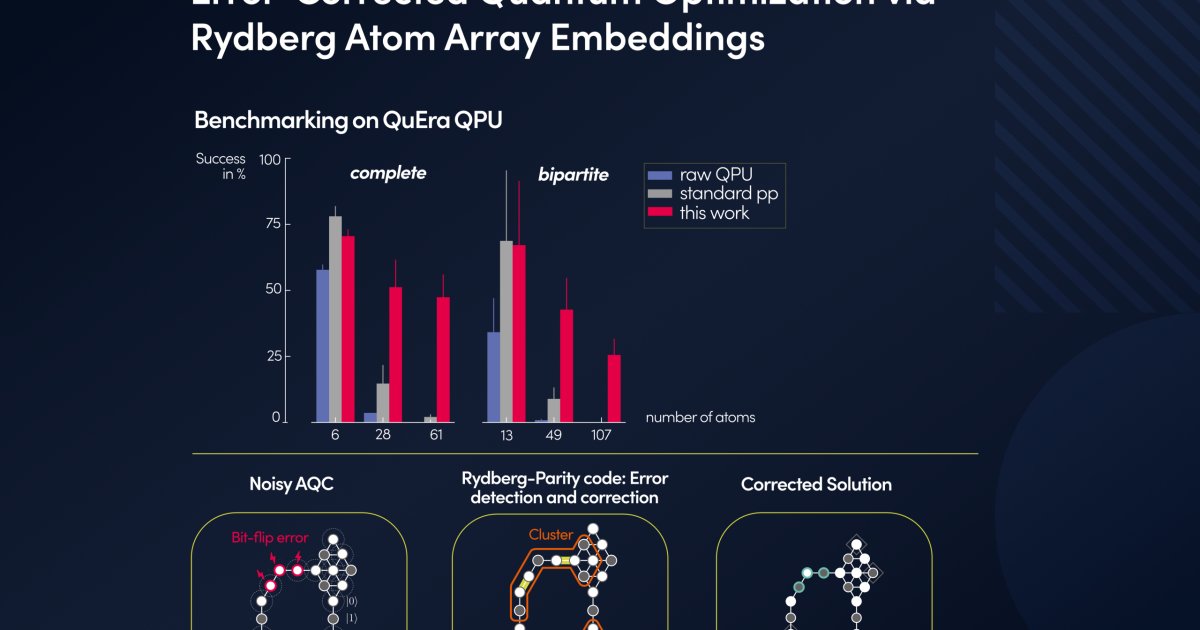
Researchers at ParityQC, the University of Innsbruck, and QuEra Computing have demonstrated error correction in quantum optimization by using the atoms added to expand problem-solving capacity, the company says. The team ran an optimization problem using 107 atoms on the QuEra Aquila QPU, revealing that “ancillary atoms” aren’t simply overhead, but an “intrinsic resource for error correction.” This approach groups atoms into “superatoms,” each constrained to host a single excitation, effectively forming a classical error-correcting code within the quantum system. The researchers’ tailored Cluster decoder recovered exact solutions with at least an 8 percent success rate, even when standard methods failed.
Rydberg-Parity Embedding Enables Error Correction in Atom Arrays
The researchers demonstrated this functionality by running optimization problems on the QuEra Aquila QPU with up to 107 atoms, achieving a success rate that surpasses bare hardware and standard post-processing techniques. The core innovation lies in how the embedding process is viewed. Rather than simply a method for mapping complex problems onto the hardware, it’s now understood as a co-designed architecture where computation and error correction are intrinsically linked.
The team’s analysis of the ParityQC Architecture-based Rydberg embedding revealed that the resulting superatoms form the basis of this error correction. This means the Rydberg blockade, which restricts each superatom to a single excitation, isn’t just a physical constraint but a mechanism for detecting errors. The specific properties of this, including qubit overhead and encoding rate, are dictated by the topology of the original optimization problem being solved.
Decoding the nonlinear error syndromes generated by this embedding required a new algorithm, dubbed the Cluster decoder. Standard decoders designed for linear codes proved inadequate because the Rydberg-Parity code is inherently nonlinear. The Cluster decoder operates by forming clusters around detected errors and attempting to resolve them using predefined lookup tables of the gadgets. If a cluster cannot be uniquely corrected, the decoder dynamically expands its scope, merging overlapping clusters until a valid configuration is found or the entire graph is encompassed.
Every cluster successfully resolved is guaranteed to represent a valid codeword within the embedded graph, ensuring the correction of errors. Results showed that both the Cluster decoder and a standard GreedyMIS algorithm improved success rates compared to raw experimental data. However, the performance gap between the Cluster decoder and GreedyMIS widened as the problem size increased.
Specifically, for the largest layout, the Cluster decoder recovered target solutions with an average success rate of at least around 8 percent, a result unattainable with either the raw data or the GreedyMIS algorithm. The applicability of this approach extends beyond the specific ParityQC Architecture, according to the company. The researchers demonstrated that the same superatom syndrome and Cluster decoder can be applied to other blockade-based Rydberg gadget layouts, including crossing lattices and 3D quantum wires, all exhibiting similar error-correction thresholds.
More broadly, the Cluster decoder is designed to function with layouts constructed from a finite set of bounded-size gadgets, provided their admissible configurations are known and propagate deterministically. This work builds upon previous findings from ParityQC, where the Cluster decoder was also applied to results obtained from a globally driven, ParityQC Architecture-based neutral-atom array, yielding a significant improvement in the probability of reaching the target state.
As Andrew Byun and colleagues state in their preprint, ‘Error-Corrected Quantum Optimization via Rydberg Atom Array Embeddings’, the embedding is a hardware mapping and an architecture for quantum optimization. The team’s findings suggest a pathway toward building more robust and scalable quantum optimization systems by using the inherent properties of the hardware itself for error mitigation., the company says.
Stay currentSee today’s quantum computing news on Quantum Zeitgeist for the latest breakthroughs in qubits, hardware, algorithms, and industry deals.
-
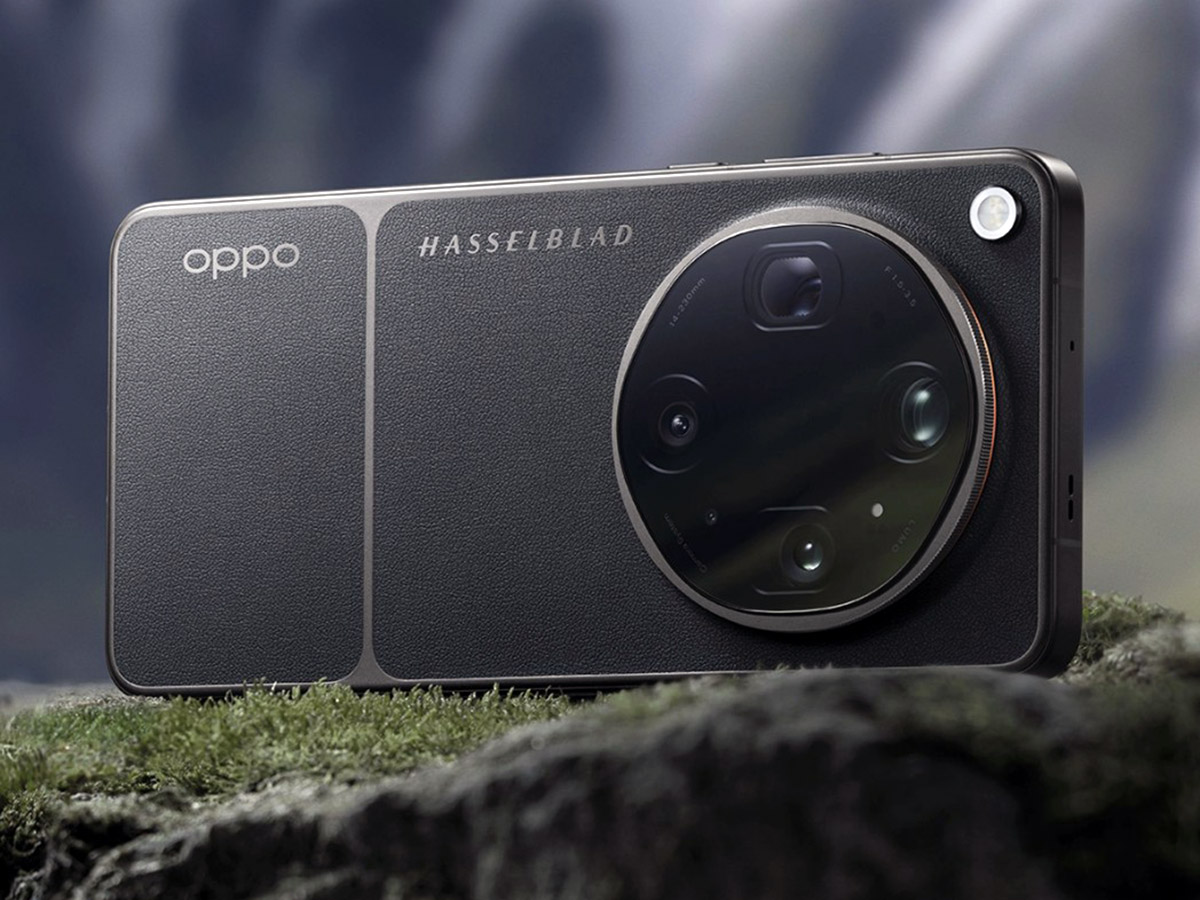
Oppo suspending Find X10 Ultra phone line over wider screen trend and soaring chip prices
One of the most souped-up phone lines of recent years, Oppo’s Find X Ultra, which introduced many flagship camera and display “firsts,” may be no more. The Ultra’s development has reportedly been suspended over at Oppo, including the Find X10 Ultra that was supposed to launch next quarter, as user habits and preferences drift away from the narrow candybar form factor and chip prices become insane.
The 2027 Oppo phone roster is likely to be more focused instead of having numerous phones in its premium Find X line, and there will be extra attention paid to the wider form factor. It doesn’t become clear if that includes the N line of foldable Oppo phones, too, which is one of the thinnest and most camera-centric out there.
Oppo Find X10 Ultra launch may be cancelled
In any case, when asked if the suspension of development will start from this or the next generation, the leaker DCS with a credible track record when it comes to insider knowledge replied with “this generation,” meaning that the Oppo Find X10 Ultra may never see the light of day. Which is a pity, as users were expecting a triple 200 MP camera set bonanza with Oppo’s 10x periscope zoom lens thrown in for a good measure.
Such a phone, however, especially with the latest-gen Snapdragon chip, copious amounts of memory, and a huge battery, would likely be prohibitively expensive, which may have been another consideration for putting the kibosh on the line by Oppo. The recently released Oppo Find X10 Pro Max with a triple 200 MP camera, for instance, costs nearly as much as the foldable Samsung Galaxy Z Fold 8 before its current discount on Amazon.
Oppo is not alone in ditching its flagship Ultra phone line, as the Xiaomi 18 Ultra was reportedly cancelled over its high cost, and surging memory prices were cited as a factor. The sub-brand’s iQOO 16 Ultra may not arrive in 2027, either, while another leaker claims that the OnePlus 16 and OPPO Find X10 Ultra launches for India have been cancelled, pouring more credibility into that particular rumor mill.
New Oppo phones in 2027
As for Oppo’s 2027 plans, its contribution to the wide phone screen trend could include a 6.35-inch slab with a standard 16:9 ratio and a 2560 x 1440 display. Bezels are said to be around 1 mm, and the body would be roughly 81 mm wide, or wider than its current Find X9 Ultra flagship. Test units reportedly use a flagship Dimensity chip and a 3D ultrasonic fingerprint sensor. The first model would be a high-end flagship, with a slimmer, camera-centric version possibly following later.
The leaker also claims that Oppo will release a new kind of imaging product leveraging its phone camera prowess, a gimbal camera, fairly soon. Previous rumors said that both Oppo and Vivo are working on pocket gimbal cameras with a 200 MP 1/1.12″ main sensor, a possible Hasselblad or Zeiss partnership, and a high-end chip. Needless to say, the Find X10 Ultra demise is unconfirmed, and Oppo hasn’t said anything officially. Still, if the Ultra really is being sidelined, the Find X lineup and Oppo’s roster as a whole may look quite different in 2027.
-

Governor-Elect of Texas Announces Plans to Bring Elon Musk Under Control
The governor-elect of Texas Gina Hinojosa made it clear on the campaign trail that she would work to rein in data centers and billionaire tech barons. And now that she’s headed into office, that means playing hardball with SpaceX and Tesla CEO Elon Musk.
“We can have a strong working relationship with Elon Musk and his companies, but it has to be on our terms,” Hinojosa said Thursday in an interview with CNN, as quoted by Bloomberg. “It cannot be just running over the people of Texas, and that’s what changes now that I will be governor.”
A central part of Hinojosa’s campaign was demanding an immediate moratorium on new data center construction until lawmakers have established tighter regulations and stronger protections for local communities.
In the Thursday interview, Hinojosa reiterated her commitment to placing more stringent regulations on data centers by saying she would “balance” it with keeping Texas a business-friendly state.
She also shared that she’s already making moves to crack down on Musk. Amid speculation that Texas officials have been considering a sale of state park land to SpaceX, Hinojosa said she spoke to the head of the Texas Parks & Wildlife Department to “request that no action be taken,” per Bloomberg.
“It is such an important resource,” she told reporters in Austin, hours before the CNN interview.
Wall Street and the AI industry are watching Hinojosa closely, as Texas has become the nucleus of the data center boom. Over a quarter of the US’s planned data center capacity resides in the state.
Musk is deeply invested in the state, having relocated his companies SpaceX and Tesla there from California. He’s also reportedly exploring sites to build another large data center in Texas, to add to the controversial “Colossus” facilities he operates in Greater Memphis. That’s not to mention the quarter of a billion dollars he poured into the midterms to support Republican candidates.
Of course, Musk could simply do what many think is impossible — or at least economically infeasible — and ditch terrestrial AI instrastructure altogether.
“Data centers in space looking pretty appealing right now,” Musk wrote on X, following the brutal election loss.
More on AI: The Tech Industry Went All in on Trump, and Now They’re in Serious Danger Now That Americans Have Turned on Him
-

Sony Delays PlayStation Pulse Elevate Wireless Speakers Days Before Launch
Sony has announced an indefinite delay for PlayStation’s Pulse Elevate wireless speakers just days before their global launch.
The tech company announced the last-minute schedule change in a November 6, 2026, update to an existing PlayStation.Blog post. The message cites a recently identified “production issue” that must be attended to, with no new release date shared.
“As part of our ongoing quality testing of Pulse Elevate speakers, we have identified a production issue with the product and have made the decision to delay the launch,” Sony’s announcement said. “The additional time will allow us to ensure the product will deliver the experience we intended for our players. We apologize for the delay and appreciate your patience and understanding. We look forward to bringing Pulse Elevate to players soon.”
Scroll the tiniest bit further down, and you’ll see that Sony had set the Pulse Elevate speakers to launch globally November 12 – just six days out from when the delay update was published. Whatever problem its team encountered must have been pretty significant, but without a new release date or additional information, it’s unclear if we’ll learn what happened.
Sony announced its new PlayStation-branded, $219.99 speakers in September of last year as the latest entry in its collection of Pulse audio accessories, which includes earbuds and headphones. They were said to be available in both Midnight Black and White, with both boasting a built-in microphone with “AI-enhanced noise rejection.” The speakers are also able to be paired with PlayStation 5, PC, Mac, and even PlayStation Portal devices.
“Pulse Elevate builds upon the immersive next-level gaming audio experience we introduced to players with Pulse Elite wireless headset and Pulse Explore wireless earbuds, combining powerful technologies like planar magnetic drivers and PlayStation Link into new form factors for players to experience with their favorite games,” Sony said at the time of the announcement.
How many units were manufactured ahead of the delay, or how the new issue may impact these existing speakers, was not made immediately clear. IGN took a closer look at all of the new PlayStation hardware, Pulse Elevate wireless speakers included, back in June. We came away looking forward to how the tech might work in practice, calling its noise rejection system “seriously impressive stuff.”

Michael Cripe is a freelance writer with IGN. He’s best known for his work at sites like The Pitch, The Escapist, and OnlySP. Be sure to give him a follow on Bluesky (@mikecripe.bsky.social) and Twitter (@MikeCripe).
-
ST×NLB Cross-References: Less-sweet kopitiam brew to beat the heat
SINGAPORE – This week’s ST×NLB Crossword was constructed by ST Assistant Life Editor Boon Chan, who is part of a team of 40 volunteers from both organisations.
Words with no single canonical spelling in English always pose a bit of a quandary for your humble crossword setters. Of course, such words abound in Singapore, where many local terms are loanwords derived from various different languages, or even corruptions of such loanwords.
Take, for instance, the local way to order a [Less-sweet kopitiam brew to beat the heat]: TEH PENG SIU DAI (4D).
Now, the “teh” (tea) part is fairly uncontroversial, but what about the rest of it?
According to Google Trends, the “peng” (ice) variant derived from Hokkien is far more popular than “bing”, which follows the standard Mandarin hanyu pinyin spelling and comes in a distant second. An even smaller minority of people spell it “ping”, including one of our playtesters, and a handful of truly avant garde teh aficionados prefer “beng”.
The Health Promotion Board favoured the “siu dai” spelling when it launched a movement to make less-sweet drinks the default option.
PHOTO: HEALTH PROMOTION BOARD
Also per Google Trends, “siew dai” (less sweet) is the far more common rendering of a term widely believed to be derived from Cantonese. However, the Health Promotion Board favoured the spelling “siu dai” when they launched their “siu dai by default” movement in September 2023.
Whichever variants you personally prefer, the P in PENG and the U in SIU DAI are both crossed in this grid, to help solvers get to our intended spelling (with apologies to “teh ping” enjoyers).
9A. EYE DROPS are a kind of liquid solution which helps to soothe irritated eyes. Be sure to aim them at the right kind of pupils. They may not be effective in soothing irritated school children.
16A. A baker’s DOZEN is a set of 13, rather than the standard 12. The commonly accepted theory of how this came to be is that bakers in mediaeval England were subject to strict punishments if they were caught selling a smaller than advertised quantity of bread. To avoid accidentally coming up short, they would give customers a little extra, just to be safe.
19A. Lorong LIMAU, named after the lime fruit, is the [Whampoa street with a citrusy name]. The area was once known for having many lime trees in the late 1800s, a heritage reflected in other nearby place names like Jalan Kebun Limau and a mosque called Masjid Hajjah Rahimabi Kebun Limau.
23A. What comes to mind when you picture [White-coated laboratory residents?] Besides human scientists in their lab coats, lab MICE have also made great contributions (albeit without their consent) to humanity’s scientific advancements by serving as live test subjects.
Book recommendations
Let the week’s clues inspire your next read, courtesy of NLB. Follow the links to borrow.
1D. “We were the people who were not in the papers. We lived in the blank white spaces at the EDGES of print. It gave us more freedom. We lived in the gaps between the stories.” — The Handmaid’s Tale by Margaret Atwood
22D. “She mourned that she would never see Aziza grow up… would not get to paint her hands with HENNA and toss noqul candy at her wedding. She would never play with Aziza’s children. She would have liked that very much, to be old and play with Aziza’s children.” — A Thousand Splendid Suns by Khaled Hosseini
27D. “Had the myth of Narcissus and ECHO had a happy ending, their child might have grown up to become a writer-translator like me. I can trace aspects of my own creative impulses to both figures. For writing is, among other things, a deep and direct regarding of oneself.” — Translating Myself And Others by Jhumpa Lahiri
Don’t have the NLB mobile app? Download it now on the App Store or Google Play to enjoy more great reads.
Across
8. Type of coffee with no kick (13): DECAFFEINATED
9. Solution targeted at pupils? (3,5): EYE DROPS
11. Muslim leader (4): IMAM
13. Stay in place (6): REMAIN
16. Thirteen, to a baker (5): DOZEN
19. Lorong _____ (Whampoa street with a citrusy name) (5): LIMAU
20. Satay stick, say (6): SKEWER
23. White-coated laboratory residents? (4): MICE
25. Target centre (8): BULLSEYE
29. 50km foot race, for instance (13): ULTRAMARATHON
Down
1. They may be rough or sharp (5): EDGES
2. Dull discomfort (4): ACHE
3. A long way off (4): AFAR
4. Less-sweet kopitiam brew to beat the heat (3,4,3,3): TEH PENG SIU DAI
5. Squid’s fluid (3): INK
6. Subject grouping often set against the humanities (4): STEM
7. Stubbornly resolute (7): ADAMANT
10. Weakly lit (3): DIM
12. Ineffectual, as a threat (4): IDLE
14. A Nightmare On ___ Street (3): ELM
15. Barbie Girl band who made a splash in 1997 (4): AQUA
17. End of the ABCs, in NYC (3): ZEE
18. Former student (7): ALUMNUS
21. Isle of Dogs director Anderson (3): WES
22. Temporary tattoo dye (5): HENNA
24. Security guard’s video feed, for short (4): CCTV
26. What’s sliced to make sliced bread (4): LOAF
27. Nymph cursed to repeat the words of others (4): ECHO
28. Injection, informally (3): JAB
If you have any feedback, feel free to write to us at stgames@sph.com.sg. See you next week!