Author: Merrel Briona

  • “Diva Down:” Nvidia CEO Jensen Huang Resigns

    “Diva Down:” Nvidia CEO Jensen Huang Resigns

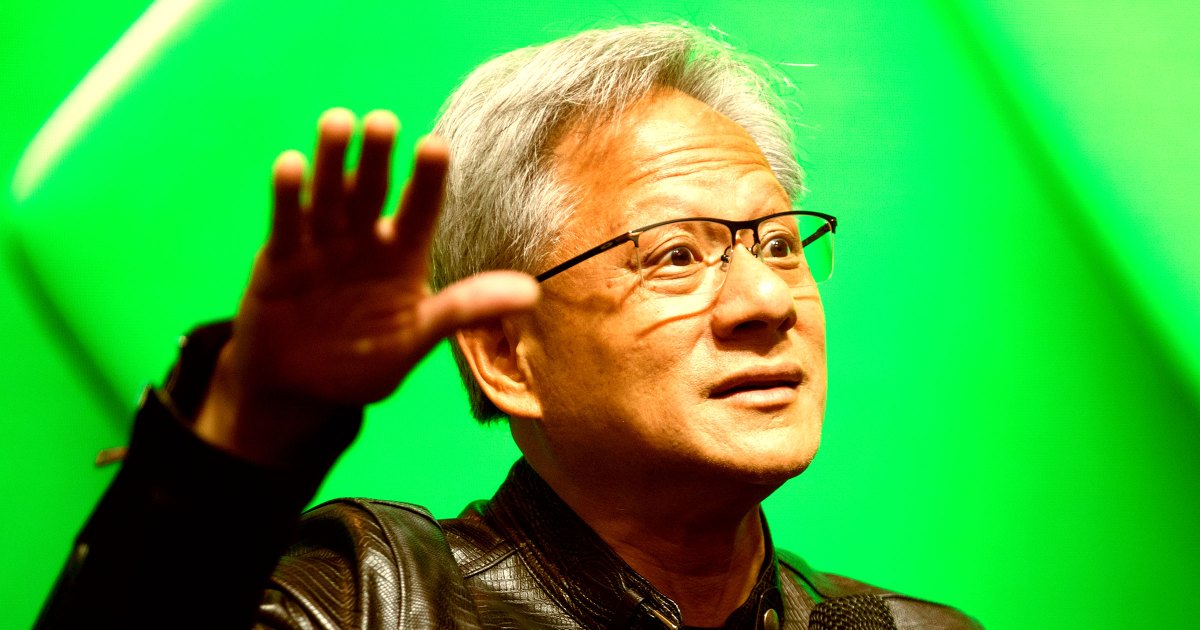
    After mounting pressure on Nvidia’s board to fire its scandal-plagued chief executive, the company’s CEO Jensen Huang is officially resigning.

    According to a press release published early Thursday morning before the opening bell, Nvidia announced its “CEO transition” with Huang resigning as “President, Chief Executive Officer, and a member of the Board, effective immediately.”

    In his stead, the AI chipmaker’s current executive VP and CFO Colette Kress will serve as interim CEO.

    The New York Times revealed late last month that Huang had an extramarital affair with a suspected Chinese spy. This week, the newspaper revealed he had a second affair with Nvidia health executive Kimberly Powell.

    Huang’s identity is practically inseparable from Nvidia, which he founded back in 1993 with the support of the wife he later cheated on.

    As such, reactions online were explosive.

    “It’s official: diva down,” wrote journalist Paris Martineau on social.

    The company’s stock is likely to be in turmoil when markets open later this hour. The company’s shares are already down over 11 percent in pre-market trading.

    More on Nvidia: We Are Now Learning in Real Time Whether the Stock Market Cares About an AI Executive Admitting to an Affair With an Alleged Chinese Spy

    Source link

  • Warby Parker bets on Google AI glasses for growth, but privacy fears still loom

    Warby Parker bets on Google AI glasses for growth, but privacy fears still loom

    NEW YORK, Nov 12 : Warby Parker is entering the smart glasses market in partnership with Google and Samsung, betting that demand for the artificial intelligence wearables will balloon in the coming years.

    But the New York-based fashion brand, known for its affordable eyewear, is also seeking to head off privacy concerns that have weighed on existing producers of the glasses, most of which embed small cameras allowing wearers to record their surroundings without taking out their phone.

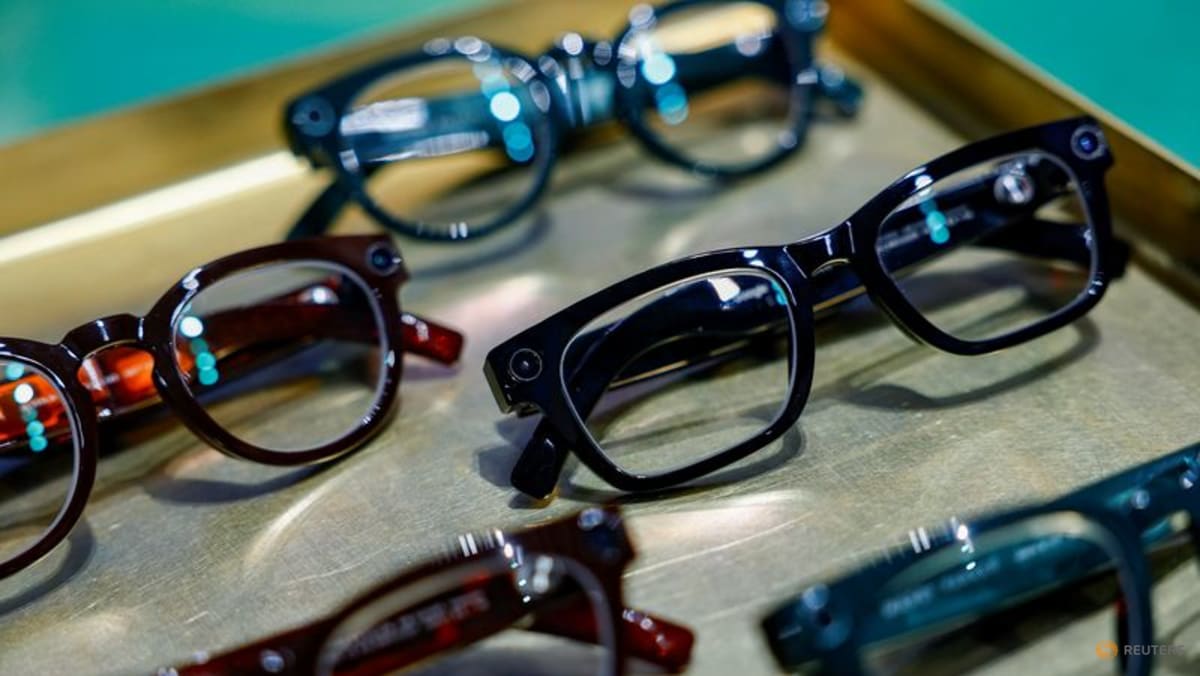
    The Warby Parker glasses are broadly similar to Meta smart glasses already available from Ray-Ban and Oakley maker EssilorLuxottica, which have faced regulatory scrutiny from Norway to Australia. Also like the Meta glasses, they will connect to an AI assistant, in this case Google’s Gemini, for everything from directions to language translation.  

    The big difference from existing versions on the market is the privacy framework embedded in the glasses from the outset, Warby Parker Co-CEO Neil Blumenthal told Reuters.

    Alphabet’s Google will not use visuals captured with the glasses to train its AI. The glasses will bar facial recognition of bystanders. And a small white notification light on the front of the glasses automatically turns on when a user starts recording video.

    Shoppers will start placing pre-orders from Warby Parker on Thursday. Ray-Ban’s Meta glasses still dominate, representing 81.3 per cent of AI glasses shipments in the first half of this year, according to tech research group Omdia.

    But brands from Warby Parker to luxury group Kering — poised to release glasses also in partnership with Google — are looking to gain a foothold. Global AI glasses shipments more than doubled in the first half of 2026 from a year ago, though growth has slowed since the second half of last year, Omdia data shows.

    Meta’s AI glasses also include a camera notification light on the front, a Meta spokesperson said, adding that input from safety experts helped inform the privacy features on its glasses.

    CATEGORY CONFRONTS PRIVACY RISKS

    Optimism that Warby Parker’s “intelligent eyewear” plan will prove to be a major growth engine has helped its shares rally by nearly 40 per cent this year, outperforming a 10 per cent gain in the S&P 500.

    The company expects an addition of several percentage points to fourth-quarter revenue growth from the new wearable technology, executives said on an earnings call earlier this month.

    “As long as the tools provide utility to customers, then we’ll be successful,” Blumenthal said.

    While the core optical backdrop remains soft, smart glasses are poised to be an “increasingly important driver” of Warby Parker’s growth outlook, analysts at TD Cowen wrote in a research note last week. 

    Still, concerns about privacy could slow their pace of growth. One of Britain’s biggest pub chains has restricted the use of the frames, Norway’s government is planning a temporary ban on the use of AI glasses in certain locations, and Australia is considering barring the use of camera-equipped smart glasses in government workplaces.

    GOOGLE AIMS TO REBUILD TRUST

    Juston Payne, who leads extended reality products at Google, acknowledged that public skepticism could be a risk to growth.

    “This is an area where, understandably, trust was lost,” he told Reuters at a demo for the Warby Parker glasses in New York.

    Google says it will embed extensive privacy guardrails into the devices to prevent tampering with the recording indicator light; redact people’s faces from video footage before it is sent to Gemini; and ban targeted advertising on the glasses.

    “We are going to change this conversation,” Payne said. “We are trying to raise the bar.”

    But it remains to be seen whether those measures will ease concern about widespread surveillance, if the glasses become ubiquitous.

    “I’m certainly happy to hear that (video footage is) not automatically fed into AI systems for training,” said Calli Schroeder, who leads the AI and human rights program at the Electronic Privacy Information Center, an advocacy group. “But that still leaves open: a stranger has footage of my kid on their phone. That’s concerning no matter how you phrase it.”

    Source link

  • Zamboanga City mayor, nag-alok ng P2-M pabuya para madakip ang pumaslang sa Basilan judge

    Zamboanga City mayor, nag-alok ng P2-M pabuya para madakip ang pumaslang sa Basilan judge

    Nag-alok ang alkalde ng Zamboanga City ng P2 milyong pabuya para madakip ang mga salarin sa pag-ambush at pagpatay kay Isabela City, Basilan Regional Trial Court Judge Joseph Wee Sit. Ang Korte Suprema at Integrated Bar of the Philippines, kinondena ang krimen.

    Source link

  • Adobe MAX 2026: AI Creative Assistants

    Adobe MAX 2026: AI Creative Assistants

    What Is Covered in This Article:

    • Adobe Creative Agent and the new AI assistants across Firefly and Creative Cloud
    • Native MCP support (in preview) and connectors that let third-party AI agents operate Adobe desktop apps
    • Firefly’s expansion into a multi-model AI creative studio, including Firefly Design, Builder, and Graph
    • GenStudio updates for enterprise content supply chains, including CX Enterprise Coworker and Brand Intelligence
    • The CEO handoff from Shantanu Narayen to Anil Chakravarthy

    The Event—Major Themes & Vendor Moves: Adobe MAX 2026 opened November 10 in Miami Beach and runs through November 12, with more than 300 speakers and keynotes streamed online. The opening keynote doubled as a handoff: Shantanu Narayen, closing out 29 years at Adobe, cited more than a billion monthly active users across Adobe products before passing the stage to incoming CEO Anil Chakravarthy.

    Chakravarthy’s message was focused on providing customers with choice. Creators who want nothing to do with AI get non-AI tooling such as dynamic text in Illustrator and a rebuilt Color Mode in Premiere. Those who want AI get the Adobe Creative Agent, which now powers AI assistants in Firefly, Premiere, After Effects, Illustrator, InDesign, and Frame.io, plus third-party models from Google, Kling, Runway, Luma, Flux, OpenAI, ElevenLabs, and the recently acquired Topaz Labs, all under one subscription.

    The most consequential announcement was native Model Context Protocol (MCP) support, now in preview, across Adobe’s desktop creative tools, demonstrated with OpenAI and Anthropic models operating Photoshop and Illustrator on stage at Adobe MAX 2026. Adobe connectors already run inside Anthropic, Google, OpenAI, and Slack surfaces, with Microsoft Copilot coming soon.

    Firefly expanded into what Adobe calls an AI creative studio, adding Firefly Design (beta), the no-code Firefly Builder (private beta), and Firefly Graph (public beta) for reusable node-based workflows. For enterprises, Adobe is bringing CX Enterprise Coworker into GenStudio, adding Brand Intelligence to enforce brand standards, and announced a multi-year alliance with The Walt Disney Company. Adobe also said nearly 70% of professional Photoshop users regularly use its AI features.

    Adobe MAX 2026: Adobe Ready to Let Other AI Agents Run Its Apps

    Analyst Take—Adobe MAX 2026 Shows Adobe Ceding the Front Door: Adobe MAX 2026 delivered plenty of features, but the strategic signal is that Adobe is willing to let someone else own the interface. Native MCP support (in preview) and connectors into Claude, ChatGPT, Gemini, and soon Copilot mean a user can direct Photoshop or Illustrator without opening either application. Adobe is positioning its apps as the trusted execution layer behind whatever agent a customer prefers.

    The counterweight to this approach is Adobe’s professional base. Serious creatives are unlikely to abandon Photoshop, Premiere, or Illustrator just because an agent can drive them; they will keep working inside the core apps for the pixel-level precision and control their clients pay for. Adobe’s own numbers point the same way: Photoshop shipped 77 new features across 32 releases this year, and Adobe said its most advanced users are the heaviest adopters of its AI features.

    That loyalty is Adobe’s real defensive moat, and it reaches beyond the creative team, because creative professionals often shape which tools the enterprise licenses and renews. The moat holds only if Adobe keeps shipping both AI and non-AI improvements, from Premiere’s rebuilt Color Mode to a 40% reduction in Photoshop crashes, at the pace this base now expects. If the pros feel neglected in favor of casual creators or third-party agents, enterprise creative spend becomes contestable.

    Opening the apps to outside agents is still the right call, because buyers are moving toward agents. In Futurum’s 2H 2026 Enterprise Applications Decision Maker Survey (N=833, published August 2026), 42.7% of IT decision-makers prefer AI delivered through autonomous agents, versus 31.2% for copilots. The cost is real, though. When a third-party agent initiates the work, Adobe risks becoming a back-end utility, and utilities get priced like utilities.

    Adobe’s Bundled Pricing Faces an Agentic Stress Test

    For now, the “every model, one subscription” pitch at Adobe MAX 2026 is working. Creatives get models from Google, Kling, Runway, Flux, OpenAI, ElevenLabs, and Topaz alongside Adobe Fonts, Adobe Stock assets, and storage, without juggling separate accounts and invoices, and Adobe’s tools can auto-select the best model for a task. Buyers are responding: Adobe’s AI-first ending ARR topped $650 million in Q3 FY 2026, up more than 150% year over year.

    Predictable seat-based pricing also still has a sizable constituency. In Futurum’s 2H 2026 survey, per-user pricing remains the single most-preferred model among buyers paying for generative AI as an add-on, at 42.3%.

    The model gets harder to sustain as agentic workloads become common. Today, most generations are still triggered by a person working in the app. An agent that adapts one poster into dozens of sizes and seven languages, or a Firefly Graph capsule that batches hundreds of product shots, consumes compute in ways that bear no relation to a seat, and third-party agents calling Photoshop through MCP will make that usage even less predictable.

    The same survey shows where buyers are heading: 57.7% of add-on buyers prefer consumption- or outcome-based pricing. I expect Adobe to keep the bundled subscription for hands-on creative work while shifting agent-driven and high-volume workloads to metered, per-action, or outcome-linked pricing within 12 to 18 months. Generative credits will be the pressure point, and how transparently Adobe manages that transition will determine whether its loyal professional base sees it as fair or as a stealth price increase.

    The Enterprise Story at Adobe MAX 2026 Was Under-Told

    MAX is first and foremost a show for creatives, and Adobe was right to center the keynote on the people who live in Photoshop, Premiere, and Illustrator every day. Its enterprise marketing and customer experience story typically gets its full airing at Adobe Summit. Even so, GenStudio received only a few minutes of brand videos from Disney and Coca-Cola at the end of a two-and-a-half-hour keynote, with no live demo, and that undersells an advantage Adobe should press at every event.

    CX Enterprise Coworker and Brand Intelligence are arguably the most defensible things Adobe announced, because governing brand consistency across fleets of agents is a problem enterprises will pay to solve, and the Firefly Design demo, in which the agent flagged off-brand fonts and colors across a campaign, hinted at that value.

    Enterprise-Safe Positioning Must Extend to Partner Models

    Many of the creatives in the MAX audience work inside, or on behalf of, large enterprises, and those organizations care about what Adobe emphasized only in passing: commercially safe Firefly models, security protocols, attribution and ownership of content, and the assurance that Adobe will be around for years to come.

    That enterprise-safe positioning matters more, not less, now that third-party models from Google, OpenAI, Kling, and others sit alongside Adobe’s own and outside agents can operate its apps. Enterprise buyers will want clear answers on which models and workflows carry Adobe’s commercial-safety assurances and how governance follows content across agents.

    Adobe already has the building blocks. Under Adobe’s Firefly product description, customers on qualifying plans are eligible for IP indemnification for content generated with eligible Firefly features, but that coverage excludes capabilities the interface identifies as powered by non-Adobe-trained models, as well as beta features. Adobe also automatically applies Content Credentials, tamper-evident C2PA metadata that records how an asset was made, to qualifying Firefly-generated content. Those safeguards are anchored in Adobe’s own models.

    In an analyst session at MAX, a leader on Adobe’s Firefly Enterprise team said Adobe offers pass-through indemnification on some third-party models, including within its Firefly Creative Production for Enterprise workflow tool, and is working to add more, with its forward-deployed experts helping customers’ legal teams weigh the pros and cons of individual partner models. That is a guided, case-by-case answer rather than a published policy, and one customer in the session, the CIO of event producer Multi Image Group, said indemnification was why his firm chose Adobe in the first place, but that the arrival of partner models made things “a little bit more murky.”

    Turning that guidance into clear, published coverage for partner-model and agent-driven output is where Adobe can widen its enterprise lead. Adobe should weave this trust and governance message into its creative narrative between now and Summit, and then prove it at enterprise scale inside Workfront and Adobe Experience Manager.

    What to Watch:

    • Firefly Builder’s design-to-code pitch pushes Adobe into territory Figma and Canva are already contesting with AI app creation, and private beta status gives both time to respond.
    • Google, OpenAI, and other model providers supply Firefly while building their own creative tools; watch whether connectors extend Adobe’s reach or train customers to start their work elsewhere.
    • How Adobe meters agent-initiated work and third-party model usage will determine whether the one-subscription promise holds under heavy agent workloads.
    • Chakravarthy inherits a creator base anxious about AI and an enterprise business betting on agents, and balancing those two messages will define his first year.
    • Disney and Coca-Cola lend credibility, but measurable content supply chain outcomes from GenStudio deployments will matter more to buyers.

    You can read the full press release on Adobe’s website.


    Declaration of generative AI and AI-assisted technologies in the writing process: This content has been generated with the support of artificial intelligence technologies. Due to the fast pace of content creation and the continuous evolution of data and information, The Futurum Group and its analysts strive to ensure the accuracy and factual integrity of the information presented. However, the opinions and interpretations expressed in this content reflect those of the individual author/analyst. The Futurum Group makes no guarantees regarding the completeness, accuracy, or reliability of any information contained herein. Readers are encouraged to verify facts independently and consult relevant sources for further clarification.
    Disclosure: Futurum is a research and advisory firm that engages or has engaged in research, analysis, and advisory services with many technology companies, including those mentioned in this article. The author does not hold any equity positions with any company mentioned in this article.
    Analysis and opinions expressed herein are specific to the analyst individually and data and other information that might have been provided for validation, not those of Futurum as a whole.
    Read the full Futurum Group Disclosure.

    Other Insights From Futurum:

    Adobe Brings CX Enterprise Coworker into Third-Party AI Platforms

    Documents Are the Overlooked Layer of Enterprise AI Strategy

    Adobe and NVIDIA Speed Agentic Creation, but Trust Is What Enterprises Buy


    Keith Kirkpatrick is VP & Research Director, Enterprise Software & Digital Workflows for The Futurum Group. Keith has over 25 years of experience in research, marketing, and consulting-based fields.

    He has authored in-depth reports and market forecast studies covering artificial intelligence, biometrics, data analytics, robotics, high performance computing, and quantum computing, with a specific focus on the use of these technologies within large enterprise organizations and SMBs. He has also established strong working relationships with the international technology vendor community and is a frequent speaker at industry conferences and events.

    In his career as a financial and technology journalist he has written for national and trade publications, including BusinessWeek, CNBC.com, Investment Dealers’ Digest, The Red Herring, The Communications of the ACM, and Mobile Computing & Communications, among others.

    He is a member of the Association of Independent Information Professionals (AIIP).

    Keith holds dual Bachelor of Arts degrees in Magazine Journalism and Sociology from Syracuse University.
    Source link

  • Traffic caused by ASEAN preparations spares no one — not even senators  

    Traffic caused by ASEAN preparations spares no one — not even senators  

    Preparations for the ASEAN Summit continued to cause traffic on Thursday, with a few senators getting caught in the congestion.

    Source link

  • Lotto Results Today – November 12, 2026

    Lotto Results Today – November 12, 2026

    Superlotto 6/49

    44-23-35-13-03-21

    P 103,364,779.46

    Lotto 6/42

    15-39-42-38-35-36

    P 15,861,195.08

    6D Lotto

    4-1-7-4-4-1

    P 7,975,201.56

    3D Lotto 2PM

    1-0-9

    P 4,500.00

    3D Lotto 5PM

    7-8-0

    P 4,500.00

    3D Lotto 9PM

    1-9-5

    P 4,500.00

    2D Lotto 2PM

    29-08

    P 4,000.00

    2D Lotto 5PM

    22-20

    P 4,000.00

    2D Lotto 9PM

    17-28

    P 4,000.00

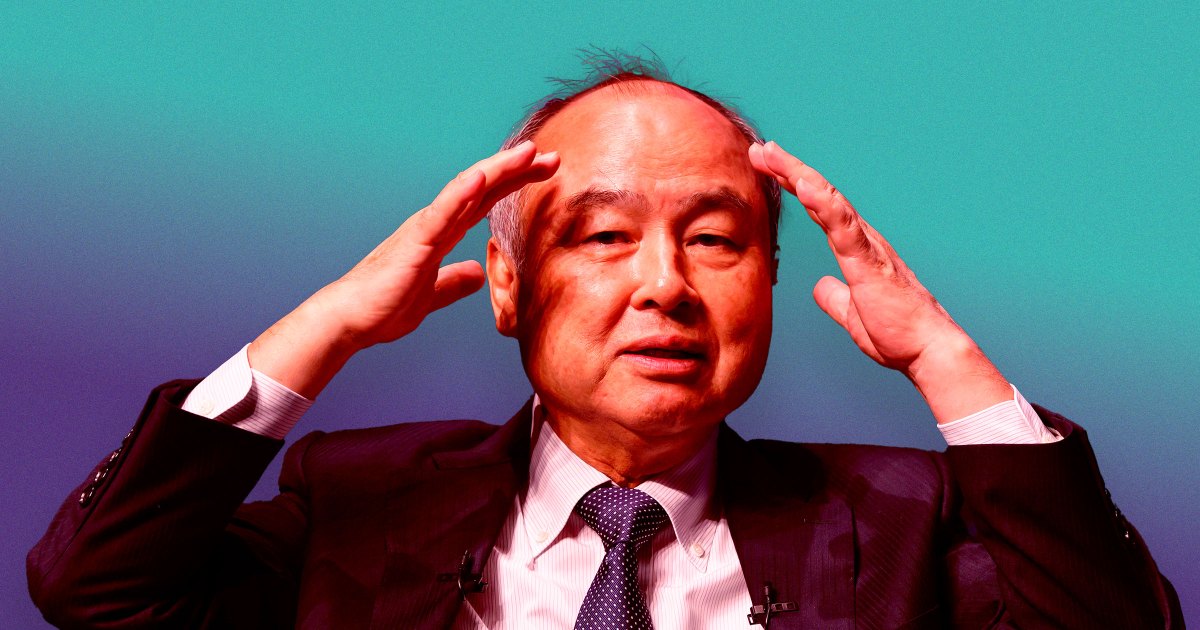
  • SoftBank Loses  Billion as AI Data Centers Turn Out to Be Risky Investment

    SoftBank Loses $7 Billion as AI Data Centers Turn Out to Be Risky Investment

    The AI data center boom is looking as shaky as ever.

    Nowhere is that more apparent than at the Japanese megafirm SoftBank — perhaps best known for bankrolling WeWork before its spectacular implosion — and which now seems to be standing on a financial snowpack that could collapse into an avalanche.

    SoftBank backstopped OpenAI, the lab behind ChatGPT, with over $60 billion in risky debt financing. As the Financial Times reports, that move has now dragged the bank into an ominous loss of $7 billion between July and September, the company’s first quarterly loss in two years of business.

    According to the FT, at least $3.7 billion of the loss is likely attributable to a massive OpenAI data center development in Ohio. SoftBank initially blamed that portion on financing for “existing and planned” data center projects there, before backtracking to say the losses are “completely unrelated” to any dealings in the buckeye state.

    Compare SoftBank’s $7 billion overall drop to its profit of $2.17 billion the previous quarter, or its heady $15.64 billion profit over the third quarter of 2025, and it’s clear the firm is currently hemorrhaging money to keep some AI dreams alive.

    Shares in the company have also plummeted by nearly 50 percent since June, the FT notes, as ratings downgrades and rising skepticism over the viability of the AI industry scare investors into safer corners of the market.

    In order to keep pumping money into AI powerlabs like OpenAI, SoftBank itself has started digging into junk bonds — high-risk debt, essentially — raising over $11 billion in non-investment grade bonds in September.

    So on top of boasting perhaps one of the highest degrees of exposure to the AI bubble on the planet, the Japanese investment firm is now the world-record holder for the largest corporate junk bond offering ever made. With a foundation this unstable, it’s no wonder SoftBank CEO Masayoshi Son calls the AI bubble a myth — because if it exists, his megabank is in mega trouble.

    More on data centers: Only One Town in America Voted in Favor to Building a New Data Center, and the Reason Why Is Bleak

    Source link

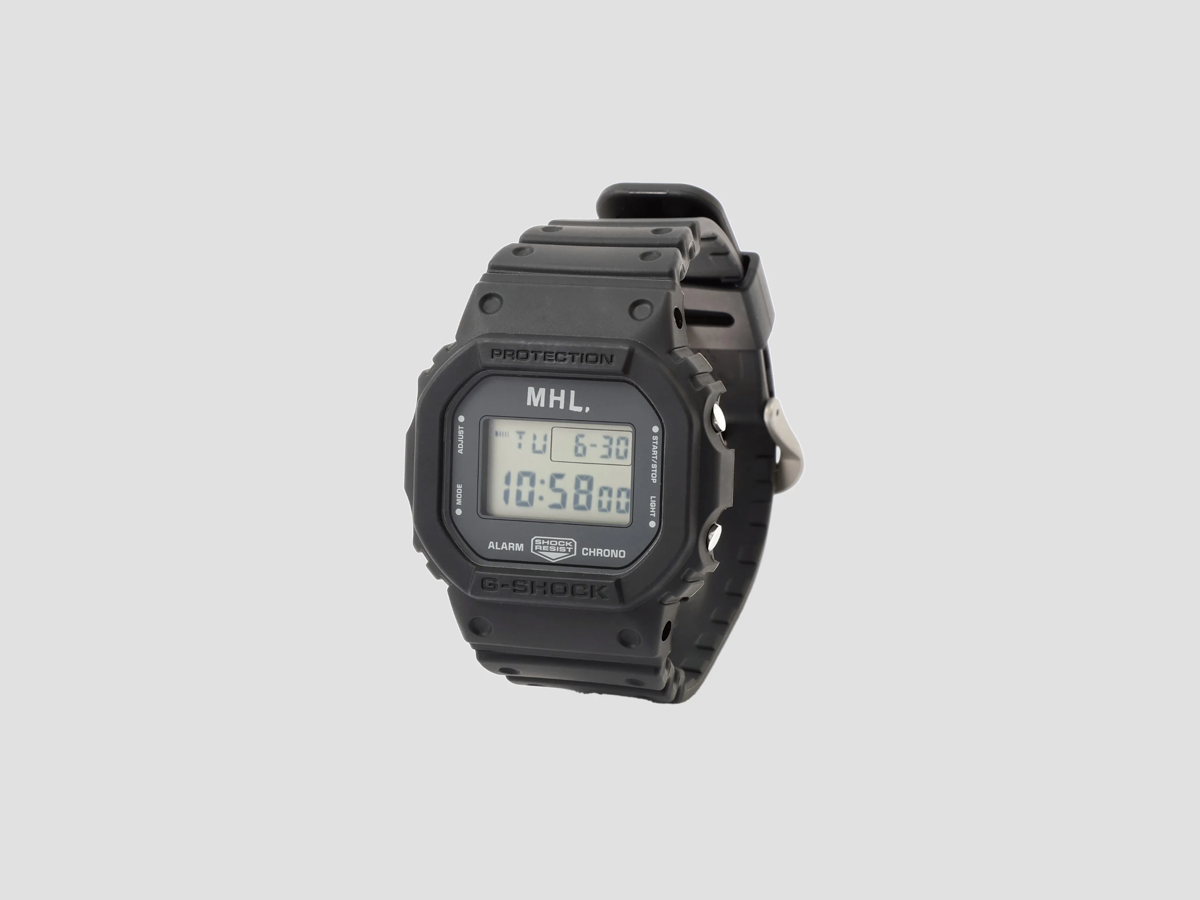
  • MHL. x Casio G-Shock gives the classic 5600 a minimalist grey makeover for ¥24,200

    MHL. x Casio G-Shock gives the classic 5600 a minimalist grey makeover for ¥24,200

    MHL. has taken one of Casio’s most recognisable G-Shock shapes and dialled the styling right back for its latest collaboration.

    The new MHL. x G-Shock goes on sale in Japan on 12 November for ¥24,200, through participating MHL. shops and the brand’s online store.

    The square watch gets a grey dial with light-grey markings and restrained MHL. branding, set inside a matte resin exterior. G-Shock is hardly a range known for shrinking into the background, but there are no exuberant graphics or conspicuous colour accents here. Understatement is rather the point.

    A sizeable premium for the MHL. treatment

    The design may be minimalist, but the price premium is less so. Casio currently lists the standard Japanese donor version at ¥14,300, meaning the MHL. edition costs ¥9,900 more, or roughly 69%.

    There is plenty of history behind that familiar square shape. Casio dates the first 5600-series model to 1987, four years after the original G-Shock made its debut.

    Underneath the quieter wardrobe, the familiar G-Shock credentials remain. The standard model is shock resistant and rated for 200-metre water resistance, while its CR2016 battery is rated for approximately five years. It also offers a stopwatch, 24-hour countdown timer, multifunction alarm and white LED backlight.

    The standard watch measures 48.9 × 42.8 × 13.4 mm and weighs 52 g, keeping the familiar compact square proportions intact.

    For this collaboration, the changes are primarily aesthetic. MHL. has taken a G-Shock design lineage with nearly four decades behind it and made it look almost conspicuously quiet, which for a G-Shock may be something of an achievement.

    Source link

  • Dragon Ball: 6 Strongest Versions of Beerus in the Multiverse, Ranked

    Dragon Ball: 6 Strongest Versions of Beerus in the Multiverse, Ranked

    Beerus is one of the most powerful characters in the Dragon Ball multiverse, but not every version of the God of Destruction is created equal. Across different timelines and alternate continuities, Beerus has proven time and time again just how terrifying a Destroyer can be when their full power is unleashed.

    While Dragon Ball Super‘s Beerus remains a benchmark for Goku and Vegeta, some versions have pushed the God of Destruction’s abilities even further, showcasing feats that make even his usual displays of power look modest. From alternate incarnations with unrivaled Power Levels to variants who can slay Gods like Zeno, the strongest versions of Beerus stand above everyone in Dragon Ball.

    6

    DBZ Beerus is Nothing Compared to Beerus These Days

    Dragon Ball Z: Battle of Gods, Dragon Ball Z: Resurrection F

    It’s easy to take for granted, but Beerus was the first Dragon Ball villain who won their arc. At the end of Battle of Gods, Goku fails to defeat Beerus and the God of Destruction destroys the earth (literally a small piece of dirt qualifying as “earth”). It’s a refreshing change of pace that shows off just how utterly outclassed Goku was compared to the God of Destruction.

    Akira Toriyama famously destroyed Beerus’ Power Level as being 10/10 in the movie continuity, with Goku’s Power Level being a 6/10 and Whis’ being a 15/10 (to show just how much stronger the Angel was). Unfortunately for Movie Beerus, his story ends at Resurrection F, so he’s be default the single weakest version of Beerus.

    5

    Anime Beerus Kept Pushing the Benchmark For Power

    Dragon Ball Super Anime, Dragon Ball Super: Broly, Dragon Ball Super: Super Hero

    Beerus got something of a power boost when Dragon Ball‘s story moved over from movies to an anime. The Dragon Ball Super anime did not follow Toriyama’s suggestion that Beerus’ Power was a 10 and Goku was a 6, instead opting to make Beerus feel more like a 15 and Goku closer to a 2.

    Any time Goku catches up to Beerus, the anime makes it painfully clear that the Destroyer is so much stronger than he lets on. Beerus doesn’t have too much to do in Dragon Ball Super‘s back-half, but he kills Zamasu with a Hakai and clearly has a lot of power hidden away. That said, his best feats are still to come in Dragon Ball Super 2.

    4

    Remake Beerus Showed Off Ultra Ego Out of Nowhere

    Dragon Ball Super: Beerus

    Dragon Ball Super: Beerus hasn’t even finished remaking Battle of Gods yet, but the anime has already shown off one of the strongest versions of Beerus in the entire franchise. In Dragon Ball Super: Beerus Episode 5, Beerus actually used Ultra Ego against Super Saiyan God during their fight. He doesn’t call it such, but it’s obvious what form he’s using.

    The fact that Beerus is already showing Ultra Ego is a good sign that he’ll be even stronger in the remake. Dragon Ball Super: Beerus has heavily implied that the remake is following the manga’s power scaling, but the addition of Ultra Ego throws a serious spanner in the works. Of course, Beerus is holding back against Goku the whole time, so the fact he isn’t immediately killed by Ultra Ego Beerus does have an obvious in-universe explanation.

    3

    Manga Beerus Knows Ultra Instinct

    Dragon Ball Super Manga

    Beerus Ultra Instinct

    Anime Beerus will likely surpass his manga counterpart once Dragon Ball Super: The Galactic Patrol finally releases, but until then, Manga Beerus reigns supreme. By far the biggest difference between Manga Beerus and other versions of the God of Destruction is that this variant actually knows how to use Ultra Instinct.

    Toyotarou reveals in the Universe Survival Saga that Whis taught Beerus the Angelic form. In the Dragon Ball Super manga’s Zeno Exhibition Match, all of the Destroyers fight in a battle royale that Beerus effortlessly sweeps simply by using Ultra Instinct. Goku and Vegeta are getting close to being strong enough for their final rematch with Beerus, but it won’t be so easy in the manga timeline.

    2

    CC Beerus is Overpowered Beyond Belief

    Super Dragon Ball Heroes

    Super Dragon Ball Heroes is home to what is quite possibly the most overpowered universe in anime history: the Capsule Corp Timeline. The CC Timeline is a branch of the Dragon Ball multiverse where almost every single story in the series happened, from most of the anime series, to all of the movies, and even some OVAs. The end result is Goku and the rest of the cast becoming stronger than they’ve ever been – and that includes Beerus.

    CC Beeurs is in a league of his own. Even with how overpowered CC Goku has gotten, he canonically does not have a high enough Power Level to beat Beerus yet – this is despite the fact CC Goku would be able to sweep the main Dragon Ball Super timeline, including Zeno. Perhaps CC Beerus’ greatest fear is one-shotting Super Saiyan Blue CC Goku in the SDBH manga,

    1

    Whirus is the Most Powerful Being in Existence

    Dragon Ball Fusions

    EX-Fusion is an artificial form of Fusion created by Bulma. By wearing an EX Bracelet, multiple participants can fuse together via EX-Fusion. Not just that, EX-Fusion removes the Power Level balance required for the Metamoran Fusion Dance and the permanence of the Potara earrings for Gods. Best of all, EX-Fusion has no time limit whatsoever and can be defused at will, and only at the cost of a slightly lower multiplier than other forms of Fusion.

    Rearrange the movies into the correct US release order.


    Beerus and Whis actually fuse together via EX-Fusion in Dragon Ball Fusion, becoming the most powerful fusion and being in the entire Dragon Ball multiverse. CC Goku may have the craziest feats in anime history, but Whirus is half Beerus and half Whis – equal parts the strongest God of Destroyer and the strongest Angel. It goes without saying, but Whirus is functionally unbeatable and he would be able to sweep the entire Dragon Ball Super cast if he made it to the main timeline.

    Source link

  • Pepay Aguilar proud sa anak, never nangbastos ng bakla

    Pepay Aguilar proud sa anak, never nangbastos ng bakla

    MASAYANT ibinandera ng komedyanteng si Pepay Agular ang goods na goods na samahan nila mg kanyang biological son na si Kenjie.

    Sa kang guesting sa “Chika Cart” nitong Martes, November 10, ipinagmalaki niya kina Baninay Bautista, Donita Nose, at Jeff Fernando kung gaano siya ka-proud bilang ama.

    Chika ni Pepay, bata pa lang si Kenjie ay maaga na niyang ipinaintindi sa anak ang kanyang trabaho.

    “’Pag nakikita niya akong nagme-make up na, pinapaliwanag ko sa kanya na pupunta akong trabaho. Dada kasi ang tawag [niya] sa akin.

    Baka Bet Mo: Wacky Kiray sa pagkamatay ng mga comedian: Nakakapraning!

    “[Sabi ko], ‘Hindi si Dada magme-make up kung hindi pupunta ng trabaho,” lahad ni Pepay.

    Bata pa lang ang anak ay nakikita na nito ang kanyang trabaho at ngayon nga’y binata na ang anak.

    “Simula maliit siya nakikita niya na akong ganon, kaya ngayon na 20 [years old] na siya, ang galing niya na magkabit ng false eyelashes,” biro pa ni Pepay.

    Chika pa niya, “Actually, kapag naglalakad kami sa mall, napagkakamalan talaga kaming mag-jowa. ‘Yun nga ‘yung iniiwasan ko.”

    Proud rin si Pepay dahil mataas ang respeto ng kanyang anak sa LGBTQIA+ community, na natutunan nito dahil sa pagmamahal at paggalang sa kaniya bilang isang ama.

    “Isa lang ang proud ako doon sa anak ko talaga, kapag nakakakita ‘yon ng ibang bakla sa daan, alam na alam niya na hindi niya pwedeng bastusin ‘yon kasi alam niya na ang tatay niya ay bakla,” sey ng komedyante.

    Nausisa naman ni Baninay si Pepay hinggil sa relasyon ng anak sa ina nito at dito niya inamin na hindi na sila nagkikita.

    “Parang blessing sa akin ‘yung bata, ‘yung nanay naman, blessing din naman kasi siya ang nagbigay ng buhay sa anak ko, pero hindi na kami nagkikita,” amin ng komedyante.

    The post Pepay Aguilar proud sa anak, never nangbastos ng bakla appeared first on Bandera.

    Source link