Author: Merrel Briona

  • Israeli strike on Gaza hospital kills six, including surgeon and child

    Israeli strike on Gaza hospital kills six, including surgeon and child

    An Israeli airstrike on southern Gaza’s main hospital overnight killed at least six Palestinians including a surgeon and a 13-year-old boy.

    Source link

  • Celebrity ARMYs share their BTS superfan stories le

    Celebrity ARMYs share their BTS superfan stories le

    American pop-rock band LANY was back in the country for the seventh time, almost a decade after their first visit in 2017.

    Source link

  • Apple’s New Apple TV 4K Jumps to ¥49,800 — Can A19 Chip Keep It the “Strongest” Despite the Price Hike? — BigGo Finance

    Apple’s New Apple TV 4K Jumps to ¥49,800 — Can A19 Chip Keep It the “Strongest” Despite the Price Hike? — BigGo Finance

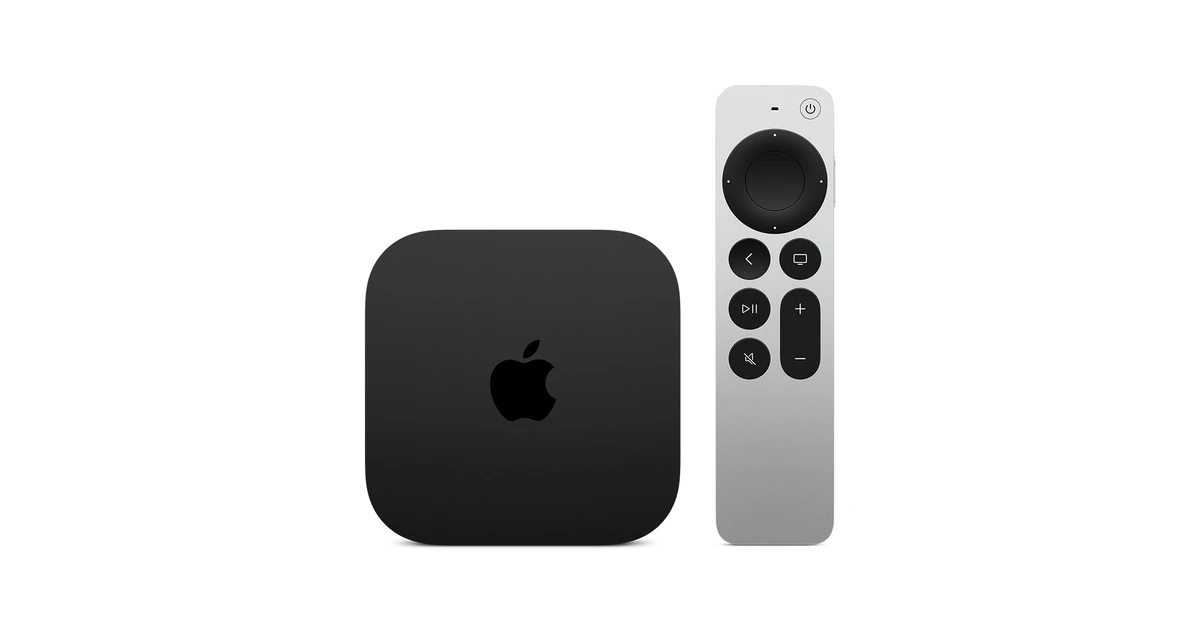
    Apple’s media streaming device “Apple TV 4K (4th generation),” set to launch on November 13, will be priced at ¥49,800 (approximately $310), a significant increase from the previous generation. The third-generation model released in 2022 was priced at ¥19,800 (approximately $120) for the Wi-Fi-only version and ¥23,800 (approximately $150) for the model with Gigabit Ethernet. The new model consolidates to a single configuration with both Wi-Fi and wired LAN, making the effective price increase more than ¥20,000 (approximately $130). The U.S. price is $299, a $150 increase from the equivalent previous-generation model. While performance has evolved, the focus is on how the price barrier will affect its ability to attract new buyers.

    The new model is the first redesign in about four years since 2022. The exterior is largely unchanged from the third generation, retaining the palm-sized chassis that connects to a TV or monitor via HDMI. The only visible change is the front status light moving from the right side to the center.

    The internals have been significantly overhauled. The Apple silicon has shifted from the A15 Bionic to the A19, which is also used in the iPhone 17 series. According to Apple, CPU performance is up to 50% faster and GPU performance up to twice as fast compared with the previous generation. Apps that process on-device rather than in the cloud launch and transition more smoothly, and gaming with a PlayStation DualSense controller connected via Bluetooth feels responsive and comfortable.

    On the video side, in addition to the existing 4K/HDR, Dolby Vision, and HDR10+ support, a dedicated decoder for AV1-format video has been added. AV1 is a highly efficient codec adopted by YouTube, Netflix, and others, enabling stable playback of high-quality video while conserving bandwidth. The wireless standard has also been updated from Wi-Fi 6 to Wi-Fi 7, and storage is now standardized at 128GB.

    A notable new feature is the three far-field microphones built into the device. Previously, operating Siri required the remote, but now users can simply speak while watching TV for voice control. In the U.S., an English-language beta of the new “Siri AI” is planned for a future software update, supporting questions about the content being watched and content searches that take into account personal context left in messaging apps and elsewhere. However, the timing for Siri AI support in Japanese and for the Japan region has not been disclosed, and for now operation will center on the conventional Siri.

    The included “Siri Remote (4th generation)” is the same size as before but now supports the “Find Nearby” precision-finding feature in the Find My app. Using a compatible device such as iPhone 17 or later (excluding iPhone 17e), iPhone Air, or iPhone Duo, users can see the distance and direction to the remote on screen. The remote can also play a sound to help locate it, reducing the stress of losing it. The remote is also sold separately for $59 (approximately ¥9,400), and works with all past generations of Apple TV 4K.

    Its role as a smart home hub has also been strengthened. It supports Matter and Thread, and in addition to linking with lighting and security cameras, it serves as a border router bridging the Thread network and the home LAN. In a test of voice-controlling a smart bulb registered in the Home app by speaking toward the Siri Remote, lights in a distant location switched without delay, showing good responsiveness.

    On the audio front, a key highlight is a new feature that pairs with the “HomePod mini 2” smart speaker (¥24,800, approximately $160) released on October 30. Users can build a home theater surround sound setup using up to four compatible HomePods, and under the condition that the front and rear pairs each use the same model, a configuration combining two HomePod (2nd generation) units and two HomePod mini 2 units is also possible. Setup involves registering each room and stereo pair in the Home app, then creating a sound group from the Apple TV 4K settings screen. An automatic calibration of about three to five minutes recognizes the speakers’ positional relationships and adjusts playback timing and volume.

    The HomePod mini 2 is the first refresh in about six years since the original launched in 2020. Priced at ¥24,800 (approximately $160), it comes in five colors: pink, green, blue, white, and midnight. The chip is the S10, also used in the Apple Watch Series 10, and it inherits the computational audio that analyzes music in real time to optimize acoustic characteristics. A new “Sound Glow” feature makes the top surface pulse in time with the sound. Compared with the original, the separation of mid and high frequencies is improved, with a tendency to tighten the rhythm without inflating the bass. Pairing two units in stereo brings the sound image forward, delivering a richness that belies the small chassis.

    The price increase also casts a shadow over Apple’s smart home strategy. In the U.S., “Apple HomeView,” the company’s first smart display featuring a 7-inch Liquid Retina display, is scheduled for release on November 13, but its launch timing in Japan is undecided. In popularizing smart home products in households, the pricing of the Apple TV 4K — which controls the TV viewing environment — carries significant weight.

    Among market observers, some argue that while it overwhelms competitors on performance, the higher price range will hinder efforts to cultivate new customers. Some U.S. media reviews praise it, saying “it remains the best streamer on the market,” while others point out that “the $299 price will make those who have been switching from Amazon and Roku devices hesitate to buy.” Many also believe there is no need for third-generation users to rush to upgrade, and it appears that what will determine the reach of Apple’s smart home vision is less the richness of features than the reasonableness of the price.

    Source link

  • WALANG PASOK: Mga suspendidong klase sa Biyernes, Nov. 13, 2026

    WALANG PASOK: Mga suspendidong klase sa Biyernes, Nov. 13, 2026

    Ilang local government units (LGUs) ang nag-anunsyo ng walang pasok sa Biyernes, November 13, dahil sa pagdeklara ng Special Non-Working Holiday, at may nakatakdang power interruptions.

    Source link

  • Angelina nagamit ng netizens, gusto na lang maging simple ang buhay

    Angelina nagamit ng netizens, gusto na lang maging simple ang buhay

    Gamit na gamit si Angelina Jolie sa social media ng iba nating kababayang negosyante.

    Source link

  • OpenAI Is Sustaining Enormous Losses

    OpenAI Is Sustaining Enormous Losses

    OpenAI is losing money out the wazoo.

    The ChatGPT maker told investors Tuesday that its operating losses in the third quarter topped $10.9 billion, up from $10.1 billion in the previous one. That’s striking because the company actually grew its revenue by around 50 percent from the second to the third quarter, per the The Wall Street Journal, though it wasn’t enough to offset its astonishing expenses — illustrating just how steep of a gap it still has to close to achieve profitability.

    The increased revenue also came by betraying a core promise, which is hardly a surprise for a company that has long abandoned its eponymous tenet of promoting open-source AI development. 

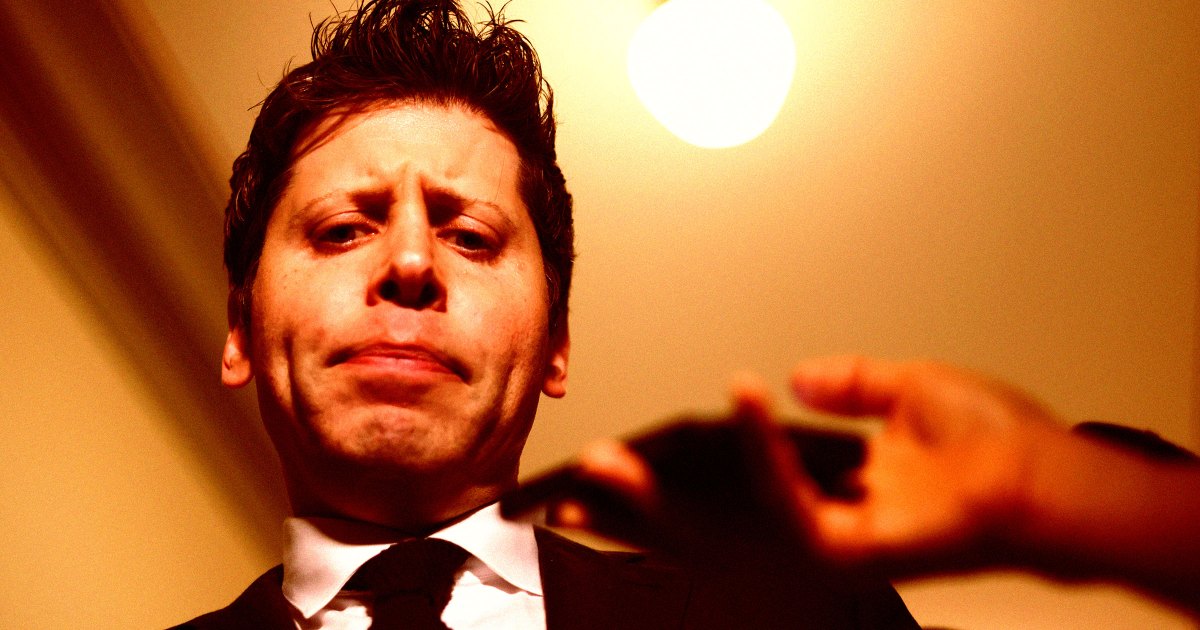
    In February, OpenAI started showing ads on its chatbot, an idea that CEO Sam Altman had previously called “unsettling” and vowed would only be used a “last resort.” The company’s chief competitor Anthropic ruthlessly mocked it for the reversal in a series of Superbowl commercials, and many users were furious. The company hasn’t officially reported how much stuffing ads into its premier product is earning it, but in August it said that its ad division was on track to rake in $1 billion in a year.

    The news comes not long after controversy over how OpenAI was projecting its earnings. In October, the company reported an annualized revenue, an estimate of how much money it will earn over a year, of about $50 billion — which was $20 billion short of what it told investors only a month before.

    The discrepancy was taken as an admission that the business models of AI companies weren’t as robust as their leadership was making them out to be, fueling speculation of an impending bubble.

    It also comes as OpenAI and Anthropic submit themselves to more scrutiny as they each prepare for what are expected to be historic IPOs. The looming event has only heightened their rivalry, with OpenAI making strides to catch up to the Claude-maker in enterprise sales. Anthropic has cornered the corporate customer market with its coding tools, while OpenAI has lagged with a more broadly consumer-focused model, though its president boasted last week that it now generates most of its revenue from enterprise sales.

    Big picture, in just a few years the AI sector has gone from an asterisk in the tech industry to its shining star — but unless frontier labs like OpenAI can figure out how to make money instead of burning it, investors are going to start asking some hard questions.

    More on OpenAI: OpenAI Hears Voters’ Overwhelming Rebuke To Data Centers, Vows to Build More of Them

    Source link

  • Synchron Pauses Trials of Its Brain Implant Due to Performance Issues

    Synchron Pauses Trials of Its Brain Implant Due to Performance Issues

    Brain implant company Synchron has paused clinical trials of its second-generation device after it failed to perform as expected in initial study participants, WIRED has learned.

    The Brooklyn-based startup, a competitor to Elon Musk’s Neuralink, is also undergoing a restructuring, which includes eliminating jobs and scaling back its footprint in New York while building up a team in San Diego to support the development of an entirely new device.

    Synchron is one of several companies developing brain-computer interface technology meant to allow people to control digital devices by reading brain signals and translating those signals into output commands. The company has touted its technology, dubbed the Stentrode, as minimally invasive since it does not rest in the brain itself or require brain surgery.

    Instead, the stent-like mesh tube is inserted into the jugular vein at the base of the neck, then guided with a catheter to sit on top of the brain’s motor cortex. The company’s first-generation Stentrode connected using an external wire resting on a user’s chest. Ten volunteers across the US and Australia received that device and were able to send emails, text, browse the internet, and do online shopping and banking with their thoughts. Synchron has also enabled volunteers to control an Amazon Alexa and Apple’s iPad and Vision Pro without using their hands or voice.

    Synchron’s second-generation device has fewer electrodes and is fully wireless, using Bluetooth to connect. The company launched a multisite trial in the US earlier this spring with sister sites in Australia and Canada to evaluate the newer Stentrode, and some participants have already had it implanted. Those sites have recently paused enrollment, however, because the device is not working as intended, according to sources familiar with the trials who asked to remain anonymous.

    In a statement to WIRED, Synchron says it voluntarily paused enrollment “after identifying a performance issue involving the lead, the cable that carries signals from the Stentrode to the implanted electronics.”

    “The issue does not involve the Stentrode itself and no safety issues related to the device have been identified. The pause was a company decision, not an FDA-directed action,” the statement continues.

    The company says it has since brought lead design and manufacturing in-house. Instead of fixing the lead alone, Synchron says it is upgrading the whole Stentrode system and will resume trial enrollment once the hardware upgrades are complete.

    Source link

  • PBB: Kuya addresses 'dinosaur' issue with male housemates

    PBB: Kuya addresses 'dinosaur' issue with male housemates

    Kuya spoke to Anthony Constantino and Raheel Bhyria to get to the bottom of the “dinosaur” issue that offended some viewers of “Pinoy Big Brother: Collab Edition 3.0.”

    Source link

  • 1, patay sa pagsalpok ng malaking truck sa 4 na sasakyan sa Pampanga

    1, patay sa pagsalpok ng malaking truck sa 4 na sasakyan sa Pampanga

    Isa ang nasawi, at tatlo pa ang sugatan sa pagsalpok ng isang malaking truck sa apat na sasakyan sa Guagua, Pampanga.

    Source link

  • Nintendo reveals Black Friday 2026 deals: Save  on the Switch 2

    Nintendo reveals Black Friday 2026 deals: Save $50 on the Switch 2

    TL;DR: Nintendo has announced plans for Black Friday in 2026: From Nov. 22 through Dec. 5, the Nintendo Switch 2 + Mario Kart World bundle will be available for $499.99 ($50 off).


    Have you been holding off on upgrading your handheld setup after Nintendo’s painful September hardware price hikes? You’re not alone. Times are tough right now in the world of tech, but Black Friday is finally giving you a clean window to strike back.

    Nintendo has officially revealed its 2026 Black Friday lineup, locking in bundle discounts and $20 price cuts across flagship games. The headline deal is undoubtedly the Nintendo Switch 2 and Mario Kart World bundle. You can pick up this popular bundle for $499.99 from Nov. 22 through Dec. 5, saving you $50 on list price.

    Early digital game deals kick off on Nintendo starting Nov. 19, followed by physical game discounts at major retailers including Amazon, Best Buy, Target, Walmart, and GameStop from Nov. 22-29.

    The best tech deal this week

    The Apple iPhone 18 Pro is free right now with T-Mobile

    Should you wait for Black Friday to shop?

    The short answer is yes.

    After raising the standalone Switch 2 base price to $499.99 in September, Nintendo’s Black Friday promotion effectively gives you a launch title and online access for free. Buying the console, Mario Kart World ($79.99 value), and a three-month Nintendo Switch Online membership separately would easily push your cart close to $600. That makes this $499.99 bundle deal pretty appealing.

    Nintendo is also knocking $20 off some of the year’s biggest first-party physical releases, including Super Mario Galaxy + Super Mario Galaxy 2, Donkey Kong Bananza, Metroid Prime 4: Beyond (both Switch 2 and original Switch editions), and Kirby Air Riders.

    Patience, gamers. The time to shop is coming.

    Source link