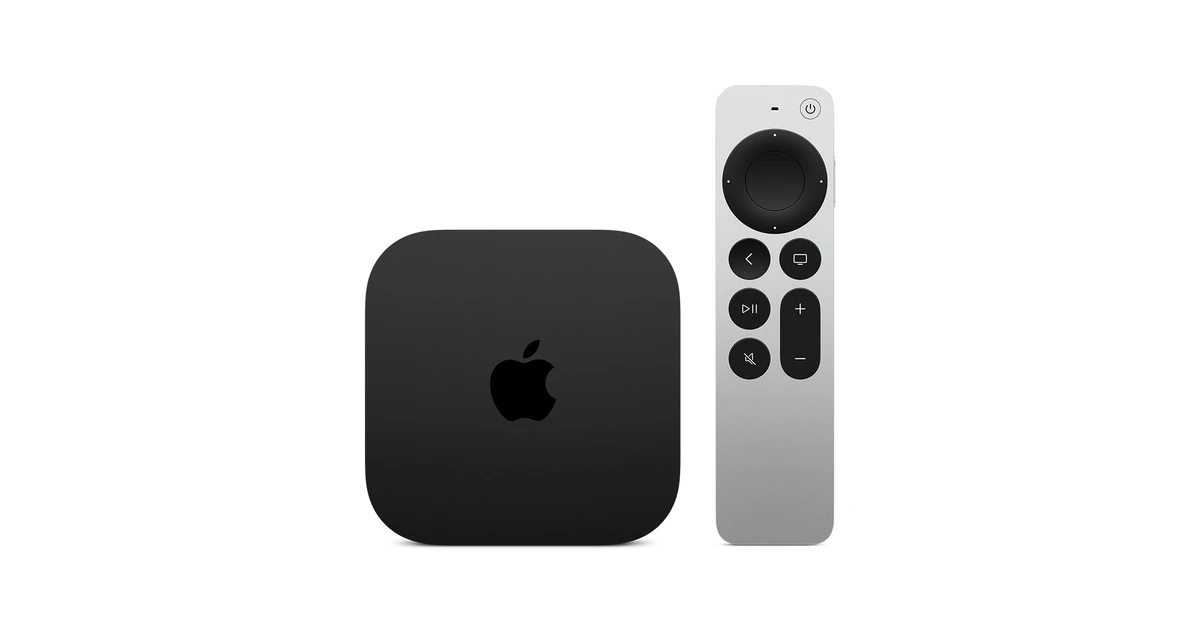
Apple’s media streaming device “Apple TV 4K (4th generation),” set to launch on November 13, will be priced at ¥49,800 (approximately $310), a significant increase from the previous generation. The third-generation model released in 2022 was priced at ¥19,800 (approximately $120) for the Wi-Fi-only version and ¥23,800 (approximately $150) for the model with Gigabit Ethernet. The new model consolidates to a single configuration with both Wi-Fi and wired LAN, making the effective price increase more than ¥20,000 (approximately $130). The U.S. price is $299, a $150 increase from the equivalent previous-generation model. While performance has evolved, the focus is on how the price barrier will affect its ability to attract new buyers.
The new model is the first redesign in about four years since 2022. The exterior is largely unchanged from the third generation, retaining the palm-sized chassis that connects to a TV or monitor via HDMI. The only visible change is the front status light moving from the right side to the center.
The internals have been significantly overhauled. The Apple silicon has shifted from the A15 Bionic to the A19, which is also used in the iPhone 17 series. According to Apple, CPU performance is up to 50% faster and GPU performance up to twice as fast compared with the previous generation. Apps that process on-device rather than in the cloud launch and transition more smoothly, and gaming with a PlayStation DualSense controller connected via Bluetooth feels responsive and comfortable.
On the video side, in addition to the existing 4K/HDR, Dolby Vision, and HDR10+ support, a dedicated decoder for AV1-format video has been added. AV1 is a highly efficient codec adopted by YouTube, Netflix, and others, enabling stable playback of high-quality video while conserving bandwidth. The wireless standard has also been updated from Wi-Fi 6 to Wi-Fi 7, and storage is now standardized at 128GB.
A notable new feature is the three far-field microphones built into the device. Previously, operating Siri required the remote, but now users can simply speak while watching TV for voice control. In the U.S., an English-language beta of the new “Siri AI” is planned for a future software update, supporting questions about the content being watched and content searches that take into account personal context left in messaging apps and elsewhere. However, the timing for Siri AI support in Japanese and for the Japan region has not been disclosed, and for now operation will center on the conventional Siri.
The included “Siri Remote (4th generation)” is the same size as before but now supports the “Find Nearby” precision-finding feature in the Find My app. Using a compatible device such as iPhone 17 or later (excluding iPhone 17e), iPhone Air, or iPhone Duo, users can see the distance and direction to the remote on screen. The remote can also play a sound to help locate it, reducing the stress of losing it. The remote is also sold separately for $59 (approximately ¥9,400), and works with all past generations of Apple TV 4K.
Its role as a smart home hub has also been strengthened. It supports Matter and Thread, and in addition to linking with lighting and security cameras, it serves as a border router bridging the Thread network and the home LAN. In a test of voice-controlling a smart bulb registered in the Home app by speaking toward the Siri Remote, lights in a distant location switched without delay, showing good responsiveness.
On the audio front, a key highlight is a new feature that pairs with the “HomePod mini 2” smart speaker (¥24,800, approximately $160) released on October 30. Users can build a home theater surround sound setup using up to four compatible HomePods, and under the condition that the front and rear pairs each use the same model, a configuration combining two HomePod (2nd generation) units and two HomePod mini 2 units is also possible. Setup involves registering each room and stereo pair in the Home app, then creating a sound group from the Apple TV 4K settings screen. An automatic calibration of about three to five minutes recognizes the speakers’ positional relationships and adjusts playback timing and volume.
The HomePod mini 2 is the first refresh in about six years since the original launched in 2020. Priced at ¥24,800 (approximately $160), it comes in five colors: pink, green, blue, white, and midnight. The chip is the S10, also used in the Apple Watch Series 10, and it inherits the computational audio that analyzes music in real time to optimize acoustic characteristics. A new “Sound Glow” feature makes the top surface pulse in time with the sound. Compared with the original, the separation of mid and high frequencies is improved, with a tendency to tighten the rhythm without inflating the bass. Pairing two units in stereo brings the sound image forward, delivering a richness that belies the small chassis.
The price increase also casts a shadow over Apple’s smart home strategy. In the U.S., “Apple HomeView,” the company’s first smart display featuring a 7-inch Liquid Retina display, is scheduled for release on November 13, but its launch timing in Japan is undecided. In popularizing smart home products in households, the pricing of the Apple TV 4K — which controls the TV viewing environment — carries significant weight.
Among market observers, some argue that while it overwhelms competitors on performance, the higher price range will hinder efforts to cultivate new customers. Some U.S. media reviews praise it, saying “it remains the best streamer on the market,” while others point out that “the $299 price will make those who have been switching from Amazon and Roku devices hesitate to buy.” Many also believe there is no need for third-generation users to rush to upgrade, and it appears that what will determine the reach of Apple’s smart home vision is less the richness of features than the reasonableness of the price.