Emos, cinephiles and bookworms, this weekend is for you.
Source link
Author: Merrel Briona
-

Weekend list: QCinema, My Chemical Romance, expos
-

Petermann Bédat Introduces the 2914 Chronograph Monopusher
Independent watchmaker Petermann Bédat made its name with its inaugural watch, the 1967 Deadbeat Seconds. It soon followed up with an even more complicated split-seconds monopusher chronograph, executed to an equally high standard. The watch stands out even among the increasingly crowded field of high-end independent watchmakers.
Now, at the IAMWATCH event in Singapore, the duo has introduced a new watch: its first pure-play chronograph, the 2914 Chronograph Monopusher. Surprisingly, the new watch is even smaller than the earlier split-seconds model, with an unusually traditional 36.5 mm platinum case, and is limited to 20 pieces.

An unusual 36.5 mm modern chronograph.
Pure-play chronograph
The 2941 Split-Seconds Chronograph, launched in 2023, was an impressive watch. Few independent watchmakers attempt the split-seconds chronograph genre, let alone one with an instantaneous jumping minute counter. But some collectors have been yearning for a pure-play chronograph without the extra complications. Three years later, the duo has finally delivered with the 2914 Chronograph Monopusher.
What really surprises is the size of the new watch. The original split-seconds chronograph was already relatively classical at 38.5 mm, but the latest model goes a step further with a 36.5 mm case, returning to the proportions of watches from the 20th century. This is small even by today’s standards, amid the current trend for smaller watches. The platinum case makes it all the more appealing – despite its small size, the watch will feel solid and reassuringly heavy in the hand.
The new 2914 retains the best features of the 2941 Split-Seconds Chronograph, with a few changes. It remains a monopusher chronograph and keeps the jumping chronograph minute counter, so there is still plenty to appreciate mechanically. The only thing missing is the split-seconds mechanism. This is not necessarily a drawback, since it was an additional module hidden beneath the dial. Its removal has little visual impact on the new watch, and the movement looks much the same from the back, just as attractive as before.

The dial has been refined, particularly in its proportions. Compared to the earlier chronograph, the 2914 has smaller sub-dials in solid, dark colours, which look more elegant than the slightly oversized counters of the previous version. As a result, the new dial is arguably more attractive, despite now being made of brushed steel rather than frosted platinum.
Petermann Bédat may be known for its clever movement construction and excellent finishing, but its design deserves just as much attention. Many new independent watchmakers struggle to get their dial designs right, but Petermann Bédat has found a design language that is original without straying too far from classical watchmaking. The semi-open dial and sapphire components are contemporary, yet the overall look remains familiar and elegant. That is no small feat.

Calibre 234
Inside the watch is calibre 234, the same base movement found in the earlier split-seconds chronograph. Perhaps reflecting the founders’ backgrounds at A. Lange & Söhne, its architecture draws some inspiration from the Datograph. It features long, slender steel springs and levers, with beautiful curves and finishing. Another nice touch is the arrowhead-shaped tails on some of the levers, inspired by vintage Minerva movements but with a twist.
As with the dial, the movement has a classical appearance but is entirely original in its execution. It doesn’t feel like a recreation of something from the past. One distinctly modern element is the oversized jewel on the mainspring barrel, a signature detail found across Petermann Bédat’s watches.

Interestingly, the movement has a slow frequency of 18,000 vibrations per hour, an unusual rate in the modern watch world but entirely apt for a chronograph with such an old-school character. The seconds track would be even more fitting if it had five divisions per second, as on the earlier split-seconds version, rather than the four currently marked. This would allow the chronograph seconds hand to tick in step with the track.

Gorgeous movement (Image: Revolution ©)
Tech Specs: 2914 Chronograph Monopusher
Reference: 2914
Movement: Calibre 234; manual winding; 56 hours power reserve; 18,000 vibrations per hour (2.5 Hz)
Functions: Hours, minutes, seconds, monopusher chronograph
Case: 36.5 mm x 9.9 mm; platinum; water resistant to 30m
Limited edition: 20 pieces in platinum
Price: CHF 180,000 (excluding taxes) -

Jeo Ong hindi napigil ng parusa, bibong-bibo pa rin sa pagiging ‘Linis King’!
PHOTO: Screengrab from Facebook/Pinoy Big Brother ABS-CBN MUKHANG hindi kayang pigilan ng anumang parusa ang pagiging malinis ni Jeo Ong sa loob ng Bahay ni Kuya!
Isa si Jeo sa mga housemate ng “Pinoy Big Brother Collab 3.0” na nakatanggap ng parusa dahil sa paglabag sa mga patakaran ng reality show.
Pero kahit may mabigat na board na nakakabit sa kanyang katawan bilang bahagi ng punishment, hindi pa rin niya napigilan ang sarili na gawin ang isa sa mga paborito niyang gawain…ang paglilinis!
Sa isang eksenang ipinasilip sa programa, makikitang tila hindi nagpatalo si Jeo sa hirap ng kanyang sitwasyon.
Baka Bet Mo: Jeo Ong ibinuking ang amoy-anghit sa loob ng Bahay ni Kuya
Sa tulong ni fellow housemate Lans Nagal na walang naging violation at hindi rin napatawan ng parusa, nakahanap sila ng paraan para makapaglampaso pa rin siya ng sahig.
Dahil sa kanyang pagiging masipag at hindi mapakaling makakita ng maruming paligid, tinawag ng kanyang mga kasamahan at ni Kuya mismo si Jeo na “Linis King.”
<iframe src=" width="380" height="476" style="border:none;overflow:hidden" scrolling="no" frameborder="0" allowfullscreen="true" allow="autoplay; clipboard-write; encrypted-media; picture-in-picture; web-share" allowFullScreen="true"></iframe>Mukhang hindi lang basta palayaw ang titulong ito dahil ilang beses na ring ipinakita sa mga nakaraang episode na isa si Jeo sa mga housemate na hindi mapakali kapag may kailangang ayusin o linisin sa loob ng bahay, partikular na sa boys’ bedroom.
Hindi rin nakaligtas sa atensyon ng viewers ang pagiging maasikaso niya sa kalinisan nang bumisita sa Bahay ni Kuya ang Kapuso power couple na sina Marian Rivera at Dingdong Dantes.
Sa naturang pagbisita, na-highlight ang maayos at malinis na kondisyon ng boys’ bedroom, na ayon sa kapwa housemates ay pinangunahan ni Jeo.
Samantala, kilala si Jeo bilang Adventure Boy-Next-Door ng Palawan sa pinakabagong season ng Pinoy Big Brother.
The post Jeo Ong hindi napigil ng parusa, bibong-bibo pa rin sa pagiging ‘Linis King’! appeared first on Bandera.
-

5 Seconds of Summer surprises Pinoy fans with pink jeepney performance
5 Seconds of Summer gave Filipino fans a special treat in the form of a jeepney-themed meetup and a surprise appearance in Pasay City.
Source link -

Celebrity ARMYs share their BTS superfan stories
Even as celebrities themselves, Arci Muñoz, Isabel Oli, Ysabel Ortega and Shaira Diaz experience the same joys, excitement and even challenges that come with being BTS fans — make that superfans.
Source link -

Mamdani Blasts Google for Using Monopoly to Bully Schools That Ban AI
New York City mayor Zohran Mamdani blasted Google’s decision to block its search engine in schools that restrict its AI features.
“Google is trying to use its monopoly power to force AI into our public schools,” he wrote in a social media statement. “No corporation should have the power to dictate how we teach our children.”
“Our public schools exist to serve students,” Mamdani added, “not to grow the profit margins of Big Tech.”
Google announced Tuesday that it would turn off AI features in its software for students unless school administrators specifically chose to activate them — something educators have been asking for.
But with this seeming act of goodwill, Google smuggled in a twist: if schools decide to restict all its AI features, it would also disable their access to Google Search. In a statement to the New York Times, which first reported the decision, Google vice president for education Chris Phillips offered little by way of explanation, stating that “Search and AI are deeply integrated.”
Strictly speaking, this is true, and by being intentionally vague Google is giving the impression that it’s a technical problem, not a deliberate choice to ice out AI-wary schools. Its search engine is now laden with AI features. And even before the post-2022 chatbot boom, it long used AI algorithms to improve its search results.
Search and AI are indeed “deeply integrated,” then, but does it have to be this way? Before chatbots, the way Google Search integrated AI still encouraged you to perform the actual act of searching through information instead of giving you entire answers. Even its old-school “featured snippets” that appeared above search results pulled stuff from a webpage word-for-word, prominently linking to the original source and ensuring that nothing was being lost in AI hallucination.
Since then, Google has added its AI Overviews and a full-blown AI mode, turning the experience into something more like using a chatbot. Now, when you search on Google, the top of the page features an AI summary and chat window that will automatically synthesize lengthy answers to even the most specific queries, presenting them authoritatively despite the AI being notoriously prone to hallucinating. A casual user, or the average student, has almost no reason to chase down actual sources of information.
That’s worrying to parents and educators, who want their children to develop critical thinking skills and the ability to research problems independently. The problem is only exacerbated when a child is given access to a full-fledged chatbot product, such as Google Gemini. Along with the wealth of studies suggesting a reliance on these tools impacts critical thinking , many school districts are wary of thrusting a technology that’s become synonymous with effortless cheating at school assignments into students’ hands.
Mamdani has made AI in education a key part of his agenda. In September, he announced a one-year moratorium on New York City schools using AI in the classroom, a policy he called the “most comprehensive of its kind anywhere in the country.”
For Google, amid all these concerns, to tell schools it’ll now cut off their search access if they restrict AI comes off as an unusually spiteful move. It is by far the dominant search engine and most people’s gateway to the internet. Its bargaining power in this standoff with schools is incalculably outsized — hence Mamdani’s accusation that it’s using “monopoly power to force AI into our public schools.”
A federal judge, on that note, ruled in 2024 that Google held an illegal monopoly over the search engine market and used its dominance to shut out competitors. There’s a compelling argument that it’s now doing something similar with schools, hoping that it can strong-arm them into submission so it can guarantee that this generation of children will be future customers by getting them hooked on its AI ecosystem.
More on education: The Tech Industry’s Aggressive Push to Integrate AI Into Schools Is Turning Into a Disaster
-

Satlyt CEO Rama Afullo: Orbital Data Centers Already Pay Off, Telcos Face 10-Year Extinction — BigGo Finance
The most interesting number in the orbital data center debate isn’t about rockets. It’s 11.7%.
That’s the share of satellite-collected data that turned out to be useful in a recent Satlyt experiment, according to CEO Rama Afullo, speaking on This Week in Startups. The other 88.3% was junk — and at $10 to $20 per gigabyte to beam it down through a ground station, junk is expensive. “If you can send only what’s useful, it’s cheaper for you, much more efficient,” Afullo said. Satlyt’s answer: run Google’s Gemma language model onboard the satellite, filter the data in orbit, and downlink only the fraction worth paying for.
It sounds like a science project. It’s actually the first version of a business case for putting data centers in space — and it’s already making money for at least one company, even as the giants fight over whether the whole idea is realistic.
The economics: profitable for software, not for hardware
Afullo’s most important claim is that Satlyt doesn’t need launch costs to fall to be commercially viable, because it doesn’t build or launch anything. It sells orchestration software that runs on satellites owned by others. The brutal per-kilogram math that governs satellite operators simply doesn’t apply.
“For us, for Satlyt, it’s already cost effective because we don’t build our own hardware,” he said.
That math, though, is why the broader industry is still waiting. Getting mass into orbit remains extraordinarily expensive:
Launch scenario Cost per kg Status per Afullo Rideshare, typical satellite operator ~$15,000 Current market rate SpaceX Starship estimate ~$1,000 Approaching, pending catch tests Parity with terrestrial data centers ~$100 The threshold that matters The gap is a launch-capacity problem, not a physics problem, in Afullo’s framing. Starship and Blue Origin’s New Glenn both need to reach full operational tempo — “anyone who’s building a massive vehicle to transport more satellites into orbit” has to be running at scale. He noted that if Starship’s booster catch succeeds, “we’re off to the races.”
The demand-side argument is real estate and power. Low Earth orbit has a larger circumference than the planet, so vastly more available area than any terrestrial site. Sun-synchronous orbits give satellites continuous access to solar power without atmospheric loss — addressing what Afullo calls the biggest limiting factor for compute generally. And an orbital data center is flexible in a way a cloud region isn’t: a satellite moving at 17,500 mph can be positioned over any point on Earth within 90 minutes, while a terrestrial data center is stuck where it was built.
What Satlyt actually sells: Kubernetes for satellites
The product demo is the most concrete part of the conversation. Satlyt’s mission operations center lets an operator define a job across a constellation of what Afullo calls “systems with dissimilar architectures” — satellites from different makers — and the software places and orchestrates containerized workloads across them. The components include a container registry (so software can be ported without rewriting it), data compression, telemetry analysis, encryption, and storage. He credits Google’s Kubernetes work as the model.
In the demo, five satellites each run an NVIDIA Jetson Orin Nano — 8 GB of memory, six cores, a 15-watt power budget — and data must downlink through at least one node to a ground station. The software schedules services across nodes and enforces the power ceiling.
Then Gemma goes to work filtering. The flow looks like this:
Afullo says this exact experiment has already run on a couple of satellites, and that Google DeepMind published a case study on the work.

Heat: both camps are right, and the fix is to run chips hotter
The cac talk he keeps encountering: space is cold, so cooling should be free. The counterargument: space is a vacuum, so hardware should overheat. Afullo’s answer is that both are correct. Waste heat cannot conduct away in vacuum — it must be radiated, which is why the International Space Station carries those massive radiator panels. At the same time, the ambient environment really is cold.
The resolution is hardware designed for the environment. Afullo points to Intel’s Starfire and NVIDIA’s space modules as examples of compute built to run much hotter and dissipate around 3,000 watts. “They’re essentially just skipping the entire debate,” he said — instead of solving cooling for terrestrial chips, run space-grade chips hot and throttle as needed. He notes the scale of what’s changing: some compute now being deployed in orbit is roughly 10 times the total compute ever put across the roughly 20,000 satellites currently in space.
That last figure is striking, and it’s also unattributed — one of several places where Afullo’s claims run ahead of the public evidence.
Direct-to-device: the telco gets landlined
Afullo’s most aggressive forecast is that orbital capability erases the traditional telecom carrier within about a decade, reducing it to the status of the landline telephone. The mechanism is direct-to-cell service: if satellites can beam data straight to a handset regardless of the handset’s power efficiency, “you no longer actually have to have a telco on the ground. It essentially eradicates the typical telco in the next 10 years or so.”
He cites this as the reason there’s a race in direct-to-satellite services right now. Handsests wouldn’t need architectural changes to receive service — a detail that matters enormously for adoption.
He also raises a darker use case. During the Los Angeles wildfires, he says, insurance companies obtained data about what was about to happen faster than ordinary residents did, and several changed policies just before the fires hit. Host Jason Calacanis calls the example “a little bit dark”; Afullo agrees, but uses it to show how much control faster orbital data confers — and to whom.
Other applications he names: real-time scientific experiments that no longer require launching to the ISS and paying an astronaut to run them, and faster emergency and wildfire response for remote areas.

NASA wants 4K video from the Moon
Satlyt is working with NASA’s Glenn Research Center on delay-tolerant networking — a protocol family Afullo says was built by early internet creators including Vint Cerf for deep-space communication. The goal: relay 4K video from a lunar base through lunar-orbit satellites to low Earth orbit satellites and down to a ground station at low latency, while suppressing packet loss and bit flips — ones and zeros swapping — which Afullo calls a “showstopper.”
On extending this to Mars, he’s skeptical of daisy-chaining satellites across interplanetary distances. The geometry is too complex — planets rotate on their axes while satellites move — and the intermediate orbits would need to be populated first. He expects the industry to add orbital infrastructure incrementally rather than attempt a Mars relay chain soon.
The skeptics are not fringe
The contrast with the terrestrial cloud establishment is sharp. AWS chief executive Matt Garman said in a Nov. 10 interview that he puts the odds of orbital data centers being economically viable or practical within 10 to 20 years as very low. It’s not a problem one person can solve, he argued: a single GPU rack weighs a metric ton, radiating heat in a vacuum is extremely hard, and servers must be radiation-hardened at added cost. Among space, the ocean, and the desert, Garman called the desert the most realistic site for data centers.
Garman’s own business explains why the debate matters: AWS is adding one GPU to its data centers every 14 seconds and still can’t keep pace with demand, with roughly $220 billion in capital spending budgeted this year. “Demand is far outpacing supply right now,” he said. He thinks the inference market may be running at less than 1% of its eventual size.
Afullo’s answer to the physics objections is essentially: build for the environment, don’t fight it. Radiation-hardened or shielded hardware, thermally robust design, and efficiency are mandatory anyway — every kilogram and every bit matters. And the spillover thesis is that space-grade engineering pays back on Earth: microwaves and solar panels came from space programs, and hardware built to survive launch and vacuum tends to last longer and need replacing less often.
He’s not dogmatic about ruggedization. Planet Labs, he notes, ignored conventional wisdom — sending up smartphones with solar panels attached, and hardware with moving parts. NVIDIA Jetson Nanos with spinning fans are operating in orbit right now. But for longevity, shielding and expensive testing are still required. He also predicts the smartest space players will maintain a terrestrial counterpart to absorb the volume of data and outputs coming from orbit.
“If you can build it to survive in space, you’re going to have to have material science combined with the engineering to make it very rugged,” Calacanis summarized. “If you make it that efficient, now I kind of understand your earlier answer.”
From Starlink to Satlyt: a decade-long bet
Afullo’s path runs through family and a long-held conviction. His father is a professor of electrical engineering whose PhD focused on satellite and microwave technology; his mother is a computer scientist who taught him copy-paste. He’s Kenyan-American, raised partly in Botswana, where his older brother ran a CD-copying business — the family’s first lesson in spotting an unmet market.
He says he knew what his startup would be called about a decade before founding it, and bought the Satlyt domains — including satellite.ai — four to five years ago. The name is a backronym for “space and technology analytics.” Before Tesla he was the company’s third employee in Africa; he later worked at Google as a professional cloud architect and solutions consultant, where he pitched orbital compute at the start of the AI boom. Google’s priorities were terrestrial LLMs competing with ChatGPT, so he left for SpaceX and a product manager role at Starlink. Three months in, he was told in no uncertain terms that the last people to propose orbital compute were no longer at the company. He left and started Satlyt just over two years before this conversation.
He also mentions getting married the week of recording, and invokes the Japanese concept of ikigai — the overlap of what you love, what you’re good at, what the world needs, and what you’ll be paid for — as the frame for his career.
What the smart money is actually doing
The market isn’t waiting for the orbital debate to resolve. SpaceX, now public, has become a compute landlord first and a rocket company second: its Super Intelligence segment rented out $7.6 billion of capacity in the third quarter, up 830% year over year, with Anthropic accounting for more than a third of sales. Deutsche Bank estimates AI compute will account for more than half of fourth-quarter revenue. Musk has said SpaceX plans to begin launching AI-computing satellites in the third quarter of next year, and analysts are split on timing — GF Securities sees 5 gigawatts of space AI capacity by 2028, while Deutsche Bank sees nothing material until 2029 or 2030.
The near-term truth is simpler: the compute shortage on the ground is so severe that the ground is where the money is. Garman’s one-GPU-every-14-seconds line is the tell. Orbital data centers are a bet on a launch-cost curve that hasn’t bent yet, a thermal problem that’s solvable but expensive, and a regulatory environment on Earth that is getting harder — Goldman Sachs estimates new restrictions could affect around 45% of planned U.S. data center capacity expansion. That last point is the quiet bull case for space: if you can’t build on the ground, orbit starts looking less like science fiction.
Afullo’s forecast that telcos become relics within a decade is speculative and unproven. But the 11.7% number is real, the DeepMind case study exists, and the NASA Glenn work is underway. For investors, the question isn’t whether orbital compute replaces the cloud — it’s whether the launch-cost curve, not the physics, is the binding constraint. Watch Starship’s catch tests, watch direct-to-device spectrum rules, and watch whether Satlyt’s software layer becomes the Kubernetes of orbit before the hardware economics catch up.
-

Solo Leveling Officially Brings Back Legendary Character From Death
Solo Leveling recently made a massive return after a long absence in 2026. The Manhwa for its sequel, Solo Leveling Ragnarok, is finally back and serializing on a weekly basis right now. Most recently, we were treated to a brand-new release in the form of Solo Leveling Ragnarok Season 3 Chapter 72.
This new Solo Leveling release officially brings back one of the original Solo Leveling antagonists, that being the iconic villain and the Monarch of Frost, Sillad. While Sillad died in the original Solo Leveling, he is back as a copy, and he is going to cause chaos in the world of Ragnarok. National-level Hunter Thomas Andre, as well as powerful S-Rank Korean Hunters, are there to fight him, but whether they will be up to the challenge or not is still to be seen as we await the next chapters of Ragnarok.
Solo Leveling Ragnarok Chapter 72 Brings Back Sillad
Most fans of Solo Leveling are familiar only with the original series written by Chugong and illustrated by DUBU. However, Solo Leveling has its own sequel series known as Solo Leveling Ragnarok, which has been in the works since 2023. Previously, Solo Leveling Ragnarok went on hiatus following the ending of its second season and the military enlistment of its artist JIN. This put the series on a break, which began on January 7, 2026. With that being said, Solo Leveling: Ragnarok officially returned recently with its third season, with art handled by Sanjimseung.
Since November 5, 2026, Ragnarok has delivered consistent new content to all fans. On its return day a week ago, we received three new chapters, those being chapters 69, 70, and 71. Now, finally, a week later, on November 11, we have received Solo Leveling: Ragnarok Chapter 72 after a week-long wait. Given the exciting events set up by the previous three chapters, we were definitely looking forward to this new release, and it definitely didn’t disappoint. Taking the focus away from characters like Sung Suho, we instead completely zoom in on the S-Rank Hunters of South Korea, as well as Thomas Andre, who are currently in a dangerous dungeon.
In this dungeon, a mysterious entity showed up. This entity first manifested as a weapon and then slowly took on a humanoid form. To fans familiar with the original Manhwa of Solo Leveling, this figure is reminiscent of none other than Sillad, the Monarch of Frost. Even the Korean Hunters quickly pointed out how this enemy was similar to one Sung Jinwoo previously fought. Naturally, this is an exciting turn of events, as we see the return of an iconic antagonist with overwhelming power that the average S-rank Hunter cannot even hope to compete with.
With that being said, from what we know so far, and based on what we’ve seen in Ragnarok, this silhouette isn’t the original Sillad. This was made obvious in chapter 72 of the manhwa as well, when Thomas Andre pointed out that this is not the villain’s original body. Instead, the figure we see in Solo Leveling Ragnarok chapter 72 is a copy, but a powerful one nonetheless.
Sillad’s Role In The Original Solo Leveling
Sillad is undoubtedly one of the best antagonists of Solo Leveling. In the Solo Leveling anime, he has already made an appearance, being teased at the end of Season 2 after the battle of Jinwoo against the Ant King. While Solo Leveling’s anime-only fans might not be too familiar with this foe, fans of the Manhwa and novel know just how dangerous he is.
Sillad’s role really comes into effect in the International Guild Conference Arc of Solo Leveling, where he is revealed to be the one behind one of Solo Leveling’s most tragic deaths — the killing of the head of the Chairman Association of South Korea, Go Gun-Hee, an important figure in Jinwoo’s life who guided him forward and helped him along his journey. Pushed by Go Gun-Hee’s tragic death, Sung Jinwoo then takes on the Monarch Sillad, as well as two other Monarchs, those being Rakan and Querehsha, in a 3-versus-1 fight orchestrated by Sillad himself.
Thus, in the Monarch’s War arc, we see a display of Sillad’s true power. Being the Monarch of Frost, Sillad has powerful ice and frost-based abilities. He is an overwhelming force, and with the help of Rakan and Querehsha, he is technically able to even kill Sung Jinwoo. It is only through the help of his father, Sung Il-Hwan, and the awakening of his Shadow Monarch power that Jinwoo is able to triumph over Sillad and kill the villain.
For quite some time, this was all Sillad had to offer to us, but he ended up making a second comeback during the 27-Year Monarch War, where time was rewound, and Jinwoo had to come face to face with all the Monarchs once more. We don’t know how Sillad fell in the new timeline, but we know that Jinwoo took him down again. The full events of his fall will be further explored in Solo Leveling: Karma, a game delayed to 2027.
Sillad’s Upcoming Role In Solo Leveling Ragnarok
The return of Sillad through a copy in Solo Leveling Ragnarok Season 3 Chapter 72 was an extremely exciting moment for fans of the series, but many wonder what kind of role he will play in the upcoming few chapters and in Ragnarok as a whole. In theory, we should have all the information we need to know pertaining to Sillad’s role in Solo Leveling Ragnarok. After all, this Manhwa is based on a novel written by Daul between 2023 and 2025. However, Solo Leveling Ragnarok’s Manhwa adaptation has been largely unfaithful to its original source material. Thus, it is hard to predict what Redice Studio has planned with Sillad and his copy.
For context, in the novel, Sillad did make a return, but in quite a different way. He appeared inside a white void after Suho activated his own passive skill, White Shadow. The new appearance in chapter 72 is completely original, but what we can expect in the upcoming few chapters of Ragnarok is an intense and heated battle. The likes of Thomas Andre, as well as Cha Hae In, are sure to steal the spotlight with their overwhelming National-Level strength.
The next chapter of Solo Leveling Ragnarok Season 3, which is Chapter 73, is scheduled to be released next week, both in South Korea and the U.S. on November 18, 2026. Fans of Solo Leveling can catch up with the original manhwa as well as read the ongoing sequel on Tapas until the platform shuts down on March 31, 2027.
-

'PBB Collab 3.0': Mikee Quintos apologizes to housemates, opens up about past online bashing
Mikee Quintos apologized to her fellow housemates in “Pinoy Big Brother: Collab Edition 3.0” after realizing that past experiences had affected the way she responded to their acts of kindness.
Source link -
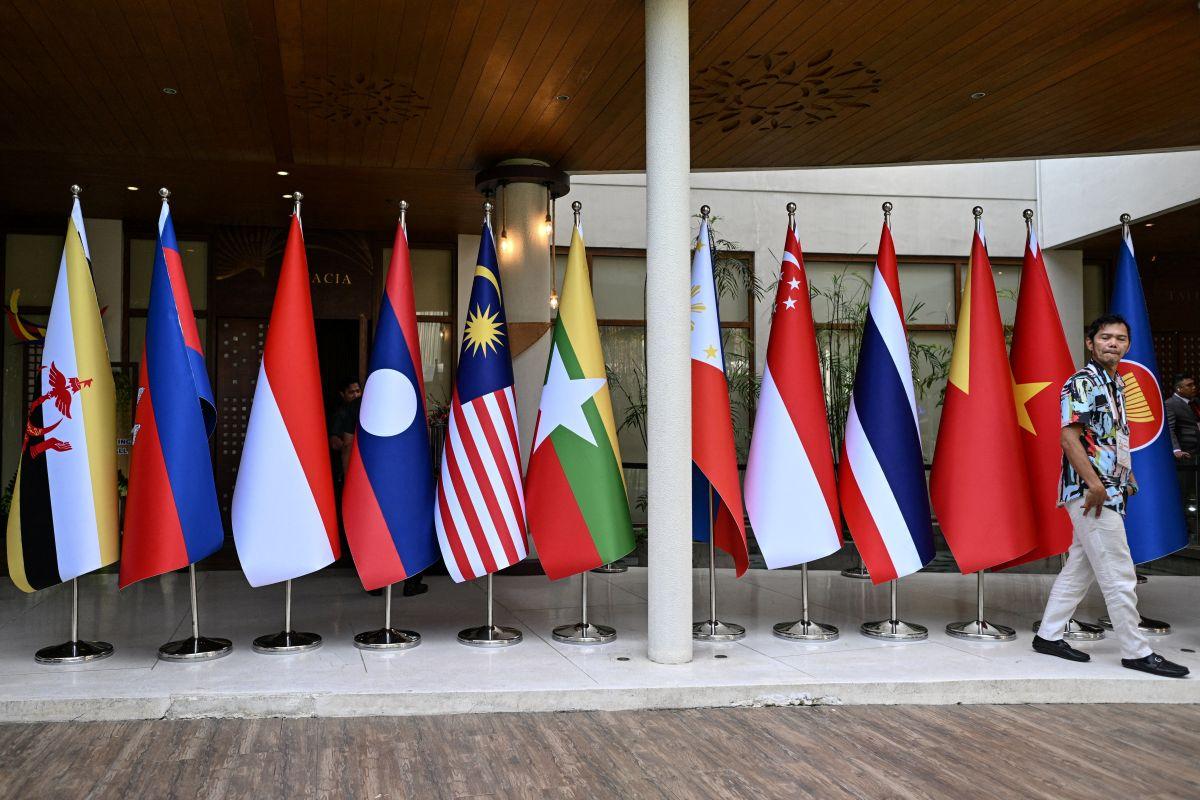
ASEAN leaders to arrive in PH starting Nov. 14 for 2026 summit
ASEAN leaders to arrive in PH starting Nov. 14 for 2026 summit
Source link