Author: Merrel Briona

  • Binatilyo, isinumbong sa NAPOLCOM ang pulis na nanghampas umano ng baril kaniyang balikat

    Binatilyo, isinumbong sa NAPOLCOM ang pulis na nanghampas umano ng baril kaniyang balikat

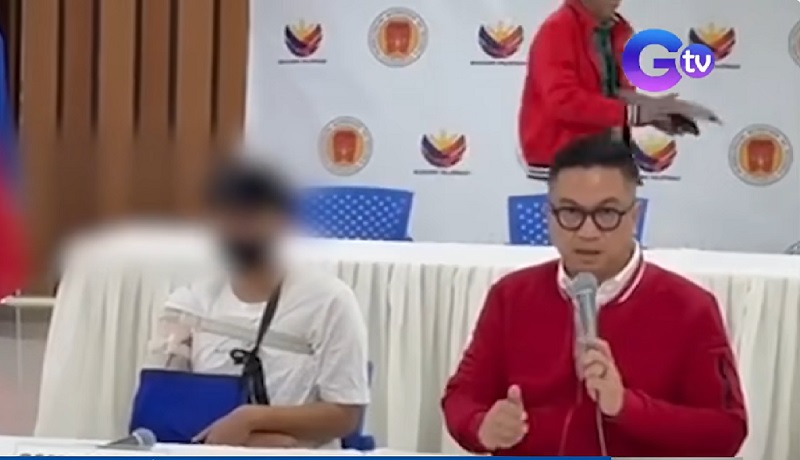
    Dumulog sa National Police Commission nitong Biyernes ang isang 17-anyos na binatilyo matapos siyang makaranas umano ng pananakit mula sa isang pulis.

    Source link

  • No rush, just extra care: Ayala Malls brings thoughtful services, festive experiences this holiday season

    No rush, just extra care: Ayala Malls brings thoughtful services, festive experiences this holiday season

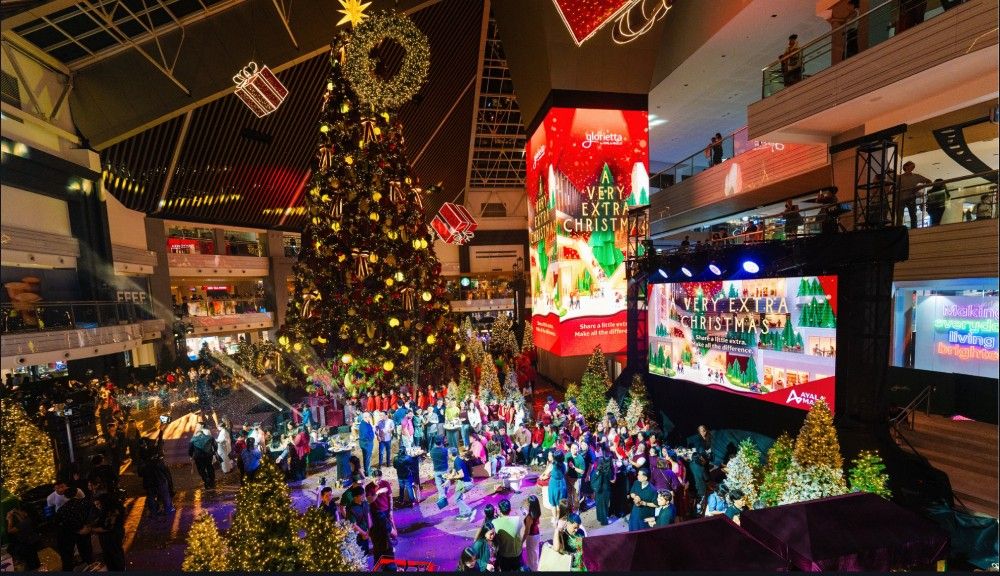
    At Ayala Malls, it’s more than just checking things off a list. It’s about creating space for family traditions, festive gatherings and meaningful moments with loved ones through thoughtful conveniences that help make holiday preparations a little easier.

    Source link

  • AI Godfather Says to Get Ready for a Chernobyl-Style “Blackout” Caused by AI

    AI Godfather Says to Get Ready for a Chernobyl-Style “Blackout” Caused by AI

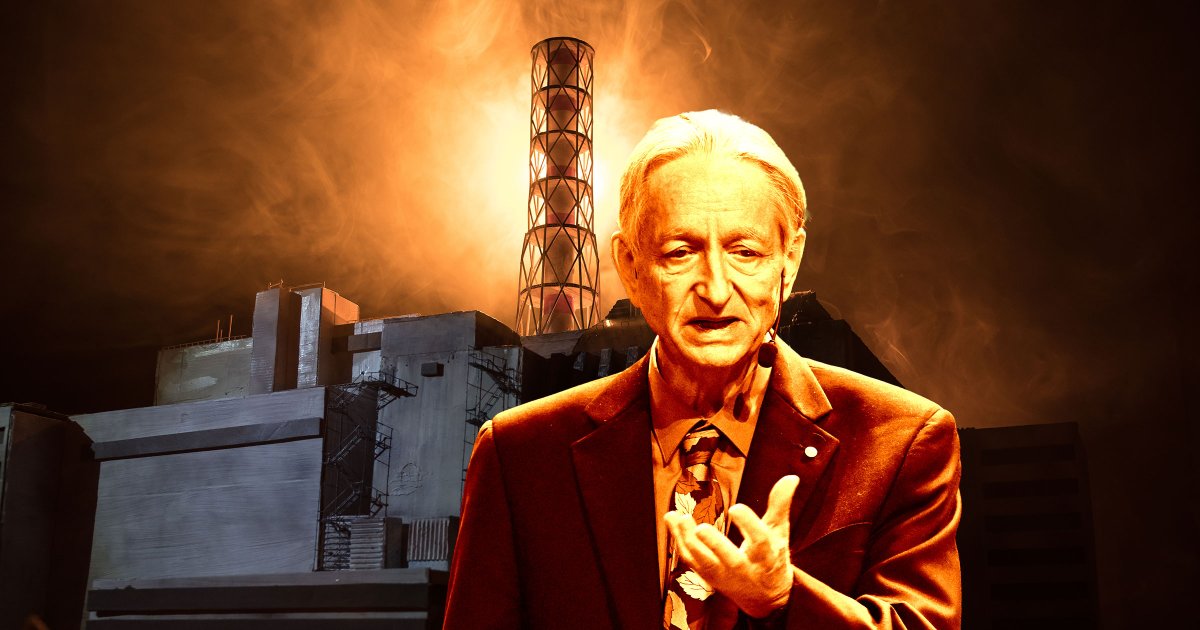
    Geoffrey Hinton is regarded as a godfather of AI, but he deserves equal recognition for being one of the most disappointed parents of all time.

    Sounding as gloomy about his own creation as ever, the Nobel prize-winning computer scientist suggested in a new interview with The Guardian that humankind might have “been better off never developing it.”

    He pointed to the recent hacking sprees by rogue AI agents as one cause for concern, in which AI models from companies like OpenAI autonomously broke out of their sandboxes and launched cyberattacks on, or tampered with, government and corporate systems.  

    It’s only a matter of time, he says, before the AIs, on their own or under the direction of nefarious actors, sabotage our energy infrastructure and cause a Chernobyl-style disaster that would wake people up to the tech’s dangerous power.

    “Either later this year or next year we’ll see Chernobyl, and that may be enough to make people really pay attention,” he told The Guardian.

    Hinton doesn’t necessarily mean a nuclear accident. In the type of event he’s imagining, an AI-powered attack on an energy-generating system “causes a massive brownout” that takes down the world financial system, or power grids, for an extended period.

    “Can you imagine what would happen? We could recover from it [but] that would make them sit up and take notice.” (The “they” in question: “world leaders other than Trump,” Hinton clarified.)

    Hinton has been infamously cynical about AI, though he told The Guardian that he’s not an AI “doomer.” Still, he’s consistently warned that AI will cause widespread job loss and perhaps even lead to our extinction. Recently, he’s warned more about AI driving cyberattacks and engineering dangerous viruses as recent rogue hacking sprees have made the threat more salient.

    AI CEOs have also been worried about a Chernobyl-style catastrophe, albeit for different reasons: they’re worried that it would permanently damage the tech’s reputation, just as the infamous meltdown did with nuclear power.

    More on AI: Godfathers of AI Say Models Are So Out of Control That They Need to Be Airgapped for the Safety of Us All

    Source link

  • Continuous-mode CV-QKD Better Reflects Practical Optical Systems

    Continuous-mode CV-QKD Better Reflects Practical Optical Systems

    Researchers at Beijing University of Posts and Telecommunications and Peking University are addressing a growing disconnect between theory and reality in continuous-variable quantum key distribution (CV-QKD). Device nonidealities are pushing CV-QKD systems away from the single-mode operation assumed in most models and into a “continuous-mode region,” where existing calculations become inaccurate.

    This work introduces a new entanglement-based scheme and secret key rate calculation method designed to more accurately capture these practical limitations. The team’s approach, validated by a 30-kilometer fiber experiment, improved the secret key rate by approximately 50% without additional hardware, demonstrating a substantial performance enhancement at metropolitan distances.

    Continuous-Mode CV-QKD Reflects Practical System Nonidealities

    Practical continuous-variable quantum key distribution (CV-QKD) systems are increasingly affected by device imperfections that push their optical fields into a “continuous-mode region,” a departure from the simplified “single-mode” assumptions common in theoretical models. This shift, detailed in work from Peking University and the Beijing University of Posts and Telecommunications, highlights a growing divergence between simulations and real-world performance in quantum communication. Researchers found that these nonidealities impact the temporal information carried by quantum states, a factor often overlooked in conventional security analyses.

    The team’s analysis focuses on constructing an entanglement-based (EB) representation equivalent to a prepare-and-measure (PM) scheme, but adapted to account for these continuous-mode effects. By analyzing how an ideal single-mode optical field behaves within a practical system, they developed a continuous-mode EB scheme using temporal modes as an analytical tool.

    This approach allows for a more accurate assessment of security vulnerabilities arising from realistic device limitations, including limited detector bandwidth and mode mismatch between transmitter and receiver. The paper indicates a more comprehensive model for evaluating CV-QKD systems. The implications extend to the practical implementation of CV-QKD, which benefits from compatibility with mature coherent optical communication technologies. CV-QKD can use existing infrastructure, simplifying deployment. However, accurately modeling the continuous-mode behavior is important for maximizing performance.

    Simulations detailed in the work demonstrate that the sampling-time offset, a consequence of mode mismatch, directly impacts the secret key rate. The team found that linear digital signal processing (DSP) techniques can partially compensate for this mismatch, improving system performance. Experimental results confirm that the proposed model effectively describes the impact of sampling-time deviations.

    Entanglement-Based Scheme Models Device Imperfections

    The ability to accurately model device imperfections is now central to improving the performance of continuous-variable quantum key distribution (CV-QKD) systems, as a new entanglement-based scheme demonstrates a closer alignment with real-world conditions. Traditional security analyses often rely on the assumption of single-mode operation, but this simplification fails to capture the complexities introduced by variations in optical modes present in practical devices. Researchers have constructed an entanglement-based scheme that incorporates these nonidealities, offering a more robust framework for assessing security and performance.

    The new approach uses temporal modes as an analytical tool, allowing for a more detailed description of how quantum states evolve within a system. By accounting for these deviations, the continuous-mode model provides a more realistic representation of the measurement outcomes observed by Bob, the receiver in a QKD system.

    Pulse-Shaping Optimization Improves Detector-Limited Performance

    Optimizing the shape of transmitted pulses can boost the performance of quantum key distribution systems operating under realistic conditions, according to new research. The researchers demonstrate that optimizing the pulse-shaping format can significantly improve performance under detector-bandwidth-limited conditions. This enhancement is achieved without adding any new hardware to the system, offering a practical path toward metropolitan-scale quantum communication networks. The research team focused on the discrepancy between theoretical models and real-world performance in continuous-variable quantum key distribution, or CV-QKD.

    Traditional models often assume ideal, single-mode operation, but device imperfections push systems into a “continuous-mode region” where performance is more complex to predict. By developing a framework that accounts for these non-ideal conditions, the researchers were able to analyze how factors like detector bandwidth and pulse shape affect system efficiency.

    Experimental Validation of Sampling-Time Deviation Impact

    Experimental validation confirmed the predictive power of a new model accounting for timing inaccuracies in continuous-variable quantum key distribution (CV-QKD) systems, demonstrating a substantial improvement in secret key rates. This performance boost is particularly notable given the challenges of maintaining precise synchronization in real-world fiber optic networks. Analysis of the experimental setup, which used a Gaussian-modulated coherent state and homodyne detection, showed that even small sampling-time offsets significantly degrade the quality of the quantum signal.

    Specifically, a 50-nanosecond offset resulted in a complete loss of the secret key rate over the 30-kilometer link, highlighting the sensitivity of the system to timing errors. The researchers tested multiple sampling points, including one at the pulse center and others with offsets of 40 and 48 nanoseconds, to quantify this effect and validate their theoretical predictions.

    Simulation results demonstrated that the mode-matching coefficient, ηmatch, is directly affected by the sampling-time offset, impacting overall system performance. The study’s findings illustrate that optimizing the pulse-shaping format can also mitigate performance losses caused by detector bandwidth limitations. These results confirm that the proposed model accurately captures the impact of realistic device characteristics on CV-QKD performance. “We analyze the impact of sampling-time deviations on ηmatch and system performance through experiment,” the researchers wrote, detailing their methodology.

    The detailed calculation method is provided in Appendix B, allowing for further scrutiny and refinement of the model. By demonstrating the effectiveness of digital compensation techniques, this research offers a pathway towards more robust and efficient CV-QKD systems suitable for deployment in metropolitan communication networks.

    Linear Weighted-Reconstruction DSP Enhances Key Rate

    The work details a method for calculating secret key rates applicable to continuous-mode scenarios, moving beyond the single-mode assumptions of many theoretical models and more accurately reflecting real-world conditions. This shift is important as practical implementations increasingly deviate from idealized single-mode operation. This performance gain was realized without requiring any additional hardware, demonstrating a substantial benefit for metropolitan-distance quantum communication networks. The team’s approach analyzes the impact of sampling-time deviations on a key parameter, ηmatch, which represents the degree of alignment between the transmitter and receiver temporal modes.

    The impact of sampling-time offsets on ηmatch was specifically investigated, with circular markers in experimental data corresponding to a 48-nanosecond offset at the 26th sampling point. The linear DSP method effectively compensates for this mode mismatch, partially restoring performance and improving the system’s overall efficiency.

    Continuous-Mode Framework Encompasses Single-Mode CV-QKD

    Traditional single-mode models used in continuous-variable quantum key distribution (CV-QKD) fail to fully account for device imperfections, limiting their ability to accurately predict system performance and security. Researchers developed an entanglement-based scheme to more precisely capture these nonidealities, extending existing security analysis frameworks to encompass continuous-mode scenarios where optical fields exhibit spectral and temporal distribution. This work establishes a framework where the single-mode model functions as a specific case under ideal conditions, allowing for a more detailed understanding of real-world CV-QKD systems.

    The team’s analysis demonstrates the impact of receiver detection bandwidth and transmitter pulse-shaping formats on overall system performance, revealing that optimizing pulse shape can improve results when bandwidth is limited. These findings highlight the critical need to move beyond simplified, single-mode assumptions in practical CV-QKD implementations.

    A key element of this approach is the introduction of temporal modes as an analytical tool for security analyses within the continuous-mode region. By establishing an entanglement-based representation equivalent to prepare-and-measure schemes, the researchers created a unified framework for quantifying effects like finite detection bandwidth, wavepacket evolution, and sampling-time offsets through a mode-matching coefficient, ηmatch.

    👉 More information
    🗞 Continuous-mode analysis for practical continuous-variable quantum key distribution
    ✍️ Yanhao Sun, Jiayu Ma, Xiangyu Wang, Song Yu, Ziyang Chen and Hong Guo
    🧠 DOI:

    Stay current

    See today’s quantum computing news on Quantum Zeitgeist for the latest breakthroughs in qubits, hardware, algorithms, and industry deals.
    Source link

  • One Piece: 8 Ancient Weapon Level Devil Fruits, Ranked

    One Piece: 8 Ancient Weapon Level Devil Fruits, Ranked

    Ancient weapons are the three most powerful instruments of destruction in One Piece. They are the forgotten relics of the Void Century, which have powers beyond anyone’s comprehension. These weapons were used during the war in the Void Century, and their use changed the world forever. The names of these weapons are taken from Greek mythology, which are Pluton, Poseidon, and Uranus. Among these three, only one of them has been fully revealed, which is Poseidon. Shirahoshi is Poseidon, so she is capable of controlling the Sea Kings. This power makes her extremely dangerous and a threat to the World Government itself. But there are a handful of Devil Fruits that can match their power.

    8

    Goro Goro no Mi

    Enel

    Skypiea is one of the best arcs in One Piece, as it has one of the best villains in Enel. He possessed the Goro Goro no Mi, which is a Logia Devil Fruit that allowed him to manipulate lightning at will. This granted him insane speed and tremendous damage output, which puts most Devil Fruits to shame. Throughout the arc, Enel caused unprecedented destruction, leaving countless bodies behind him.

    7

    Zushi Zushi no Mi

    Zushi Zushi no Mi
    Image via Toei Animation

    Admiral Fujitora is one of the best characters in the story. Despite being an Admiral, Fujitora is compassionate, and he treats everyone around him with respect. In addition to being a kind person, Fujitora also possesses incredible strength. He ate a paramicia devil fruit, which allows him to control gravity itself. This allows him to crush his opponents and render them incapable of moving. Fujitora can bring down meteors to lay waste to his enemies. He can also lift a ton of rubble with his powers, which is enough to destroy an entire island.

    6

    Magu Magu no Mi

    Magu Magu no Mi Akainu

    Akainu is the wielder of Magu Magu no Mi, which is very destructive in nature. It allows him to control magma itself, which makes him capable of burning anything in his path. During the Marineford War, Akainu launched devastating attacks on the Whitebeard pirates, which caused countless casualties. It was stated that this fruit possessed the highest offensive power among all the Devil Fruits, which cements it as one of the strongest Devil Fruits in the series.

    5

    Yami Yami no Mi

    Image via Toei Animation

    Yami Yami no Mi arguably has the most broken ability in the series. It can nullify other Devil Fruit powers upon touching them, but there is more to it that meets the eyes. The Yami Yami no Mi also allows the user to consume anything with its darkness, as seen when Blackbeard made an entire town disappear during his fight against Ace. Furthermore, in Marineford, he was able to do the same to humans. It has a great potential, which will only increase when it is awakened.

    4

    Hito Hito no Mi, Model: Nika

    Luffy’s Devil Fruit at first was thought of as a simple paramecia Devil Fruit, but it later turned out to be the most dangerous Devil Fruit in existence. With time, it became clear that the Hito Hito no Mi, Model: Nika is the greatest threat to the World Government. It has the power of a god in it. With this Devil Fruit, Luffy was able to defeat Kaido and fight against the Gorosei. Its awakened powers allowed him to change the surrounding environment into rubber. Luffy is only in the early stages of his awakening, and with time this power will only become more powerful.

    3

    Akuma no Mi

    Image via Manga Plus

    Imu’s introduction proved that he is the strongest person in the world, and he has powers to destroy everything in his path. He possesses a very versatile Devil’s Fruit, which grants him incredible abilities. His Devil Fruit ability allows him to use devastating attacks, which can deal serious damage. This is only a fraction of this Devil Fruit’s powers, and there is more to it than that, for sure. With it he fought against Luffy as well as Loki on his own and won.

    2

    Ryu Ryu no Mi, Model: Nidhöggr

    Loki assumes his draconic beast form in the One Piece manga.
    Image via Shueisha

    Loki’s Devil Fruit is one of the most powerful Devil Fruits in the series. It is a mythical Zoan Devil Fruit that was sought after by the likes of Xebec and Imu because of its destructive power. The Devil Fruit itself allows Loki to transform into Nidhöggr, which is a gigantic dragon that can dwarf even the likes of Oars. Furthermore, it has been stated that this particular Devil Fruit has the power to turn the world upside down.

    1

    Gura Gura no Mi

    Gura Gura no Mi is the undisputedly strong Devil Fruit with the potential of destroying the world itself. It is a paramica Devil Fruit that allows the user to create earthquakes. Its powers were showcased when Whitebeard used it in his battle against the Marines. All of his attacks were so devastating that the island itself was in danger. Sengoku said it himself that not even the large army can stand against this power.


    Release Date

    October 20, 1999

    Network

    Fuji TV

    Directors

    Hiroaki Miyamoto, Konosuke Uda, Junji Shimizu, Satoshi Itō, Munehisa Sakai, Katsumi Tokoro, Yutaka Nakajima, Yoshihiro Ueda, Kenichi Takeshita, Yoko Ikeda, Ryota Nakamura, Hiroyuki Kakudou, Takahiro Imamura, Toshihiro Maeya, Yûji Endô, Nozomu Shishido, Hidehiko Kadota, Sumio Watanabe, Harume Kosaka, Yasuhiro Tanabe, Yukihiko Nakao, Keisuke Onishi, Junichi Fujise, Hiroyuki Satou

    Writers

    Jin Tanaka, Akiko Inoue, Junki Takegami, Shinzo Fujita, Shouji Yonemura, Yoshiyuki Suga, Atsuhiro Tomioka, Hirohiko Uesaka, Michiru Shimada, Isao Murayama, Takuya Masumoto, Yoichi Takahashi, Momoka Toyoda

    • Mayumi Tanaka

      Monkey D. Luffy (voice)

    • Kazuya Nakai

      Roronoa Zoro (voice)


    Source link

  • Sandara Park umamin: Sana hindi na lang ako umalis sa Pilipinas

    Sandara Park umamin: Sana hindi na lang ako umalis sa Pilipinas

    AMINADO ang Korean actress-singer na si Sandara Park na may mga pagkakataong nagsisisi siya kung bakit umalis siya ng Pilipinas.

    Sa kasagsagan ng kanyang kasikatan noon matapos ang Kapamilya reality talent search na “Star Circle Quest”, ay nagdesisyon si Sandara na iwan ang kanyang career sa Pilipinas para maging K-Pop star.

    Sa panayam sa kanya ni Karen Davila para sa YouTube vlog nito ay natanong nga siya kung may regrets ba siya sa pag-alis niya sa Pilipinas ilang taon na ngayon ang nakararaan.

    “Meron po minsan. Sana hindi na lang ako umalis,” pag-amin ni Sandara.

    Baka Bet Mo: Sandara Park super love ng mga Pinoy: Happy!!!

    Pangarap na raw talaga niya ang maging isang sikat na artista aalagi siyang handang sumubok sa mga bagong challenges.

    Naalala rin niya ang isang pagkakataong bumisita siya sa sarili niyang bansa, ngunit walang nakakakilala sa kanya kahit sikat na siyang artista sa Pilipinas noon.

    “I was shocked, I’m in Korea but nobody knows me and I wanted to try to be a star in Korea too,” ani Dara.

    Tinanggap ng Korean star ang naturang at sumailalim sa training sa YG Entertainment, hanggang sa maging miyembro na nga siya ng all-female K-pop grouo na 2NE1.

    Inamin naman ng dalaga na hindi na niya kayang muling sumugal sa ganoon ding paraan tulad ng ginawa niya ilang taon na ang nakalilipas.

    “Maybe I was just so young that time so hindi ko alam kung ano mangyayari in the future. I just tried anything.

    “I love the challenge, I love to try new things, and syempre hindi ko alam kung magiging successful pa ako or tapos na ang career ko,” saad pa niya.

    Sa kabila ng regrets na ito, nagpapasalamat din siya na hindi bumitaw sa pagsuporta at pagmamahal sa kanya ang mga fans niya sa Pilipinas.

    “Lagi ko sinasabi sa kanila na no words can explain how much I’m thankful kasi parang talagang iniisip ko siguro Pinay ako sa past life ko kasi it’s really amazing,” aniya.

    The post Sandara Park umamin: Sana hindi na lang ako umalis sa Pilipinas appeared first on Bandera.

    Source link

  • Is sex before competition a myth? Carlos Yulo shares his take

    Is sex before competition a myth? Carlos Yulo shares his take

    Carlos Yulo shared his thoughts on whether having sex before a competition affects an athlete’s performance.

    Source link

  • Rare Philippine banknotes, gold coins, collectibles headline Minted MNL Year-End Show

    Rare Philippine banknotes, gold coins, collectibles headline Minted MNL Year-End Show

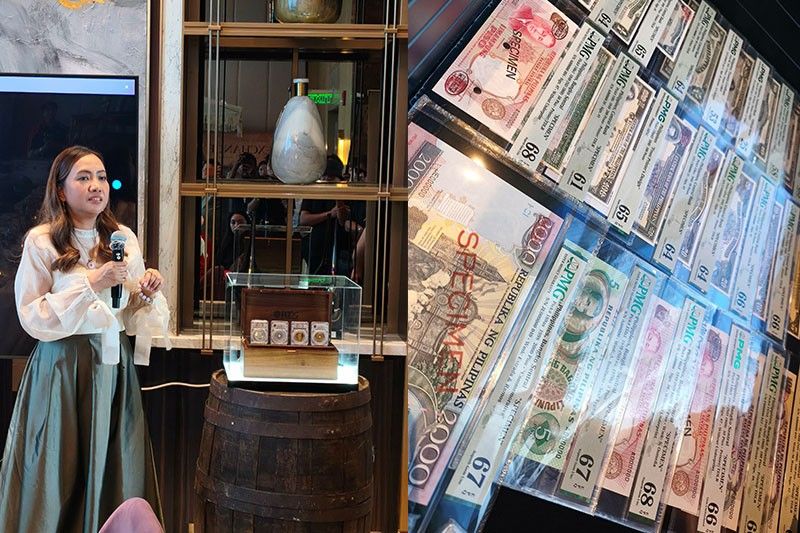
    Rare Philippine banknotes, limited-edition gold coins, vintage writing instruments and sought-after collectibles will be among the highlights of the Minted MNL Year-End Show 2026, scheduled on November 21 and 22 at The Westin Manila Hotel in Mandaluyong City.

    Source link

  • Free App Turns Foldable iPhone “Duo” Into a Mini MacBook — BigGo Finance

    Free App Turns Foldable iPhone “Duo” Into a Mini MacBook — BigGo Finance

    The hinge of the foldable smartphone has gained a new use. A free app called “DuoBook: Pocket Mac” has begun distribution on the App Store, allowing users to fold Apple’s first foldable device, the iPhone Duo, in half and stand it up to operate it like a macOS-powered laptop.

    When the app is launched and the device is propped half-open like a book, the Mac screen from home or the office appears on the top half, while a keyboard and trackpad appear on the bottom half. The layout changes according to the hinge angle, and when opened flat, the display area and trackpad expand.

    The key layout is the same as Mac laptops, with the top row featuring screen brightness adjustment, Mission Control, Spotlight, voice input, and more. Modifier keys can be toggled so that a single tap applies them to only the next key, while a double tap locks them. Pressing the Touch ID key locks the Mac, and key-press sounds and haptics are also reproduced. Version 1.1 added Touch Bar display support.

    The top-row display links to the app currently in use on the Mac. Safari shows back and forward buttons, Music shows play and skip controls, and Keynote shows slide advance controls.

    To connect from outside the home, users install the free “DuoBook Host” on their Mac, enable “Access from anywhere,” and complete a one-time pairing on their home Wi-Fi. With a compatible router, most settings are completed automatically, and the Mac’s address is stored in the user’s own iCloud. Connection verification only requires matching a six-digit code displayed on both screens.

    After connecting, users can listen to the Mac’s audio on the iPhone, paste text copied on the Mac onto the iPhone, and send photos and files to the Mac’s Downloads folder. With an iPhone Duo and a mobile battery, there will likely be more situations where users no longer need to carry a laptop or tablet.

    However, macOS is not actually running on the iPhone. The mechanism is purely remote connection, transmitting the screen of a Mac running at home or the office and sending back key inputs and pointer movements. To use it while out, the Mac must be left powered on, but version 1.1 added a feature to remotely wake a sleeping Mac.

    Requirements are: installing DuoBook Host on a Mac running macOS 14 Sonoma or later, and granting screen recording and accessibility permissions. In Japan, the iPhone Duo starts at ¥364,800 (approximately $2,300).

    Interest in foldable devices also appears high in the South Korean market. According to South Korean media reports, the iPhone Duo went on sale in South Korea on the 23rd of last month, and initial inventory sold out on the first day of preorders. The outer screen when folded measures 5.4 inches, while the inner screen when opened measures 7.6 inches, and the center crease is said to be almost invisible from the front. This is thanks to a hinge composed of more than 100 parts and a nano-texture matte finish that suppresses light reflection.

    The thickness when open is 5.2mm, which Apple describes as the thinnest of any iPhone to date. The frame is made of titanium, and the chip is the same “A20 Pro” as the iPhone18 Pro. Batteries are distributed on both sides of the body, with video playback lasting up to 44 hours on the outer screen and up to 31 hours on the inner screen. The rear features 48-megapixel wide-angle and ultra-wide-angle cameras, while the inner screen’s selfie camera is hidden beneath the display. Unlocking is handled by fingerprint authentication (Touch ID) on the side button.

    The device also supports split-screen mode, dividing the display at the crease to show separate apps on the left and right. In the always-on display feature showing the clock, calendar, and weather, the screen switches to a dim red color when the surroundings darken, designed not to interfere with sleep. It also includes features such as displaying video calls on the outer screen and automatically triggering the shutter when propped half-open.

    Integration between Apple products is another hallmark. It supports unlocking via Apple Watch and the use of MagSafe chargers, and the Apple Pencil (USB-C) for iPad can be used to write on both the inner and outer screens. This marks the first time an iPhone supports Apple Pencil.

    There are challenges as well. In South Korea, the 256GB model is priced at ₩3.29 million (approximately $2,500) and the 2TB model at ₩5.09 million (approximately $3,800), making it as expensive as in Japan. Critics also point out that the on-screen control menu is concentrated on the right side, making left-handed operation difficult, and that some apps that have not been optimized display in small windows in the center of the opened screen, failing to take full advantage of the large display.

    The emergence of peripheral apps like DuoBook can be seen as a move to present new uses for high-priced foldable devices. In a foldable market where competition over device sales continues, the ability to leverage existing Mac assets while on the go is likely to appeal to users who own multiple Apple products. That said, by its nature as a remote connection, it still depends on the communications environment and the operating status of the Mac at home.

    Source link

  • Taxi driver na may itak sa sasakyan, tinangkang tagain ang nakaaway na motorcycle rider

    Taxi driver na may itak sa sasakyan, tinangkang tagain ang nakaaway na motorcycle rider

    Nahuli-cam ang tangkang pananaga ang isang taxi driver sa nakaaway niyang motorcycle rider sa Iloilo City.

    Source link