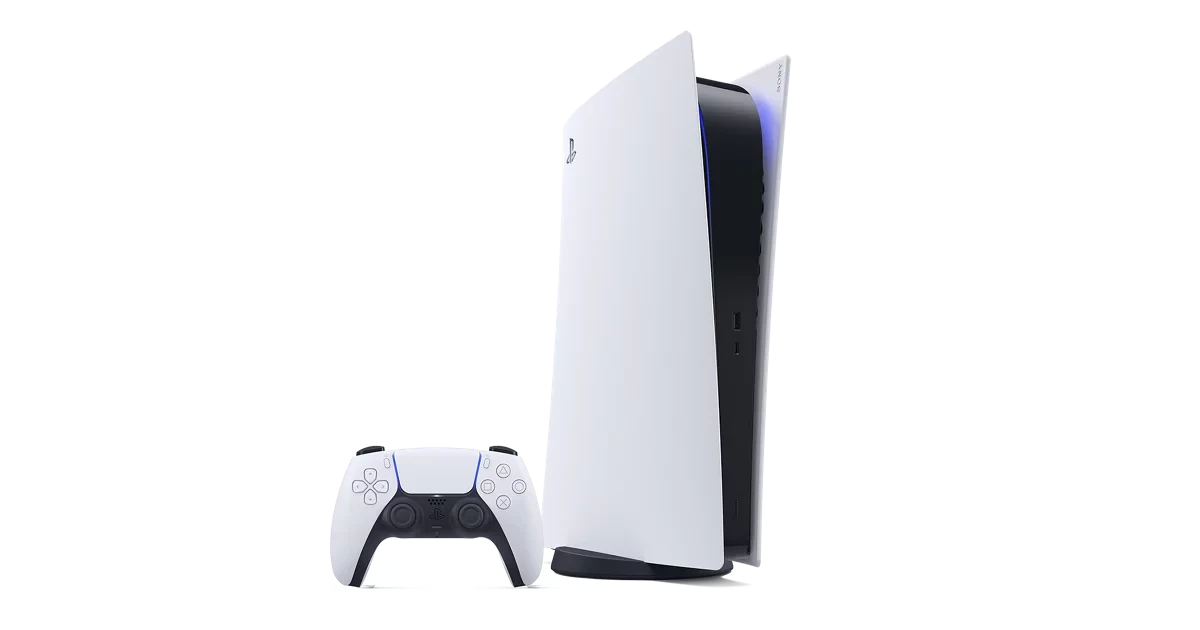
Sony Group’s PlayStation 5 is closing in on a lifetime shipment milestone of 100 million units, even as the company prepares to stop producing disc-based games in 2028 and lines up the next generation of hardware.
In its fiscal second-quarter results for the July-September period, released Nov. 5, Sony said its Game & Network Services segment drove group revenue to ¥3.4294 trillion (approximately $21.6 billion), up 10% from a year earlier, while operating profit climbed 45% to ¥622.3 billion (approximately $3.9 billion) – a record for a second quarter. The company raised its full-year forecast to ¥13 trillion (approximately $82.1 billion) in revenue, ¥1.87 trillion (approximately $11.8 billion) in operating profit and ¥1.33 trillion (approximately $8.4 billion) in net profit.
PS5 shipments in the quarter totaled 2.6 million units, down 35% year over year, leaving cumulative shipments at about 97.9 million as of Sept. 30 – roughly 2.1 million short of the 100 million mark. Sony shipped 7.9 million consoles in the October-December quarter a year earlier, making a calendar-year crossing highly likely given normal seasonality.
Hardware volumes are declining as the platform moves deeper into the back half of its life cycle, and Sony cited lower hardware revenue from fewer unit sales as a drag on the segment. Software and network services more than offset that decline. Monthly active users across PlayStation hit a record 127 million in September, with total play time up 4% year over year, and first-party title Marvel’s Wolverine sold 2.4 million copies in about 50 days.
| Sony Q2 FY2026 metric | Result | Change |
|---|---|---|
| Group revenue | ¥3.4294 trillion (approx. $21.6 billion) | +10% YoY |
| Group operating profit | ¥622.3 billion (approx. $3.9 billion) | +45% YoY |
| PS5 quarterly shipments | 2.6 million units | -35% YoY |
| Cumulative PS5 shipments (Sept. 30) | ~97.9 million units | — |
| PlayStation monthly active users (September) | 127 million | Record for September |
Note: Full-year guidance raised to ¥13 trillion revenue, ¥1.87 trillion operating profit and ¥1.33 trillion net profit.
On the earnings call, CFO Lin Tao said Sony is steadily advancing preparations for its next-generation platform, with investment proceeding on schedule and expected to become visible as an impact in the second half of the fiscal year. She said development is progressing as planned, with solid progress targeted for the fiscal year ending March 2028, and that an announcement will come at an appropriate time.
The hardware transition comes as Sony prepares to end production of disc-based games in 2028, a shift that could shape what the PlayStation 6 ultimately becomes. No new titles released in 2028 and beyond will receive physical copies, though existing discs will continue to work.
For current owners, the PS5 remains a capable media machine. All PS5 game discs play on the console, as do PS4 physical games; Sony’s backward compatibility documentation lists only six PS4 titles that cannot be played, including Hitman Go: Definitive Edition, We Sing and Just Deal With It!, and notes that demos and media apps may also fall short. Game Boost technology delivers smoother frame rates on patched titles such as God of War, The Last of Us Part II and Days Gone, pushing many to 60 fps.
Backward compatibility stops there, however: the console will not play physical PS1, PS2 or PS3 games, leaving titles such as LittleBigPlanet and Shadow Hearts: Covenant stranded on their original hardware unless re-released digitally.
On the video side, the PS5 supports Ultra HD Blu-ray, standard Blu-ray and DVD discs, giving old movie and TV collections continued use. 3D Blu-rays are not supported, and home-burned discs may work only if properly finalized, with no guarantees. Audio CDs are also off the table, matching the PS4, though Apple Music and Spotify apps are available. Owners of the Slim digital PS5 or PS5 Pro can add a detachable disc drive for $79, which does not fit the original Digital Edition. Sony also warns that non-circular discs shaped like a card, star or heart will be rejected, and that small GameCube discs should not be inserted.
The shipment trajectory and raised outlook suggest Sony is extracting more profit from a maturing install base while it funds the next console cycle. For investors, the key questions are whether software and services can keep offsetting falling hardware sales, and how the 2028 shift away from physical game media affects retail partners and collectors. For players, the practical takeaway is that the disc drive still has years of utility – for PS4 and PS5 libraries and for Blu-ray and DVD collections – even as the pipeline of new physical releases narrows.