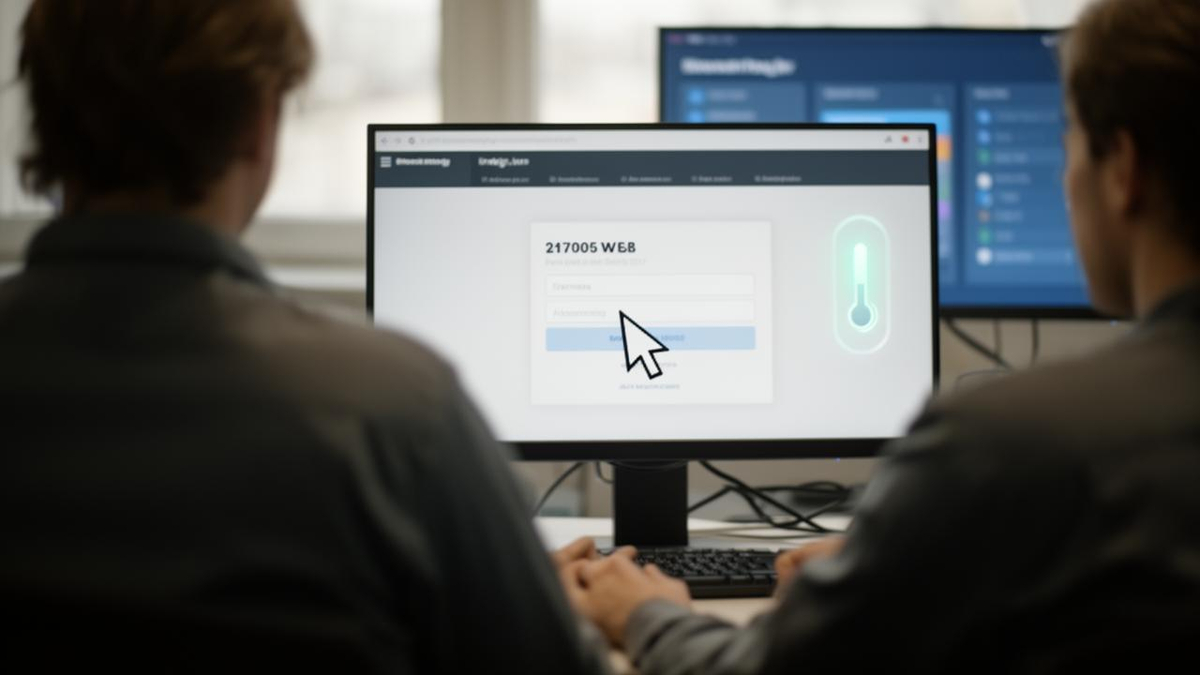
Shield, a technology company that builds software for IT services providers, said it has wired OpenAI’s GPT-6 Astra into its Forge platform so that AI agents can log into aging customer portals and finish routine browser work that has long tied up human technicians.
The company said the workflows are already running in production, with thousands of executions a month across its network of managed service providers. Forge is pitched as an AI operating system for IT support shops, pulling together business data and customer context to carry a ticket from start to finish.
The gap the integration targets is access. Many of the portals that technicians use daily to manage tickets, devices and software licenses predate modern APIs, so an agent has to read the screen and click through it the way a person would. Shield’s earlier attempts at so-called computer use, in which a model interprets a screen and operates it, were not dependable enough, according to Mayank Jain, the company’s Head of Technology.
“Usually, a system that doesn’t have an API is an old-school system that also doesn’t look very nice and is very hard to use, even by a human,” Jain said.
With the new model, Forge’s AI Engineer hands supported browser tasks to a computer-use agent, and technicians set the boundaries on what it may do unsupervised and what must come back for review or approval. Shield says the agents now complete those steps on their own instead of leaving a customer waiting for a person to log in.
“The only time you should have to bring in a human technician is if you need their judgment, not because you’re blocked on access,” Jain said.
The performance numbers Shield disclosed are notable for a market where reliability, not raw capability, tends to decide adoption.
| Metric | Shield’s reported result |
|---|---|
| Task completion speed vs. earlier models | 35-40% faster on average |
| Reliability | Fewer failures and fewer timeouts |
| Technician overhead | Less time spent writing detailed agent instructions or guiding tasks |
| Customer satisfaction | Higher on tickets where AI is used |
Note: Figures are Shield’s own measurements of its Forge platform.
Jain said the model’s handling of interfaces was the biggest departure from prior generations, which visibly stumbled while moving through a screen. “GPT-6 Astra feels like watching a human click around,” he said.
The division of labor is not total. Phone calls, on-site visits and remote-desktop work still require people, and Shield is testing remote-desktop workflows that would let agents take on more complex actions directly on a machine’s desktop.
The timing matters for small and medium-sized businesses, which typically lean on outsourced providers for everything from a locked account to a misconfigured firewall that has knocked an office offline. Speed of response is the product those providers sell, and any step that stalls on a portal login becomes a visible delay. Shield argues that offloading routine navigation lets technicians concentrate on higher-priority incidents such as phishing attacks or critical outages.
“GPT-6 Astra allows our agents to embody what a technician does by logging into portals and legacy websites that might not have API access and performing tasks that only a human could six months ago,” Jain said. “With GPT-6 Astra, Forge is now truly an extension of our human technicians.”
The integration also signals where enterprise AI vendors are pushing next: not just drafting text or answering questions, but operating the unglamorous, undocumented software that still runs much of the business world. For IT services firms, the competitive question is shifting from whether agents can act to how much of that action can be trusted without a human watching. Shield’s answer is a permissions layer in which technicians decide in advance which tasks run unattended and which wait for sign-off.