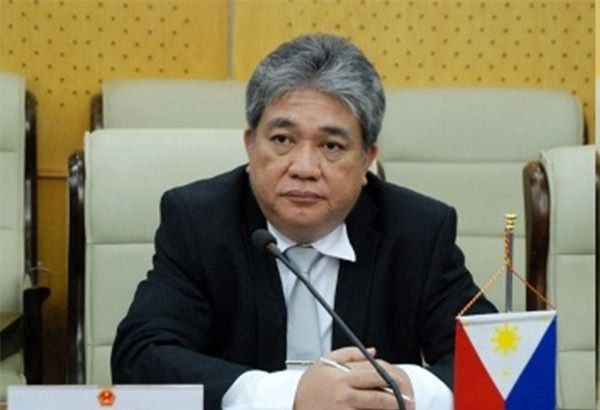
Since Carandang ended his seven-year fixed term in 2020, the SC ordered all his retirement benefits, as well as salaries he was supposed to receive when he was preventively suspended and eventually dismissed in 2018, be given to him.
The Supreme Court (SC) has voided former president Rodrigo Duterte’s dismissal of then-overall deputy ombudsman Melchor Arthur Carandang, serving as a vindication for the latter nearly a decade after leading a probe on Duterte’s alleged ill-gotten wealth.
The high tribunal’s Third Division denied the petition for review on certiorari by the Office of the President (OP), then represented by former executive secretary Vic Rodriguez, that challenged the November 2021 decision and the July 2022 resolution of the Court of Appeals.
The said rulings by the appellate court set aside the OP’s decision to dismiss Carandang from the service in July 2018 and make him liable for graft and corruption and betrayal of public trust, and favored Carandang’s petition for review.
In a 28-page decision promulgated last Jan. 29, 2026, the SC cited the CA’s proper reference of past jurisprudence that prohibited the OP from “administrative or disciplinary authority over a deputy ombudsman,” which is among those included in the constitutional principle of independence granted to the Office of the Ombudsman.
It noted the said jurisprudence was the basis for invalidating a provision in Republic Act 6770 or the Ombudsman Act of 1989 that allows the President to remove a deputy ombudsman.
“The CA rightly cited the Second Gonzales Decision in overturning the office of the former president’s removal of former overall deputy ombudsman Carandang. By constitutional design, the president possesses no administrative or disciplinary authority over a deputy ombudsman,” according to the decision penned by SC Associate Justice Maria Filomena Singh.
The SC also supported the CA’s reference to the stare decisis doctrine that orders courts to adhere to cases already settled, making Carandang’s dismissal “void and without legal effect.”
“The removal of former overall deputy ombudsman Carandang serves as the convenient doorway through which that settled ruling may be reopened. Yet the Court remains unconvinced. There is no compelling reason for such a drastic turn, all the more so when the president’s own conduct was in issue, thereby underscoring the enduring need to shield the Office of the Ombudsman from the shifting winds of political influence,” the SC ruling emphasized.
“Accordingly, the CA was correct in voiding the Office of the President’s decision and resolution for lack of jurisdiction,” it added.
The SC also maintained Carandang’s dismissal based on solely his media interviews disclosing his investigation into Duterte’s alleged ill-gotten wealth could have been avoided.
It noted that his probe stemmed from a complaint filed by Duterte’s harshest critic, former senator Antonio Trillanes IV, in May 2016 based on alleged records from the Anti-Money Laundering Council (AMLC), which the agency denied giving.
“Carandang’s comments in the televised interview, which referred to the supposed enormity of the amounts involved, were qualified with terms such as ‘baka’ and ‘siguro’ and referenced other individuals through the pronoun ‘nila’ to speculate on the actions of those who allegedly disclosed former president Duterte’s unexplained assets. Such uncertainty was understandable, as the figures and documents he was evaluating during the interview were supplied by the reporter and had not been vetted by the Office of the Ombudsman,” it said.
“The text of Carandang’s statements demonstrates neutrality and stressed the preliminary nature of the actions taken by the Office of the Ombudsman,” the SC noted.
Since Carandang ended his seven-year fixed term in 2020, the SC ordered all his retirement benefits, as well as salaries he was supposed to receive when he was preventively suspended and eventually dismissed in 2018, be given to him.
SC Third Division chairman Associate Justice Alfredo Benjamin Caguioa and members Associate Justices Henri Jean Paul Inting, Samuel Gaerlan and Japar Dimaampao concurred with the decision that was published on the SC website on Saturday, May 2.