Viewers are expected to experience intense scenes of love and betrayal in the new Disney+ Korean series “The Remarried Empress.”
Source link
Blog
-

Intense love and betrayal expected in Disney+ K-drama ‘The Remarried Empress’
-

Dragon Ball Super: Beerus Episode 5 Release Date & Time
The prologue is officially over as Dragon Ball Super: Beerus begins in earnest. Goku has finally become a literal God and is ready to do battle with the most powerful opponent he’s ever fought: the God of Destruction, Beerus. Dragon Ball Super: Beerus Episode 5 is going to be action-packed from top to bottom, remaking one of the greatest battles Akira Toriyama has ever written. The best part? Super Saiyan God Goku VS Beerus is only the tip of the iceberg.
Dragon Ball Super: Beerus is going to get crazier from here on out, as Goku and Vegeta break their limits, unlock new God forms, and battle the strongest warriors across the multiverse. Before the series starts changing the status quo forever, however, Goku and Beerus’ battle is going to shake the entire universe in Dragon Ball Super: Beerus Episode 5.
When Does Dragon Ball Super: Beerus Episode 5 Come Out?
Goku has become a God, the fate of the universe is at stake, and the greatest battle in Dragon Ball history is about to begin. Dragon Ball Super: Beerus Episode 5 will be available for streaming on Crunchyroll with English subtitles on October 25, 2026 at 7:15 AM PT / 10:15 AM ET. New episodes of the remake will also be available to stream on Hulu the same day and time. Netflix subscribers will have to wait six days until Dragon Ball Super: Beerus Episode 5 premieres on the streaming platform, however.
Dragon Ball Super: Beerus Episode 5 is expected to adapt Super Saiyan God Goku VS Beerus, one of the best fights in the series on a pure choreography level. Both Battle of Gods and the original Dragon Ball Super anime suffered from shoddy animation at certain moments (especially the movie), which is something DBS: Beerus is sure to fix. Considering how slowly paced Episode 4 was, there’s a chance that Episode 5 will only be Goku’s fight, with Episode 6 adapting the end of the Beerus Saga.
Considering Beerus has already used 10% of his Power Level against Vegeta, Dragon Ball Super: Beerus will need to make some changes to the series’ power scaling. The remake is based on Akira Toriyama’s original outline, which placed Beerus at roughly 70% of Super Saiyan God Goku’s full power. It’s possible that DBS: Beerus will be keeping the power scaling more in line with Toyotarou’s manga, where the power gap from arc to arc isn’t nearly as massive as in the Dragon Ball Super anime.
It’s not until the Dragon Ball Super 2 sagas that Goku and Vegeta’s Power Levels start getting out of control, which would honestly track with the remaining 30% of Beerus’ power. If Super Saiyan God is 70% of Beerus’ strength, then Super Saiyan Blue is realistically 75%, Ultra Instinct Sign is close to 80%, and Perfected Ultra Instinct is anywhere from 85% to 90% depending on Goku’s mastery. With that in mind, Beerus using 10% of his power against Super Saiyan 2 Vegeta in Episode 3 actually makes perfect sense.
-

Questyle to Launch ¥33,000 Dongle DAC ‘MEX’ in December, High SNR Without a Battery — BigGo Finance
Shenzhen, China-based audio equipment maker Questyle will release the MEX, a dongle-type portable DAC/headphone amplifier, in mid-December. The expected price is around ¥33,000 (approximately $210). The company announced the product at a launch event held in Tokyo on November 7. Pre-orders have been open since the same day on the crowdfunding site Mimigoto, with plans starting at ¥26,400 (approximately $170), a discount of up to 20%. Orders will be accepted through November 29.
The MEX carries two ESS DAC chips, the ES9219Q, and four “SiP current-mode amplifier modules” — Questyle’s patented current-mode amplification circuit packaged as a system-in-package (SiP). It supports native playback of PCM up to 384kHz/32bit and DSD up to 256. The housing is bus-powered, connecting directly to a smartphone or PC, and contains no built-in battery.
The output terminals consist of one 4.4mm balanced and one 3.5mm single-ended connection. Maximum output is 4V for balanced and 2V for single-ended (both at 300Ω). Gain can be set to three levels — high, medium, and low — and volume adjusts across 64 steps. The 3.5mm jack also supports earphones with a microphone, and the unit itself has a built-in microphone.
Its biggest feature is two modes that let users switch how sound is shaped. A slide switch on the unit toggles between “PURE mode,” which minimizes signal processing to amplify the original sound, and “TUNE mode,” which allows fine-tuning of sound quality from a smartphone app. The app supports both iOS and Android and has obtained Apple’s “MFi certification.” When connected to an iPhone, the app launches automatically.
TUNE mode offers a 10-band parametric EQ (PEQ). Frequency, gain, and Q value can be set for each band, and the filter type can be selected from five options: low shelf, peaking, high shelf, low-pass, and high-pass. Adjustments can be made while visually checking the results on a graph, and created settings can be saved and recalled at any time. It also features “DRE (Dynamic Range Enhancement),” which picks up minute sonic details to expand the usable dynamic range, plus two types of DAC digital filters; these work in both PURE and TUNE modes.
Founder and CEO Wang Fengshuo traveled to Japan to speak at the launch event. According to Wang, the idea for current-mode amplification dates back to 2004, when he was a student at China’s Yangzhou University and accidentally assembled a circuit during a communications circuit experiment that showed excellent characteristics for audio use. After graduating, he first joined a U.S. IC design company, worked on solving issues for mass production, and then founded Questyle in Shenzhen in 2012.
Whereas ordinary amplifiers amplify music signals in voltage form, current-mode amplification first converts the signal to current, amplifies it, and finally converts it back to voltage. The advantages are said to be that distortion is unlikely even with large signals, and current consumption can be kept low while maintaining a wide bandwidth. Initially, the effort required to match transistor characteristics was a barrier to mass production, but after repeated improvements the circuit has now been miniaturized to a 3mm-square IC chip size.
Asked why the device adopts a skeleton structure that exposes the board circuitry on the back, Wang said, “Our stance is to show what’s inside for things we’re confident about.” He also indicated plans to build out “Q-Code,” a mechanism allowing users to share sound-quality settings with one another, and to spread the company’s “easy Hi-Fi” concept of letting people enjoy Hi-Fi regardless of whether they have specialized knowledge.
At the event, audio critic Kenji Nomura and audio/DTM writer Ken Fujimoto explained how to use the sound-tuning features. Nomura noted that conventional dongle-type DACs draw power from the smartphone, making it hard to raise the signal-to-noise ratio, and said the MEX achieves effective noise reduction despite having no battery, and that with its low distortion, PURE mode earns high marks. Fujimoto recommended using the PEQ not to dramatically change the sound but to pinpoint-adjust frequency bands of concern.
Key specifications are as follows.
Item Specification DAC chip ESS “ES9219Q” ×2 Amplifier SiP current-mode amplifier module ×4 Supported formats PCM 384kHz/32bit, DSD256 Output terminals 4.4mm balanced / 3.5mm single-ended Maximum output 4V (balanced), 2V (single-ended, at 300Ω) Gain 3 levels (H/M/L) Volume adjustment 64 steps Power Bus-powered (no built-in battery) Expected price Around ¥33,000 (approximately $210) Pre-order From ¥26,400 (approximately $170) (through November 29) Note: Prices include tax. Pre-orders are being accepted on the crowdfunding site Mimigoto.
The portable DAC market into which the MEX is being launched has expanded mainly among people who enjoy high-quality earphones with their smartphones. However, prices range widely from a few thousand yen to tens of thousands of yen, and major smartphone makers and Chinese players are entering one after another. Questyle positions its in-house-developed amplifier circuit and rich adjustment features as its differentiation axes. The ¥30,000-plus price places it in the mid-range for dongle types, aiming to capture not only users accustomed to sound tuning but also those who want to correct the quirks of their earphones.
For the company, the MEX is a product that extends the current-mode technology cultivated in desktop and portable players into a more accessible price range. Along with expanding brand recognition, how firmly it can establish the ongoing touchpoint of sharing settings via the app will likely shape future sales.
-

P30M water impounding project completed in Kalinga –DA
The Department of Agriculture (DA) said that it has completed a P30 million small water impounding project in Tabuk City, Kalinga, which could help supply irrigation to farmers amid the ongoing El Niño phenomenon.
Source link -

Korean actor Park Bo Gum, certified hairdresser na
Kung sa Pilipinas ‘yun tiyak na iintrigahin na kaagad si Park Bo Gum na isang certified hairdresser na.
Source link -

One Piece Creator Eiichiro Oda Reveals New Plan For Manga Ending
Eiichiro Oda’s One Piece is a legendary shonen manga that has been running in Shueisha’s Weekly Shonen Jump for almost 30 years now. One Piece began serialization in Weekly Shonen Jump on July 18, 1997, in the 34th issue of the magazine for that year. Since then, it has consistently been one of the best manga in the magazine and has now become its strongest pillar in the modern era.
That said, One Piece is edging closer to its conclusion with each new release. Currently, Eiichiro Oda’s story is in its Final Saga, and now, with the upcoming release of chapter 1198 on November 8, 2026, in Shueisha’s Weekly Shonen Jump Issue 50, it has officially been confirmed that the series’ ending is being pushed back by Eiichiro Oda even further due to the new release schedule of the manga.
Eiichiro Oda Confirms Series Extension As New Break Announced After Chapter 1198
One Piece creator Eiichiro Oda first announced the beginning of the end of the series with the Final Saga, which the Straw Hat Pirates embarked upon following the conclusion of the Wano Country arc. One Piece chapter 1058, released on August 29, 2022, in Shueisha’s Weekly Shonen Jump issue 39, marked the beginning of the Final Saga and thus the beginning of the end for the series as well. Four years have passed since then, and One Piece is nowhere close to its conclusion. While Eiichiro Oda’s One Piece has ended the Egghead arc, the Elbaf arc is still currently in its climax and is now facing significant interruptions due to frequent hiatuses by the author of the series.
One Piece received its latest chapter, 1197, on November 1, 2026, as part of the 49th edition of the Weekly Shonen Jump magazine for the year. Currently, fans are awaiting the release of chapter 1198, which is set to be released on November 8, 2026, in Shueisha’s Weekly Shonen Jump issue 50. However, as has been confirmed officially, One Piece is headed for another break after the release of chapter 1198.
Over the last three months, Eiichiro Oda has been consistently taking breaks after every two chapters, which comes as a massive surprise to the fans. Previously, Oda used to take a break after the release of every three chapters, which meant that every month fans used to get three chapters at the very least. Now Eiichiro Oda is releasing significantly fewer chapters, and this has now become his new publication schedule for the manga. With One Piece chapter 1198 set to be released on November 8, 2026, the series will not get any new chapter in the following week on November 15. Instead, One Piece chapter 1199 will be released officially on November 22, 2026.
One Piece’s New Break Schedule Confirms The Manga Won’t End Anytime Soon
With the climax of the Elbaf arc, it has now officially been confirmed that One Piece has a new publication and break schedule directly from the author, Eiichiro Oda. This new break schedule has officially delayed the ending of One Piece significantly and pushed it back by many years. On the surface, it might not look like a big deal to the fans, but when looking at how many chapter releases Oda drops a year, this difference becomes significant.
When it comes to the average year, Eiichiro Oda delivers anywhere between 35 and 38 chapters based on his latest manga production schedule, which he has stuck to since the climax of the Wano Country arc. Based on this new production schedule by Eiichiro Oda, which officially kickstarted at the climax of the Elbaf arc, Oda will drop fewer than 25 chapters in a year. This means that each year, fans will now get around 12 to 15 fewer chapters, slowing down the series significantly.
Over a period of 5 years, One Piece will have around 60 fewer published chapters, which could account for an entire arc of the series and thus take more years to cover. For instance, if Oda had projected to end One Piece by 2030 at his previous rate, the new schedule adds years to the life of the manga, effectively delaying the ending even further. But this is something that fans aren’t particularly worried about either, as it gives them more One Piece content.
Why Oda’s One Piece Will Slow Down Further With Time
As things stand, One Piece is in the climax of the Elbaf arc. Based on the current progression of the story, this arc isn’t ending before 10 to 15 more chapters. Based on the current pace of the story, One Piece’s Elbaf arc will end sometime in spring to summer of 2027, and the series will then head deeper into the final saga. It is also quite clear that, at this rate, One Piece is not going to end the story anytime soon. Whereas Oda previously wanted to end the story by 2025, we are already way beyond that mark, and the series will most definitely continue for at least a decade longer, if not more, based on how many breaks Oda is taking.
The reason behind these breaks has never been explained to us, but it comes down to two main reasons. The first reason is Oda’s deteriorating health, which is a natural consequence of writing manga for almost 30 years. This is also something that fans should accept and respect. A biweekly release schedule of One Piece only serves to help Oda get even better. The second reason is Oda’s involvement with a multitude of side projects. Oda is constantly working together with Netflix on the One Piece live-action project.
On top of that, he has now started working together with Toei Animation for new movie projects, such as Film God Valley and Film Baad. With Oda’s side project involvement increasing even further, he has less time for the manga and for himself. As such, One Piece is experiencing a lot of hiatuses this year, which is most certainly going to continue into next year as well. In fact, in a couple of years, it is entirely possible that One Piece will instead receive just a single chapter release a month. This would slow down the story even more significantly and see the ending pushed back indefinitely. For now, we are still enjoying biweekly releases for the Elbaf arc, and hopefully, Eiichiro Oda will update us further on the current production rate of the manga soon.
All chapters of One Piece by creator Eiichiro Oda are available to read via Manga Plus and Viz Media.
-

OpenAI Hears Voters’ Overwhelming Rebuke To Data Centers, Vows to Build More of Them
The “blue tsunami” that swept over the midterm elections made it clear that voters are sick of tech billionaires meddling in politics, opposed to data center construction, and deeply suspicious of the AI industry.
But OpenAI chief financial officer Sarah Friar apparently didn’t get that memo. In an interview with CNBC on Friday, she vowed that OpenAI would keep pouring money into data center construction so it can please its corporate customers — voters be damned.
“When I think about the midterms, I need to keep thinking about how do we keep investing to meet that customer demand,” Friar told CNBC’s Sara Eisen in the interview. “It starts early with having built relationships with all of the hyperscalers, and it will continue to mean that we raise capital.”
While Eisen is focused on “customer demand,” she should probably start paying attention to what voters are asking for. Across 41 local ballot measures on restricting AI data centers, voters supported all but one, Ballotpedia data showed. 56 percent of Americans considered AI and data centers a crucial or major factor in how they voted, according to NBC News exit polls.
Meanwhile, Democratic challengers flipped seats in multiple states while campaigning against the data center buildout. Texas governor-elect Gina Hinojosa will become the first Democrat to lead the state in over three decades after promising voters to impose a moratorium on new data centers.
But all that is moot to OpenAI’s Friar — since, in her eyes, people want AI.
“The demand for AI is real,” Friar said in the interview. “I don’t think anyone’s arguing with that, or if they are, I think it’s a losing argument.”
In all, she doesn’t believe that the election drastically changes anything for the company. To her, it seems, the backlash to AI is more or less a messaging problem.
“If the midterm means more focus on data centers and communities, we’re going to keep doing the work to get into those communities and to build trust with them,” Friar said.
She put it in more transactional terms elsewhere in the interview: “We are going to keep building out those relationships with communities so we can get the compute we need.”
If Friar’s intentions are to portray the company as unphased, it’s coming a little too late. In the wake of the elections, OpenAI moved swiftly to announce “new commitments to the communities” where it’s building data centers, which included a promise to no longer use non-disclosure agreements while discussing data center construction with government officials.
CEO Sam Altman, meanwhile, showed his poker face still needed improvement by immediately tweeting that “people should always be in control of the future.”
More on AI: Voters Supported Every Single Anti-Data Center Proposal in America, Except One
-

Security Researcher Max Justicz Finds Remote Android Takeover With AI in One Afternoon — BigGo Finance
Max Justicz bought a brand-new, fully patched Android phone, pointed the same AI models he’d used on server software at it, and within hours found a way to take it over remotely — sending a malicious message over the cell network to seize control of the device. That finding, and a separate remote root code-execution bug in the package manager behind every Debian and Ubuntu machine, are the strongest evidence yet that the hardest part of security research — finding the flaw — has been radically democratized, according to Justicz, speaking on the MTS podcast.
“The worst of the worst finding where I could send a malicious message just over cell networks to an Android phone and take it over,” he said, describing the Android result. He is not a full-time security researcher; he has a day job and does bug bounties on the side. That’s precisely his point: what took him “dicking around one afternoon” would, until recently, have demanded expertise built over years.
The package manager is the most dangerous place to find a bug
The APT bug came first. Justicz had audited package-manager code by hand years earlier, which gave him the intuition to aim GPT-5.6 at it. After a couple of hours, the model returned a flaw that, by his account, affects all Ubuntu and Debian machines: a man-in-the-middle on the network can force those machines to install arbitrary software as root. “If you compromise the package manager, you compromise everything,” he said.
He reported the bug in September 2026. The fix and its rollout took five or six weeks — a delay he attributes to people, not engineering, since maintainers were partly on vacation during the window. In his view, a patch could have been written and shipped the same day.
The more telling signal, he argues, is what the speed of the find says about coverage. “The fact that I was able to find this app bug as quickly as I was kind of indicates to me that no one’s even bothered to aim an AI model at this code,” he said. That gap extends well beyond Linux: he points to radio firmware on an aircraft that decodes signals from other planes as an example of software where the first person to point a model at the code will find whatever is there.

A patch is not a fix when it takes six weeks
The episode’s practical through-line is a widening gap between how fast AI can find flaws and how fast humans can fix them. Discovery now runs in hours; patching still runs on human schedules, vacations included.
Bug Reported Patch status Time to patch APT (Debian/Ubuntu package manager) September 2026 Rolled out 5-6 weeks Android remote takeover over cellular During the interview period Still rolling out Ongoing at interview time For ordinary users, Justicz has little comfort to offer. “I think ordinary users are in a pretty bad spot right now,” he said, and the main lever is using fewer services. His pre-AI advice still holds: stick with major smartphone brands likely to be patched quickly, use major operating systems, and keep everything up to date. He called the current situation “a little bit feudal.”

His skill advantage is a leading indicator, not a moat
Justicz refuses to cast himself as an elite. He says he is not one of the world’s best hackers but has had some bug-bounty success, and he has seen a massive uplift from the models. His only edge is taste — knowing which targets are worth aiming a model at — and he expects that edge to evaporate fast.
“I’ve seen just a massive uplift in what I can do because of these models. And I think that marginal difference due to my skills is just going to quickly diminish to the point where if you’re completely unskilled, you’ll be able to do the same thing,” he said. “I have a little bit of taste in being able to aim the models at things that I think are worth looking at, but what kind of moat is that? I don’t think that’s going to last very long.”
He describes himself as a canary in the coal mine. A couple of months before the interview, the most skilled hackers were the ones getting extra results from AI; at the time of the interview it was people like him; soon it will be ordinary computer users. He is “pretty confident” of that progression.
The labs are tightening access — but the horse may be out of the barn
If AI makes finding bugs this easy, why hasn’t there been a wave of cyberattacks on ordinary people? Justicz offers three reasons, and only one of them is reassuring.
First, the frontier labs are getting better at refusing egregious vulnerability-hunting requests. He used Daybreak Blue, which he describes as the easiest-to-access tier with elevated security permissions that OpenAI offers, and says the same requests that found the APT bug no longer work since the disclosure. He says he hasn’t been able to get Claude to do anything “super useful” for him. Second, the number of actors trying to cause harm may itself be a rate limit — ransomware crews are still busy running ransomware. Third, and in his view most important, “I think the tools just aren’t in enough people’s hands to have caused major incidents. But I think we’ll see them. I think it’s kind of just a matter of time.”
That timeline is short. His forecast is that a wave of “really ridiculous bugs” is about to surface and will get worse over the next few months.
The access question is where the story gets uncomfortable. Justicz also tested an unrestricted open-weight model, GLM 5.3, served through a startup called Obliteration that strips out its safety restrictions. He calls it “a bit dumber” than the GPT-5.6 models he used but “certainly powerful enough to be dangerous” and capable of finding shallower bugs — for about $100.
Model / access route Justicz’s assessment GPT-5.6 via Daybreak Blue (OpenAI’s elevated-security tier) Found the APT bug; the same requests stopped working after disclosure Claude (Anthropic) He could not get it to do anything “super useful” for him GLM 5.3 via Obliteration (unrestricted) Dumber than GPT-5.6 but dangerous; finds shallower bugs for ~$100 On whether services like Obliteration are net good, he splits his answer by time horizon. In the short term he sees them as good, because they let defenders audit code faster — and he notes second-order effects, like his own use raising awareness of the problem. He even messaged the company on LinkedIn to thank it. In the long term, though, he calls it “probably net bad to be providing kind of misaligned AI as a service,” because it normalizes access to models willing to do harmful things.
What defenders should do now — and why it’s a race
Justicz’s advice to package maintainers is blunt: sign up for the labs’ security programs — he names Daybreak Blue and what he recalls as Anthropic’s “cyber verification program” — and aim the models at your own code. He calls it “table stakes now.” For more aggressive auditing, spend the $100 on an unrestricted model and audit with that.
The structural problem underneath all of this is coverage. Popular devices may keep a high bar, but the surface area of modern life is too large for anyone to audit all of it, so security depends on who points a model at a given piece of code first. That makes AI-assisted bug hunting a first-mover race: the defender who audits their own code finds the flaw before an attacker does, and the attacker who looks first gets a window that human patch schedules — five to six weeks in APT’s case — leave wide open.
What follows is a race with an unstable equilibrium. The same access that lets defenders audit faster also lowers the skill floor for attackers, and the labs’ tightening of access — which Justicz observes directly — slows both sides at once. The unresolved tension is that nobody can audit everything, the models keep getting better, and patching still moves at the speed of vacation schedules.
For investors, the read-through is less about any single stock than about where risk now sits. Software that has never been audited with AI tools is an unpriced liability — for the companies that ship it, the platforms that depend on it, and the insurers who cover them. The defensive winners will be the labs’ security-access programs, the boutiques selling AI-assisted audits, and the vendors whose patch pipelines can actually move at machine speed. The losers are everyone who assumes the code they rely on has been checked — because, as Justicz’s afternoon on an Android phone shows, it probably hasn’t.
-
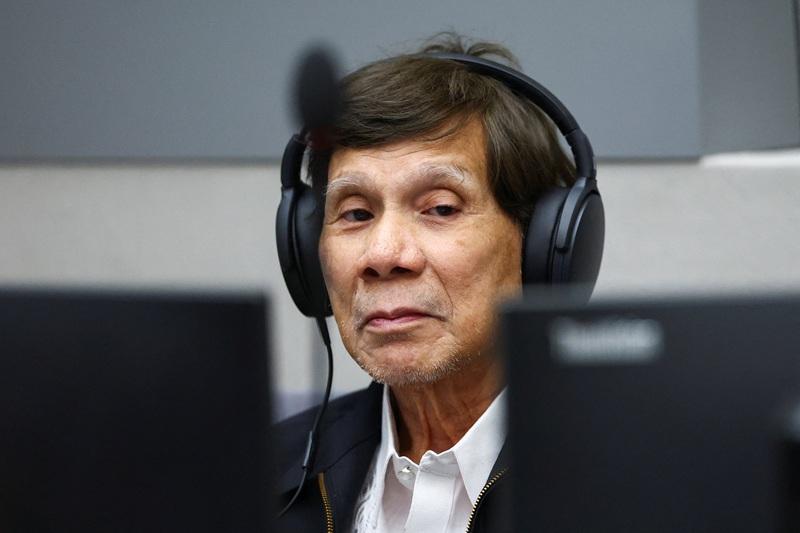
Rodrigo Duterte defense challenges expert report bid
PRAGUE, Czech Republic – Among the expert reports that International Criminal Court (ICC) prosecutors are seeking to admit as evidence, former President Rodrigo Duterte”s defense is challenging one that cites external materials not considered an “integral part” of a witness”s evidence.
Source link -

Jujutsu Kaisen Officially Confirms The Death Of The Original Main Character
Gege Akutami’s Jujutsu Kaisen is known to be a brilliant series that is often darker than the average shonen. Right from the get-go in Jujutsu Kaisen chapter 1, released on March 5, 2018, in Weekly Shonen Jump Issue 14, it was clear for us to see that the author was setting a darker tone for his story. As it continued, this pattern became apparent as Gege started killing characters all across the board.
When eventually reached its end in chapter 271, quite a lot of important characters had already perished, and this also included the strongest modern sorcerer, Gojo Satoru. However, at some point later down the line, in the blank period that followed between Jujutsu Kaisen and Jujutsu Kaisen: Modulo, set 68 years after the Sukuna Raid, Gege ended up killing his original main character of the story in a shocking turn of events. To this day, the main reason for the death of the original main character has not been revealed by Gege, and it remains a mystery to us all. Regardless, the world of Jujutsu Kaisen moves forward in a brand-new era where their sorcery has ceased to exist in the next generation, and Heavenly Restriction alongside Cursed Tools has taken over.
Gege Akutami’s Original Main Character Has Already Been Killed Off in Jujutsu Kaisen
Gege Akutami started Jujutsu Kaisen on March 5, 2018, in Shueisha’s Weekly Shonen Jump Issue 14. This chapter built up the main character of the series, Yuji Itadori, and continued to craft a story around him. Over the next few years, Gege Akutami established Yuji as a compelling main character, and alongside him was a side cast of some amazing characters as well. However, most fans of Jujutsu Kaisen do not know that Yuji Itadori was not originally intended to be Gege’s main character. There is also a misconception that Gege’s original main character was Yuta Okkotsu due to him having been the lead in JJK 0, the prequel series to Jujutsu Kaisen.
In reality, Gege Akutami’s original main character for Jujutsu Kaisen is none other than Megumi Fushiguro, as was confirmed by the author in Jujutsu Sousen drafts. Yuji Itadori was still supposed to exist in the world of Jujutsu Kaisen, but only as a side character, with Megumi taking the lead. This draft eventually underwent many alterations, and it was decided that Yuji would instead become the main character, with Megumi pushed to the sidelines. In this Jujutsu Kaisen draft, it was also confirmed to us that Megumi was always destined to be taken over by Sukuna, given that it was he who was originally intended to be the vessel of the King of Curses instead. Now, in the modern timeline of Jujutsu Kaisen, it has already been confirmed that Megumi Fushiguro has passed away.
Yuji: That’s why I’m saying everyone will just have to figure it out.
Nobara: It is at times like these that I wish Fushiguro was still around.
— Nobara confirms Megumi’s death, Jujutsu Kaisen Modulo Chapter #25
In Jujutsu Kaisen: Modulo Chapter 25, which was officially released on March 9, 2026, in Shueisha’s Weekly Shonen Jump Issue 15, Gege Akutami confirmed through Yuji Itadori and Nobara Kugisaki that Megumi passed away due to unforeseen circumstances at an unknown time, long before the beginning of the Modulo era, which is truly unfortunate for someone who once supposed to be was the original main character of the series.
Why Gege Switched Main Characters From Megumi To Yuji
In the original draft by Gege Akutami, Megumi Fushiguro was supposed to lead from the front, and at his side was none other than Tsumiki, who was heavily involved in the original first chapter. Yuji, meanwhile, was supposed to be a side character to Megumi and held a blood connection to the King of Curses, Ryomen Sukuna. Eventually, this idea was scrapped by Gege completely. Yuji Itadori was made the main character, while Megumi was moved to a side character. Tsumiki was removed from the original trio completely and replaced by Nobara. Instead of Megumi being the original vessel of Sukuna, it was also switched to Yuji Itadori.
As to why Gege Akutami changed his mind, no one can say for sure, but it is uncommon for authors to craft multiple drafts for their story before it is officially published. For Gege, something must have told him that Yuji would make a more compelling main character than Megumi Fushiguro, and that Megumi himself would serve better as a side character in the story. Needless to say, we agree with Gege Akutami’s final judgment, as Yuji was a phenomenal protagonist, and Megumi, for whatever role he played, served it brilliantly.
Yuji And Megumi’s Roles In The Future Of JJK
It is unfortunate that Megumi Fushiguro’s role in Jujutsu Kaisen has practically ended forever. With his death having been confirmed, Megumi is no longer going to affect the plot of JJK directly, unless his successor is revealed by Gege Akutami at some point later down the line. It was heavily implied in Jujutsu Kaisen that Megumi and Hana ended up together. If these two ended up having children, then they could potentially serve as a window to expand upon the life of Megumi Fushiguro and give us a look at him in his prime before he ended up dying. It would also show us how Megumi ended up dying, despite being such an important character in the story. For now, we do not know anything about his life as an adult, so hopefully, Gege Akutami will shed more light on that later down the line.
“I’m going to live for another 300 or so years. I will handle whatever follows. And if necessary, I’ll bear the consequences of this great sin.” — Yuji confirms his age, Jujutsu Kaisen: Modulo Chapter #22
Meanwhile, Yuji Itadori continues to press forward in the modern era of Modulo. In Jujutsu Kaisen: Modulo Chapter 22, Yuji Itadori decided to erase Cursed Energy from the next generation of Japan entirely. At the same time, in JJK: Modulo Chapter 25, Yuji, together with Nobara, decided to seek out all the Heavenly Restriction users and equip them with mass-produced cursed tools in an attempt to defend Japan against any cursed spirits that would be born in Tokyo moving forward.
“The last part is pretty bothersome. I’m gonna become a cursed object when I finally die. As you know, the aliens arrived. We don’t know what will become of the Earth later on. If people need cursed energy once again in the future, someone just has to eat me, as a cursed object!” — Yuji reveals his plan after his death, Jujutsu Kaisen Modulo Chapter #25
Yuji also decided to become a Cursed Object upon death, which means that in the future, if Japan and Earth are ever threatened by a superior force, someone would simply have to eat Yuji and become his vessel, so that he can come back and fight as well as defend his people.
All the chapters of Jujutsu Kaisen and Modulo by Gege Akutami are available to read via Manga Plus and Viz Media.