House House has clarified it used AI tools “sparingly” during the “final stretch of development” on Big Walk to address “difficult technical challenges and bugs.”
The Australian indie studio released a statement to Aftermath after a group of jurors for the 2027 Independent Games Festival (IGF) said they would not vote for any game developed with generative AI.
Big Walk was one of the games submitted for the IGF. Submissions closed on September 13, with finalists to be announced in January 2027.
In a social media post, the IGF jurors said they had seen a “significant increase in the number of submitted games developed with generative AI tools.”
“This year we are declining to vote for any game that uses generative AI in any capacity. We urge the IGF to adopt a strong anti-AI policy for future years that disallows games containing any AI-generated work.”
House House explained its use of AI tools, including the implementation of LLMs “to research, via chatbots, issues encountered with third-party code.”
“In some cases, snippets from LLM responses were copied as a starting point to be modified into game code – we’d estimate that well under 0.1% of Big Walk’s code had anything to do with this usage, and generative AI was not used in any other context when making the game.”
House House provided the following explanation, noting it wrote “a version of” this disclosure for the IGF, as it was a suggested part of Big Walk’s submission:
“We needed to cull shadow casters by distance from the camera, but Unity URP only allows culling shadow casters by distance in camera forwards, so shadow casters behind the player were being rendered at an infinite distance.
This made our game run 50% slower for around 20 seconds at sunrise and sunset. We researched the problem extensively, and we looked at the URP code ourselves, but we couldn’t find a way. Then, we were able to speak directly to an engineer at Unity, who asked around and ultimately concluded that what we wanted wasn’t possible.
Finally, we posed the question to an LLM chatbot. After a few dead ends, it suggested a possible fix, and while we had to modify the suggestion extensively, it worked. This fix represented about 10 lines of code inside URP.”
House House stated it has not disclosed this information on Steam because “the platform does not request disclosure of code or chatbot usage. We are posting this disclosure as it has become a matter of public interest.”
“This is not an endorsement of, or argument for, the use of AI tools, however minimal,” the developer said.
“We have some concern that voluntary disclosures like this might contribute to the normalisation of this technology, or its treatment as ‘inevitable’. We support the work of those who are trying to limit the harm generative AI is doing to video games and our world, and apologise that Big Walk’s LLM usage may not meet their standards.”
“Big Walk was developed without an internal AI usage policy in place, and we consider that lack of policy a failure. We will work to have a more comprehensive policy going forward.”
Malacañang on Tuesday urged government officials to exercise diplomacy when discussing issues involving the West Philippine Sea (WPS), but said there was no need to “tone down” their statements as long as these were within their respective mandates.
President Donald Trump’s obsession with AI is even grimmer than we believed.
The commander-in-chief has hardly hidden his enchantment with AI slop, regularly posting bizarre AI videos glorifying himself, denigrating his foes, and at times, attempting to rewrite reality.
But a behind-the-scenes look suggests that Trump is now completely lost in an AI alternate reality of his own making.
While Republicans scramble and prepare for what could be a disastrous midterm election season for their party, sources told the New York Times that Trump is cloistering himself in a world made of sycophantic press coverage, disparaging clips about his foes, and, not least of all, “AI slop,” in the words of one White House official.
One person keeping him hooked on the stuff is Bill Pulte, a top federal housing official. According to the reporting, Pulte regularly joins Trump in his cabin on Air Force One and shows him memes — some of which are almost certainly AI-generated — posters, and documents related to the mortgage industry. One administration official even described Pulte as a “court jester.”
Trump is now so isolated from critical coverage that his indignation and incredulity when encountering it can be petulant and extreme. When comedian Bill Maher — who you wouldn’t describe as particularly left wing — joked about Trump’s ties to Jeffrey Epstein and his affinity for Russia, Trump’s response was absurdly disproportionate: a maniacal 1,300 word rant raging against Maher that he posted on his website Truth Social, which breaking news accounts on social media struggled to capture in one screenshot.
The signs of his AI infirmity have long been apparent. But some worry that AI is playing a direct role in the president’s decision-making, too. A recent scoop from TIME magazine reported that Trump is so enthralled by Elon Musk’s chatbot Grok that his conversations with it encouraged him to invade Venezuela and capture its president Nicolas Maduro.
Top Democrats are now demanding to see those Grok conversations and others.
More on AI:Trump Addresses United Nations to Declare That the United States Is Now Calling Artificial Intelligence “Super Intelligence” in “All Official Documents”
Quantum Brilliance is redefining the path to scalable quantum computing by focusing on the connection between device performance and material specification within its Quantum Diamond Foundry. Dr. Marcus Doherty, Chief Technology Officer, received the 2013 Chancellor’s Prize for Excellence for his PhD thesis on the nitrogen-vacancy colour centre in diamond.
Doherty concurrently leads technology development at Quantum Brilliance while serving within the Future Land Warfare Branch of Army Headquarters, overseeing the implementation of Army’s Quantum Technology Roadmap. “In many ways, that is increasingly how I think about what QDF was always meant to be: the point where the science of quantum materials meets the discipline required to turn them into technologies that can be built, repeated, and scaled.”
Dr. Marcus Doherty Pioneers Diamond Quantum Technology
Quantum Brilliance established its Quantum Diamond Foundry (QDF) a year ago with the goal of creating a dedicated materials and manufacturing infrastructure for diamond quantum technology, moving beyond laboratory demonstrations. Doherty views QDF as a system where device physics dictates material requirements, those requirements guide suppliers, and the resulting knowledge feeds back into the development of future devices. This approach allows the company to begin with desired device performance parameters, sensitivity, contrast, or linewidth, and then use modeling to determine the necessary material properties and tolerances, Quantum Brilliance says.
Metrology enables Quantum Brilliance to test whether a diamond possesses the required properties and pinpoint areas for improvement. The company is focused on translating metrology and modeling into repeatable tools, assisting suppliers in refining their processes and ensuring consistent reproduction as production scales.
Doherty believes this infrastructure, encompassing scientific knowledge, measurement, modeling, fabrication, suppliers and personnel, will support the growth of a diamond quantum industry with increasing capability and global reach. The establishment of QDF signifies a shift from purely academic research to industrial production, capturing scientific understanding in a scalable and reproducible form.
Doherty emphasizes the importance of connecting materials capabilities to the evolving generations of chips being developed at Quantum Brilliance, ensuring a continuous cycle of innovation and improvement, according to the company. He expressed confidence that the foundations laid in Melbourne will support a growing diamond quantum industry, stating, “I am more convinced than ever that the foundations taking shape in Melbourne will support a diamond quantum industry that grows in capability and global reach over time.” The company’s long-term vision extends to enabling quantum computing “anywhere,” a goal supported by its integrated approach to materials science, manufacturing and device development.
Quantum Diamond Foundry Focuses on Device-Informed Materials
Quantum Brilliance has shifted its focus within the Quantum Diamond Foundry (QDF) toward a device-centric approach to materials science, prioritizing the characteristics needed for functional quantum devices over simply improving diamond growth techniques. Initial plans for QDF, established a year ago with investment from the National Reconstruction Fund and Breakthrough Victoria, emphasized building internal diamond growth capabilities, but the company now prioritizes a system integrating measurement, modeling, processing and growth, the company says.
This evolution reflects a growing understanding of how to best translate research into scalable quantum technologies. The foundry now operates as a system where desired device performance, such as sensitivity, contrast, or linewidth, drives material specifications, rather than the other way around. This process isn’t simply about creating better diamonds. It’s about creating diamonds tailored to specific applications and consistently reproducing those materials as production scales.
QDF Integrates Measurement & Modeling for Material Validation
This shift signifies a deliberate focus on translating scientific understanding into repeatable industrial processes, moving beyond initial facility setup to practical application. Quantum Brilliance now applies an approach, connecting device performance directly to material specifications through integrated measurement and modeling, the company states. Metrology then verifies whether a diamond possesses these properties, identifying discrepancies that highlight areas for improvement. Two diamonds appearing similar based on supplier specifications can exhibit markedly different behavior within a quantum device, and physical models help Quantum Brilliance interpret these differences, linking material measurements to device performance.
Quantum Brilliance can now determine which material characteristics require modification, the extent of those changes and how to confirm successful improvement. When modeling and measurement data diverge, this discrepancy itself provides valuable insight, revealing gaps in current understanding and guiding future research.
Extended Supply Chain Builds Sovereign Quantum Capability
Quantum Brilliance is now applying established measurement and characterization routines to address real-world material challenges, moving beyond initial facility setup after twelve months of operation at its Quantum Diamond Foundry (QDF). The facility’s initial emphasis on internal diamond growth capabilities has evolved, with the company now prioritizing a view of the manufacturing ecosystem. This shift reflects a broader strategy to connect scientific discovery with scalable production techniques, essential for translating quantum materials into functional technologies.
The company’s approach to supply has undergone a significant transformation during the first year, expanding beyond internal development to include collaboration with existing manufacturers and processing partners. Quantum Brilliance is actively working with these entities to develop, test, and qualify the specific materials required for its devices, encouraging a more robust and reliable supply chain.
This collaborative model extends to partnerships with organizations including L3Harris, Monash University, RMIT, La Trobe University, Chromos Labs, Tessara Therapeutics and the University of Melbourne, spanning diverse applications while using common foundations in quantum materials and device development, by the company’s account. Australia’s decades-long investment in quantum research is now being used through QDF, which acts as a bridge between fundamental research and the supply chain needed to support a growing industry, both domestically and internationally.
This connection is not limited to research institutions. It’s designed to attract further investment and technical expertise, anchoring manufacturing knowledge and companies within the region while serving global markets. The focus is currently on increasing the availability of material for quantum magnetometry, a key application driving near-term commercialization. Simultaneously, Quantum Brilliance is developing the tools and manufacturing pathways necessary to extend these advancements into future sensing technologies and, ultimately, quantum computing.
This progression requires a transition from simply understanding material requirements to actively verifying and qualifying diamond against those specifications, ensuring consistent performance and reliability. Doherty describes the developing infrastructure as “a network of scientific knowledge, measurement, modeling, fabrication capability, suppliers, and people, all working together to help take quantum anywhere.” This interconnected network is designed to embed scientific understanding into design tools, measurement methods, and manufacturing processes, allowing others to build upon existing knowledge and accelerate innovation.
Stay current
See today’s quantum computing news on Quantum Zeitgeist for the latest breakthroughs in qubits, hardware, algorithms, and industry deals.
HINDI lang sa Pilipinas pinapaindak at pinapakilig ni TJ Monterde ang fans dahil ngayon, handa na rin siyang ipamalas ang husay ng Original Pilipino Music (OPM) sa international stage!
Kinumpirma na ang paglahok ng singer-songwriter sa official lineup ng ROUND Festival, ang taunang ASEAN-Korea Music Festival na gaganapin sa South Korea.
Kabilang ang singer ng hit song na “Palagi” sa mga artistang magtatanghal sa nasabing event, kasama ang iba pang kilalang performers mula sa Southeast Asia at South Korea.
Baka Bet Mo: KZ Tandingan virgin nang ikasal kay TJ, anyare sa unang gabi?!
Taunang inorganisa ng Korean broadcaster na KBS ang ROUND Festival sa suporta ng ASEAN-Korea Cooperation Fund.
Layunin nitong mas patatagin ang cultural ties at pagkakaibigan ng mga bansa sa rehiyon sa pamamagitan ng musika.
Hindi na rin bago kay TJ ang pagpapakilala ng kanyang musika sa international audience.
Ilan sa mga pinasikat niyang awitin ang “Dating Tayo,” “Ikaw At Ako,” at “Mahika,” na minahal ng maraming tagapakinig dahil sa tagos-pusong lyrics at malambing niyang boses.
Bukod dito, nakipagtambalan na rin siya sa Korean singer na si 10CM para sa kantang “Silver” at sa artist na si YELO para naman sa “Little Things.”
British author John Harrison has won the 2026 Booker Prize for his novel, “The End of Everything,” a dystopian satire that the prize says probes the limits of human understanding.
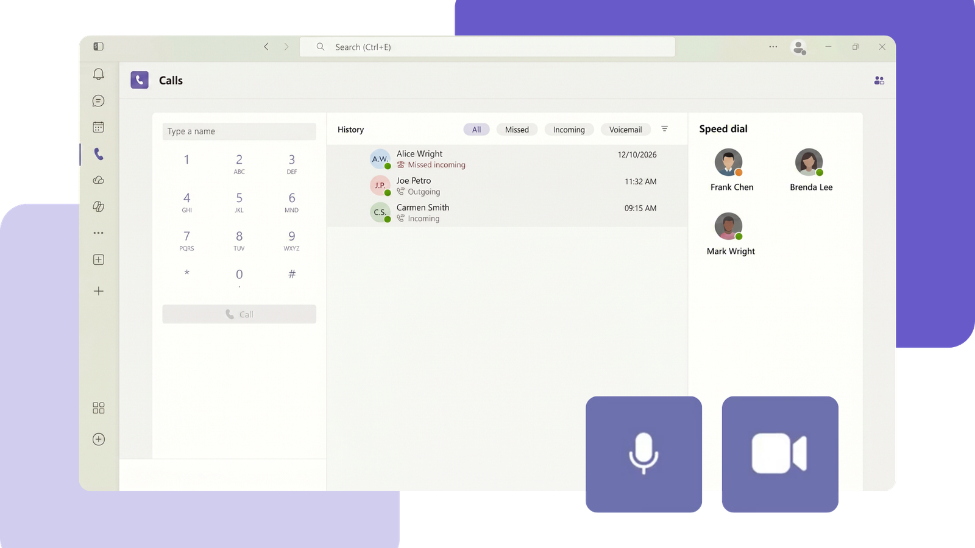
Access4 has integrated Microsoft Teams calling into its SASBOSS platform, enabling channel partners to sell three voice platforms through a single wholesale service.
The UK-based cloud communications provider has added Teams calling through UCTeams, its Microsoft-certified operator connect service. The integration allows partners to offer customers a choice of Microsoft Teams calling, hosted voice or a combination of both, while managing quotations, provisioning and billing through SASBOSS.
The platform is designed to simplify the management of multiple voice services, which have traditionally required separate suppliers, portals, contracts and invoices. Access4 says the integration will allow partners to serve businesses with different communications requirements without managing multiple wholesale relationships.
“Teams calling on its own is a price comparison, and nobody needs another one of those,” said Jonathan Walker, CEO UK and Ireland at Access4. “The margin sits in what goes alongside it. Bringing Teams into SASBOSS means partners can sell it next to the voice services they already offer, then build each account out with contact centre, recording and integrations from the same platform. That is how a voice line becomes a long-term customer.”
SASBOSS is organised around three areas: unified communications, customer experience and user experience. Partners can use the platform to add contact centre services within Teams, call recording through Dubber and other user experience tools. Access4 operates a wholesale billing model, invoicing partners rather than end customers. This allows partners to set their own prices, manage customer billing and retain their margins across the services they provide.