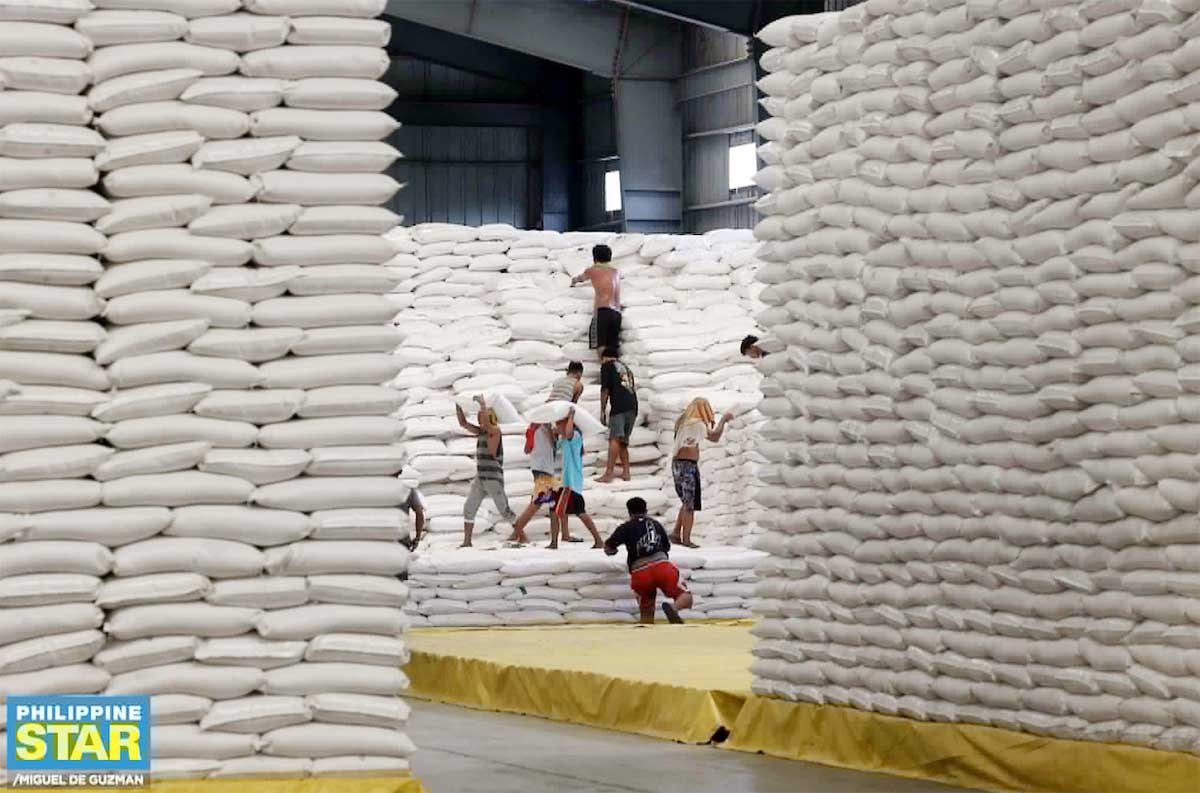
This will mark the National Food Authority’s fourth rice auction, typically conducted to raise additional funds to purchase more palay or unhusked rice and clear more space for purchases of rice stocks.
The National Food Authority (NFA) plans to auction more than one million bags of aging rice stocks in June as part of the agency’s move to generate additional funds and free up warehouse space for the upcoming harvest season.
NFA administrator Larry Lacson said on Monday, May 25, they are planning to auction more than one million 50-kilo bags of rice stocks or about 50,000 metric tons (MT) of milled rice by June.
This will mark the NFA’s fourth rice auction, typically conducted to raise additional funds to purchase more palay or unhusked rice and clear more space for purchases of rice stocks.
Lacson said the NFA is now finalizing the floor price and guidelines for the auction.
He added that the floor price for aging rice may slightly increase, based on the NFA’s current numbers on prevailing prices of local and imported rice.
Lacson said the agency remains confident of strong participation in the auction despite the P50 per kilo price cap on imported grain and the P53 per kilo suggested retail price for rice.
“If the price of rice is high, it’s more attractive to buy at the NFA auction because it’s cheaper. If the price goes down, of course, the interest in auctions may decline but we are expecting that many will participate,” Lacson said.
He added that future rice auctions would gradually decline as the government allocates most of the rice stocks toward its subsidized P20 per kilo rice program
Meanwhile, the NFA is targeting total rice buffer stocks to reach 790,000 MT by the end of the year. About 300,000 to 350,000 MT is targeted to be purchased in the first half, while the remaining will be procured in the latter half of the year.
Lacson said NFA procurement only reached about 25,000 MT out of its up to 350,000 MT target for the first semester.
“We’re still low, but if you look at the performance month-to-month for May and April it suddenly shot up,” he added.