Local communities fed up with corruption and inefficiency as the Philippines continues to experience more deaths and devastation from disasters are standing up, leading the frontlines and creating their own means to ease climate-related threats.
The Center for Disaster Preparedness Foundation (CDP), a civil society organization that advocates for community-based disaster risk reduction and management, said effective initiatives are “quietly emerging in 18 local communities around the Philippines.”
The CDP said there have been strides in the government’s disaster risk reduction approach but are “mostly top-down, project-based, and reactive.” The 18 community-led practices have quietly developed “unnoticed in the national thrust for disaster resilience.”
Mayfourth Luneta, CDP deputy executive director, said more will be added to the 18 initiatives in Luzon, Visayas and Mindanao, adding, “We are harnessing a culture of innovation and creativity in local communities using existing resources to develop solutions based on local conditions.”
“We are all frustrated when billions of pesos meant for protecting Filipinos through better infrastructure go to corruption, and we must make government accountable,” Luneta said.
“We can continue to push back and protest but people thought of better ways to do that – by empowering themselves to design proactive and effective initiatives of protection,” she added.
Luneta is also the vice president of the Asian Disaster Reduction and Response Network, with over 70 civil society organizations in over 20 Asia Pacific countries under which the CDP, which has partnered with more than 200 barangays in the Philippines, is a member.
The 18 organizations that CDP chose to support launched on March 13 the Kalipunan ng mga Tagapaglikha para sa Katatagan ng Komunidad (KATATAGAN), an alliance of people’s organizations from diverse sectors.
It was formed through the CDP’s “Pinnovation Academy Project” that urges communities to identify the problems before, during and after disasters and develop and test “Pinoy innovations” that address emergency response on typhoons, flooding, landslides, drought, mental health, food security, transportation, agricultural sustainability, forest and coastal management.
KATATAGAN said “community-led innovation does not replace government responsibility but rather strengthens it” as it intends to strengthen partnerships and local governance.
Merging data with lived experience, culture, indigenous insight
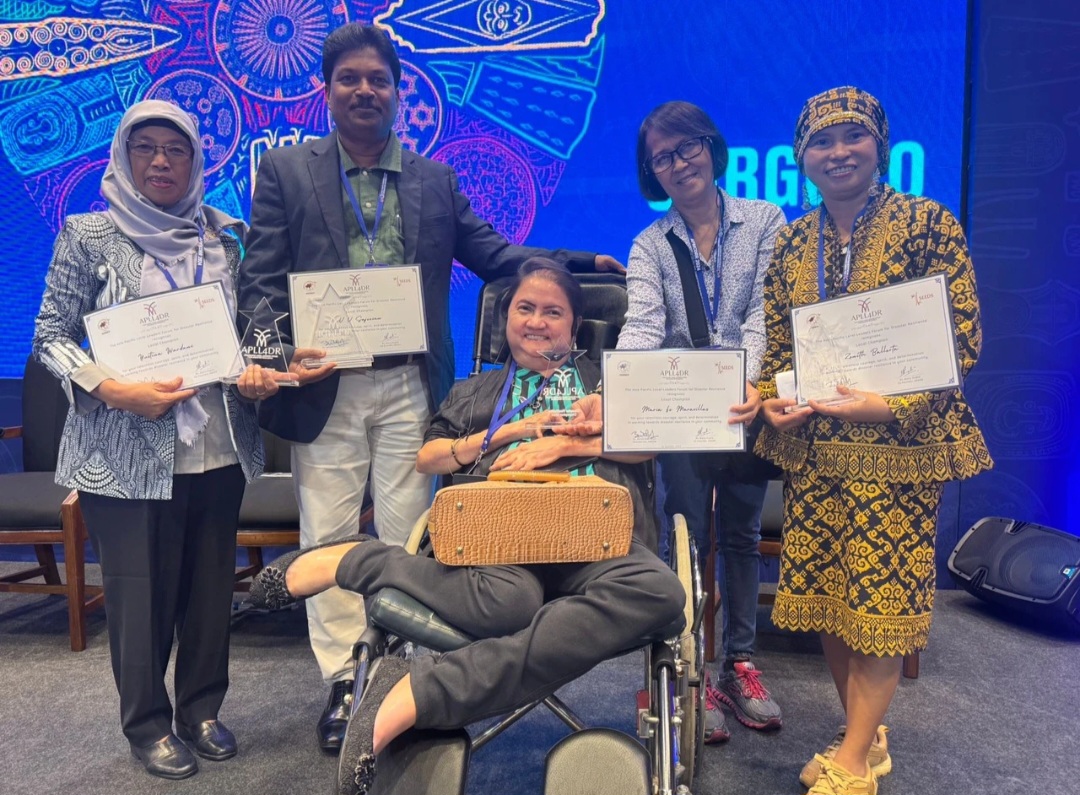
Maria Fe Mejia Maravillas, convener of KATATAGAN who also heads the Las Piñas Persons with Disability Federation, said during the March 13 event that “persons with disabilities (PWDs) and senior citizens face the most difficulties during disasters,” citing her experience as a wheelchair-bound PWD.
Her organization’s “Accessible Transportation Mobile Service for Persons with Mobility Concerns (A-TRAMS)” that transports PWDs and senior citizens on wheelchairs for safe and efficient evacuation, is one of the 18 Pinnovation Academy-selected services.
She said the A-TRAMS, which is supported by the local government for use in four barangays, is a modified barangay vehicle that has a wheelchair conveyor, handle, lock and seatbelt.
“Our transport service is expanding to the 20 barangays in Las Piñas. We are in touch with our local government and other agencies and groups to partner with and coordinate,” she said.
Zenith Ballerta from the Teduray indigenous group in Maguindanao is the president of the Pandan Tri-people Women’s Organization that manages the Lawi Fetinanaan (House of Healing), which produces herbal teas, liniment, oils, soap and other naturally derived remedies.
“Our House of Healing combines traditional healing practices and current disaster preparedness approaches. We’re situated near a hospital so we coordinate in preventing disease and harm on people,” she said.
Another initiative in Tagum City, Davao del Norte is “Lingkuranan sa Kagawasan” (Wheelchair of Freedom), a project of Barangay San Isidro PWD Association headed by engineer Darlito Palermo, that produces customized, rattan wheelchairs for children aged 12 and below with disabilities and with orthopedic impairments.
“These children need wheelchairs specific to their size and weight, so we developed these assistive wheelchairs so that they can continue playing or studying,” he said of the wheelchairs handcrafted by the group’s PWD members.
“We came up with an innovation that frees children from physical constraints, and this means embracing inclusion and freedom.”
Palermo said the project will seek government approval for mass production to reach more children in need and will also partner with the Philippine Health Insurance Corporation through its PWD package for free wheelchairs for children.
Building resilience through people
The CDP said the KATATAGAN approach aligns with the Philippine Disaster Risk Reduction and Management Act, the National Climate Change Action Plan, and global frameworks such as the Sendai Framework for Disaster Risk Reduction.
CDP executive director Luneta said as climate risks continue with more frequency and devastation in the Philippines, “We will need to improve on building resilience by thinking of becoming a more adaptive and stronger people.”
She said many people in their partner barangays broke down witnessing congressional hearings of government officials, along with contractors, for irregularities dating back 15 years amounting to billions of pesos meant for in flood control and other infrastructure.
“These communities are able to create initiatives with scarce resources in difficult environments, and billions are lost to corruption,” she said.
The National Disaster Risk Reduction and Management Council noted 23 typhoons in the Philippines in 2025, including geological dangers such as earthquakes and volcanic eruptions.
In the World Risk Index 2025, the Philippines ranked among the top three disaster-prone countries in the world and one of the top countries adversely affected by extreme weather events from climate change.