The new Chowking mobile app gives customers a more convenient way to enjoy their favorite Chinese-inspired dishes while unlocking exclusive offers and benefits.
Source link
Author: Merrel Briona
-

Chowking makes every 'Sarap Mag-Chow' moment easier with new app
-
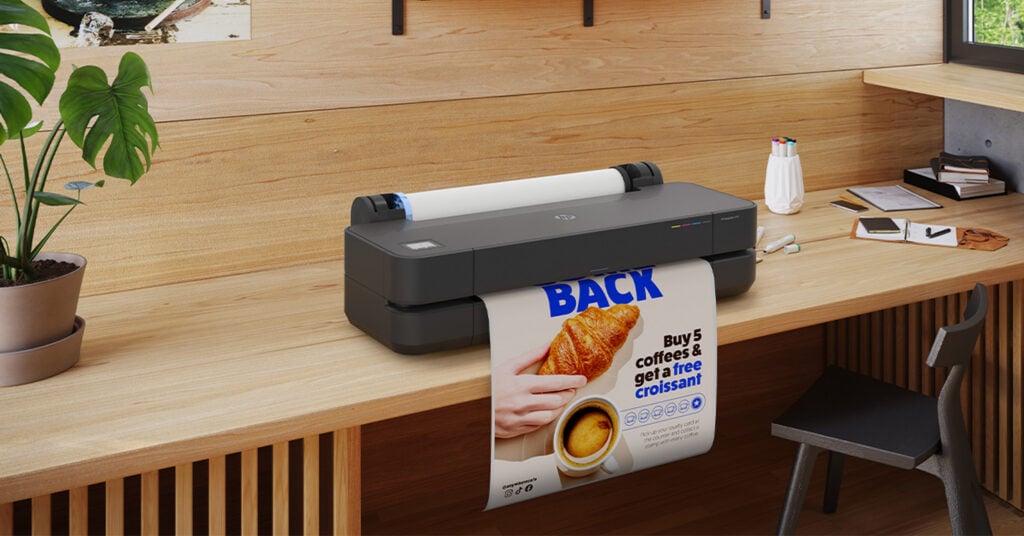
HP DesignJet T250 printer places professional printing in users’ hands
From printing menus to educational posters, technology company HP’s DesignJet T250 printer gives businesses the ability to design and print high-quality materials in house.
Described by the brand as the “world’s smallest plotters”, with HP DesignJet T250 users can customise thousands of professionally created templates and print content on-site when required.
The printer can be used for everything from designing large-format posters to advertising a new product or an event.
It can also print branded communications or create retail displays, among other materials. According to HP, this benefits multiple industries, from food and culture to education and design.

Businesses can print everything from marketing deals to educational posters and menus HP explained that this flexibility redefines the professional printing workflow by giving businesses control over the creative and operational process, reducing their reliance on external printing providers.
This also results in increasingly flexible timelines, with in-house designers able to tweak their design, then quickly print another copy.
According to HP, the printer also gives brands and companies greater control over costs.
This is particularly useful to smaller businesses, entrepreneurs and creative studios, it explained, where developing professional marketing materials can be expensive and time-consuming.
Instead, HP DesignJet T250 places control into user’s hands by giving them a fast and flexible way to bring creative ideas to life.

It is described by the brand as the “world’s smallest plotters” According to HP, click software incorporated into the device further streamlines workflow by providing an easy print experience and helping ensure prints are produced as intended.
“By bringing design and large-format printing together in one accessible solution, the HP DesignJet T250 helps small businesses and creative professionals create impactful visual communications without the complexity traditionally associated with professional printing,” the company said.

Users can purchase an HP DesignJet T250 with a year’s worth of Canva Pro included The HP DesignJet T250 is compact enough to be placed in small workspaces, offices or studios. It was made from at least 40-per-cent recycled plastic and is the first HP large-format plotter to contain recycled metal.
Users can also save 65 per cent energy when using the printer’s on/off auto-scheduler, according to the brand.

Users can customise thousands of professionally-created templates For a limited time, users can purchase an HP DesignJet T250 with a year’s worth of Canva Pro included. According to HP, this gives designers everything they need to create and print professional-quality posters from a single workflow.
“The combination of Canva’s intuitive design platform and the HP DesignJet T250 creates a seamless workflow that allows users to move from concept to final print with ease,” said HP.
To learn more about HP DesignJet T250, visit HP’s website.
Read more
-

Kip Oebanda reveals Marian Rivera only asked for 1-day TF for 'Balota'
Kip Oebanda revealed that Marian Rivera only asked for the equivalent of one day’s talent fee for her starring role in the 2024 Cinemalaya film “Balota.”
Source link -

PNP: No evidence linking Thomas Markle Jr. to child sex abuse case
The Philippine National Police (PNP) on Monday said it has found no evidence linking Thomas Markle Jr., son of Thomas Markle Sr., to the child sexual abuse case involving his father.
Source link -
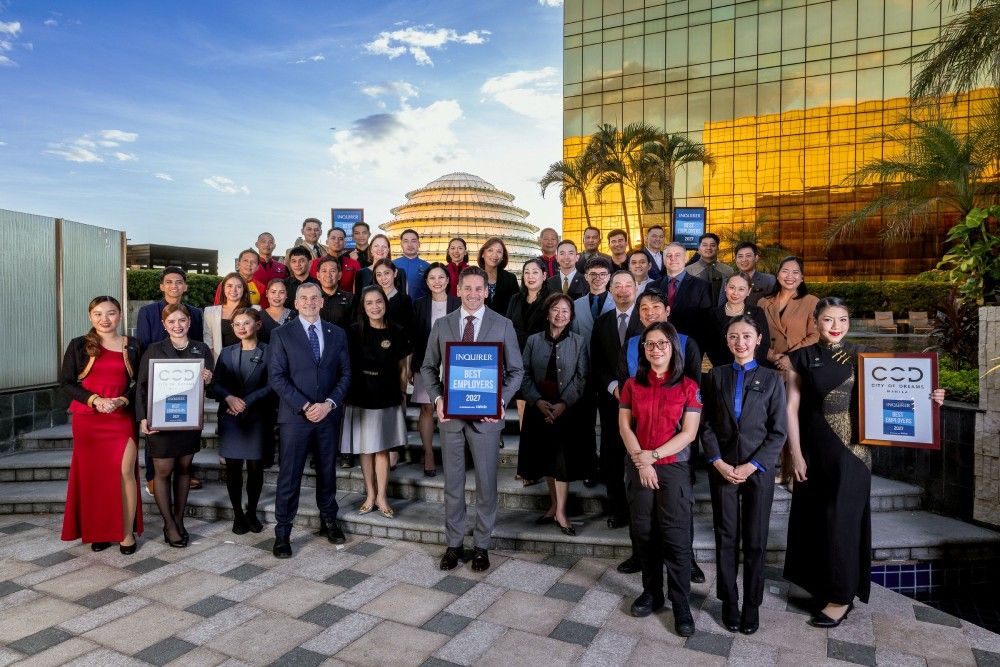
City of Dreams Manila tops Philippines’ Best Employers 2027 rankings in the Travel and Leisure category
City of Dreams Manila also ranked No. 53 overall among the 300 companies selected.
Source link -

There Are Now Growing Signs That AI Is Hurting Employment in the Job Market
Despite a visibly degrading job market and widespread anxiety around AI automation, empirical evidence definitively linking the two phenomena has been hard to come by. Until now, at least.
New reporting by the Financial Times details two new sources of data pointing to AI’s impact on the labor market.
First, there was a new analysis by US-based financial researcher Eric Basmajian, who recently wrote in a post on social media that “AI productivity gains are showing up” in jobs data — with the caveat that only about 15 percent of jobs seem to be impacted so far.
“The three heaviest AI adopters (information, professional services, finance) went from a 2.2 percent productivity trend to 5.0 percent since 2022,” Basmajian explained, pointing to incremental gains in workplace productivity coinciding with a high AI adoption rate.
The very next day after Basmajian’s post, what appears to be an internal Goldman Sachs report began circulating on social media. It warned that the “AI labor market impact” has been spreading beyond tech work — a field that has already been hit hard as generative AI becomes a common tool for writing software code.
The report shows a rising trend between an industry’s AI exposure and unemployment around non-tech professional sectors like finance, telecomms, technical services, and administration, seemingly reinforcing Basmajian’s assertion.
But while there does seem to be a positive trendline in at least some areas of the job market, the FT tacks on a veritable laundry list of disclaimers.
Perhaps most importantly, the metrics looking at “productivity” in these cases aren’t necessarily reflective of quality — meaning we’re not necessarily talking about skyrocketing productive output and revenue as a result of AI, but of lower headcount, which is a big difference.
The data is also specifically about the US, pointing to broader post-Pandemic economic woes rather than a global AI jobpocalypse. As the FT explains, the “link that was visible in the US between AI usage on the one hand, and productivity growth and falling employment on the other, is conspicuously absent elsewhere.”
Either way, it seems the AI doomers finally have something to write home about as far as the labor market is concerned — though anyone preparing their bunker for a hypothetical AI labor revolution is going to have to keep on waiting.
More on AI and labor: Support for Unions Is Spiking as AI Threatens Jobs
-

Gemini 4 Launch Moves Up: GOOGL Down 3.8% [Apr 2026]
Google DeepMind’s new chief says the Gemini 4 launch is coming “much earlier” than the end of 2026, and the model has already entered early post-training. The Verge reported that Koray Kavukcuoglu made the remarks in his first media appearance as head of the division, speaking with The Information. No release date, price, benchmark score or spec sheet came with them.
The comments landed at The Information’s AI Agenda Live Summit on September 23-24, 2026, and they still frame the AI race on November 9. Six weeks later, the open question is the same one investors and developers asked that week: when does Google ship a new flagship, and does it close the gap with OpenAI, Anthropic and Meta? This analysis separates what Google’s DeepMind chief actually said from what the market and headline writers added.
Here is the short version. Google has promised speed but not a date. Rivals have shipped new flagships since September. Meta’s Muse agent keeps adding features. And anyone choosing between assistants today, as our Gemini vs ChatGPT plan comparison shows, is still buying on the current Gemini lineup, not on a model that has no public release.
Google · Preferred SourcesDon’t miss new tech stories on Google
Add Tech Insider once in the Google app and our stories appear in your news suggestions.
Add Now
What Kavukcuoglu Said About the Gemini 4 Launch
Three claims sit at the center of the story. First, Gemini 4 has entered the early stages of post-training, the phase where a base model gets refined so it behaves reliably. Second, Kavukcuoglu expects the model to launch much earlier than the end of 2026. Third, Google plans to put out an early post-training output rather than wait for a fully polished release.
His own words on the third point, as carried by The Verge, were: “Our intention is to, like, as soon as possible, to release an early post-training output because we see the results and we are excited.” He added that Google DeepMind would “continue the fast-paced iterations” once that first output is out. That phrasing signals a staged rollout, with a rough first release followed by quick updates, instead of one big launch day.
What he did not say matters as much. He gave no calendar date. He gave no model size, no context window, no pricing and no benchmark result. The Decoder reported that Google is still working on safeguards and safety testing, and that engineers already use the model internally for Antigravity, the company’s coding tool. Those are the only operational details the cited reports offer.
Confirmed Facts Versus Open Questions
A story this crowded invites loose claims, so it helps to sort them. The table below lists what named outlets reported and what remains unconfirmed as of November 9, 2026. If a detail sits in the right-hand column, treat any site that states it as fact with suspicion.
Claim Status Source Gemini 4 is in early post-training Confirmed by Google DeepMind’s chief The Verge, The Decoder, Stocktwits via Yahoo Finance Launch expected “much earlier” than end of 2026 Confirmed (stated intent, not a commitment) The Verge, The Decoder Early post-training output to ship “as soon as possible” Confirmed (stated intent) The Verge, The Decoder Remarks made at The Information’s AI Agenda Live Summit Confirmed The Verge, The Decoder, Stocktwits Specific Gemini 4 launch date Unconfirmed None Price, model size, benchmarks, context window Unconfirmed None Gemini 4 is a direct answer to Meta’s Muse Unconfirmed Google has not framed it that way Speaker was Demis Hassabis Incorrect, the cited reports name Kavukcuoglu The Verge, The Decoder Who Said It: Kavukcuoglu, Not Hassabis
Some headlines on this story credit Demis Hassabis. That attribution is wrong. The Verge and The Decoder both identify Koray Kavukcuoglu as the speaker, and both describe the summit appearance as his first public outing in the new role. Hassabis stepped down as DeepMind CEO in August, according to those reports.
The Decoder adds that Kavukcuoglu, previously the CTO, runs day-to-day operations without the CEO title, and that Hassabis now chairs the unit and serves as Alphabet’s chief scientist. The same report says all Gemini development is moving to the Bay Area. That detail matters for reading the speed pledge. A division that treats Gemini as a product line, with a product chief at the helm, will talk about shipping dates differently than a lab built around research milestones.
The shift in tone showed up in how Kavukcuoglu handled the AGI question. He told the audience that whether the field has achieved AGI is “not the right conversation,” and steered toward whether labs can build intelligent agents people can trust. His predecessor had spent years framing DeepMind’s mission around AGI. The change in vocabulary tells you where the incentives now sit.
What Early Post-Training Means for Gemini 4
Frontier models move through two broad stages. Pre-training builds the base model from huge datasets. Post-training then shapes that base into something usable, through supervised tuning, preference learning, safety work and tool-use training. Stocktwits, in the piece syndicated on Yahoo Finance, described post-training as the process of refining a base model for reliability and performance.
Why “early” is the operative word
Kavukcuoglu did not promise a finished model. He promised an early post-training output, which implies a checkpoint that Google considers good enough to show users while the work continues. Labs have used this pattern before, shipping a preview and then tightening behavior over several weeks. The risk is obvious. Early checkpoints can ship with rough edges in tool calling, refusals and long-task stability, exactly the traits that agent users notice first.
What the reports leave out
None of the named outlets gave a parameter count, a training-compute figure or a benchmark number for Gemini 4. Some aggregator pages quote precise pre-training dates and durations. We could not tie those to a named primary source, so we leave them out. The same rule applies to any leaked score that circulates before Google publishes a model card.
Why Google Needs a Gemini 4 Launch Now
The urgency comes from the calendar. The Verge noted that Google has not released a new flagship since the Gemini 3 series in November 2025. The Decoder filled in the gap: Gemini 3.1 arrived in February, followed by several smaller and cheaper Flash models. CEO Sundar Pichai announced Gemini 3.5 Pro at I/O in May for a June release, yet it never shipped. The Decoder, citing the Financial Times, reported that the project missed three deadlines.
Kavukcuoglu acknowledged the detour. He said the company “took a little bit of a step back” and prioritized faster Flash models. He did not say whether Gemini 3.5 Pro is officially canceled. When asked about falling behind, he answered, “In my mind, it’s a certainty that we are always gonna be at the frontier.” That is a confident statement from an executive whose company has no new flagship on the shelf, and readers should weigh it as a goal, not a result.
The table below puts the recent flagship cadence side by side. Every row comes from the reports cited above.
Date Event Reported by Nov. 2025 Gemini 3 series, Google’s last flagship release The Verge Feb. 2026 Gemini 3.1 update, plus smaller Flash models The Decoder May 2026 Pichai announces Gemini 3.5 Pro at I/O for June The Verge, The Decoder June 2026 Gemini 3.5 Pro does not ship, three deadlines reportedly missed The Decoder (citing FT) Aug. 2026 Hassabis steps down as DeepMind CEO The Verge, The Decoder Sept. 1, 2026 Anthropic unveils Claude Fable 5.1 Stocktwits via Yahoo Finance Sept. 3, 2026 OpenAI launches GPT-6 Astra Stocktwits via Yahoo Finance Sept. 23-24, 2026 Kavukcuoglu says Gemini 4 is in early post-training The Verge, The Decoder How Meta’s Muse Fits the Story
Muse is Meta’s personal AI agent, and its rollout has been fast. According to the Meta Newsroom feed, the company introduced Muse on September 8, 2026, billing it as a personal AI agent built for everyone. PPC Land reported that the first rollout covered the US across iOS, Android, muse.ai and a WhatsApp chat surface, and that Canada was added later.
The pace since then has been steady. The table lists the Muse announcements visible in the Meta Newsroom feed. Titles are Meta’s own, so treat feature details beyond the titles as unverified unless a named outlet covered them.
Date Meta Newsroom item Apr. 8, 2026 Introducing Muse Spark, MSL’s first model July 7, 2026 Introducing Muse Image Sept. 8, 2026 Introducing Muse, the personal AI agent Sept. 24, 2026 The Biggest News From Connect 2026 Sept. 29, 2026 Muse for Small Business Oct. 12, 2026 Muse Wonder and Muse Wonder Full, frontier models for agents Oct. 28, 2026 Muse available in Singapore Nov. 5-6, 2026 Muse voice and expressive avatars, plus app customization The September 29 business push is the most concrete. PPC Land reported that Meta added connectors to 15 third-party tools, including Shopify, Intuit QuickBooks, Klaviyo, Stripe and Canva, alongside Facebook Pages, Instagram professional account analytics and Meta ad accounts. Meta says nothing publishes, sends or spends without the owner’s approval. That is an agent product with distribution through apps that billions of people already open, which is a different competitive threat than a model that wins a leaderboard.
Is Gemini 4 Google’s Answer to Muse?
The headline version of this story says yes. The evidence says maybe, and Google has not said so. Kavukcuoglu’s remarks, as quoted by The Verge and The Decoder, never mention Meta or Muse. The Verge noted that Hassabis announced great progress on Gemini 4 before he stepped down in August, which puts the work ahead of Muse’s September 8 debut.
The link comes from the market side. The Stocktwits piece on Yahoo Finance said Alphabet’s selloff that week was driven by investor concerns about competition from Meta’s Muse agent, which had climbed to the top of the US free-app charts. So the framing of Gemini 4 as a reply to Muse comes from financial coverage of the stock reaction, not from Google. We treat it as an interpretation. It is a reasonable one, because the timing of the announcement and the stock move overlapped, but it remains unconfirmed.
There is also a category difference. Muse is a consumer and small-business agent product. Gemini 4 is a model. A fair comparison puts Gemini 4 against Meta’s underlying Muse models, and puts Google’s own agent surfaces against the Muse app. Until Google ships an early Gemini 4 output and publishes details, neither comparison has numbers behind it.
Market Impact: Alphabet Shares and the Agent Trade
The market reaction gives the clearest read on how much weight investors put on the Gemini 4 launch. Stocktwits reported that Alphabet closed 3.8% lower in the regular Wednesday session, its worst drop in more than a month, and lost nearly 5% across two straight sessions. After Kavukcuoglu’s remarks, GOOGL rose 0.6% overnight. Retail sentiment on the platform improved over the week and read “extremely bullish” late Wednesday, though some traders argued the Muse threat was overstated.
Those numbers describe one week in September, not the current price, so don’t read them as a November quote. They do show how a single timing comment from a research chief can move sentiment on a megacap. The broader backdrop has stayed jumpy. Our coverage of the AI sell-off that hit the Nasdaq shows how quickly sentiment on AI names can flip, and a delayed or underwhelming Gemini 4 would feed that nervousness.
Capital intensity sits underneath all of this. OpenAI’s reported $11 billion raise at a $1.25 trillion valuation shows how much money rivals are pulling in, and Google is spending to keep pace on infrastructure too, including its plan around a $17 billion Wyoming data center site. The Decoder also reported that Google began selling its TPUs directly to customers this year, and that Kavukcuoglu said new models show hardware engineers how to design the next two or three generations of chips. A strong Gemini 4 therefore carries a hardware angle, not just a software one.
Competitive Comparison: Google, OpenAI, Anthropic and Meta
Rivals moved first. Stocktwits reported that Anthropic unveiled Claude Fable 5.1 on September 1 and OpenAI launched GPT-6 Astra on September 3. The Decoder wrote that Anthropic released its Mythos and Fable family in the spring and updated it, along with the Opus line, in September, and that OpenAI has been rolling out GPT-6 models since early September. The Verge said both outperform Gemini 3 and give those providers a sizable lead.
Meta plays a different game. Its Muse line spans a model tier (Muse Spark, Muse Wonder) and a product tier (the Muse agent), and it ships on a weekly rhythm. Google has the opposite profile. It has reach through Search, Android and Workspace, plus the TPU business, but a flagship gap. Anthropic’s path to public markets adds another pressure point, which we covered in our look at the Anthropic IPO and its 22 banks.
The takeaway: Google’s weakness is cadence, not capability. The Decoder noted that Gemini 3 was such a leap that OpenAI declared a “Code Red” and only pulled level again with GPT-5.2. If Gemini 4 repeats that pattern, the shipping gap will matter less. If it lands as a modest step, the gap widens, because Anthropic, OpenAI and Meta all keep moving.
Historical Context: From Code Red to Gemini Factory
DeepMind’s role inside Alphabet has changed twice in four years. After ChatGPT arrived, Google merged Google Brain and DeepMind into Google DeepMind during its first “Code Red,” according to The Decoder, and the Gemini name came from that merger. The London team kept a special status for years. The August reshuffle, with Kavukcuoglu running operations and Gemini development moving to the Bay Area, ends that era in the eyes of the report’s sources.
The Decoder quoted a former Google executive, speaking to The Guardian, saying the era of DeepMind as an independent actor is over. It also cited the Financial Times on executive frustration that Hassabis gave commercial needs less weight, with the open release of AlphaFold as one example. The report called it unclear how voluntary Hassabis’s exit was, and said Google had not commented on claims from an industry newsletter.
Read against that history, the Gemini 4 pledge is a product-org statement. The company that built AlphaFold now measures itself by release cadence against OpenAI and Anthropic. Whether that shift speeds up good research or squeezes it is a debate, and The Decoder framed the change as complete.
DeepMind’s Leadership Reset and the Talent Question
Departures reported around the reset
The Decoder listed a string of exits it attributed to the talent drain: Noam Shazeer to OpenAI in June, AlphaFold Nobel laureate John Jumper to Anthropic, and Gemini researchers Jonas Adler and Alexander Pritzel to Anthropic as well. It also cited Fortune for a hiring statistic. DeepMind’s ratio of new hires to departures fell from about 12 to 1 in the second quarter of 2023 to roughly 2 to 1 in the third quarter of 2026.
Why it bears on the launch date
A launch promise depends on the people who train and tune the model. Post-training in particular rewards experience, since small choices in data mixes and reward design change how a model behaves in agent loops. Kavukcuoglu told the audience he is fully confident in his team, and The Decoder quoted him calling it insanely strong. Outside observers can’t test that claim until a checkpoint ships, which is another reason an early release helps Google: it replaces assurances with something users can run.
What Developers and Buyers Should Do Now
Practical advice starts with a plain rule: plan around what is shipping. If you build on the Gemini API today, keep your integration tied to the current model versions and abstract the model name behind configuration, so a swap to a new Gemini 4 checkpoint takes a config change and an eval run, not a rewrite. Google’s own Gemini model page is the place to confirm official availability once a release happens.
Teams should also build a small regression suite before any new checkpoint arrives. Pick 30 to 50 prompts that match your workload, record current outputs and scores, and rerun them the day a new model appears. Early post-training outputs can shift behavior, so a repeatable test beats first impressions. Our blind-test method for ranking AI chatbots shows one way to run that comparison without brand bias.
Consumers face a simpler call. Don’t cancel or delay a subscription in anticipation of a model with no date. Our rundown of AI chatbots by budget covers what each tier buys today, and the AI and machine learning section tracks launches as they land.
Predictions: Five Calls on the Gemini 4 Rollout
These are editorial forecasts, not reported facts, and each one could prove wrong. We include them because readers ask what happens next.
- Google ships a preview before a finished model. The stated plan is an early post-training output followed by fast iterations, so expect a labeled preview or limited-access release first.
- The first release targets coding and agents. Engineers already use the model internally for Antigravity, and the competitive pressure from Muse and rival agent products points the same direction.
- Benchmarks arrive with the release, not before. Google gave no scores in September, and labs rarely publish numbers ahead of a launch.
- Rivals answer within weeks. OpenAI, Anthropic and Meta ship on short cycles, so any Gemini 4 lead would face a response quickly.
- Alphabet shares react to the release, not the promise. The September move showed sentiment can swing on timing comments, but a real checkpoint with real scores will carry more weight.
What to Watch Before the Gemini 4 Launch
Four signals will tell you more than any rumor. First, a Google announcement naming the early post-training output and its access tier. Second, a model card or technical blog post with benchmarks and safety notes. Third, any update on Gemini 3.5 Pro, which remains in limbo according to the reports. Fourth, Meta’s next Muse step, since the Meta Newsroom feed shows new Muse features as recently as November 5 and 6.
As of November 9, 2026, none of the sources we reviewed reports that Gemini 4 has shipped or carries a date. That gap is the real story. Google has told the market that a launch is near, and the market will hold it to that standard.
FAQ: Gemini 4 Launch, Kavukcuoglu and Meta’s Muse
When is the Gemini 4 launch date?
Google has not announced one. Koray Kavukcuoglu said the launch should come much earlier than the end of 2026, and that Google wants to release an early post-training output as soon as possible. That is a stated intent, not a scheduled date.
Who announced that Gemini 4 is coming earlier?
Koray Kavukcuoglu, who leads Google DeepMind. The Verge and The Decoder both name him, and both say the remarks came at The Information’s AI Agenda Live Summit. Some headlines credit Demis Hassabis, but that attribution is not supported by the cited reports.
What does early post-training mean?
It is the refinement stage after a base model is built. Stocktwits described it as the process of refining a base model for reliability and performance. Google plans to release an early output from this stage and keep improving it in quick iterations.
Is Gemini 4 a response to Meta’s Muse?
That is unconfirmed. Google has not tied Gemini 4 to Muse. The link comes from financial coverage, where Stocktwits tied Alphabet’s September selloff to investor worry about Muse and then noted Kavukcuoglu’s comments as a new data point.
What happened to Gemini 3.5 Pro?
Pichai announced it at I/O in May for a June release, but it never shipped. The Decoder, citing the Financial Times, reported that the project missed three deadlines. Kavukcuoglu said Google took a step back to focus on faster Flash models, and he did not say whether the model is canceled.
What do we know about Gemini 4 specs and pricing?
Nothing confirmed. No named outlet has reported a model size, context window, benchmark score or price. Treat any figure you see before an official Google release as unverified.
Should I wait for Gemini 4 before choosing an AI assistant?
No. With no date and no confirmed specs, a purchase decision should rest on what ships today. If you build on an API, keep your model choice configurable so you can test a new checkpoint the day it appears.
How is Muse different from a model like Gemini 4?
Muse is Meta’s personal AI agent, a product that completes tasks on a user’s behalf, according to Meta’s newsroom posts. Gemini 4 is a model. The fairer comparison pairs Gemini 4 with Meta’s Muse models and Google’s agent surfaces with the Muse app.

-

Vivamax bombshell Alecca Adarna umaming may ADHD
Shiena Yu at Alecca Adarna NAGING bukas ang Vivamax actress na si Alecca Adarna sa kanyang mental health issue nang humarap siya sa entertainment media recently.
Si Alecca ang isa sa mga host ng latest content ng VMX, ang “Bida Max” with Shiena Yu, mula sa direksyon ni Christian Paolo Lat.
Bukod sa pagiging aktres, isa ring negosyante, painter, pilates instructress at certified acupuncturist si Alecca.
Kuwento ng dalaga, na-diagnose siya ng ADHD noong nasa high school siya pero siniguro niyang hindi ito magiging hadlang sa pagtupad sa kanyang mga pangarap sa buhay.
Base sa isang health website, ang ADHD o attention deficit/hyperactivity disorder, ay isang kondisyong neurodevelopmental (may kinalaman sa pag-unlad at paggana ng utak).
Maaari itong ipaliwanag bilang isang karamdaman o kondisyon ng hirap sa pag-focus o pagbibigay ng atensyon, labis na pagkabalisa o pagiging hyperactive, at biglaang pagkilos nang walang plano.
“At a very young age, I had trouble talaga with school. I was not the normal kid. I was very rowdy, hard to teach, so my family always had trouble with that.
“Fourteen years-old, fifteen years old was my troubling years talaga,” ang rebelasyon ni Alecca.
Dagdag ng dalaga, “In Cebu naman, hindi big yung mga medication, mental illness. We’re in the province so weren’t really informed.
“Ngayon lang naman yung wave na we understand more about mental illness, but I wouldn’t really consider it as a mental illness. It’s more of like a learning disability,” esplika ni Alecca Adarna.
Baka Bet Mo: Vivamax star inalok ng mayor, senador ng one-night stand; P300K ang tip
“I worked through it. It can be challenging especially when I read lines, memorized lines. but there’s a pro to it. Like me, I have tried working corporate but it’s not forever.
“For the kind of mind I have, perfect yung mga entrepreneurship endeavors, creative ideas. I can do 10 roles and do a good job at it.
“But yung normal roles that people do on a daily basis, I can’t really commit to that.
“Nagbi-business ako, ginagawa ko yung gusto ko at yung creative ideas ko, nag-a-art din ako so I paint, I express my emotions, I also dance,” lahad pa ni Alecca.
Samantala, ang “Bida Max” ay isang 70-minute special feature kung saan muling sasariwain ang mga unang VMX movies na tumatak at ang mga bidang naging Vivamax leading ladies.
Powerhouse ang mga artistang tampok sa special feature na ito kabilang sina AJ Raval, Apple Dy, Aiko Garcia, Christine Bermas, Angela Morena, Jenn Rosa, Azi Acosta, at Angeli Khang.
Balikan kung paano sila nagsimula sa maliliit na roles hanggang sa sila na ang naging bida sa sarili nilang mga pelikula.
Isa sa mga iha-highlight sa special feature na ito ay si AJ Raval at ang naging breakout movie niya sa VMX, ang “Paglaki ko, Gusto Kong Maging Pornstar”. Babalikan din natin ang kaniyang first major solo lead role sa pelikulang “Taya.”
Tampok din sa feature si Aiko Garcia, na ginulat ang mga manonood sa “High On Sex.” Marami rin ang naakit sa kanyang pagganap sa first-ever leading role niya sa VMX na “Haliparot.”
Kasama rin sa mga bida ang nakasama ni Aiko Garcia sa “High On Sex” na si Apple Dy. Muli ring sariwain ang kaniyang pagganap sa kauna-unahan niyang lead role sa VMX na “Punit na Langit.”
Muli ring mapapanood ang mga pelikula ni Christine Bermas na “Siklo” at ang kauna-unahan niyang major role sa “Moonlight Butterfly.”
Featured din si Angela Morena pati ang mga pelikula niyang “Kinsenas Katapusan” at ang “X-Deal 2”, kung saan first time niyang maging co-headliner.
Hindi rin magpapahuli ang mga pelikula ni Jenn Rosa na “Bisyo”, kung saan ginampanan niya ang first-ever role niya sa VMX, at ang “TL”, na naging first lead role naman niya.
Balikan din ang naging supporting role ni Azi Acosta sa “Sitio Diablo” at ang kanyang breakout lead film na “Pamasahe.”
Hindi kumpleto ang throwback feature kung wala si Angeli Khang, na unang napanood sa VMX sa “Taya” at mas nakilala pa ng maraming tagahanga sa kaniyang first lead role sa “Mahjong Nights.”
Walong naggagandahan at nag-uumapaw sa appeal na kababaihan. Panoorin ang special feature na ito na mula sa direksyon ni Christian Paolo Lat.
Mas painitin pa ang inyong panonood sa paborito niyong streaming platform! I-stream na ang “Bida Max”, simula ngayong November 10, 2026.
The post Vivamax bombshell Alecca Adarna umaming may ADHD appeared first on Bandera.
-

Dingdong Dantes on back-to-back milestones of Zia and Sixto: 'Proud is an understatement'
Dingdong Dantes is one proud dad as he attended back-to-back milestones of kids Zia and Sixto over the weekend.
Source link -

Yen Santos, Jameson Blake essay breakup anxiety in PETA play
"The Art of Breaking Up" is an anthology of vignettes dissecting the many-faceted realities of separation, heartbreak, and emotional recovery across multiple generations.
Source link