Nasawi ang isang babaeng balikbayan mula Sweden matapos siyang barilin sa Lapu-Lapu, Cebu. Nahuli ang gunman, pati ang babaeng caretaker na siya umanong utak sa krimen.
Source link
Author: Merrel Briona
-

Balikbayan na mula sa Sweden, patay nang barilin sa Cebu
-
Anker Japan to Launch Sleep-Specific “Sleep Earbuds 4” in January 2027, Aiming to Reduce Pain When Sleeping on Your Side — BigGo Finance
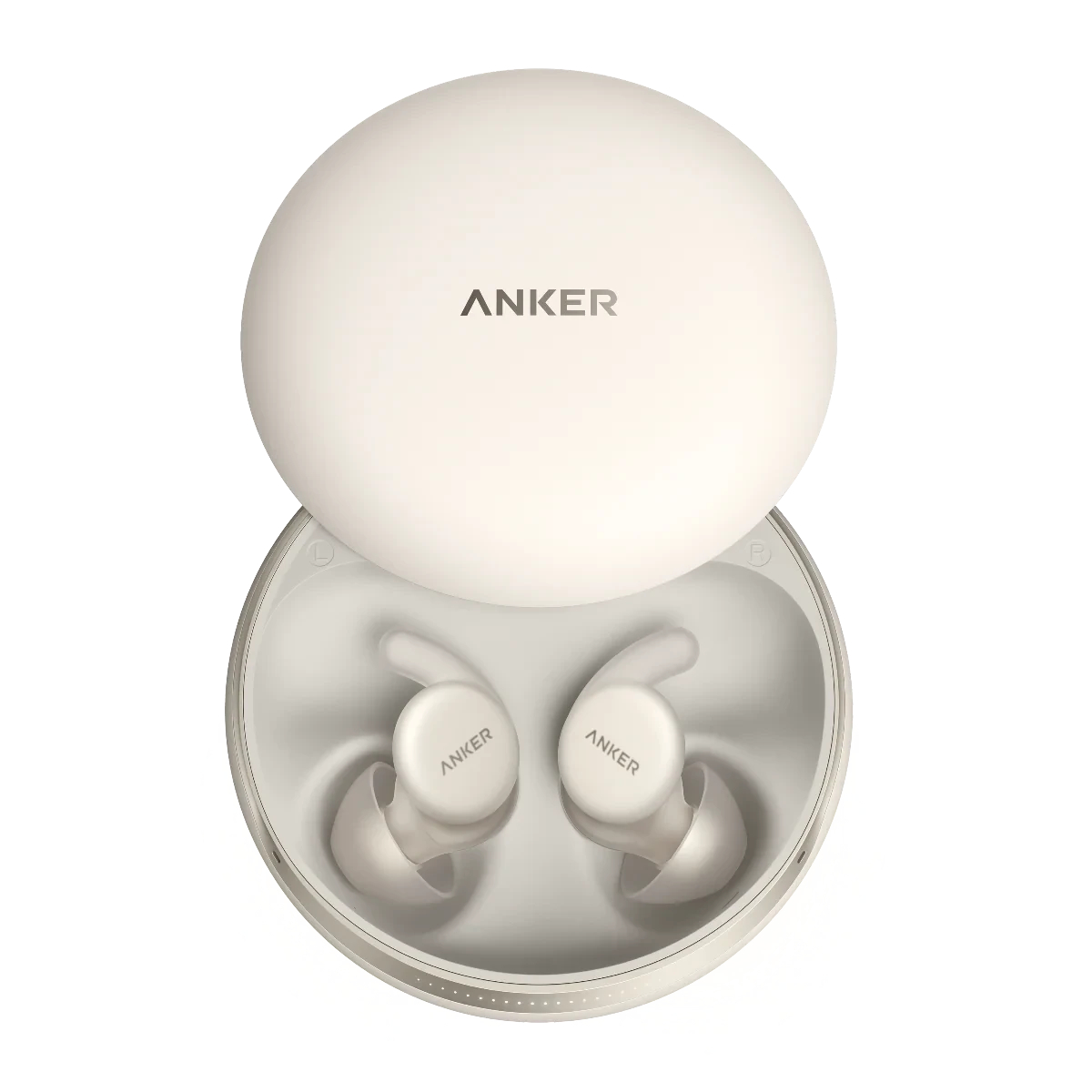
Anker Japan will launch “Anker Sleep Earbuds 4,” a new model of fully wireless earbuds designed to be worn while sleeping, in January 2027. The price is ¥34,880 (approximately $220), tax included. In the “sleep earbuds” market aimed at improving sleep quality, the new model improves both fit and noise reduction performance over the previous model.
The color lineup consists of three options: off-white, pastel pink, and pastel blue. Off-white will go on sale in January 2027, with pastel pink and pastel blue expected to become available from February 2027.
Contact area with the ear reduced by 20%
The new model is positioned as the successor to the “Sleep A30” developed under the Soundcore brand. While the weight per earbud is unchanged from the previous model at about 3 grams, the housing shape has been redesigned. Based on ear-shape data from more than 10,000 people, it adopts a two-tier structure with a stepped design. The contact area with the ear is reduced by about 20% versus the previous model, making the ears less likely to hurt even when sleeping on one’s side.
In terms of sound quality, the placement of the driver unit and microphones has been optimized. The Active Noise Cancellation (ANC) function, carried over from the previous model, has been enhanced, particularly in reducing low-to-mid frequency noise such as the operating sounds of home appliances, outdoor traffic noise, and people’s voices. The reduction amount reaches up to 5dB versus the previous model, according to the company.
Two connection methods can be used selectively. The earbuds feature a “Bluetooth mode” for pairing with a smartphone and other devices, and a “local playback mode” for playing sleep-inducing music or noise stored in built-in memory. They support Bluetooth 6.0 and the SBC and AAC codecs.
With ANC on, continuous playback time is up to about 8 hours for the earbuds alone in Bluetooth mode, and about 32 hours with the charging case. In local playback mode, it is up to about 9.5 hours for the earbuds alone and about 38 hours with the case. The charging case now supports wireless charging. Weight including the case is about 58 grams. The earbuds come with five sizes of silicone ear tips and four sizes of ear wings. A separately sold dedicated foam ear tip is also available.
Sleep-support functions have also been expanded. The charging case is equipped with a “snore masking function” that, when it detects snoring nearby, plays a masking sound at a volume and pitch suited to covering the snoring while adjusting it in real time. The earbuds also feature an alarm that sounds only from the earbuds themselves, a sleep report based on built-in sensors, automatic stopping of music at sleep onset, and a function that plays a sound to help locate the earbuds. Settings are configured through the “Anker Soundcore” mobile app. The earbuds have IPX4-equivalent splash resistance.
Key specs compared with the previous model are as follows.
Item Anker Sleep Earbuds 4 Notes Launch timing January 2027 (some colors in February) Off-white first Price (tax included) ¥34,880 (approximately $220) — Weight per earbud About 3 grams Unchanged from previous model Contact area with ear About 20% less than previous model Two-tier housing Low-to-mid frequency noise reduction Up to 5dB better than previous model ANC equipped Continuous playback (ANC on) Bluetooth about 8 hours / local about 9.5 hours About 32 hours / about 38 hours with case Charging USB-C, wireless charging Wireless is new Splash resistance IPX4 equivalent — Note: Based on the company’s announcement. Continuous playback times are figures for the earbuds alone.
The company has also announced the launch of a higher-end model, “Anker Sleep Earbuds 4 Pro.” It adopts a high-precision sleep analysis function using an optical heart rate sensor and a case equipped with an AMOLED display that can show sleep data and settings. It is scheduled for release around spring 2027 at ¥49,990 (approximately $310), tax included.
Headphones and ear-cuff earbuds also introduced
Anker Japan also brought audio products other than sleep-oriented ones to market the same day. The wireless headphones “Anker Space 2 Pro” are priced at ¥32,990 (approximately $210), tax included, and the ear-cuff earbuds “Anker AeroClip 2” at ¥22,990 (approximately $140), tax included; both went on sale on November 12.
The Space 2 Pro is equipped with the company’s proprietary AI chip “Thus” and eight microphones, raising noise cancellation performance to about 1.5 times that of the previous model (20Hz–2kHz). It features 35mm drivers and supports LDAC and 3D audio. Playback time with ANC on is up to 30 hours.
The AeroClip 2 is the successor to the “Soundcore AeroClip,” with the part that clips onto the ear made about 20% thinner to improve fit. It is equipped with 12mm drivers and supports LDAC, and uses the AI chip “Thus,” four microphones, and two bone-conduction sensors to reduce noise during calls. The charging case is about 20% smaller and supports wireless charging.
In the sleep earbuds space, companies are rolling out products amid growing demand for better sleep. Anker Japan is moving its sleep-specific “Sleep” series from the Soundcore brand to the Anker brand, broadening its price range with a two-model lineup that includes the higher-end model. With the main unit priced in the upper ¥30,000 range—above typical fully wireless earbuds—the key to sales will be how much consumers recognize the value of the sleep use case. For the company, the aim appears to be to solidify its position in the sleep earbuds market, including steering customers toward the Pro model with its sleep data analysis and display functions.
-

Calix Esguerra inispluk management ni Fyang, milyon inilalabas tuwing nominated?
PASABOG ang naging rebelasyon ng “Pinoy Big Brother Collab 3.0” Kapamilya housemate na si Calix Esguerra patungkol sa “Pinoy Big Brother Gen 11” Big Winner na si Fyang Smith.
Habang nag-uusap kasi ang ilang housemates ay napag-usapan nila ang dating big winner na idol niya dahil never itong na-evict kahit lagi siyang nano-nominate.
“Yung manager niya, kilala ko kasi `yung manager niya, si Mannix. Nakakuwentuhan ko kasi `yung manager niya, sabi niya sa akin, na sobrang laki raw nang in-invest nila kay Fyang,” chika ni Calix.
Pagpapatuloy niya, “Na talagang ginastusan nga raw, na parang every week, parang milyon daw ang nilalabas nila. Milyon daw talaga.”
Baka Bet Mo: Calix Esguerra hiyang-hiya nang maghubo sa task ni Big Brother
View this post on InstagramSinagot naman ni Robbie si Calix ng, “Pero ‘yun nga ang point ko, na porket na-nominate ka, ibig sabihin mawawala ka na sa bahay, di ba? ‘Yun lang ‘yon. Huwag mo nang isipin na tapos na ang panahon at oras mo dito. Never say die, pare!”
Agad namang nag-buzzer si Kuya kaya napa-sorry ang binata sa kanyang mga pahayag.
Nag-ugat ang pasabog ni Calix dahil sa nalalapit na eviction night kung saan isa siya sa nanganganib na mapalabas sa Bahay ni Kuya.
Marami naman sa mga faney ni Fyang ang nainis sa mga tinuran ng binata.
Hirit nila kay Calix, hindi lang ang management nito ang dahilan kung bakit ito itinanghal na big winner dahil ibinoto siya ng mga tagasuporta sa outside world.
“Bobo na lang maniniwala dito. Knowing na may limit per maya account. Hahahaha,” saad ng isang netizen.
Comment naman ng isa, “Pwede ka na maging writer paglabas mo Calix.”
“Wala na ngang ambag sa task. Tsismoso pa,” sabi ng isa.
“Please lang kuya, si Calix na lang palabasin mo,” hirit naman ng isa.
The post Calix Esguerra inispluk management ni Fyang, milyon inilalabas tuwing nominated? appeared first on Bandera.
-

AMLC: Walang bank records na may contractor o taga-DPWH nagpasok ng pera kay Romualdez
Inihayag ng isang testigo mula sa Anti-Money Laundering Council (AMLC) nitong Huwebes na walang kaugnayan sa mga transaksiyon mula sa flood control projects ang mga remittance na nagkakahalaga ng P560.5 milyon na pumasok sa bank account ng suspendidong kongresista ng Leyte na si Martin Romualdez, na mula 2022 hanggang 2025.
Source link -

REVIEW: vivo V80 Lite 5G is built for the scroll, the stream and more things in between
When you're exploring an unfamiliar place, having your phone ready whenever you need to look up a route makes a difference.
Source link -
Critical Vulnerability in Apache HTTP Server Could Allow Remote Code Execution via HTTP/2; Versions 2.4.55–2.4.70 Affected
The Apache HTTP Server development project released its latest version, 2.4.71, on November 11. The release follows the discovery of a critical vulnerability (CVE-2026-119618) in the HTTP/2 support module “mod_http2” that can lead to remote code execution (RCE), and the project has classified the severity as “critical.” Versions 2.4.55 through 2.4.70 are affected, and affected environments are urged to update to the fixed version.
The root cause is improper synchronization of concurrent processing of shared resources. This can corrupt the heap and allow externally injected code to be executed. An attacker only needs to be able to reach the server without authentication, and a successful exploit could give full control of the server process. In its own assessment, Red Hat gave the vulnerability a CVSS score of 9.8 out of 10 and noted that “reliable exploits have been demonstrated in public research” against servers in default configurations with mod_http2 enabled. However, it did not provide the name or link of the specific research. Security firm Wiz, by contrast, said the same day that no exploitable proof-of-concept exists and that there have been no reports of exploitation in real-world environments, indicating a divergence in assessments. According to Wiz’s analysis, 64% of cloud environments contain resources affected by the vulnerability, and 51% have internet-exposed instances. It noted, however, that these figures do not take into account configurations such as whether HTTP/2 is enabled or disabled.
The scope of impact extends beyond the Apache HTTP Server itself. The standalone module “mod_h2,” published on GitHub, is also affected in versions 2.0.8 through 2.0.42. However, that repository has been read-only since it was archived on June 9, and no fixed version has been published. Servers using the standalone module must also mitigate the risk through the configuration changes described below.
In addition to the critical issue, the release fixes two other bugs. A NULL pointer dereference in mod_md (CVE-2026-106023), which handles automatic certificate acquisition and renewal, crashes a child process while processing an HTTP request; its severity is “important,” and versions 2.4.30 through 2.4.70 are affected. The other is a one-byte buffer overwrite in mod_vhost_alias (CVE-2026-109163), with a severity of “low”; versions 2.4.69 and 2.4.70 are affected.
The three vulnerabilities fixed in 2.4.71 are as follows.
CVE Module Severity Affected Versions Summary CVE-2026-119618 mod_http2 critical 2.4.55–2.4.70 Heap corruption and remote code execution due to a race condition on shared resources CVE-2026-106023 mod_md important 2.4.30–2.4.70 Child process crash due to NULL pointer dereference CVE-2026-109163 mod_vhost_alias low 2.4.69–2.4.70 One-byte stack buffer overwrite The vulnerability discoverers listed are Anthropic’s “OSS Scanner” (management number ANT-2026-MAPKT6MZ) and two researchers from Google Cloud Vulnerability Research. The reports were filed on October 26 by Anthropic and on November 3 by the Google side; the fix was committed to the source code on November 11, and 2.4.71 was released the same day.
HTTP/2 runs only when enabled via the Protocols directive in the configuration file. HTTP/2 over TLS is specified with “h2,” and HTTP/2 over plain TCP with “h2c,” and this can be configured server-wide or per virtual host. Administrators therefore need to check both the server-wide configuration and the configuration of each virtual host. The Apache HTTP Server security advisory does not offer a workaround, but Wiz advises that, as an interim measure when updating is difficult, administrators remove h2 and h2c from the Protocols directive and leave only “http/1.1.”
Linux distributions are providing fixes through their own custom-built packages, with version numbers that differ from the upstream release. Red Hat had already distributed fixes for Red Hat Enterprise Linux 9 and 10 by the previous day, and it rates the severity as “Important” for its products. This is because its implementation, which assigns a dedicated memory allocator to each HTTP/2 stream, makes attacks more difficult, and RHEL 8 and earlier do not contain the vulnerable code.
Target Affected Versions Fix Status Apache HTTP Server (upstream) 2.4.55–2.4.70 Fixed in 2.4.71 mod_h2 (standalone) 2.0.8–2.0.42 No fixed version (repository archived) Red Hat Enterprise Linux 9/10 Vendor builds Fixed packages distributed (severity: Important) Red Hat Enterprise Linux 8 and earlier Not affected Do not contain the vulnerable code Note: Red Hat’s fixed package for RHEL 9 is provided as “mod_http2-2.0.26-7.el9_9.1.” The status for Debian and Amazon Linux is based on the descriptions in their respective trackers.
In Japan, JVN (Japan Vulnerability Notes), operated by JPCERT/CC and IPA, published “Update for Multiple Vulnerabilities in Apache HTTP Server 2.4” (JVNVU#90805396) dated November 11. It calls for referring to the Apache advisory, and organizations in Japan should check it together with information from each vendor.
This is not the first vulnerability involving HTTP/2. CVE-2026-23918 was identified previously and fixed in 2.4.67, released on May 4. However, the current vulnerability also affects versions from 2.4.67 through 2.4.70. The repeated occurrence of HTTP/2-related flaws is something infrastructure operators cannot afford to overlook.
Apache HTTP Server is one of the most widely used web servers in the world, and its impact ranges from corporate mission-critical systems to individually operated sites. Organizations running affected versions should inventory not only externally exposed services but also internal systems and test environments, and update to 2.4.71 as soon as possible. Until they can update, a realistic approach is to reduce risk through layered defenses such as disabling HTTP/2 and detecting suspicious requests with a WAF (web application firewall). Those who installed the software through package management need to check the application status of the fixed versions published by their respective distributions.
-

Daniel Matsunaga, Nene Tamayo share bets for Big Winner at 'Pinoy Big Brother: Collab 3.0'
Daniel Matsunaga and Nene Tamayo shared their bets to be the Big Winners of “Pinoy Big Brother: Collab Edition 3.0.”
Source link -

Indonesia VP hands resignation to parliament as dad Jokowi backs Prabowo
Gibran Rakabuming Raka’s resignation followed a push by lawmakers for his impeachment on grounds of inadequate educational credentials.
Source link -

Thai Airways International expands travel options, global connectivity with third daily Manila-Bangkok flight
The new schedule strengthens travel links between the Philippines and Thailand while expanding access to THAI's European, Australian, Indian Subcontinent and Asian network for leisure and business travelers
Source link -
Japan’s Elecom Launches Mobile Battery with Gel-Electrolyte Semi-Solid-State Battery, Quadrupling Cycle Life — BigGo Finance
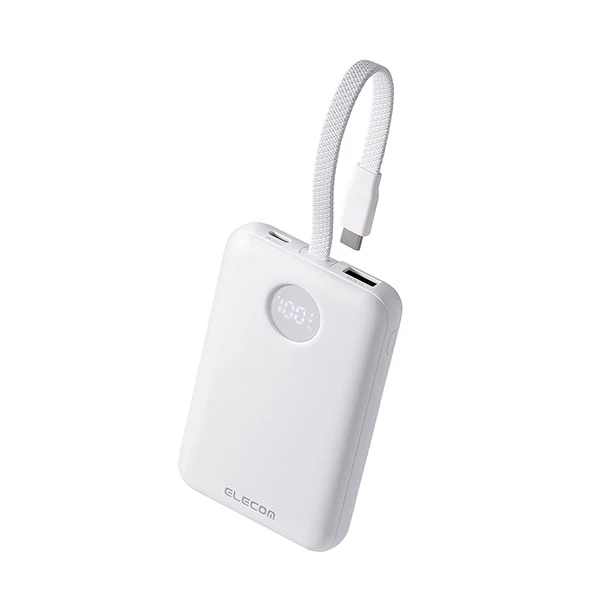
Elecom will release the DE-C102 series of 10,000mAh mobile batteries in mid-November 2026, featuring a “semi-solid-state lithium-ion battery” made with a gelled electrolyte. The units have an integrated cable, are open-priced, and are scheduled to sell for ¥7,480 (approximately $47), tax included, on the company’s direct-sale website.
Unlike the liquid electrolytes widely used in conventional mobile batteries, the semi-solid-state battery sharply reduces the amount of flammable organic electrolyte used. Even in the event of a short circuit, the design is said to suppress the generation and external release of flammable gases. Improved chemical stability has also extended cycle life fourfold, from about 500 cycles in conventional products to roughly 2,000 cycles in testing.
The body features a “Health Monitor” whose LED changes color according to the number of charge and discharge cycles, letting users check battery health and gauge when to replace the unit. It also includes “Thermal Protection,” which monitors and controls temperature in real time while powered, and a multi-layer protection circuit that automatically shuts down when an abnormality is detected.
Item Specification Capacity 10,000mAh Maximum output when used alone 22.5W (USB PD/PPS compliant) Simultaneous charging Up to 3 devices (total output decreases) Operating temperature range Minus 15 to 45 degrees Celsius Size and weight 68 x 19 x 108mm, approximately 190g Colors Black, White, Shiro-chan Note: Output and operating temperature range are based on the company’s published figures.
In addition to an integrated cable about 0.1m long, the body has a USB Type-C port and a USB-A port. It supports a pass-through function that prioritizes charging the connected device without routing through the battery, as well as a low-current mode for low-power devices such as wireless earbuds.
On the environmental front, the body uses recycled plastic, and the packaging uses paper materials with no plastic. The product is also covered by the collection program of JBRC, a general incorporated association, and can be dropped off at participating collection stores.
In the mobile battery market, concern about safety issues such as ignition and swelling is growing. Semi-solid-state batteries are a technology that companies are considering adopting because they can reduce the risk of electrolyte leakage. Elecom is emphasizing long life and safety, positioning the product as one suited to longer replacement cycles.
The price is ¥7,480 (approximately $47), tax included, equivalent to about $48 (roughly ¥7,700) for overseas markets. Whether Elecom can capture consumers who prioritize safety and durability will be the focus of future sales.