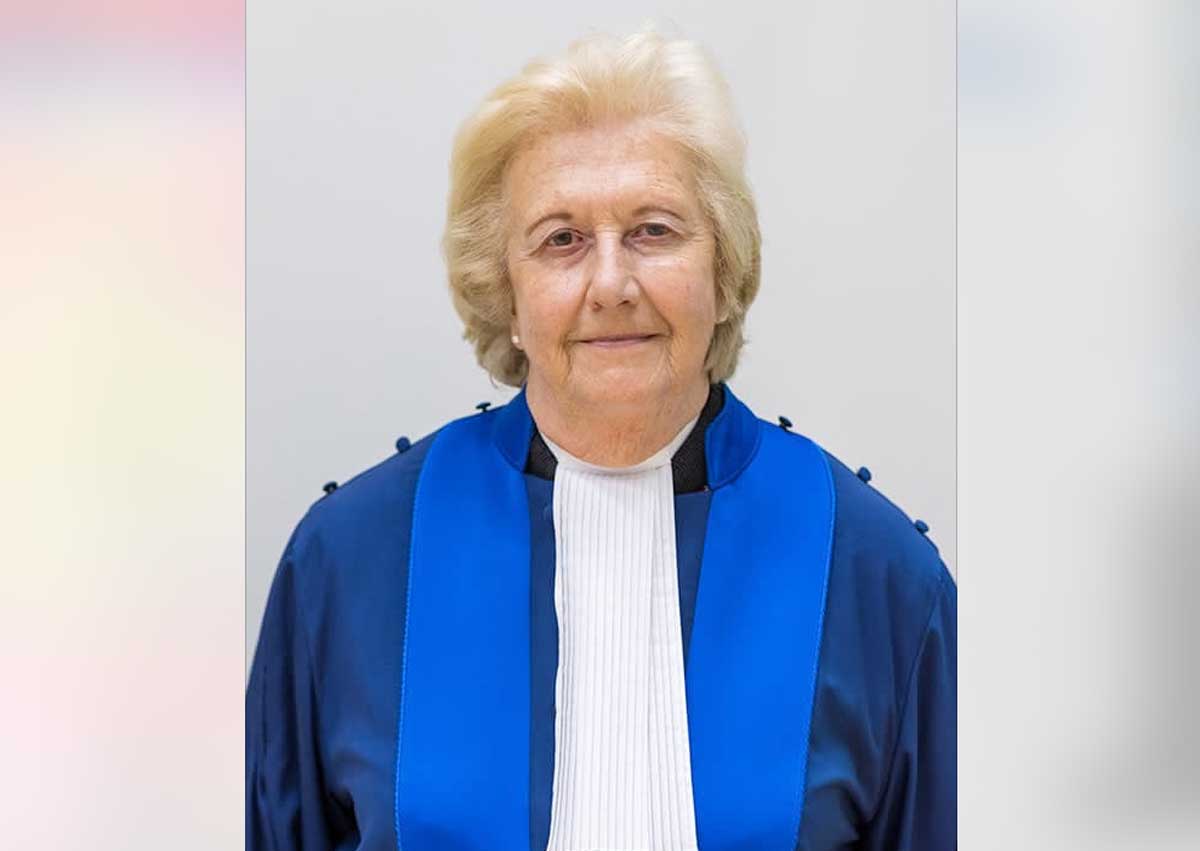
Joanna Korner, a former judge of the Crown Court of England and Wales, practiced criminal law for more than 45 years prior to her appointment to the International Criminal Court in 2021. She will serve at the international tribunal until 2030.
British Judge Joanna Korner has been elected as the presiding judge
of the trial chamber constituted to handle the case of former president
Rodrigo Duterte at the International Criminal Court (ICC).
The
newly-constituted Trial Chamber III released a three-page decision
notifying parties and the public of the selection of the presiding
judge.
Korner, a former judge of the Crown Court of England and
Wales, practiced criminal law for more than 45 years prior to her
appointment as ICC judge in 2021. She will serve at the international
tribunal until 2030.
According to her profile on the ICC website,
Korner has organized and taught on numerous training programs on
international criminal law and advocacy for judges and lawyers.
“Between
2004-2005, she was Senior Legal Adviser to the Chief Prosecutor of
Bosnia and Herzegovina, during the establishment of a War Crimes Section
in the country’s State Prosecutor’s Office,” her profile read.
The
other two members of the ICC Trial Chamber III are Judges Keebong Paek
from South Korea and Nicolas Guillou of France. They were both appointed
as ICC judges in 2024 and will serve until 2033.
“The Judges of
the ICC are persons of high moral character, impartiality and integrity
who possess the qualifications required in their respective States for
appointment to the highest judicial offices,” the ICC said in an earlier
statement.
“All have extensive experience relevant to the Court’s
judicial activity. They are elected by the Assembly of States Parties
on the basis of their established competence in criminal law and
procedure and in relevant areas of international law such as
international humanitarian law and human rights law,” it added.