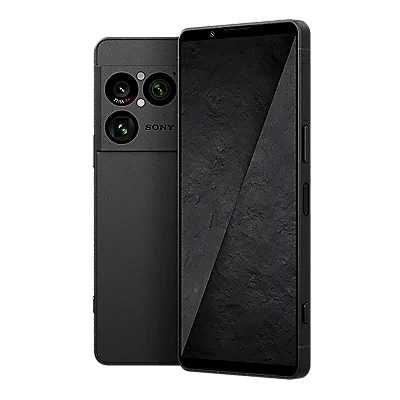
Sony’s “Xperia” smartphone series has effectively lost its distribution network in the US market. The company’s US mobile store currently lists only three products, none of which are smartphones. The “Xperia 1 V,” released in 2023, was the last high-end model officially sold in the US, and its successors have not been brought to the US market since 2024.
Sony announced its flagship “Xperia 1 VIII” in May 2026 and the mid-range “Xperia 10 VIII” in August. Both are sold in Japan, the UK, Germany, France and other select European countries, but no US launch has been indicated. US consumers have no choice but to rely on parallel imports, and they cannot obtain carrier-backed operational guarantees.
The Xperia 1 VIII is priced at £1,399 (approximately $1,900) in the UK. It features a dedicated shutter button, a headphone jack, and microSD card storage expansion. The Xperia 10 VIII costs £549 (approximately $770).
From 40 Million at Peak to 3 Million
Xperia’s decline is clearly reflected in the numbers. Sony’s smartphone unit sales have continued to fall since peaking at 39.1 million in the fiscal year ended March 2015, dropping to 2.9 million in the fiscal year ended March 2020. According to research firm Counterpoint Research, Apple and Samsung combined accounted for 84% of US smartphone shipments in the second quarter of 2026, and Sony’s share has fallen to a level where it is no longer tracked separately.
Sony chose a differentiation strategy centered on photographic expression rather than volume sales. With manual camera controls, a physical shutter button, and the ability to use the company’s “Alpha” mirrorless camera as an external monitor, the products appeal to photography enthusiasts. But they were also ill-suited to selling to consumers seeking a “solid everyday phone” at carrier sign-up counters.
In the US, the carrier-led sales model remained entrenched throughout the 2010s, and with the Xperia 1 V released in 2023, Sony switched to SIM-free sales through authorized retailers rather than the three major carriers. At about $1,400 (approximately ¥220,000), it was positioned in the high-price tier of the US market at the time.
Import Use Comes With Network Constraints
The Xperia 1 VIII supports up to four Android OS upgrades and six years of security updates, designed for long-term use. However, there are caveats when importing and using one. Multiple reports among overseas Xperia 1 VIII users note that while LTE connections work, 5G does not connect. Sony’s own carrier-facing materials also suggest that network compatibility adjustments have been complex since the period of official US sales.
| Item | Xperia 1 VIII | Xperia 10 VIII |
|---|---|---|
| Category | Flagship | Mid-range |
| UK price | £1,399 (approximately $1,900) | £549 (approximately $770) |
| Key features | Dedicated shutter button, headphone jack, microSD support | Redesigned speakers, 50% brightness boost, virtual memory |
| Sales regions | Japan, UK, Germany, France, etc. | Japan, UK, etc. |
| US sales | Undetermined (import only) | Undetermined (import only) |
Note: Prices are as announced in each market. Currency conversions are reference values at the time of writing.
In Japan, Sony is stepping up its mid-range efforts. The Xperia 10 VIII, released on October 8, newly features “Point & Pay,” which consolidates loyalty point apps and payment apps onto a single screen. The development team told Nikkei that it focused on the high proportion of users who use both points and payments, adopting a design that reduces the burden of operations at the checkout counter. A Sony representative said, “We decided to thoroughly refine everyday usability.”
However, amid rising component prices and a weak yen, the Xperia 10 VIII’s price was raised by just over ¥20,000 (approximately $130) from the previous model. The processor is unchanged from the previous model, and the SIM-free version is kept below ¥100,000 (approximately $630).
Losing Ground in the Foldable Market
The main battleground of the smartphone market is shifting toward foldables. Apple released its first foldable, the “iPhone Duo,” on October 23, 2026. China’s Huawei launched the tri-fold “HUAWEI Mate XT 2 ULTIMATE DESIGN,” sold from CNY 19,999 (approximately $3,000) for the 16GB+256GB model. The company’s cumulative tri-fold smartphone shipments have exceeded 1 million units.
Sony’s new Xperia models are not joining this competitive arena. The company has not commercialized a foldable, and the Xperia 1 VIII maintains a conventional straight form factor. Its stance of concentrating management resources on its strengths—photography and music playback—remains consistent, but as a result, its unit sales volume is shrinking further.
For Sony, the smartphone business serves as a venue for bringing together technology from other divisions such as cameras and audio. However, maintaining a global-scale distribution network requires volume, and the gap in the US—one of the world’s largest markets—could become a long-term headwind. The Xperia 1 VIII’s price of about $1,900 may be accepted by those who prioritize photographic expression, but it remains a high barrier to broadening the base of replacement demand.
Sony promises up to four OS upgrades with the Xperia 1 VIII, aiming to capture long-term users. In Japan, the Android 17 update rollout began sequentially in October. The changes center on items that improve daily operation, such as a feature that makes photo sharing with iPhone easier and settings that let users choose the fingerprint authentication method. The company is shifting its focus toward raising satisfaction among existing users rather than refreshing hardware.
Xperia is not finished. But will it remain a product with a presence in the global smartphone market, or will it remain a product narrowed to specific markets and uses? It is approaching that crossroads.