Climate change has wreaked havoc on coral reefs around the world, causing them to turn white in “bleaching events” that are conventionally seen as the death knell for these crucial ecosystems.
The process occurs after the living organisms expel tiny symbiotic algae called zooxanthellae, which live in their tissues and represent a major source of food. While technically not dead, bleached coral is more susceptible disease — and a harbinger to demise from starvation.
But thanks to a fortunate lab accident, Stanford University scientists may have just stumbled upon a clever — and surprisingly simple — way to bring bleached corals back to life, Euronews reports.
It’s a breakthrough that could potentially be used to save countless reefs from succumbing to climate change. Almost ten percent of the world’s reefs have been lost over the last 30 years, and bleaching events are only getting more severe as the effects of rising temperatures worsen.
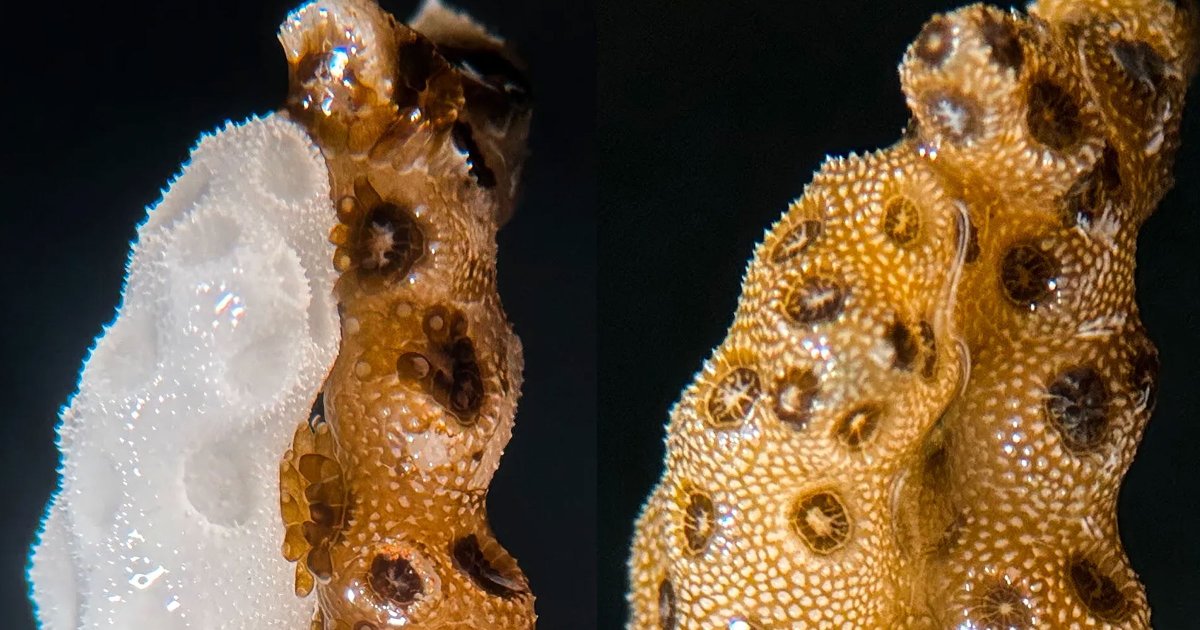
As detailed in a paper published in the journal Science Advances, the team proposes a new approach inspired by a 2025 discovery. At the time, marine biologist and Stanford professor Steve Palumbi found that one dead piece of coral leaning against a healthy one was regaining its color.
“While bleached corals may be dying, they are not dead yet,” said one of his collaborators, Stanford PhD student Danny Collins, in a statement about the research. “The question we wanted to answer is, once a coral has bleached, what can we do?”
In an experiment involving ten fragments containing bleached pieces, half were touching healthy fragments, while the others were kept only a few millimeters apart. It took just seven weeks for the former to recover, while the latter succumbed to starvation.
After examining the samples under the microscope, Palumbi and his colleagues found that the corals had effectively fused, infusing the bleached coral fragments with beneficial algae in just a week.
The algae “flood in and start dividing at the fastest rates seen in corals,” Palumbi said in a statement, roughly ten times faster than in nature.
The research could help protect coral reefs from succumbing to rising sea temperatures brought on by climate change.
“Bleached corals are often considered a lost cause because recovery after a heatwave is very slow, if it happens at all,” said Stanford professor and coauthor Fiorenza Micheli.
To be fair, it’s still unclear whether the newly discovered technique could be used on a larger scale to revive bleached reefs. Besides, as Palumbi told Euronews, the findings won’t protect reefs from rising ocean temperatures in the long term.
“This is a recovery story,” he said. “It doesn’t blunt heatwaves; it just helps the aftermath. There is still a huge need to reduce heatwaves and protect all of Earth’s life from rapid climate stress.”
Still, the findings could give scientists a tool to help “coral gardens survive heatwaves more completely,” according to Palumbi.
More on coral: Steel Frame Brings Completely Dead Coral Reef Back to Life