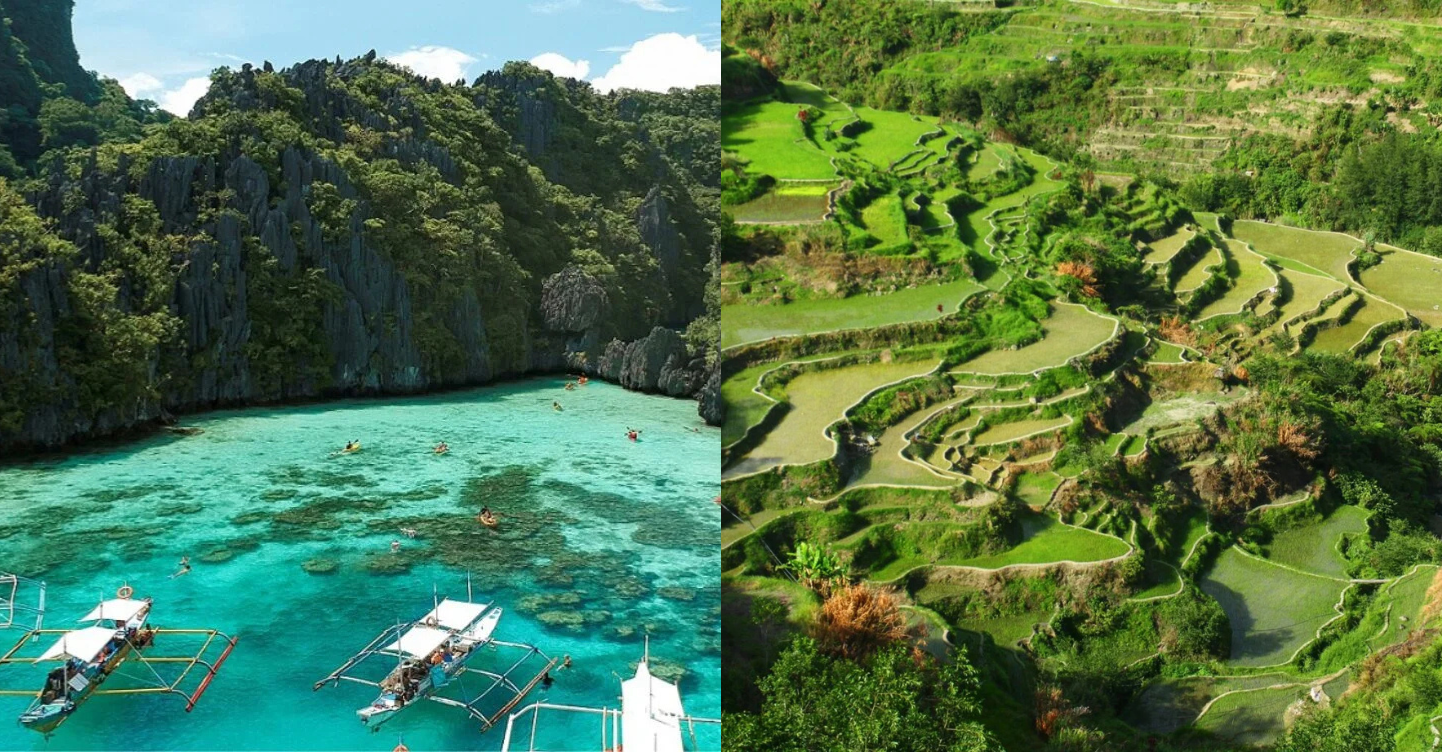
The Philippines can feel like a puzzle at first. With more than 7,000 islands, deciding where to go and what to do might seem overwhelming. Some spots are famous for beaches, while others are for rice terraces, waterfalls, or diving.
Photos: Department of Tourism, Rondell Chaz Mabunga/Unsplash
Here’s a look at a few destinations that offer a mix of beaches, mountains, and culture—plus practical tips for seeing them, staying comfortably, and moving around.
Siquijor
Why go: Siquijor is small, quiet, and slower-paced. Accessible only by ferry, it feels less touristy than other islands.
What to see:
-
Cambugahay Falls: Tiered pools perfect for swimming or bamboo rafting. Morning visits avoid crowds.
-
Coral Cay palm tree swing: A calm beach with a rope swing and hammock. Sunset here can be especially scenic.
-
Salagdoong Beach: Sparkling water and cliffs for watching or jumping. Even if you don’t jump, the views are worth it.
Getting around: Ferries connect Siquijor with Bohol or Dumaguete. Tricycles and taxis handle short trips, while longer day trips can be arranged locally.
Banaue
Photo: Rondell Chaz Mabunga/Unsplash
Why go: Banaue in northern Luzon offers the country’s iconic rice terraces and green, mountainous scenery. Overnight trips to Batad allow hikers to explore villages and waterfalls tucked among the terraces.
What to see:
-
Banaue Rice Terraces: Views best enjoyed on foot or by tricycles.
-
Batad hike: A one-hour Jeepney ride to The Saddle, then a downhill hike into the village. Overnight stays in homestays give more time to explore the surrounding trails.
-
Tappiya Falls: A refreshing dip after hiking among the terraces.
Getting around: Open-air jeepneys and tricycles are common. Getting to Banaue from Manila usually means an overnight bus ride, so planning arrival times is helpful.
Dinagat Islands
Why go: Dinagat Islands in the Caraga region is often called the mystical province, known for its pre-colonial folklore, secluded beaches, blue lagoons, and limestone cliffs. Still relatively under the radar, it offers a quieter, less developed alternative for travelers looking to explore beyond the usual island destinations.
What to see:
- Gibusong Island: Known for powdery white sand and clear, shallow waters.
- Bababu Lake: A striking inland lagoon with clear, blue-green water surrounded by rock formations. A short trek leads to the viewpoint and swimming area.
- Pagbabao Paradise Island: White sand, rock outcrops, and open sea views. Best for a relaxed beach stop while island-hopping.
- Bonsai Forest: A stretch of naturally stunted mangroves that resemble bonsai trees, creating a unique coastal landscape.
- Islander’s Castle: A hilltop structure with sweeping views of the surrounding islands and sea.
Getting around: From Surigao City, ferries travel to San Jose, the provincial capital. Boat transfers are used for island hopping, while habal-habal (motorbike taxis) are common for inland travel.
Lake Sebu, South Cotabato
Photo: Joyce Marie Cantrell/Unsplash
Why go: Lake Sebu is known for its forested hills, waterfalls, and, of course, the calm lake. The destination offers a cooler and more laid-back alternative to beach destinations. It’s also a good place to experience T’boli culture and local traditions.
What to see:
- Seven Falls: A group of waterfalls set within a forested area, with Hikong Alu as the tallest. A zipline connects viewing decks for a wider view of the landscape.
- Lake Sebu: Quiet boat rides pass by fish pens and surrounding hills, especially scenic in the early morning.
- T’boli villages: See traditional weaving and learn about local culture and craftsmanship.
Getting around: The nearest airport is in General Santos City, followed by a land trip of around two hours. Tricycles and habal-habal are available for short distances, while guided tours can help organize visits.
Bantayan Island, Cebu
Photo: Celine Martin/Unsplash
Why go: Bantayan Island, located northwest of Cebu, is known for its powdery white sand, clear turquoise waters, and laid-back atmosphere. It’s a quieter alternative to the province’s busier beach destinations, with enough activities to fill a relaxed few days.
What to see:
- Santa Fe Beach: The main hub for visitors, with fine white sand and calm water. Good for both sunrise and sunset walks.
- Virgin Island: A popular stop for island hopping, with white sand, clear water, and open space for swimming and snorkeling.
- Kota Park: Located in Madridejos, featuring a small Spanish-era fort and a cliff-jumping spot.
- Ogtong Cave: A small cave pool within a resort, ideal for a quick, shaded swim.
- Obo-ob Mangrove Garden: Wooden walkways through a mangrove forest, offering a quieter inland stop.
Getting around: From Cebu City, take a bus or van to Hagnaya Port (around three to four hours), followed by a ferry to Santa Fe (about an hour). Scooters, bicycles, and tricycles are widely available for exploring the island.
Also worth considering
If it’s your first time, destinations like El Nido, Bohol, and Panglao remain popular for a reason—they’re well-developed, accessible, and packed with activities. But if you’re looking for something quieter or less explored, the spots above offer a different pace.
The Philippines blends striking natural landscapes with lively beach towns and quiet villages. Planning how to move between islands and what to prioritize helps make the most of the trip, while leaving space for unplanned adventures along the way.